REVIEW · KATHMANDU
12 Days Manaslu Circuit Trek
Book on Viator →Operated by Nepal Treks and Tour · Bookable on Viator
That’s a lot of mountain in two weeks.
This Manaslu Circuit trek program pairs Kathmandu UNESCO sightseeing with a serious trek through villages, glaciers, and big pass-country. You’ll chase views of the Manaslu range and cross Larkya La Pass (5160m), one of Nepal’s tougher high points.
I especially like two things. First, the trek is supported from start to finish: you get an English-speaking guide, help with permits, and included gear like a sleeping bag and down jacket. Second, the route is built around real altitude rhythm, including a day to reach Manaslu Base Camp at an easier pace so you can adjust before the pass.
One consideration: this is a high-altitude trek with long hiking days (often 6–7 hours). If your fitness is weak or you hate thin-air days, this one may feel like a grind.
In This Review
- Key highlights I think matter most
- First night in Kathmandu: Thamel, your guide, and an easy start
- Kathmandu UNESCO day (plus permits prep): where the trip gets real
- Arughat to Soti Khola: the circuit begins with a classic downhill-to-uphill rhythm
- Khorlabesi, Tatopani, and river crossings: where the trail shows its muscle
- From ridges and suspension bridges to bamboo forest days near Deng
- Namrung to Samagaon: monasteries, big views, and villages built for altitude life
- Manaslu Base Camp as a smart acclimatization day trip
- Samdo to Dharmasala: mani walls, glaciers, and the approach to Larkya La
- The Larkya La (5160m) crossing: your toughest day, built into the plan
- Bimthang and onward to Lukla: a dramatic descent through park country
- Exiting Manaslu region into Annapurna Conservation Area: Thonje and Karte
- What’s included in the $799 price: value that shows up on your back
- Transportation, timing, and real logistics you should plan for
- Fitness and altitude: what to take seriously before Larkya La day
- Should you book the Manaslu Circuit trek with this provider?
- FAQ
- Where does the trek start in Kathmandu?
- Do you provide pickup from the airport?
- How long is the tour?
- What sightseeing is included in Kathmandu?
- What is the highest point on the trek?
- Are meals included?
- Is trekking gear included?
- Are permits handled?
- What is not included in the price?
Key highlights I think matter most
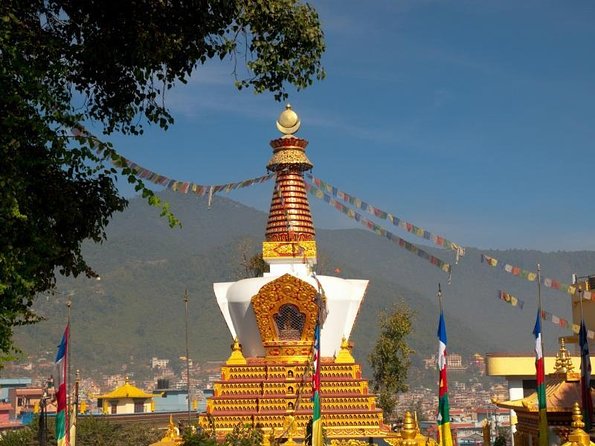
- Kathmandu UNESCO warm-up: Durbar Square, Swayambhunath, Boudhanath, and Pashupatinath before you go uphill for real
- Provided cold-weather gear: sleeping bag and down jacket included, which saves you packing stress
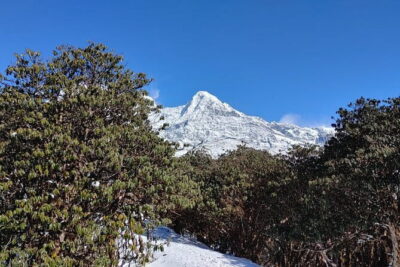
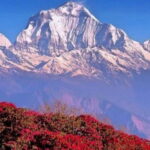
- Manaslu range views in stages: Ganesh Himal, Shringi Himal, Himal Chuli, and the Manaslu wall of peaks as you climb
- Manaslu Base Camp + Birendra Lake: a day-trip style acclimatization that still feels like a big reward
- Larkya La Pass day: the highest drama at 5160m, followed by a long descent to Bimthang
First night in Kathmandu: Thamel, your guide, and an easy start
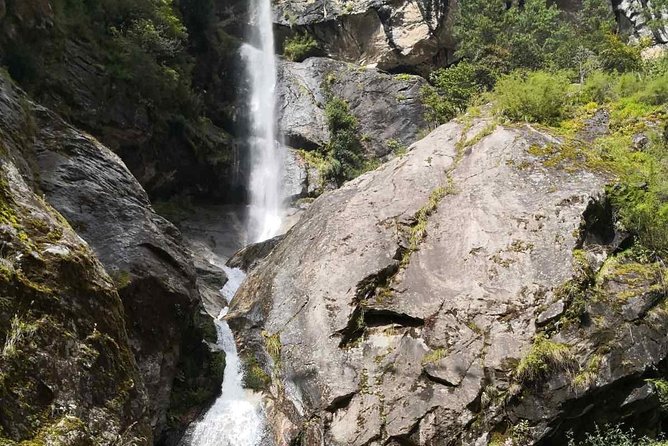
You land in Kathmandu and don’t get thrown into chaos. A representative meets you at the airport and takes you to your hotel in Thamel, a handy base because you’re close to food and everyday Nepal life. After you check in, you meet your guide and run through the plan. That matters, because a trek like this has a lot of moving parts—permits, gear, and timing—so clarity early helps your stress level stay low.
In the evening, you’ll have a welcome dinner at one of Kathmandu’s well-regarded spots. It’s a small thing, but it’s a good way to reset after travel. You’ll also have a chance to ask questions and confirm what you still need for the mountains. No tickets are listed for this dinner, so treat it as part of your built-in first-day comfort.
You can also read our reviews of more tours and experiences in Kathmandu.
Kathmandu UNESCO day (plus permits prep): where the trip gets real
On your second day, you start with sightseeing while your guide handles the paperwork for your trekking area and conservation coverage. You’ll visit major UNESCO World Heritage sites in the Kathmandu Valley, including Kathmandu Durbar Square, Swayambhunath Temple, and Boudhanath. You’ll also stop at the Hindu temple of Pashupatinath.
This isn’t sightseeing for sightseeing’s sake. It’s a smart way to get context before you head into the mountains. Temples, stupas, and palace squares are where you see Nepal’s history and religious layers in plain view, and those layers are the backdrop for the village life you’ll hike through later. You’re also using the day to prepare equipment you might still need. If you’re missing gloves, socks, or a warm layer, you’ll want to deal with it here rather than later.
The listing puts the Kathmandu day at around 6 hours with admission tickets included, so plan your pace. You’ll want energy for trekking tomorrow.
Arughat to Soti Khola: the circuit begins with a classic downhill-to-uphill rhythm
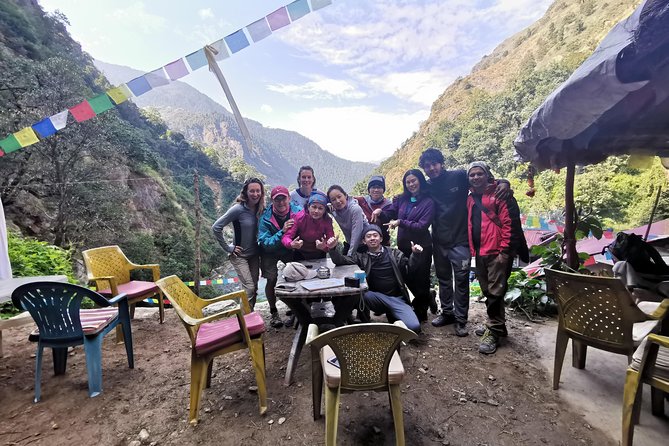
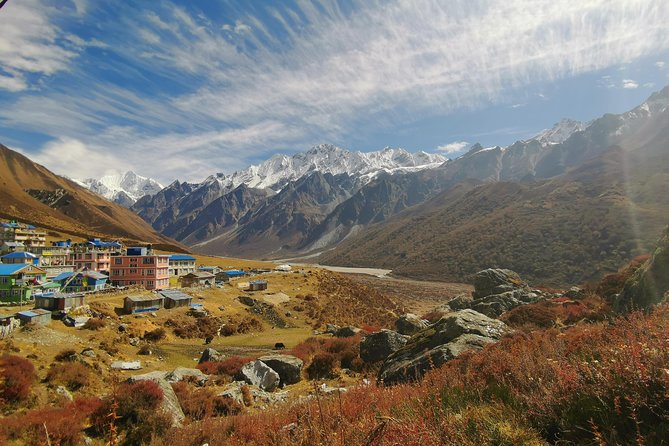
Day three is a long travel day by road before the first real trail steps. You’ll head northwest from Kathmandu through the Trishuli Highway and a series of gorges to reach Arughat. Once you arrive, the trek officially starts at Arughat.
The hiking day is about 7 hours. You trek onward and overnight in Soti Khola. This section is where you test your legs, not your courage. The climbs and descents here teach you how quickly footwear, socks, and hydration choices can make or break a day. If you’re prone to blisters, treat the first days like a dress rehearsal.
Practical note: that road journey plus a full hiking day can feel tiring, so keep your first-day pack light. You’ll accumulate gear gradually as altitude and weather demand it.
Khorlabesi, Tatopani, and river crossings: where the trail shows its muscle
Day four pushes you from Machha Khola toward Jagat and onward to Khorlabesi. The route includes narrow sections near Tharo Khola, then you reach Khorlabensi. From there you hike to Tatopani, known for natural hot springs.
If you’ve never used hot springs after a long trek day, here’s the appeal: it’s one of the few “recovery tools” you’ll get without extra equipment. Warm water can help your legs feel less cranky the next morning.
The trail also teaches you the circuit’s style—frequent bridges and river crossings. You’ll cross the Budhi Gandaki River, then cross another bridge over the Yaru Khola, and continue alongside the Budhi Gandaki River later. Expect that the day’s effort comes in uneven pieces: walk hard, cross fast, catch your breath, repeat.
You’ll arrive in Jagat for an overnight stay, with a total walking time around 6 hours.
From ridges and suspension bridges to bamboo forest days near Deng
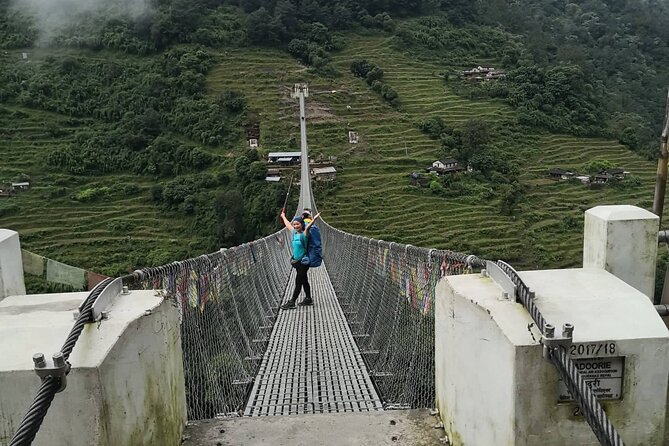
On day five, you climb over a rocky ridge to Salleri, then descend to Sirdibas. After that, you continue upstream, and you reach a long suspension bridge in Philim—the kind of crossing that looks scary but moves you through the valley like a moving part of the trek.
From Philim, the trail advances north along millet fields, then you pass Ekle Bhatti. Another key moment is crossing the Budhi Gandaki River, followed by walking through thick bamboo forests toward Deng.
This day is described at about 7 hours. Deng tends to feel like a “mountain base village” stop—simple, practical, and useful for the next push. If you’re the type who likes clean routines, you’ll appreciate this section’s consistent rhythm: farmland first, then forest cover, then the mountains getting louder in the background.
Namrung to Samagaon: monasteries, big views, and villages built for altitude life
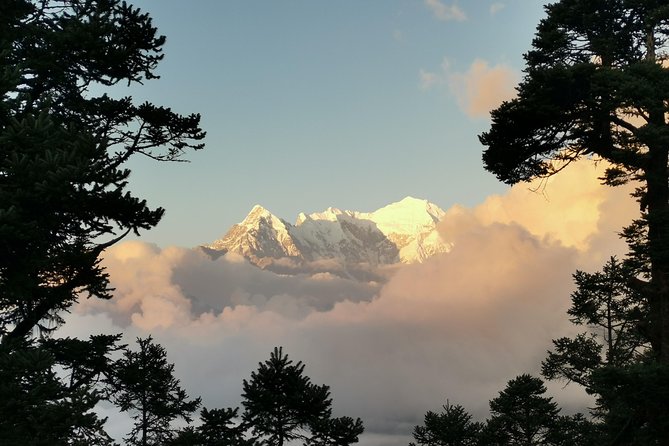
Day six leads you from Deng upward, crossing the Budhi Gandaki River again and climbing toward Rana. You’ll pass through Buddhist monasteries and you’ll also make a brief stop at Prok village, where you can view Shiringi Himal (7161m).
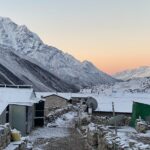
Then you continue up Budhi Gandaki valley and reach Namrung for the night (about 7 hours). As you gain altitude, you’ll feel it in your breathing. This is also where the trekking feels more cultural than purely physical. The monasteries and village structure show that people live here year after year, not just for tourists.
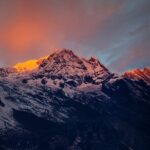
Day seven continues to Samagaon (again around 7 hours). On this stretch, the views come in layers: Ganesh Himal (7422m), Shiringi Himal (7161m), and Himal Chuli (7893m) are all called out. You’ll pass by Lihi, a Buddhist village with chortens and barley terrace fields. Then you move through Sho, Lho, and Shyala before arriving at Sama Village (Samagaon).
From here, Manaslu (8163m) becomes visible. That’s a big psychological marker. You’ve gone from “I’m walking in Nepal” to “I’m actually in the Manaslu orbit.”
Manaslu Base Camp as a smart acclimatization day trip
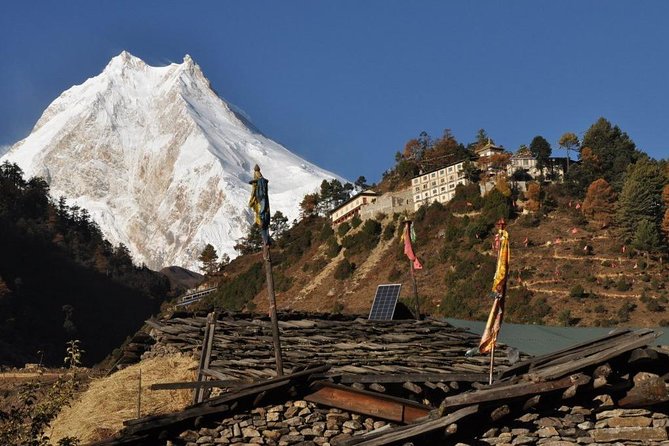
On day eight, you get a day hike toward Manaslu Base Camp from Samagaon. The plan is intentionally easier. The description says you’ll walk at a pace that helps you acclimatize en route. The out-and-back time is listed around 5 hours.
This is one of the best “value” days because you get big payoff without exhausting yourself before the highest section. At base camp, you’ll see vantage views of the entire Manaslu range and Himal Chuli (7893m). There’s also a quiet stop at Birendra Lake on the way.
Even if you don’t consider yourself a “lake person,” this kind of stop matters. It breaks up altitude fatigue with something calmer than rocks and steps. You return to Samagaon for the night.
Samdo to Dharmasala: mani walls, glaciers, and the approach to Larkya La
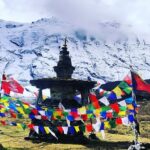
Day nine moves from Samagaon to Samdo, crossing Budhi Gandaki River and heading toward the Larkya La trail. You’ll pass Mani walls—stacked prayer stones or stone lines with spiritual meaning—then reach Kermo Kharka. After crossing the river, you continue to Samdo via Kyonggma Kharka.
This day is about 6 hours. You’re not only hiking. You’re also moving into pass-country, where weather can shift quickly and where trails feel more exposed.
Day ten continues along the Larkya La trail. You cross Budhi Gandaki River to Syacha Khola, and you also get views of Naike Peak (6211m) as you head west. The route includes sights of the Larkya Glacier, then a climb to Dharmasala, also called Larkya Phedi.
You’ll walk about 6 hours here. Dharmasala matters because it’s the staging point for the pass. Treat it like your last warm-up before the day when you’ll feel altitude most sharply.
The Larkya La (5160m) crossing: your toughest day, built into the plan
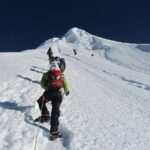
Day eleven is the hardest day. You leave Dharmasala and climb toward Larkya La Pass (5160m). The description notes you’ll ascend along the north side of the Larkya glaciers, with scenic viewpoints including Cho Danda and Larkya Peak (6249m).
The last part of the climb gets steep. That steep section is where you slow down and focus on breathing, not speed. The reward is major: you can enjoy views across Himlung, Cheo, Manaslu, and Annapurna ranges.
After the pass, you descend to Bimthang. This day is about 7 hours. If day eleven sounds like a lot, it is. The good news is that the program gives you a prior acclimatization-style base camp day, so you’re not walking in cold without preparation.
Bimthang and onward to Lukla: a dramatic descent through park country
Day twelve is described as the final day of the trek, with a route back to Lukla from Namche, and a “pleasant” descending journey through Sagarmatha National Park. Along the way you pass Monjo and Jorsalle and exit the national park area near the Dudh Koshi River. Then you cross a suspension bridge and continue through small hamlets including Bengkar, Phakding, and Chhuthawa on the way to Lukla.
You’ll be walking about 6 hours. The vibe here is usually about momentum: you’ve climbed high, now you’re getting down. Your legs may feel it anyway, because descending can be harder on knees than the climb is on lungs.
Exiting Manaslu region into Annapurna Conservation Area: Thonje and Karte
Day thirteen shifts you from the Manaslu region toward the Annapurna Conservation Area. The route starts leaving Tilije for Tal, then continues across Dudh Khola to Thonje. Permits are checked at Dharapani, and then you trek further down to Karte village.
This day is listed around 7 hours. The big thing to notice is the change in conservation area and the natural feel of plant and wildlife variety. The description calls out exotic flora and fauna endemic to the Annapurna region, so keep your eyes open beyond the trail.
What’s included in the $799 price: value that shows up on your back
At $799 per person, this trek is priced like a full-service Nepal package rather than a bare-bones guided hike. You’re getting a lot of the items that typically create surprise costs for independent trekkers.
Included items:
- English-speaking guide and his expenses
- Private transportation (so you’re not stuck sharing transfers with strangers)
- First aid kit
- Complimentary sleeping bags and down jackets
- Meals: breakfast 14 times, lunch 10 times, dinner 10 times
- All fees and taxes
- Mobile ticket and confirmation at booking
In practical terms, the sleeping bag and down jacket are the biggest “budget saver.” In cold pass-country, the right insulation matters. Even if you already own gear, it can be cheaper to travel light than to buy new winter equipment just for one trip.
Also, it’s a private tour/activity, meaning it’s your group only. That typically improves the flow of guide time and can make it easier to adjust pace when your body wants to move slower on steeper sections.
Transportation, timing, and real logistics you should plan for
The program starts at Tribhuvan International Airport in Kathmandu at 7:45 am. On day one, you’ll be met at the airport and taken to your hotel in Thamel. On trek days, you’ll have a mix of road transfers and hiking days.
A clear rhythm runs through the trek: long valley walks, then higher village-to-village steps, then the pass day, then descent. Expect most hiking days to land around 6–7 hours, which is normal for this type of route.
You should also plan for paperwork and permits. Your guide prepares permits for the Manaslu conservation area and ACAP, and later you’ll have a permit check at Dharapani. This is one of the places where using a guide pays off: it removes guesswork and reduces the chance of missing something.
Fitness and altitude: what to take seriously before Larkya La day
The tour data clearly points to a strong physical fitness requirement. That’s not marketing fluff. You’re hiking repeatedly at elevation and then pushing to 5160m. Your heart and lungs will feel the difference even if you train.
Here’s what I’d tell you to do before you book:
- Train for long walking days with hills or stairs, not just flat treadmill time
- Practice steady pacing. On pass days, speed is your enemy
- Pack smart for warmth since a down jacket is provided but you’ll still need layers and head/hand comfort
Also, the trek includes natural hot springs at Tatopani. Use them for comfort and recovery, but don’t assume they replace rest and hydration.
Should you book the Manaslu Circuit trek with this provider?
I’d tell you to book if you want a guided, full-service trek with included gear, private transportation, and a route that builds in acclimatization before the Larkya La Pass day. You also get a full Kathmandu intro with major UNESCO sites, which makes the whole trip feel like more than just “walk, sleep, repeat.”
Skip it only if you know you can’t handle steep, high-altitude hiking days or you dislike long days on the trail. This is adventure-grade trekking. It’s not a stroll.
If you’re ready for that, this program looks like solid value for $799, because many of the annoying cost variables—gear, guides, major fees, and key logistics—are handled for you.
FAQ
Where does the trek start in Kathmandu?
It starts at Tribhuvan International Airport in Kathmandu, with a stated start time of 7:45 am.
Do you provide pickup from the airport?
Yes. A representative meets you at the airport and takes you to your hotel in Kathmandu.
How long is the tour?
The duration is listed as 14 days (approximately), with the full itinerary running from Kathmandu to the trek area and back to the airport.
What sightseeing is included in Kathmandu?
You’ll visit Kathmandu Durbar Square, Swayambhunath Temple, Boudhanath, and Pashupatinath Temple.
What is the highest point on the trek?
Larkya La Pass at 5160m is the highest listed pass.
Are meals included?
Yes. Breakfast is included 14 times, lunch is included 10 times, and dinner is included 10 times.
Is trekking gear included?
Yes. Sleeping bags and down jackets are provided (complimentary).
Are permits handled?
Your guide prepares permits for the Manaslu Conservation Area and ACAP, and there is also a permit check at Dharapani later in the route. Fees and taxes are listed as included.
What is not included in the price?
The Nepal visa fee, travel insurance, and tipping for guide(s), porter(s), and driver(s) are not included.