REVIEW · KATHMANDU
Everest Short Trek -5 Days
Book on Viator →Operated by Himalayan Adventure Treks and Tours Pvt Ltd · Bookable on Viator
Five days, one of Everest’s best views.
This short-and-sweet Everest region trek mixes a quick Lukla flight, days along the Dudh Koshi valley, and a rare stop at Hotel Everest View for broad 360° sightlines across Everest’s neighbors. You’ll also hike into Sagarmatha National Park, so the trip feels more like a real mountain walk than a checklist.
I especially like the way the trek targets the best viewpoints without dragging you into the long, punishing routes. The included meals and tea-house lodges keep things practical, and the support staff make it feel “handled” from the first morning pickup to the return flight. In the same team spirit, guides like Badri, a tour lead named Bhagwat, and Sherpa Pemba show up in real-world feedback as calm, capable people who keep the day-to-day moving.
One thing to watch: Lukla flights can be weather-dependent, and if you’re delayed, extra time costs in the mountains aren’t included. That’s not unique to this operator, but it matters for how you budget and pack.
In This Review
- Key highlights you’ll care about
- A Short Everest Trek That Still Hits The Big Views
- From Kathmandu To Lukla: Where Time Starts To Matter
- Day 1: Lukla To Phakding Along The Dudh Koshi River
- Day 2: Phakding To Namche Bazar And The Altitude Learning Curve
- Day 3: Acclimatization Day To Khumjung And Hotel Everest View
- Day 4: Namche Bazar Back To Lukla Via Phakding
- Day 5: The Lukla To Kathmandu Flight And A Clean Finish
- Price and Logistics: Is $1,300 Good Value Here?
- The People Factor: Guide, Porter, And How The Trip Feels Day To Day
- Who Should Book This 5-Day Everest View Trek
- Should You Book It?
- FAQ
- What is the duration of the Everest Short Trek -5 Days?
- Where does the trek start and end?
- What’s included for meals during the trek?
- Are permits and park fees included?
- Do I get a guide and porter?
- Are accommodations included?
- Is vegetarian food available?
- What are common items not included in the price?
Key highlights you’ll care about
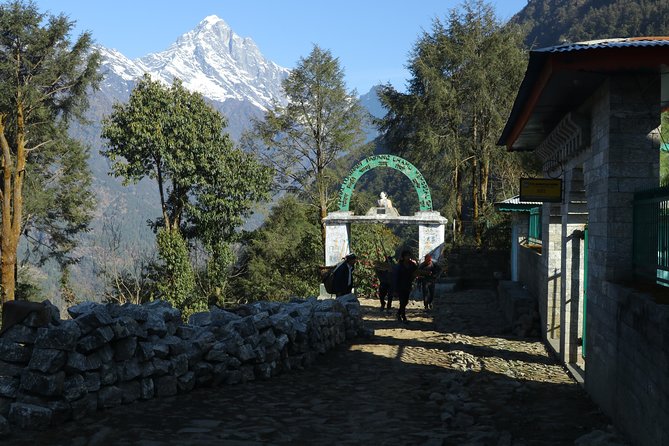
- Hotel Everest View stop with wide-angle views of Everest, Lhotse, and Cho Oyu
- Khumjung visit as the trek’s highest point, with classic Khumbu views
- All meals while trekking plus lodge stays, so you’re not scrambling for logistics
- Guide + porter support (1 porter for 2 clients) and basic medical supplies
- Sagarmatha National Park trail time along the Khumbu Valley and river corridor
A Short Everest Trek That Still Hits The Big Views
This is the kind of Everest trek I think makes sense for many people: you get the Khumbu Valley experience and the “wow” factor, but you’re not committing to weeks of hard hiking. The pacing is built around a logical route: Lukla out and back, then a quick acclimatization day that doesn’t turn the whole trip into an endurance test.
The route spends time in the Everest-adjacent Khumbu Valley and includes entry into Sagarmatha National Park. That’s more than a label. It means you’ll be walking through a protected region where the scenery and wildlife potential feel more “alive” than a road-side viewpoint day.
The big reason this trek stays popular is the Hotel Everest View portion. The trail only reaches the hotel area, which generally means less pressure than treks that go farther into higher passes. From there, the hotel is known for its wide 360° panorama—exactly the sort of moment you want on a short itinerary.
It’s not a gimmick trek, either. You still gain altitude across the trip: Phakding at 2610m, Namche Bazar at 3446m, and a hike up to about 3880m on the acclimatization day. You’re moving in altitude, just with enough structure to make it feel manageable.
You can also read our reviews of more tours and experiences in Kathmandu.
From Kathmandu To Lukla: Where Time Starts To Matter
Your day begins early—pickup is included, and the start time is 6:00 am. That matters on this route because flights to Lukla have their own timing reality. You’ll fly from Kathmandu to Lukla, and your flight plan may involve Kathmandu or Ramachap depending on operations, since those options are included in the package.
Here’s the practical take: in Everest region trips, your schedule is only as solid as Lukla weather. When the sky is clear, everything moves fast. When clouds sit over the runway, you can lose hours or more.
Still, the package is built to reduce friction. You’re not left figuring out transportation to the airport or stitching together your own trekking paperwork. The tour includes TIMS permit and Khumbu valley fees, plus the necessary paper work, so your energy goes into hiking rather than admin.
Once you land at Tenzing Hillary Airport in Lukla, the trek immediately turns real. You’re north-bound toward Phakding, and the hike starts with that classic feeling of entering a river valley that’s carved through the mountains. It’s a very “from flight to trail” transition—no long travel day afterward.
Day 1: Lukla To Phakding Along The Dudh Koshi River
On day 1, you land in Lukla and then trek to Phakding at 2610m. Time on the trail is about 3–4 hours, usually listed as lunch/dinner included.
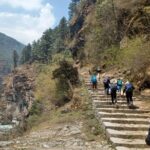
This is a smart first day distance. It’s long enough to feel like you’re trekking in the Everest region, but short enough to let your body settle after the flight. You’ll be following the Dudh Koshi River corridor, which is one of the reasons this trek feels scenic and steady. Rivers mean sound, motion, and constant visual variety—less “same trail, same view” fatigue.
Logistically, day 1 is also where you learn the rhythm of the trip. You’ll have your guide and porter support, and you’ll start using the system that the operator provides (including a duffle bag that’s returned after the trek). That duffle detail sounds minor until you’ve carried your own bag too long.
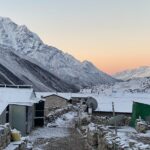
Lodges/tea houses are where you’ll stay on trekking days. Expect the usual mountain trade-offs: warm enough inside, simple rooms, and an emphasis on getting you fed and resting. Dinner comes at a normal hour, which helps more than people think when you’re about to head into higher elevations the next day.
Day 2: Phakding To Namche Bazar And The Altitude Learning Curve
Day 2 goes from Phakding to Namche Bazar at 3446m, and it’s a bigger day: about 6–7 hours, with breakfast/lunch/dinner included.
Namche is the cultural and logistical heart of the Khumbu region for many treks. But beyond that, it’s the altitude marker that tells you you’re truly climbing into Everest terrain. Even if you’re not chasing record paces, the effort on this day is real because you’re gaining elevation and walking for longer.
What I like about how this trek handles day 2 is that it’s not hiding the hard part. It builds a clear progression: river valley first, then a longer climb up toward the Namche area. When the day ends, you’re positioned exactly where you should be for the acclimatization-style day on day 3.
It also sets up the “choose your pace” reality. Your guide can guide you on how hard to push, and porter support (1 porter per 2 clients) helps keep the burden off your back. That doesn’t eliminate altitude challenges, but it usually keeps you from wasting energy on unnecessary weight.
Day 3: Acclimatization Day To Khumjung And Hotel Everest View
Day 3 is your acclimatization day. You’ll do a visit to Khumjung village and the Hotel Everest View, reaching around 3880m for this part of the day, with breakfast/lunch/dinner included.
This is one of the most valuable parts of the itinerary. Instead of trying to cram everything into consecutive hard hiking days, you get a structured day that’s meant to help your body adjust. You still walk and climb, but you’re not turning this into another full-on trekking day to a remote endpoint.
Khumjung village is included as the highest point on the trek. That’s the sort of detail that matters because it gives the day a clear summit feeling without requiring technical trekking. From there, the views are part of the payoff.
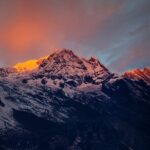
Then there’s the Hotel Everest View component. This is where you get some of the most memorable sightlines in the Everest region. The area is known for a wide 360° panorama, and the views you’ll be able to appreciate include Everest (8848m) plus major neighbors like Lhotse (8516m) and Cho Oyu (8201m). Seeing these peaks around you, not just one framed peak on a postcard, is why people love this stop on a short itinerary.
If you’re the type who likes taking time—watching weather shifts, tracking clouds off the ridgelines—this hotel stop helps you slow down without losing the trekking goal for the day.
Day 4: Namche Bazar Back To Lukla Via Phakding
Day 4 heads back down to Lukla via Phakding, returning to around 2800m. Expect 6–7 hours of walking, again with full meals included.
This is a practical day because it’s half trekking, half logistics. You’re not just moving through scenery; you’re staging yourself for the flight home on day 5. Walking back this way also keeps the route familiar enough that you can focus on energy and footing instead of constantly reorienting.
Descending can feel easier than ascending until you remember another truth: your knees notice everything. With a longer day like this, pacing matters. A good guide will push you to walk steadily, not sprint downhill and then regret it later.
If you enjoyed day 1 and the river corridor, you’ll likely recognize the valley feel again on this day. It’s less about reaching a new wow point and more about returning through the Khumbu Valley in a way that feels complete. Plus, having Phakding in the middle gives you a natural break point.
When you reach Lukla, you’ll be preparing for the final flight. This is the day where you’ll want to be mentally ready for weather realities. Not because you did anything wrong—just because the mountains run their own schedule.
Day 5: The Lukla To Kathmandu Flight And A Clean Finish
On day 5, you fly from Lukla back to Kathmandu. Breakfast is included, and that’s it—this is a straightforward finish.
This day is short, but it’s not a victory lap you should take for granted. If your flight runs on time, you’ll feel like you “compressed Everest” into a manageable, rewarding schedule. If weather affects timing, you’ll be thankful you planned for flexibility because you’re still in the same mountain flight system.
What I appreciate about this trek’s structure is that it ends on a flight day rather than a long hiking day. You don’t end the trip with sore legs and then fight airport connections. You reach Kathmandu and can finally reset—shower time, laundry time, food that doesn’t involve tea-house portions.
And if you want closure, there’s also a farewell dinner included on the last night at an authentic Nepalese restaurant with cultural performance. It’s not the same as a festival night, but it’s a nice way to end your trip without rushing straight back to travel fatigue.
Price and Logistics: Is $1,300 Good Value Here?
At $1,300 per person for about 5 days, the value depends on what you consider essential. For many people, what’s included here covers the biggest “cost headaches.”
Included items that matter:
- Flights in the Kathmandu/Lukla direction (including the Kathmandu-to-Lukla and Kathmandu/Ramachap-to-Lukla components listed)
- Pick up and drop to the airport by private vehicle
- Meals during the trekking days: breakfast, lunch, dinner
- Lodge/tea house accommodations during the trek
- Permits and fees: TIMS permit and Khumbu valley fees
- Guide and porter support (with the porter ratio stated)
- Travel and rescue arrangements plus a first aid kit
- A duffle bag that returns after the trek
- Farewell dinner with cultural performance and company t-shirts
What can add cost (and you should plan for it):
- Nepal visa fee (you obtain it easily in Kathmandu airport)
- International airfare to and from Nepal
- Extra mountain expenses if you get stuck due to bad weather delay
- Travel and rescue insurance
- Personal expenses like phone calls, laundry, bar bills, battery recharge, hot shower, and bottle/boiled water
- Tips for guide and porter
So is $1,300 fair? For a short Everest region trek that includes Lukla flights plus trekking permits and full meals, it often compares well against DIY effort where you’d still need local permits, guides, porters, and the hard-to-organize flight pieces. You’re paying for reduced stress and a functioning support system.
The one budget caution I can’t ignore is the weather delay clause. If Lukla pauses for days, you might be paying mountain costs out of pocket because those extra expenses aren’t included.
The People Factor: Guide, Porter, And How The Trip Feels Day To Day
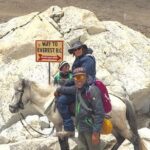
In the Everest region, the guide and porter team can make the difference between feeling confident and feeling worn out. This itinerary is set up for that kind of human support: you get an experienced, helpful guide, plus a porter. The porter ratio is 1 porter for 2 clients, which typically keeps pack loads more reasonable.
The real-world feedback around guides and the company lead names—Bhagwat, Badri, and Sherpa Pemba—points to a consistent theme: steady care, good communication, and patience. When the weather or walking pace changes, you don’t want a rigid system. You want someone who can keep you calm and moving.
Even the small inclusions support this: first aid supplies are available, travel and rescue arrangements are part of the plan, and the duffle bag system helps you manage weight without hauling everything on your back.
This is also a private tour/activity, meaning it’s your group and not a mixed crowd with random hiking speeds. That usually improves the feel of the trip, especially on days like day 2 and day 4 where you’ll want a smooth group pace.
Who Should Book This 5-Day Everest View Trek
This trek is a strong fit if:
- You want Everest region views in a short time
- You prefer a relatively easier route that still delivers major panoramas
- You like the idea of a dedicated acclimatization day instead of pushing hard back-to-back climbs
- You value having meals, lodges, permits, and core logistics handled
You might think twice if:
- You’re on a very rigid schedule with no flexibility for potential Lukla delays
- You dislike altitude walking even at moderate distances
- You’re trying to travel ultra-budget and don’t want to think about extra costs if delays happen
Should You Book It?
If you’re choosing between a weeklong Everest trek and a short option, this is the one I’d point you toward for balance: quick flights, real trail time, and a signature viewpoint stop at Hotel Everest View that’s built for big-picture photos. The inclusion of guide/porter support, meals, and permits makes it feel like a true package, not a half-assembled plan.
My decision rule: book it if your goal is Everest-region experience with manageable effort. Skip it if you can’t handle the realistic risk of weather affecting Lukla flights and possibly creating extra costs in the mountains.
FAQ
What is the duration of the Everest Short Trek -5 Days?
It’s listed as 5 days approximately.
Where does the trek start and end?
It starts in Kathmandu with flights to Lukla, then you trek through the Khumbu Valley area and fly back to Kathmandu on the last day.
What’s included for meals during the trek?
Breakfast, lunch, and dinner are included during the trekking days.
Are permits and park fees included?
Yes. The TIMS permit and Khumbu valley fees are included, along with necessary paper work.
Do I get a guide and porter?
Yes. An experienced guide is included, and there is also a porter with a stated ratio of 1 porter for 2 clients.
Are accommodations included?
Yes. Lodges/tea houses are included during the trek.
Is vegetarian food available?
Yes. Vegetarian options are available if you advise the operator at booking.
What are common items not included in the price?
Nepal visa fee, international airfare, travel and rescue insurance, personal expenses, and tips for the guide and porter. Extra mountain expenses due to scheduled delays are also not included.