REVIEW · KATHMANDU
Annapurna Base Camp Trek
Book on Viator →Operated by Glorious Himalaya Trekking Pvt. Ltd. · Bookable on Viator
Tucked into Nepal’s mountains, this trek rewards patience. This Annapurna Base Camp route layers ecosystem changes with big-peak drama in the Annapurna sanctuary—plus it reaches about 4,130m without pretending it’s a walk in the park. If you like your trekking with meaning, the area is considered sacred by both Hindus and Buddhists, and it wasn’t opened for foreigners until 1956.
What I really like is how the plan builds to the high day with recognizable milestones—especially the Poon Hill sunrise viewpoints and the gradual rhythm through villages and forests. The one drawback to weigh: meals during the trek are not included (and porters cost extra), so you’ll want a realistic daily food + snacks budget once you’re on the trail.
In This Review
- Key points I’d circle before you book
- Why Annapurna Base Camp feels more than a check-the-box trek
- Price and logistics: what $650 covers, and what you’ll still plan for
- Kathmandu to Pokhara: easing in before the first real climb
- Nayapul to Tikhedhunga: starting the trek the right way
- Ulleri, rhododendron forests, and Ghorepani’s famous stretch
- Poon Hill sunrise and Tadapani: the morning payoff, then the ridge walk
- Through Sinuwa and Deurali: bamboo, bamboo, and more bamboo
- Hinku Cave to Machhapuchhre Base Camp to Annapurna Base Camp
- The return you’ll feel in your knees: Bamboo, Chhomrong area, and Jhinu Danda
- Pokhara and Kathmandu: closing the loop with rest and a proper send-off
- Who this Annapurna Base Camp trek suits best (and who should rethink)
- A quick note on guides and service quality
- Should you book this Annapurna Base Camp trek?
- FAQ
- What’s the total duration of the Annapurna Base Camp trek?
- Where do we start, and what time does it begin?
- Do you include trekking meals during the hike?
- Are permits and entrance fees included?
- Is there a vegetarian option?
- Is a porter included?
Key points I’d circle before you book
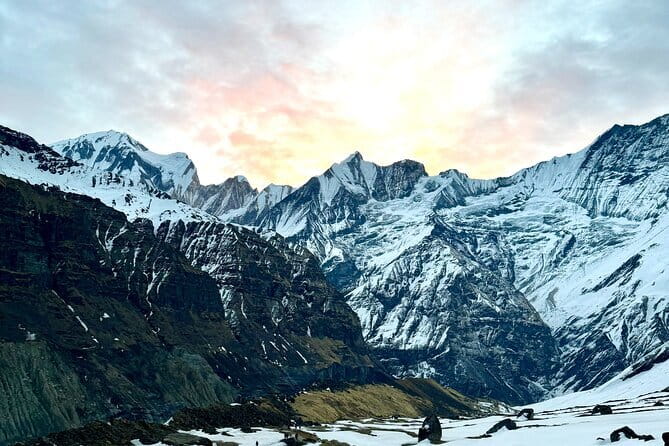
- Poon Hill sunrise: early lift to 3,210m for panoramic Himalayan views
- Real altitude payoff: Annapurna Base Camp at about 4,130m, surrounded by icy peaks
- Sacred Annapurna sanctuary setting: deep cultural context, not just scenery
- Hot springs at Jhinu Danda: an easy unwind after trekking downhill
- Flexible, human-guided experience: guides named Prakash, Keshab, Jiban, and Buddhi have been praised for care and adaptability
- Logistics that reduce stress: airport transfers, road transport, permits/fees, and first-aid medicines handled
Why Annapurna Base Camp feels more than a check-the-box trek
The Annapurna region is one of Nepal’s best examples of how quickly things change when you gain elevation. South-facing slopes bring dense forests of bamboo and rhododendron, while north-facing areas sit in a rain shadow. That means the walk doesn’t feel repetitive. One day you’re in forest shade. Another day you’re stepping into colder air with sharper views.
Then there’s the spiritual layer. This sanctuary is viewed as sacred by both Hindus and Buddhists, tied to the idea of a divine abode in the region. It also matters historically: foreigners didn’t gain access until 1956. So even if you’re trekking purely for scenery, you’re moving through a place with weight.
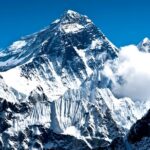
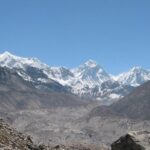
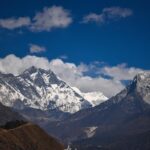
And yes, the peaks are the reason people keep returning. The trek runs with sightlines to Annapurna Himalayan ranges and other summits above 7,000m. On the high day, you’re not just seeing mountains in the distance—you’re reaching a spot where the surrounding walls of ice and rock make you understand the scale.
You can also read our reviews of more tours and experiences in Kathmandu.
Price and logistics: what $650 covers, and what you’ll still plan for
At $650 per person for about 13 days, this price is mostly about handling the big-ticket logistics. In the included items, you get airport pickup and drop-off, city hotels with breakfast, trekking lodges (twin sharing), an experienced trekking guide, long-range transport between Kathmandu and Pokhara, private vehicle support from and to trekking points, permits/entrance fees, and first-aid medicines carried by the guide.
That’s the value piece: trekking is expensive in the hidden ways—permits, timing, transport coordination, and pre-booked beds. This itinerary covers those moving parts so you can focus on walking and breathing.
What you should budget separately:
- Meals during the trek are not included. Expect to pay for lunch and dinner while hiking.
- Porters are available for an added fee if you want extra help.
- Tips to the trekking guide are not included.
One more practical note: the tour is set up as a private tour/activity, meaning it’s just your group. That usually makes coordination smoother, especially when you’re adjusting day-to-day pace.
Kathmandu to Pokhara: easing in before the first real climb
Day 1 is straightforward. You arrive at Tribhuvan Airport, and you get picked up and transferred to a hotel. Your guide then briefs you on the trek and helps you get your gear ready. I like this part because it turns the first day from chaotic travel into a calm setup.
Day 2 starts with a scenic drive from Kathmandu to Pokhara, following rivers along the route and including a lunch stop. Once you arrive, you check into your hotel and get downtime on Lakeside by Phewa Lake. Even if you keep it simple, this is the kind of evening that helps your body feel ready—rather than just “tired in a new city.”
For people who hate wasting time in transit, this is a good rhythm. You don’t spend all day stuck in a van without a payoff.
Nayapul to Tikhedhunga: starting the trek the right way
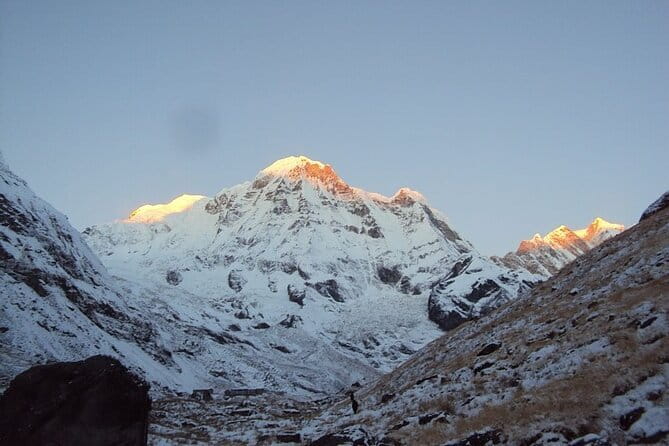
Day 3 is a classic entry day. You drive to Nayapul, the starting point, then hike to Birethanti at the confluence of the Modi and Bhurungdi Kholas. From there you climb above Sudame and rise gradually toward Tikhedhunga.
What you’ll feel here: it’s not the hardest day, but it sets the hiking pace. Tikhedhunga is also a good place to start learning how your body reacts to early altitude exposure without going straight into a steep grind.
Ulleri, rhododendron forests, and Ghorepani’s famous stretch
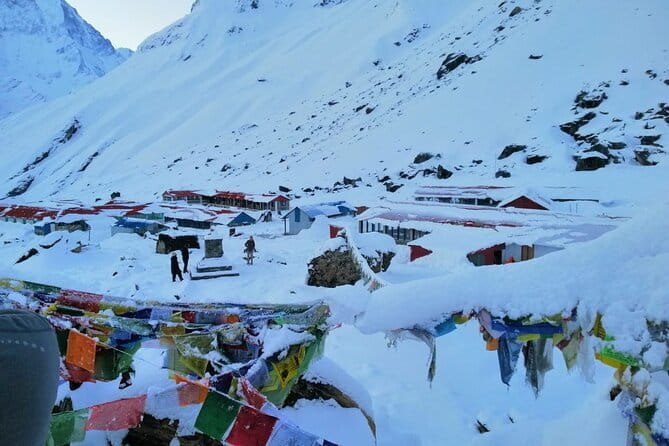
Day 4 pushes you with a steep climb via stone stairways to Ulleri, a Magar village at about 2,070m. After that comes the long, satisfying climb through forests of oak and rhododendron. You pass Banthanti (around 2,250m) and reach Nagethanti (about 2,460m) before arriving at Ghorepani.
Ghorepani is useful for a few reasons:
- It positions you well for the next morning’s early start.
- It keeps the route scenic without jumping altitude too aggressively.
This is also where your clothing matters. Forest mornings can be cool. Later, you’ll be warm from work.
Poon Hill sunrise and Tadapani: the morning payoff, then the ridge walk
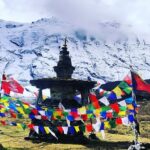
Day 5 is built around an early climb: hike up for about 45 minutes to reach Poon Hill at 3,210m. Then you get the sunrise. The view range here is a big deal—Dolpo to the far west, plus Dolpo regions, Mt. Dhaulagiri, Annapurnas, Machhapuchhre (fishtail), and Manaslu.
After that morning high, you don’t just stop. You hike along ridges through pine and rhododendron forest to Deurali, then descend down to Banthanti and turn toward Tadapani.
The nice part of this day is the split personality:
- First: a dramatic, easy-to-understand payoff.
- Second: a long walking day that keeps you moving through changing forest tones.
Through Sinuwa and Deurali: bamboo, bamboo, and more bamboo
Day 6 starts with a steep downhill through rhododendron forest to a Gurung community village area, then continues on a fairly easy path to Sinuwa at 2,300m. This kind of “down to go up later” day is often what makes ABC feel manageable, because you’re not constantly fighting steepness.
Day 7 builds momentum again. You drop down to Sinuwa Khola and climb toward Khuldighar (around 2,380m). From there, you walk through forest openings, then along rocky sections before the trail levels out and meanders through bamboo and rhododendron to Deurali hotel.
If you’re paying attention, this is where the Annapurna Base Camp story starts to feel real. As you gain altitude, the vegetation and air change—and your view starts sticking around even when you’re not actively looking for it.
Hinku Cave to Machhapuchhre Base Camp to Annapurna Base Camp
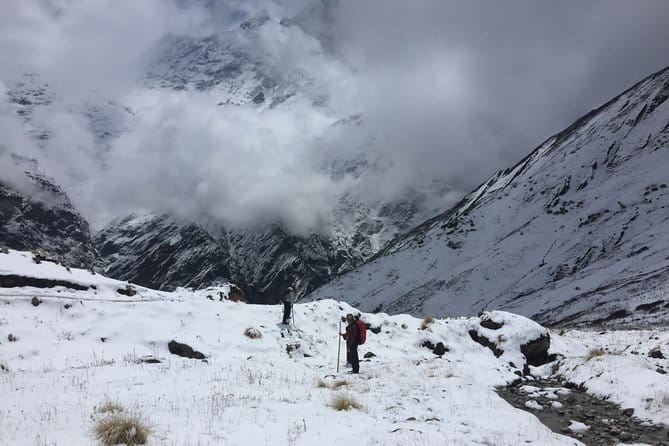
Day 8 is the big one. You climb through forest and cross Hinku Cave, pass Deurali, then head toward Machhapuchhre Base Camp. This stop is worth understanding: it’s called a base camp, but the trek does not include summiting Machhapuchhre because it’s not permitted.
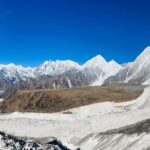
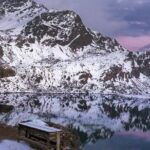
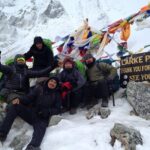
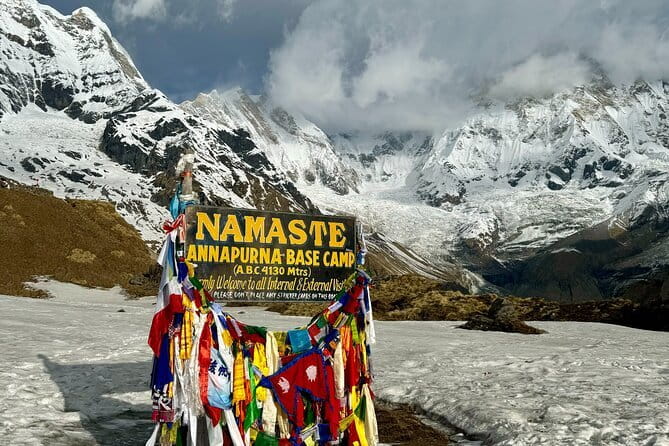
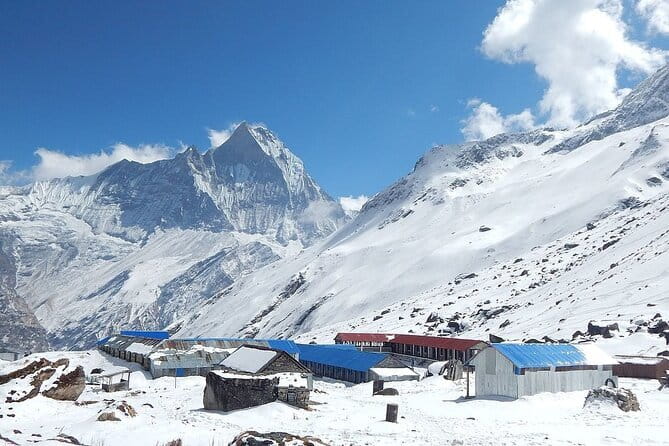
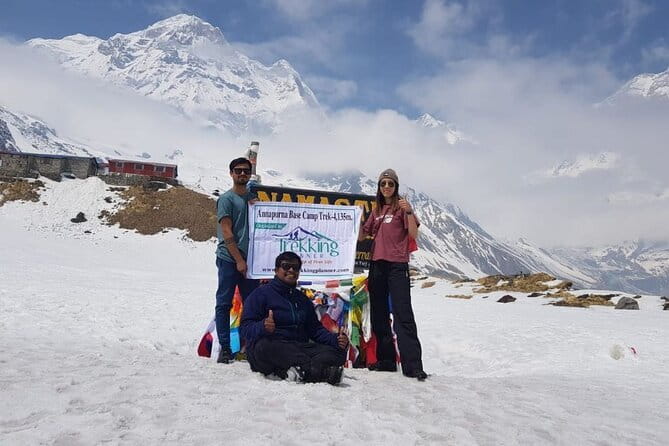
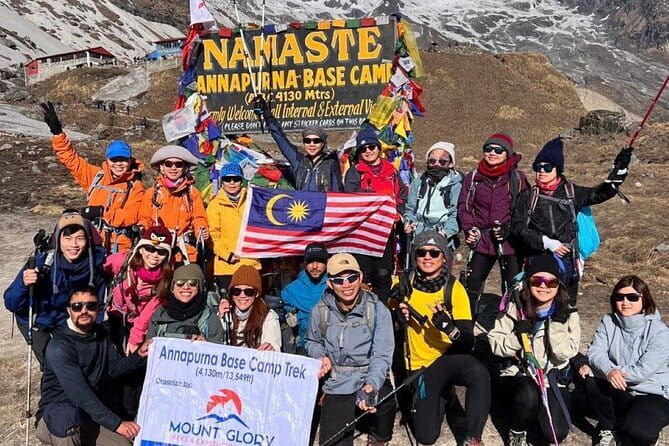
Then you push on. After about two more hours from Machhapuchhre Base Camp, you reach Annapurna Base Camp at around 4,130m. Here you get unobstructed views of the mountain scenery, with the whole area feeling like a natural amphitheater of icy peaks.
A practical read on this day:
- You’re at high altitude.
- The views will make you stop more often.
- Your pace will slow naturally.
This is where a good guide matters. You want pacing that respects altitude reality more than ego. The included first-aid support carried by the guide helps too.
The return you’ll feel in your knees: Bamboo, Chhomrong area, and Jhinu Danda
Day 9 turns into a retrace. From Annapurna Base Camp you go back toward Bamboo. It’s mostly downhill, so it tends to feel easier from an altitude standpoint—but your legs still work hard. Downhill hiking is where good footwear and steady rhythm pay off.
Day 10 is a mix of uphill and downhill. From Bamboo you head uphill to Kuldighar, then down to Chhomrong Khola, climb stone steps to Chhomrong, and continue down to Jhinu Danda.
And then you get the reward that’s almost too perfect for a trekking ending: hot springs. There’s a hot springs option just 15 to 20 minutes downhill from Jhinu Danda. Your body will thank you after days of stairs and stone paths.
Pokhara and Kathmandu: closing the loop with rest and a proper send-off
Day 11 walks up to Nayapul and then takes a bus ride to Pokhara. Lunch is provided along the way, and once you arrive, you get a night at a hotel with bed and breakfast. It’s a good reset day. You’re not staring at your next altitude gain—you’re letting your breathing come back to normal.
Day 12 returns to Kathmandu by tourist bus. Depending on what you prefer, you may also have flight options mentioned for the return, but the schedule here is bus. When you reach Kathmandu, you can rest or walk around Thamel. In the evening, there’s a farewell dinner at a typical Nepalese restaurant with a cultural dance performance.
This is the part I like most after a trek: you shift from thin-air effort to warm-food culture. It’s a clean transition.
Day 13 is departure day. You get dropped at Kathmandu International Airport for your flight home.
Who this Annapurna Base Camp trek suits best (and who should rethink)
This trek asks for moderate physical fitness. If you can handle several hours of walking daily and you know you’ll hike uphill and downhill without expecting flat ground, you’ll fit the plan.
It also works well for people who want their trekking experience organized without feeling controlled. The included guide support, pre-handled permits/fees, and the way the route strings together forests, villages, and viewpoint moments makes it feel like an actual journey—not a checklist of coordinates.
If you’re traveling with vegetarian needs, there’s a vegetarian option you can request at booking.
One caution: porters are available at an additional price. If you’re worried about carrying your own day pack comfortably, plan ahead. You’ll likely enjoy the trek more with less load than with bravado.
Finally, note that kids must be accompanied by an adult. And the start time is early—pickup and start around 6:30am—which matters if you’re not a morning person.
A quick note on guides and service quality
This operator’s standout from past trips is the human side: clear communication and responsiveness. In the feedback, guides like Prakash, Keshab, Jiban, and Buddhi are praised for being warm, attentive, and willing to adapt when weather or health changes happen.
You’ll also see consistent praise for porters named Amar, Ashok, and Azay, especially for proactive support during the days when legs feel heavy.
That doesn’t mean every day will run perfectly (mountains don’t do that). But it does mean you’re more likely to feel supported if your plan needs adjusting.
Should you book this Annapurna Base Camp trek?
You should book if you want:
- A classic ABC experience with Poon Hill sunrise and the Annapurna sanctuary payoff
- An itinerary that handles permits, transport, and accommodations so you don’t spend your time chasing logistics
- A guide-led trek with flexibility, where named guides have been praised for care and responsiveness
You might want to rethink if:
- You don’t want to budget for twelve-plus days of on-trail meals (meals during the trek aren’t included)
- You’re uncomfortable with high-altitude walking around 4,130m
- You’re counting on a porter but don’t want to pay extra (porters cost extra here)
If you’re realistic about food budgeting, pace, and altitude, this trek looks like strong value at $650—especially because so much of the “hard parts” of planning are handled for you, leaving you with the only job that matters: hiking the mountain.
FAQ
What’s the total duration of the Annapurna Base Camp trek?
It runs for about 13 days, starting with pickup from Tribhuvan Airport in Kathmandu and ending with a drop at Kathmandu International Airport.
Where do we start, and what time does it begin?
The meeting point is Tribhuvan Airport in Kathmandu, with a start time of 6:30am.
Do you include trekking meals during the hike?
Meals during the trek are not included. Dinner and a welcome dinner are listed as included, and breakfasts are included as listed, but you should plan to pay for most trail meals.
Are permits and entrance fees included?
Yes. All essential trekking permits and entrance fees are included, along with all fees and taxes.
Is there a vegetarian option?
Yes. A vegetarian option is available if you advise the organizer at booking.
Is a porter included?
Porters are not included in the base price, but they are available at an additional cost.