REVIEW · KATHMANDU
Annapurna Circuit Trekking: 15 days
Book on Viator →Operated by Himalayan Trekking Path (P). Ltd. · Bookable on Viator
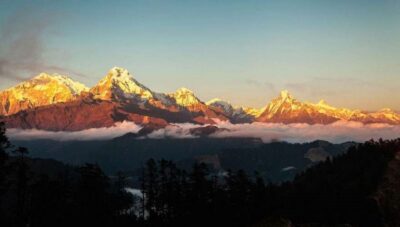
A trek around the Annapurnas is always a big deal. This one is interesting because you get a clear, steady ramp-up from Kathmandu temple days into real walking, with a professional guide leading the climb to Thorong La (5,416m). I also like that the plan is built like a circuit with practical rest and staging points, not just a straight grind. One consideration: altitude is the whole game here, so you’ll want to take the acclimatization pacing seriously and be ready for weather-based schedule changes.
What stands out from the operator’s track record is the level of care people report—support that focuses on safety and security, plus problem-solving if something doesn’t go as planned. The downside for some folks is cost creep: drinks in town and in tea houses, plus tips and personal expenses, aren’t included, so your real budget will be a bit higher than $1,300 once you’re there.
In This Review
- Quick takeaways before you go
- Kathmandu setup: temples, orientation, and that early start
- Driving to Khudi (800m): the first big shift from city to trail
- From Sirung (2200m) to Jagat (1300m): learning the circuit rhythm fast
- Chame (2710m) and Pisang (3300m): village hiking with real altitude creep
- Manang rest day: where your altitude plan pays off
- Yak Kharka (4110m) and Thorong Phedi (4600m): your high-pass prep week
- Thorong La (5,416m) to Muktinath: the summit moment and the long landing
- Tatopani (1200m) and Pokhara: finish strong, not broken
- Price and value: what $1,300 covers (and what it doesn’t)
- What the itinerary implies for your daily comfort
- Who this trek suits best (and who should be cautious)
- Should you book this Annapurna Circuit trek?
- FAQ
- FAQ
- How long is the Annapurna Circuit Trek on this itinerary?
- What’s the highest point you’ll reach?
- What’s included in the $1,300 price?
- Are meals included during the trek?
- Do you provide pickup and transportation?
- Where do you stay in Kathmandu and Pokhara?
- Is this a private tour or shared group?
- Is free cancellation available?
- What time does the trek start each day?
Quick takeaways before you go
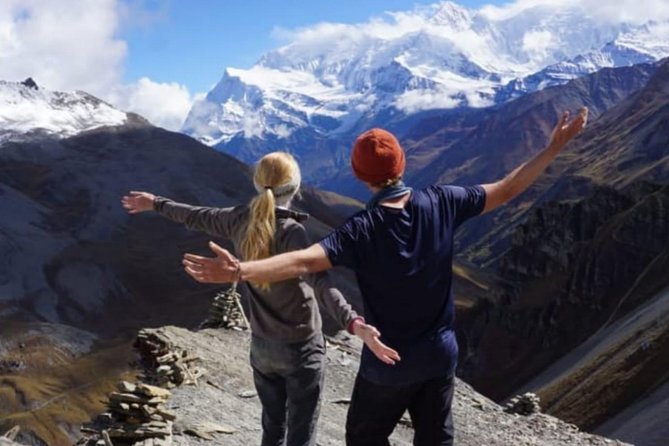
- Thorong La altitude target (5,416m): you’re setting your trip around a real high-pass moment, with staged nights like Yak Kharka and Thorong Phedi.
- Private support, not a shuffle: you travel as a private group with private transportation and a professional guide.
- Meals and logistics handled: breakfast/lunch/dinner are included on trekking days, plus hotels in Kathmandu and Pokhara.
- Kathmandu orientation day: temple-hopping with a guide helps you understand the culture before you start walking.
- Care when plans change: past trip accounts describe alternative arrangements when someone couldn’t complete the full circuit.
- Value with clear exclusions: the price includes fees and taxes, but you still need to budget for drinks, visa, insurance, and personal items.
Kathmandu setup: temples, orientation, and that early start
Most Annapurna treks feel like two trips fused together: first Kathmandu, then the mountains. Here you start with a full arrival-and-transfer day (private car to your hotel), and then a proper orientation day with a guide for about 7 hours of sightseeing: Pashupatinath, Boudhanath, Swayambhunath, and Kathmandu Durbar Square.
I like this mix because it gives your brain something to hold onto besides altitude. You’ll spend the day seeing how religion and daily life show up in public spaces—then you’ll wake up the next morning knowing Nepal isn’t just a backdrop. It also helps with jet lag pacing. You’re not sprinting into hiking from minute one.
Timing matters too. The trek start is set for 6:15am, which means the earlier day planning is more than sightseeing filler—it’s your chance to get organized, sleep decently, and avoid sloppy mistakes like forgetting a layer or not charging devices.
You can also read our reviews of more tours and experiences in Kathmandu.
Driving to Khudi (800m): the first big shift from city to trail
Day 3 is a long drive: to Khudi (800m), listed as 8 hours. That long sit matters because it’s your body’s first lesson in Nepal’s distances and road realities. It’s also a reset: you’re switching from Kathmandu’s pace into the circuit world where everything slows down to trail time.
Why this is valuable: the first trekking day doesn’t start at high altitude. After you’re dropped at a lower point, you’re able to begin moving while your breathing hasn’t been tested yet. That makes the early climb easier to manage mentally, especially if you’re still figuring out how much effort your body needs for a steep ascent.
A small drawback: that first big drive can feel like you’re “paying” for the trekking later. If you’re the type who hates long travel days, pack snacks you trust, keep your water plan simple, and treat this as part of the trek, not travel punishment.
From Sirung (2200m) to Jagat (1300m): learning the circuit rhythm fast
Days 4 and 5 are where the Annapurna Circuit teaches its rhythm. Day 4 treks to Sirung (2200m) (about 7 hours). Then Day 5 drops to Jagat (1300m) (around 6–7 hours).
This up-then-down pattern is common on circuit trekking, and it’s not random. It’s how your body gets used to moving up while still maintaining overall altitude sanity. Instead of stacking every day upward, the route gives your lungs partial recovery. Mentally, it also makes the trek feel more like a series of climbs you can complete, not one endless wall.
The practical win for you: you’ll get a chance to settle into trekking habits—footwear comfort, snack timing, water intake—before you commit to higher staging points later.
Chame (2710m) and Pisang (3300m): village hiking with real altitude creep
Day 6 moves to Dharapani (1960m), and then Day 7 climbs to Chame (2710m). Day 8 pushes to Pisang (3300m), listed around 5–6 hours.
Here’s what you should expect at this elevation range: you’ll feel altitude in your effort even if the days don’t look extreme on paper. This is the zone where breathing changes. You’ll likely notice it most during longer uphill sections, where pacing becomes more important than speed.
Why I like this segment for value: your trekking hours are structured and predictable. You get multiple “working days” with stops at established villages, which helps keep logistics straightforward—sleep locations and meal options are already built into the route’s tradition.
A possible drawback: if you rush these days, you can carry fatigue into Manang. The best trips here are the ones that treat every climb as a practice run for the big week ahead.
Manang rest day: where your altitude plan pays off
Day 9 reaches Manang (3519m) (about 6–7 hours). Then Day 10 is a rest day.
This is the part of the itinerary I’d protect the most. A rest day at altitude isn’t just a break—it’s a strategy. Your body needs time to adjust, and your planning needs time to settle. Depending on conditions, a rest day can mean gentle walking, checking gear, and planning mentally for what comes after.
From past trip accounts connected to this operator, guides like Ramhari Neupane are known for thoughtful, step-by-step support. People describe guidance that focuses on safety and comfort, and that kind of coaching matters most when you’re deciding how hard to push.
If you hate rest days, I get it. But don’t skip what the plan gives you here. If you do, you might pay for it later on steep sections and cold morning starts.
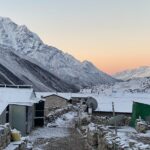
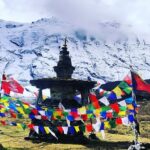
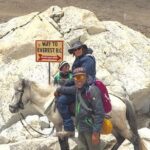
Yak Kharka (4110m) and Thorong Phedi (4600m): your high-pass prep week
Day 11 goes to Yak Kharka (4110m) (about 4 hours). Day 12 climbs to Thorong Phedi (4600m) (around 4 hours).
These are short days on paper, but don’t let that trick you. The shorter hiking windows at higher altitude are intentional. You’re setting up for a high-pass crossing while trying to keep fatigue low enough that you can handle the next morning safely.
Practical expectation: your body will feel colder and drier, even if the sun is out. You’ll likely move slower. That’s normal. The win is that the schedule is built to let you arrive at the staging points (Yak Kharka and Thorong Phedi) rather than sprinting there on a longer, more tiring day.
This is also where your guide’s role becomes obvious. In accounts connected to the team, guides such as Dendi and Shiva are described as prepared and supportive—exactly what you want when the altitude starts messing with your judgement.
Thorong La (5,416m) to Muktinath: the summit moment and the long landing
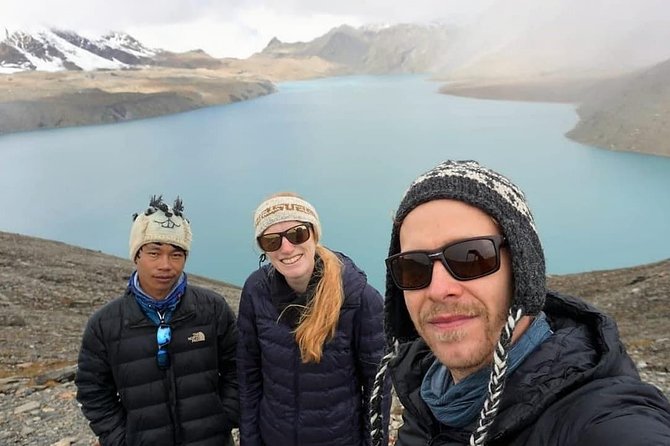
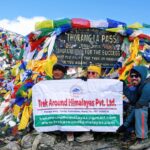
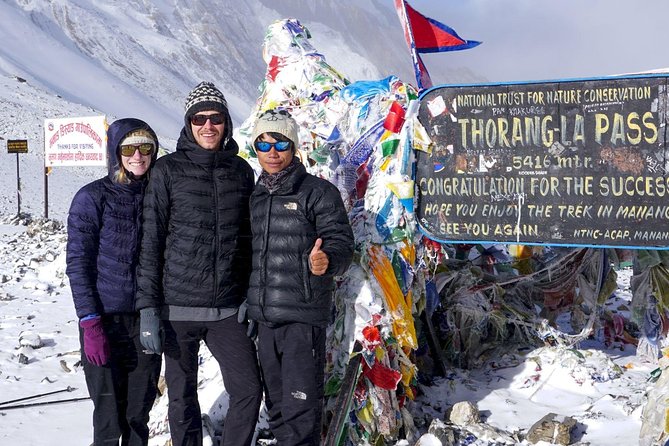
Day 13 is the headline: trek to Muktinath via Thorong La Pass (5,416m) (about 6–7 hours). This is the pass your trip is built around, and it’s the “big photo” point of the Annapurna Circuit for a reason: it forces you to earn the day.
What you should expect: a slow, steady climb where breathing and footwork matter more than rhythm. Then you’ll transition into descent toward Muktinath, which is the kind of spiritual stop many people remember long after the trekking legs quit.
Why this day is valuable for your money: it’s the core achievement of the entire circuit plan. The itinerary doesn’t bury the high point—it prepares you for it with staging days and a rest day in Manang, then puts it at the midpoint of your mountain story.
One consideration: weather and conditions can change what you can do on the pass day. The operator’s support shows up in real-life flexibility. In at least one described case, when someone couldn’t complete the full circuit, the team organized an alternative itinerary.
Tatopani (1200m) and Pokhara: finish strong, not broken
Day 14 drives to Tatopani (1200m). Day 15 goes from Tatopani to Pokhara.
That drop—from high altitude to a much lower elevation—is part of why circuit trekking is so satisfying. You’ll still feel trek legs, but the route gives your body a chance to come down into functioning mode.
Tatopani’s name comes with the expectation of hot springs, but the itinerary data here only tells you the location and altitude. Still, even without inventing details, you can assume this is a recovery-focused day. Your job is simple: hydrate, eat well, and let your body restart.
Then Pokhara is where you unwind after the mountains. You’ll have two nights at Crystal Palace Hotel. It’s a smart pairing: Kathmandu is temples and planning, Pokhara is decompression and views.
Price and value: what $1,300 covers (and what it doesn’t)
At $1,300 per person for about 15 days, the price looks fair when you break it down into what’s included. This cost includes:
- Breakfast, lunch, and dinner on the trek (3 meals)
- Private transportation
- All fees and taxes
- A professional guide
- 2 nights in Kathmandu (Hotel Dream City)
- 2 nights in Pokhara (Crystal Palace Hotel)
That’s real value if you don’t want to manage every detail while you’re tired and altitude-challenged. You’re also not stuck in a long list of add-ons for the core service.
Where people need to budget extra: drinks (water/tea/coffee/beer/soft drinks), the Nepal visa fee, airfares, travel insurance, and tips, plus personal expenses like extra charging, batteries, shower/hot water, and laundry. The trek itself also depends on your clothing and gear choices, which are not part of the package cost.
If you want the clearest decision rule: if you’re the kind of traveler who wants logistics handled and meals simplified, $1,300 can be a good deal. If you like DIY travel and already have trekking support and insurance lined up, you might compare against lower-cost options—but you’d be giving up some structure.
What the itinerary implies for your daily comfort
A trek with hours like 4–8 hours per day means you’ll likely be busy every day, but not constantly. The route includes:
- a Kathmandu culture day before you start walking
- multiple trekking days at rising altitudes
- a clear rest day in Manang
- staged high-pass prep days
- a final descent and drive into Pokhara
This matters because comfort is often about pacing, not just scenery. The itinerary design suggests they care about breathing management and fatigue control, especially by giving you Manang rest and keeping the final pass approach to shorter segments.
Also note the “private tour/activity” setup: only your group participates. That usually makes mornings smoother and keeps the guide’s attention focused on fewer people.
Who this trek suits best (and who should be cautious)
This plan is best for you if you have moderate physical fitness and you want a guided circuit with a schedule that balances achievement with acclimatization. You’ll likely enjoy it if you like mountain villages, culture stops, and you want the pass experience without doing all the trip planning yourself.
I’d be cautious if:
- you’re very altitude-sensitive and don’t feel comfortable with a 5,416m target
- you expect the trek to be easy-going every day
- you don’t want to pay extra for drinks, insurance, visa, and tips once you’re in Nepal
The key mindset: you’re not just hiking distance. You’re managing your body at altitude while learning a route that includes a major high-pass day.
Should you book this Annapurna Circuit trek?
If you want a straightforward, guided Annapurna Circuit with meals, hotels, and private transport handled, this one deserves a serious look. The trip’s value is strongest in how the itinerary supports you: Kathmandu first, gradual altitude build, a real rest day at Manang, then staging for Thorong La.
Book it if you’re ready for the altitude and you appreciate safety-focused guidance from a team that (in past cases) responds well when plans shift. Think twice if you’re trying to keep costs ultra-low or if a high-pass day at 5,416m feels like too much pressure.
FAQ
FAQ
How long is the Annapurna Circuit Trek on this itinerary?
It’s listed as about 15 days.
What’s the highest point you’ll reach?
The highest point mentioned is Thorong La Pass at 5,416m.
What’s included in the $1,300 price?
The price includes 3 meals a day (breakfast, lunch, dinner) on the trek days, private transportation, all fees and taxes, a professional guide, and hotel stays: 2 nights in Kathmandu (Hotel Dream City) and 2 nights in Pokhara (Crystal Palace Hotel).
Are meals included during the trek?
Yes. Breakfast, lunch, and dinner are included.
Do you provide pickup and transportation?
Yes. The plan includes private transportation, with transfer to your hotel in Kathmandu by private car, plus driving between trekking areas and onward to Pokhara.
Where do you stay in Kathmandu and Pokhara?
In Kathmandu you stay for 2 nights at Hotel Dream City, and in Pokhara for 2 nights at Crystal Palace Hotel.
Is this a private tour or shared group?
It’s a private tour/activity, so only your group participates.
Is free cancellation available?
Yes. Free cancellation is available if you cancel at least 24 hours before the experience’s start time for a full refund.
What time does the trek start each day?
The meeting start time listed is 6:15 am.