REVIEW · KATHMANDU
Everest Base Camp Trek With Local Expert Sherpa Guide
Book on Viator →Operated by Mountain Sherpa Trekking & Expeditions · Bookable on Viator
Everest reaches your mind, not just your legs. This Everest Base Camp trek feels like a real mix of Sherpa village life and altitude acclimatisation in Namche Bazaar and Dingboche, with support that keeps the logistics under control. I like that you’re not just buying a route; you’re getting an expert local Sherpa guide and a porter setup (1 porter for 2 people) that helps you keep moving with less strain. The main drawback is that the trek comes with typical extra costs on top of the package, like water, alcohol, desserts, and Kathmandu meals.
You start in Kathmandu with a plan that’s clear from the first evening: pickup is offered, you get a mobile ticket, and the meeting point is Tribhuvan Airport at 7:45 pm. Then you settle into best 3-star hotel accommodation with breakfast and a half-day sightseeing stop before the mountains take over.
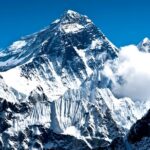
The altitude is the real headline. You’ll go all the way to Everest Base Camp at about 5,550 meters, and then push for the Kala Patthar viewpoint around 5,645 meters. Even though the trek is described as not very difficult, you still need a strong fitness base, because thin air doesn’t care how experienced you feel.
In This Review
- Key things that make this Everest Base Camp trek work
- What you’re really buying: a Sherpa-led Everest Base Camp experience
- Kathmandu pre-trek days: hotel comfort and a quick culture reset
- The Lukla flight: included, timed, and sensitive to weather
- The hiking core: 12 days on trail from Lukla, with Namche and Dingboche built in
- Namche Bazaar: excursion plus acclimatisation
- Dingboche: another acclimatisation checkpoint
- Everest Base Camp and Kala Patthar: what you’re going for at 5,550–5,645m
- Lodges, porters, and pace: how comfort shows up (without changing the mission)
- Price and value: what $2,170 really includes (and what you’ll still pay)
- Practical fitness and planning notes before you go
- Should you book this Everest Base Camp trek?
- FAQ
- How long is this Everest Base Camp trek?
- How many days will I hike on the trekking trails?
- Where does the trek start?
- What is the altitude of Everest Base Camp and Kala Patthar in this itinerary?
- Are flights between Kathmandu and Lukla included?
- What permits and cards are included?
- What kind of guide and porters are provided?
- What’s included in Kathmandu before the trek?
- What isn’t included in the price?
Key things that make this Everest Base Camp trek work
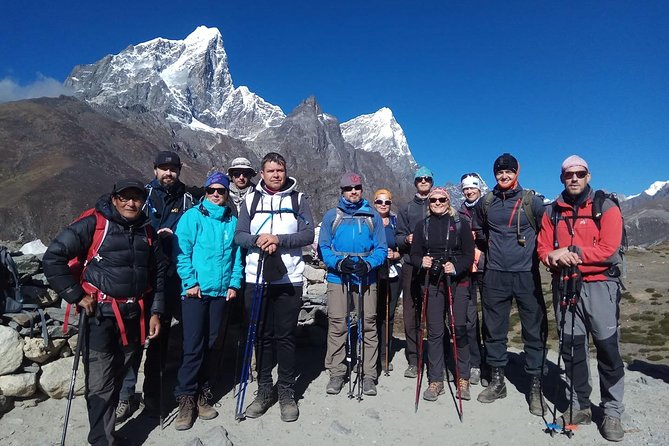
- Local Sherpa leadership you can recognize: names that show up in the program’s history include Pasang Sherpa, PD, Pema Sherpa, Tanshi, Rinji Sherpa, Mingmar Sherpa, and Ming-Ma Aprehs.
- Acclimatisation built into the calendar with excursion and adjustment days in Namche Bazaar and Dingboche.
- Real high-altitude payoff: Everest Base Camp plus the big view from Kala Patthar near 5,645m.
- Lodge-to-lodge convenience: quality lodge accommodation on the trekking days (twin sharing).
- Flights that reduce hassle: internal Kathmandu–Lukla–Kathmandu airfare is included, with weather disruption handled in the way mountaineering always gets handled in Nepal.
- You travel with gear and paperwork handled: a duffel bag, trek map, TIMS card, and the Everest trekking permit fee are part of the package.
What you’re really buying: a Sherpa-led Everest Base Camp experience
Everest Base Camp is famous for a reason, but the part that sticks with most people isn’t only the peak. It’s the steady rhythm of high-altitude hiking that slowly changes how you breathe, how you think, and how you read the villages along the way.
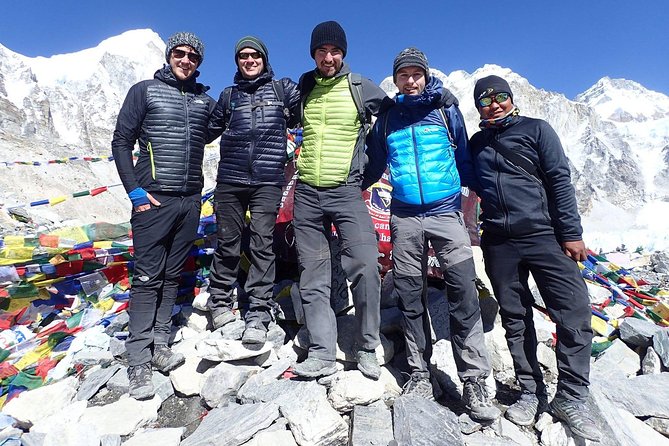
This trek leans hard into that Sherpa connection. The route is designed around well-known Sherpa towns—especially Namche Bazaar and Dingboche—not just as waypoints, but as places where acclimatisation makes sense and local culture is part of the day. You get an expert local Sherpa guide, and the support team is reinforced with strong, honest porters (again, 1 porter for 2 people). That matters because it helps you spend your energy on the trail instead of carrying everything yourself uphill at altitude.
The spiritual angle is part of the pitch, but here’s the practical version: when you hike with local Sherpa guidance, you’re less likely to wander into avoidable problems—like moving too fast for your body or misunderstanding the pace you need between altitude jumps.
You can also read our reviews of more tours and experiences in Kathmandu.
Kathmandu pre-trek days: hotel comfort and a quick culture reset
Before the mountains, you get a Kathmandu setup that feels like a buffer—not a wasted delay.
On the first day, you’re based in a best 3-star hotel with breakfast. You also get welcome dinner, which is useful on a trek like this because it gets everyone on the same page before the first flight and the first long day of walking. Then, on the second day, there’s half-day sightseeing in Kathmandu with a tour guide.
That half-day piece is smart in a low-pressure way. You’re not trying to cram Nepal into one afternoon. You’re just getting your bearings, meeting your guide and team, and stacking a little context before you fly to Lukla and start moving through Sherpa country.
One detail that’s easy to overlook: phone, internet, and battery charges on the trek are not included, so plan to conserve your device use once you’re up on the trail. Kathmandu logistics can be smooth; mountain logistics are slower by design.
The Lukla flight: included, timed, and sensitive to weather
The trek includes internal flights Kathmandu–Lukla–Kathmandu with taxes. For many people, that’s a major value driver because it removes a huge chunk of travel friction. Getting to Lukla by flight is also what turns this into a true 17-day experience rather than a trip that eats days on ground transport.
Start time matters too. You meet at Tribhuvan Airport at 7:45 pm, which puts you in the flow of Nepal’s flight schedule rather than guessing how to fit everything together yourself.
Weather is the one wild card. Nepal mountain air can be unpredictable, and fixed-wing operations sometimes get disrupted. In the program’s history, there are cases where a group used a helicopter to Lukla when fixed-wing flights were cancelled. You should treat that as a reminder, not a promise: your trek is supported, but nature still gets the final vote.
The hiking core: 12 days on trail from Lukla, with Namche and Dingboche built in
Your trek includes about 12 days hiking on trekking trails. It begins with the Lukla airport start, and the itinerary is shaped around the big altitude story of Everest Base Camp: you don’t just go up. You go up in steps, and you give your body time to adjust.
Namche Bazaar: excursion plus acclimatisation
You’re scheduled for an excursion and acclimatisation day in Namche Bazaar, one of the most important hubs on the route. Here’s why this day isn’t just a rest day in disguise:
- It helps your body handle climbing better by giving you time at mid-altitude.
- It lets you practice the key rhythm you’ll repeat later: short effort, controlled breathing, and good hydration habits.
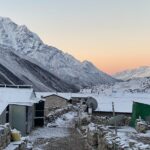
- It also gives you a cultural anchor. Namche is one of those places where you can see how Sherpa communities support the flow of trekkers and climbers.
If you’re the type who hates standing around, this can still work. The excursion format is built to keep you moving while staying smart about altitude.
Dingboche: another acclimatisation checkpoint
You also get an excursion/acclimatisation day in Dingboche. Dingboche sits at higher elevation than Namche, so it’s a critical step in preparing for the stretch that leads you toward Base Camp.
The value here is less about the town itself and more about timing. This is where you reduce the risk of pushing too hard too soon. On a trek that reaches 5,550m at Base Camp and climbs again toward Kala Patthar at 5,645m, your calendar matters as much as your fitness.
Everest Base Camp and Kala Patthar: what you’re going for at 5,550–5,645m
The headline goals are simple and serious:
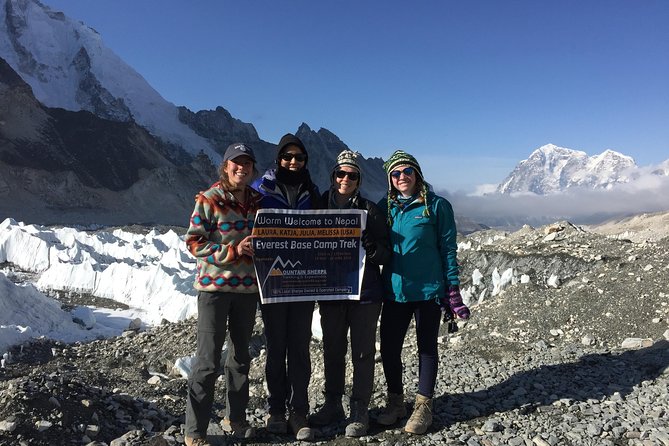
- Walk to Everest Base Camp at about 5,550 meters
- Hike to Kala Patthar for standout views around 5,645 meters
At these elevations, “views” aren’t a marketing word. They’re a reward you earn by respecting your pace. You’ll feel it in your legs and your lungs long before you feel it in your camera roll.
What tends to surprise people is how much Base Camp feels like an in-between place. It’s not just a destination. It’s a waypoint where you can look out and understand the scale of the mountain program, the logistics of climbing, and the Sherpa system that makes expeditions possible.
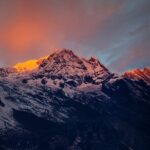
Kala Patthar is the visual payoff. You go there for that hard-earned vantage where the mountain looks close enough to touch. The push is physical, but the payoff is mental—one reason this trek is often described as more than a hike.
Lodges, porters, and pace: how comfort shows up (without changing the mission)
This tour includes quality lodge accommodation during the whole trek with twin sharing. That’s a big difference from trekking styles that turn into a constant accommodation shuffle.
Also included is a duffel bag and a trek map, plus a company T-shirt. These are small things, but they reduce the number of decisions you make while you’re tired and adjusting to altitude.
The porter setup is one of the most practical parts of the whole experience. With 1 porter for 2 people, you’re not carrying everything yourself. That matters on steep, rocky stretches and during the long days when you can feel every extra weight in your body.
The trekking pace is typically easier to manage with:
- an expert local Sherpa guide
- people moving as a group
- support that keeps you from drifting into an overly aggressive rhythm
No matter how well it’s organized, you still need to listen to your body. The tour materials stress strong physical fitness, and that’s not just a legal phrase. It’s the difference between enjoying the high-altitude climb and feeling miserable through it.
Price and value: what $2,170 really includes (and what you’ll still pay)
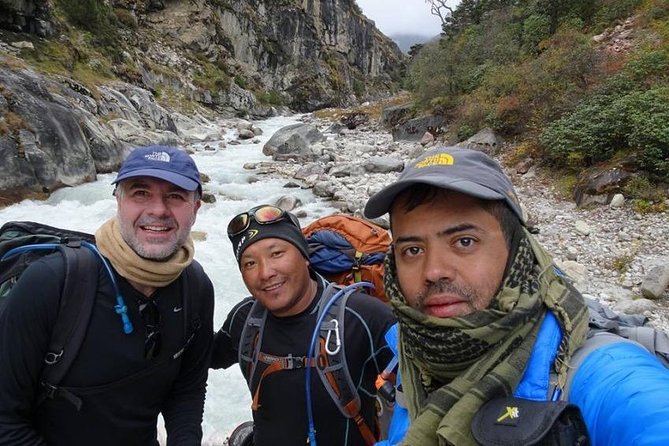
At $2,170 per person, this is not a budget trek. But it also isn’t priced like you’re paying only for views. You’re paying for the structure that makes the Everest Base Camp plan work: flights, permits, guide time, and on-the-ground labor.
Here’s what’s included in the core price:
- Best 3-star hotel accommodation in Kathmandu with breakfast
- Welcome dinner and healthy breakfast in Kathmandu
- Half-day sightseeing in Kathmandu
- Quality lodge accommodation during the trek (twin sharing)
- Kathmandu–Lukla–Kathmandu internal flights with taxes
- Expert local Sherpa guide certified by Nepal Government
- Porters (1 porter for 2 people)
- TIMS card and Everest trekking permit fee
- Group gear: duffel bag, trek map, company t-shirt, and a group medical kit
- Pay for guides and porters, plus their meals and insurance
What’s not included matters because it affects your real daily spend:
- International airfare and Nepal visa
- Travel and health insurance (strongly recommended)
- Emergency helicopter rescue insurance
- Lunch and dinner in Kathmandu (listed as $5–10 per meal)
- Water and desserts on trek, plus alcoholic drinks
- Gratuities for guide and porter
- Phone, internet, and battery charges bills on the trek
So is it good value? For a lot of people, yes—because the price bundles the stuff that’s time-consuming to arrange: flights, permits, and a guide/porter team that keeps you moving safely. It’s less good value if you’re the kind of traveler who already has a full plan, prefers independent treks, and doesn’t want to budget for the inevitable extras of high altitude travel.
Practical fitness and planning notes before you go
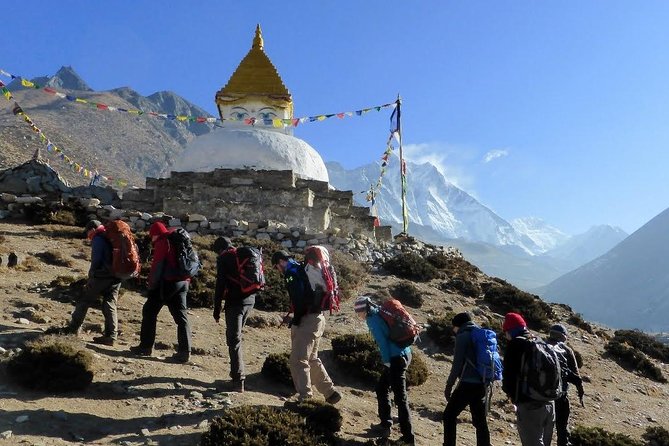
This trek is described as not very difficult, but it’s also very high. So I’d treat it like this:
- If you can handle long uphill days at sea-level, you’ll be more comfortable adjusting in Nepal.
- If you’re starting from a low fitness base, you’ll still be able to finish, but the experience won’t feel easy—your body will do most of the complaining.
- Altitude will be the main challenge, not technical hiking.
Also, don’t ignore the materials about strong physical fitness. That isn’t just marketing. It directly affects how you’ll handle the move toward Base Camp (5,550m) and especially the Kala Patthar viewpoint (5,645m).
For gear, you’re getting a trek map and a duffel bag, but you’ll still need your personal essentials—warm layers, trekking shoes, and a plan for staying hydrated. The listing specifically calls out that water isn’t included on trek, so treat hydration costs as part of your budget.
Should you book this Everest Base Camp trek?
Book it if you want Everest Base Camp with less logistics stress and more Sherpa-led guidance. The combination of internal flights, permits (TIMS + Everest trekking permit fee), a certified Sherpa guide, and quality lodge stays is the sort of package that helps you focus on altitude and pacing instead of paperwork and arrangements.
Skip it—or consider a different style—if you dislike group travel, want full independence, or you’re counting pennies and can’t absorb extra costs like water, Kathmandu meals, desserts, and gratuities. This is also not the right match if you’re not comfortable committing to solid fitness for high-altitude walking.
FAQ
How long is this Everest Base Camp trek?
The duration is listed as about 17 days.
How many days will I hike on the trekking trails?
The overview states you hike for 12 days on the trekking trails, beginning from Lukla.
Where does the trek start?
The trek starts from Lukla Airport.
What is the altitude of Everest Base Camp and Kala Patthar in this itinerary?
Everest Base Camp is described at about 5,550 meters, and Kala Patthar is listed around 5,645 meters.
Are flights between Kathmandu and Lukla included?
Yes. Internal flights Kathmandu–Lukla–Kathmandu with taxes are included.
What permits and cards are included?
The tour includes a TIMS card and the Everest trekking permit fee.
What kind of guide and porters are provided?
You get an expert local Sherpa guide certified by Nepal Government, plus strong porters. The porter ratio is 1 porter for 2 people.
What’s included in Kathmandu before the trek?
You get best 3-star hotel accommodation with breakfast, half-day sightseeing with a tour guide, and a welcome dinner.
What isn’t included in the price?
International airfare, Nepal visa fee, travel and health insurance (and emergency helicopter rescue insurance), lunch and dinner in Kathmandu ($5–10 per meal), water and alcoholic drinks and desserts in the trek, gratuities for guide and porter, and phone/internet/battery charges on the trek.