REVIEW · KATHMANDU
Annapurna Circuit Trek
Book on Viator →Operated by White Hill Adventure Treks & Expedition Pvt. Ltd. · Bookable on Viator
Altitude dreams start early in Nepal. I love how this trek is set up for gradual climbing through changing terrain, and I also like that an excellent guide handles the day-to-day logistics that can otherwise feel overwhelming (food planning, equipment support, and permits). One thing to consider: you’ll be walking 4–7 hours most days at higher elevations, and you’ll pay extra for many comforts like hot drinks, mineral water, Wi‑Fi, and hot showers.
You’ll start with a 6:15 am meeting time and get hotel pickup/drop by taxi, then bus transport for the longer transfers. Since it’s a private activity for your group, the pacing and questions usually feel easier to manage.
In This Review
- Key things I’d focus on before you go
- Price and Logistics: What Your $1,290 Buys
- The Trek in Real Order: 15 Days from Warm Lowlands to the Pass
- Day 1: Bulbule (840 m) to Nagdi (930 m)
- Day 2: Nagdi to Jagat (1,300 m)
- Day 3: Jagat to Dharapani (1,860 m)
- Day 4: Dharapani to Chame (2,670 m)
- Day 5: Chame to Pisang (3,230 m)
- Day 6: Pisang to Manang Village (3,450 m)
- Day 7: Rest day in Manang village
- Day 8: Manang Village to Yak Kharka (4,110 m)
- Day 9: Yak Kharka to Thorong High Camp (4,600 m)
- Day 10: Cross Thorong-La (5,416 m) to Muktinath (3,800 m)
- Day 11: Muktinath to Marpha via Jomsom (2,715 m)
- Day 12: Marpha to Lete (2,480 m)
- Day 13: Lete to Tatopani (1,190 m) via natural hot springs
- Day 14: Tatopani to Ghorepani (2,880 m)
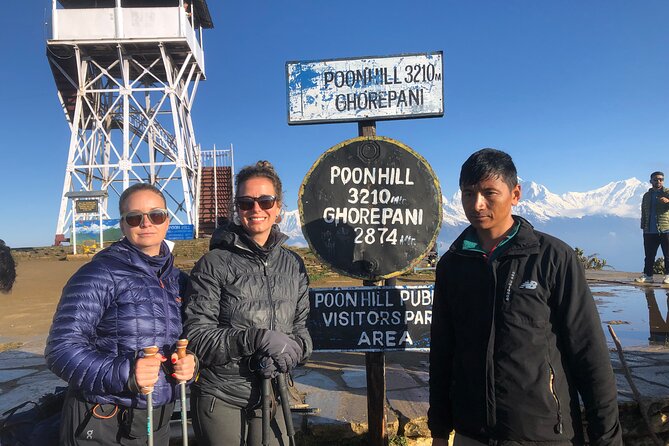
- Day 15: Ghorepani to Poon Hill (3,210 m), then to Nayapul and Pokhara
- Tea Houses, Meals, and Why That’s Not a Small Detail
- The Real Value of the Guide (Including Porter Thinking)
- Permits, Insurance, and the Non-Negotiables
- Pace, Fitness, and Altitude: How to Make the Pass Day Less Scary
- What You’ll Still Need to Pay For
- Who This Trek Fits Best
- Should You Book This Annapurna Circuit Trek?
- FAQ
- FAQ
- How long is the Annapurna Circuit Trek?
- What time do we start?
- Is transport and hotel pickup included?
- Are meals included during the trek?
- Do I need to bring my own trekking equipment?
- Is a porter included, and is travel insurance included?
Key things I’d focus on before you go
- Tea-house stays with included meals so you can spend your energy on walking
- A rest day in Manang village that helps you handle the altitude jump ahead
- Thorong-La crossing (5,416 m) followed by a descent to Muktinath
- Natural hot springs at Tatopani after tougher mountain days
- Poon Hill ending with a final trek back toward Nayapul and Pokhara
Price and Logistics: What Your $1,290 Buys
At $1,290 per person, the value here is mostly about what’s covered versus what you’ll handle yourself.
Included in the price:
- All needed transport by bus, plus hotel pickup/drop by taxi
- All food (breakfast, lunch, dinner) during the trek
- Mountain accommodation in tea houses
- An excellent guide (their food, salary, insurance, and equipment are included)
- All trekking permits needed for the route
Not included (and worth budgeting for):
- Tea/coffee/beer/cola, mineral water, hot water, Wi‑Fi, battery charges, hot shower, and similar extras
- Your trekking equipment
- Travel insurance
- Porter
Why this matters: trekking costs can balloon when drinks, charging, and extra showers are added day after day. Here, the big stuff—meals, lodging, permits, guide, and most transport—is already covered. You’re left with the small-but-steady costs that you control (water and charging), plus the major personal expenses you manage (insurance and gear).
This is also a private tour/activity. That’s useful when you want a plan that fits your group rather than a packed, mixed crowd schedule. You’ll receive a mobile ticket, and confirmation comes at booking.
You can also read our reviews of more tours and experiences in Kathmandu.



The Trek in Real Order: 15 Days from Warm Lowlands to the Pass
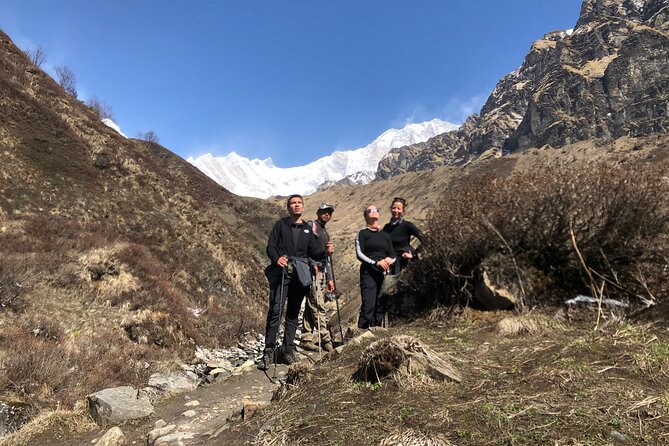
This route is famous for variety. You don’t just hike through one kind of scenery. You move from low, warmer valley patterns into cooler alpine zones, and you feel the elevation changes day by day.
Here’s what to expect, day by day, with what each section is really doing for you.
Day 1: Bulbule (840 m) to Nagdi (930 m)
You start with a drive to Bulbule, then a short hike to Nagdi. This day is light on the legs by design—about 1 hour of hiking after the drive—so you can get oriented before the longer climbing starts.
What I like about this start: you ease into the trekking rhythm instead of jumping straight into altitude hard work. The drawback is also obvious: it’s a travel-heavy day, so plan for that early start and reduced flexibility once you’re on the road.
Day 2: Nagdi to Jagat (1,300 m)
This is your first proper “get used to hiking” day, with about 4–5 hours trekking. You’ll feel the air cool more as elevation rises.
This stop matters because Jagat is where the trek begins to shift into a more classic mountain-trail feel. Don’t underestimate how quickly “only a bit higher” can affect your breathing once you’re not acclimated.
Day 3: Jagat to Dharapani (1,860 m)
Another 4–5 hour day, reaching Dharapani. Expect steady uphill work rather than dramatic sprinting.
Why Dharapani is a good target: it’s far enough up to feel a difference, but not so high that you’re forced into a painful pace. The trail keeps building momentum toward the higher Annapurna belt.




Day 4: Dharapani to Chame (2,670 m)
This is a bigger elevation step, around 5 hours of hiking to Chame. The climb starts to feel more “mountain trekking” than valley wandering.
Chame is also a practical checkpoint. If you’re dealing with any early altitude discomfort, this is where your pace choices and hydration habits start to matter.
Day 5: Chame to Pisang (3,230 m)
A 5 hour trek to Pisang. You’ll keep climbing into a higher, cooler zone, with views that tend to sharpen as the air thins.
Pisang is a useful stop because it keeps the pressure on just enough to prepare you for the Manang area, without skipping the gradual build-up.
Day 6: Pisang to Manang Village (3,450 m)
This brings you into Manang village after about 5 hours. The altitude rise is real, but the day length is manageable.
I like this because it sets you up for the next day’s rest. You can arrive, settle into tea-house life, and start thinking about what you need for the high-country push.
Day 7: Rest day in Manang village
You get a rest day here. This is a major plus of the itinerary.
Even if you don’t hike much, your body benefits from time at roughly 3,450 m before the climb continues. It also gives you a buffer day for weather, energy levels, and simple logistics like drying gear and sorting your pack.
If you’re the type who gets restless doing nothing, aim for gentle movement only. The goal is to support acclimatization, not to “make up for lost miles.”
Day 8: Manang Village to Yak Kharka (4,110 m)
Now you’re climbing again, about 4 hours to Yak Kharka. At this elevation, the effort can feel heavier even when the trail is straightforward.
This day is a real altitude test. Take it slow. You’re preparing for sleeping higher and for the upcoming high camp stretch.
Day 9: Yak Kharka to Thorong High Camp (4,600 m)
This is around 4 hours up to Thorong High Camp. Sleeping at 4,600 m is where many people feel the altitude most clearly—head pressure, slower breathing, and less appetite can happen.
This is also where your mindset matters. This is not the day to chase a fast tempo. A steady, controlled pace keeps you safer for the next day’s major effort.
Day 10: Cross Thorong-La (5,416 m) to Muktinath (3,800 m)
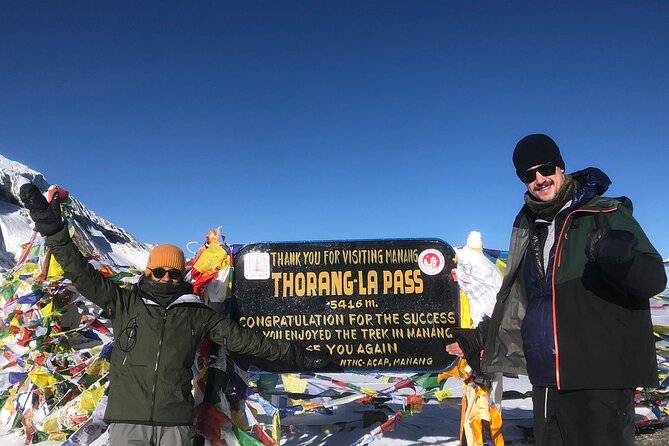
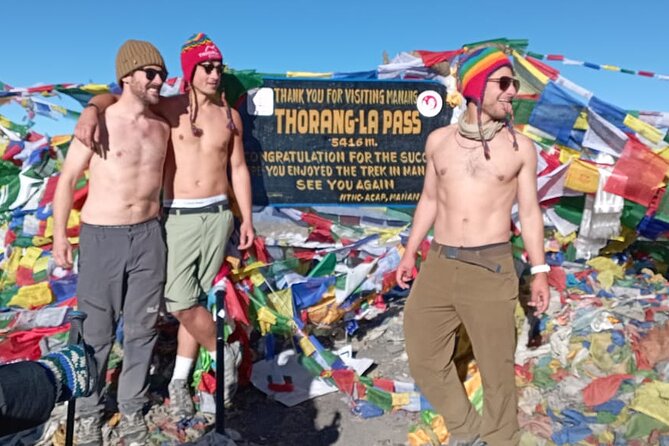
This is the day. You cross Thorong-La Pass at 5,416 m and descend to Muktinath (3,800 m), with a long day around 7 hours.
What makes this day special: the combination of altitude and terrain. You climb to the pass high point, then you come down sharply.
What to be ready for:
- The air is thin near the pass
- Your legs work hard both uphill and on the descent
- You’ll likely feel a big temperature shift and tiredness by late afternoon
Muktinath is a payoff after the pass, and dropping back to 3,800 m helps you recover.
Day 11: Muktinath to Marpha via Jomsom (2,715 m)
You hike about 6 hours to Marpha, passing through Jomsom. This part often feels different from the earlier trail because the route can feel more open and windier in the higher valleys.
Marpha is a nice transition stop. Instead of pushing higher, you’re consolidating gains and moving toward lower elevations.
Day 12: Marpha to Lete (2,480 m)
Around 6 hours to Lete. This continues the downward trend, which can feel like relief after the pass.
Still, don’t treat it as an easy day. Hills and footing stay real, and you’ll want good foot care because the season and the route can make trails uneven.
Day 13: Lete to Tatopani (1,190 m) via natural hot springs
About 6 hours to Tatopani, famous for natural hot springs. This is one of the most satisfying parts of the itinerary because it offers physical recovery, not just scenic rewards.
You’ll still hike into the day, but once you reach Tatopani, your body gets a chance to reset.
Day 14: Tatopani to Ghorepani (2,880 m)
This one can surprise people. You drop to 1,190 m, then hike back up about 6 hours to Ghorepani (2,880 m).
It’s not only about elevation, either. This day reminds you that the circuit still has “mountain math” left. You finish strong for the final views.
Day 15: Ghorepani to Poon Hill (3,210 m), then to Nayapul and Pokhara
You trek to Poon Hill (3,210 m) and then continue down to Nayapul (1,100 m). After that, you drive to Pokhara (860 m), around 6–7 hours total for the day’s end-to-end movement.
Poon Hill is your final big viewpoint moment, and Pokhara is a logical, relaxing conclusion—assuming you schedule yourself for recovery after a long circuit.
Tea Houses, Meals, and Why That’s Not a Small Detail
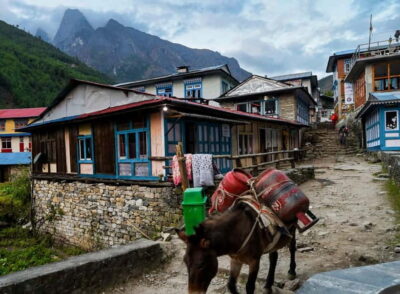
This trek uses tea houses for mountain accommodation. The big win is that your guide handles the day-to-day food plan. Since all breakfasts, lunches, and dinners are included, you don’t have to “solve meals” while your altitude brain is already under strain.
That doesn’t mean everything is free once you arrive. Tea, coffee, and other small add-ons are listed as not included, along with hot water, Wi‑Fi, and hot showers. So I’d treat tea-house days like this:
- Your core meals are covered
- Your comfort upgrades are optional and extra
The guide matters here too. An organized plan reduces the mental load when you’re busy breathing slower.
The Real Value of the Guide (Including Porter Thinking)
The guide is not just a person with a map. In this setup, the guide’s food, salary, insurance, and equipment are included, which usually translates to fewer gaps and smoother coordination.
If you care about safety and comfort, take note of the porter angle. While a porter is not included in your package, one of the most positive details connected to this trekking style is the help of a porter named Rishi, described as friendly, serious about his job, and genuinely helpful to the point that the trekkers felt safe.
Even if you don’t hire a porter for the whole trek, it can be worth calculating what you’d save in energy. The Annapurna Circuit has enough altitude stress without turning your full pack into a second obstacle.
Permits, Insurance, and the Non-Negotiables
Your trek includes all needed mountain trekking permits. That’s one of those background tasks you don’t want to manage while also thinking about breathing, hydration, and a big pass.
What’s not included: travel insurance. You should arrange it before you go, especially for a high-altitude itinerary.
Also, keep in mind the route crosses high elevations, including a pass at 5,416 m. If your insurance doesn’t cover trekking at those altitudes, it won’t help you when something goes wrong.
Pace, Fitness, and Altitude: How to Make the Pass Day Less Scary
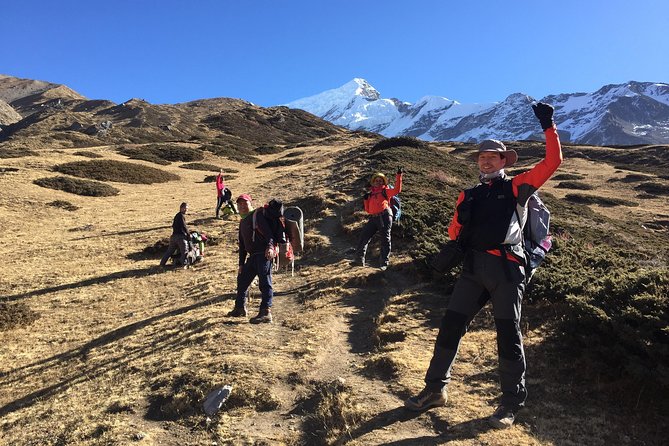
The trek calls for moderate physical fitness. In practical terms, that means you can usually walk for several hours on uneven ground and manage slower uphill effort.
You should also be mentally ready for the itinerary rhythm:
- Early days build you up with 4–5 hour hikes
- You then stack altitude steps (Manang, Yak Kharka, Thorong High Camp)
- The pass day is long and demanding: Thorong-La to Muktinath in ~7 hours
A few smart habits that match the route:
- Keep your pace controlled on climb days (especially near 4,600 m)
- Hydrate consistently and don’t wait until you feel thirsty
- Use the Manang rest day like a tool, not downtime guilt
And if weather or how you feel changes your energy, your guide becomes the person who can adjust your pace and decisions in real time.
What You’ll Still Need to Pay For
From the provided inclusions and exclusions, here’s what usually surprises people if they don’t plan ahead:
- Drinks like tea/coffee and other extras
- Mineral water and hot water
- Wi‑Fi and battery charging
- Hot shower costs
Also, you’re responsible for:
- Your trekking equipment
- Travel insurance
- Porter (not included)
If you want the trip to feel smooth, bring enough small cash for tea-house add-ons and charging. It’s less romantic than scenery, but it keeps your evenings comfortable.
Who This Trek Fits Best
This Annapurna Circuit setup fits best if you want:
- A guided experience with meals, tea houses, permits, and core transport handled
- A route with a real acclimatization pause in Manang village
- A manageable group experience in a private format
- Big scenery and altitude milestones, without having to build a logistics plan yourself
You might rethink it if you:
- Struggle with long days of uphill walking
- Want all comfort extras included (hot showers and drinks are not covered)
- Don’t have travel insurance prepared
- Are not ready to walk in higher elevations, especially around pass-day effort
Should You Book This Annapurna Circuit Trek?
I’d recommend booking if you value organized trekking: included permits, tea-house accommodation, all trek meals, and a guide who’s set up to handle equipment and planning. For many people, that’s the difference between enjoying the mountains and constantly managing details.
If you know you’ll want porter help, plan on that decision early since a porter isn’t included. And since there’s a non-refundable policy with no amendments mentioned, only book when your dates are truly firm.
FAQ
FAQ
How long is the Annapurna Circuit Trek?
It’s listed as 15 days (approx.).
What time do we start?
The start time is 6:15 am.
Is transport and hotel pickup included?
Yes. The package includes all needed transport by bus, plus hotel pick up/drop by taxi.
Are meals included during the trek?
Yes. Breakfast, lunch, and dinner are included throughout the trek.
Do I need to bring my own trekking equipment?
Yes. Your trekking equipment is not included.
Is a porter included, and is travel insurance included?
A porter is not included, and travel insurance is not included.