REVIEW · KATHMANDU
12 days Annapurna Circuit Trek
Book on Viator →Operated by Magnificent Himalayan Treks · Bookable on Viator
Thorong La makes mornings unforgettable. This 12-day Annapurna Circuit trek blends a real high-pass challenge with classic village walking, and I love the way it builds in acclimatisation in Manang plus the early Poon Hill sunrise payoff. The route also gives you a taste of different regions, from Himalayan valleys to Mustang-style scenery, without you doing the logistics math.
One possible drawback: it’s a serious walking itinerary—many days are listed as 10–12 hours, and the meeting time shows 12:15 am, so you’ll want to be ready for early starts and long days.
In This Review
- Key highlights you’ll feel on the trek
- Annapurna Circuit logistics that actually make sense
- Price and what $1,100 buys you (and what it doesn’t)
- Day-by-day walk from Dharapani through Manang to Thorong La
- Day 1: Kathmandu to Dharapani (road + jeep)
- Day 2: Dharapani to Chame (Manang District vibe begins)
- Day 3: Upper Pisang (Lamjung Himal first light)
- Day 4: Upper Pisang to Geru/Manang-area viewpoints (dry air starts)
- Day 5: Manang acclimatisation day (Ice Lake option)
- Day 6: Yak Kharka (moving north, higher, more remote feel)
- Day 7: Thorong Phedi (ridge walking + wooden bridge)
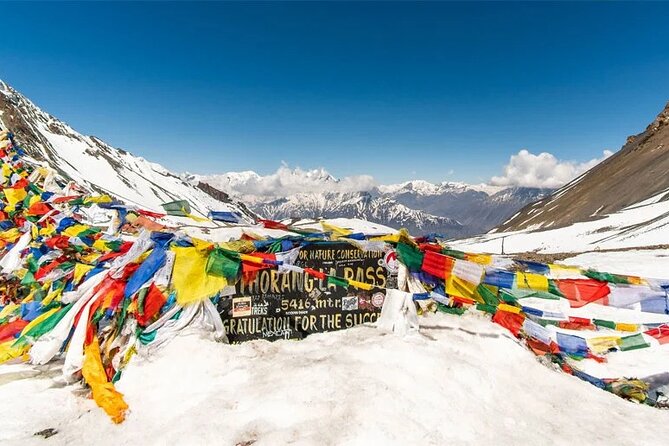
- Day 8: Thorong La summit morning to Muktinath (high pass day)
- Day 9: Muktinath to Tatopani (jeep + hot springs reset)
- From Tatopani to Ghorepani: cultures, river valleys, and the Poon Hill sunrise finale
- Day 10: Tatopani to Ghorepani (Thakali settlements + Kali Gandaki)
- Day 11: Poon Hill sunrise + ride to Pokhara
- Day 12: Pokhara to Kathmandu (bus or optional flight)
- Tea houses, meals, and what guide support changes for you
- Comfort and “how to choose your effort”
- Who this Annapurna Circuit trek is best for
- Should you book this Annapurna Circuit trek?
- FAQ
- What does the trek cost, and what’s included in that price?
- Are trekking permits and area fees included?
- How long are the trekking days, and what fitness level is expected?
- Do I need to arrange a porter?
- What meals and accommodations are provided during the trek?
- How do you get from Pokhara back to Kathmandu?
- Do I need a Nepal visa, and what does it cost?
- If I need to cancel, is there a refund?
Key highlights you’ll feel on the trek
- ACAP + TIMS covered: permits and area fees are included, so you aren’t chasing paperwork mid-trip.
- Manang acclimatisation day with an optional Ice Lake stroll to help your body adjust.
- Thorong La pass timing: an early start for the summit day, then down to Muktinath.
- Tatopani hot springs break: a planned jeep transfer day plus lodge downtime.
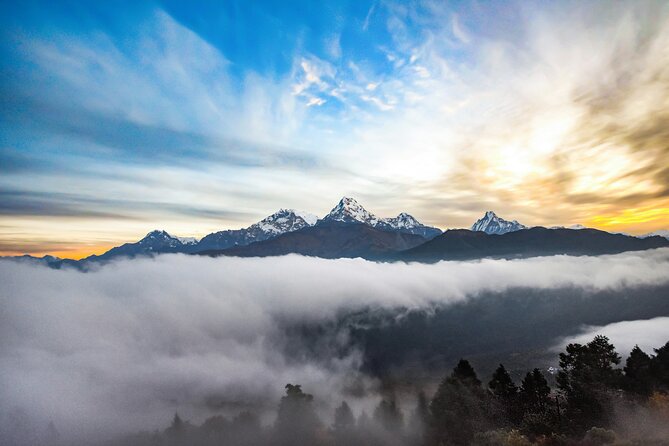
- Poon Hill sunrise at 3,210m with a big mountain view range that includes Machhapuchhre and Annapurna.
- Tea house/lodge meals included (breakfast, lunch, dinner while trekking), with Pokhara adding one included night.
Annapurna Circuit logistics that actually make sense
This is the kind of Annapurna Circuit trek where the hard part is the mountains, not the planning. You start in Kathmandu, then the itinerary quickly gets you into the trek rhythm: a road transfer from Kathmandu toward the trailheads, followed by days of tea house/lodge stays. If you’re the type who wants to spend energy on walking and acclimatising, not scheduling, this setup fits well.
You also get a guided experience built around a group format. The experience is described as private (only your group participates), with options for pickup, group discounts, and full board while trekking. Those details matter more than they seem. When your guide handles the sequence of where to sleep and what permits are needed, you can focus on pace and comfort.
Value-wise, the biggest win is that the package covers the items that often surprise people: ACAP (Annapurna Conservation Area Permit), TIMS (Trekkers Information Management System), taxes, and most meals. That’s the difference between a “cheap trek” and a trek that feels manageable once you’re already in Nepal.
You can also read our reviews of more tours and experiences in Kathmandu.
Price and what $1,100 buys you (and what it doesn’t)
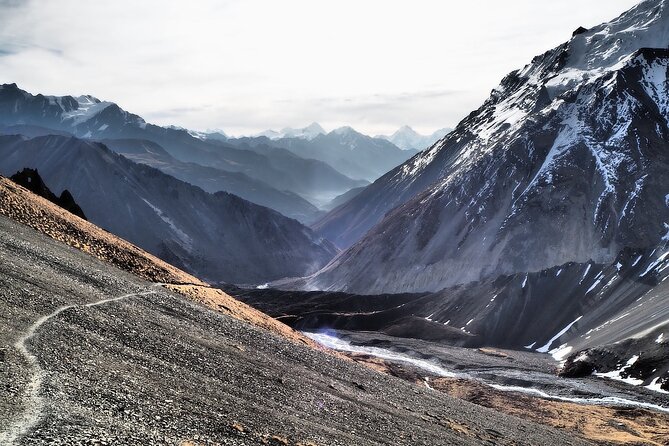
At $1,100 per person for about 12 days, the price is easiest to judge by looking at what’s included versus what you’d normally add on your own.
Included that saves you time and stress:
- Guides: Government licensed, experienced English-speaking guide, plus the package says guide meals, insurance, salary, and lodging are covered.
- Trekking permits/fees: ACAP and TIMS are included.
- Lodges/tea houses with meals: breakfast, lunch, and dinner during the trek; plus tea house/lodge accommodation.
- Transfers: Kathmandu to Dharapani (public transport), plus key jeep/bus legs later (Muktinath to Tatopani and Nayapul to Pokhara, and Pokhara to Kathmandu by tourist bus).
- A Kathmandu farewell dinner.
- Pokhara accommodation: one night with breakfast.
Not included items to budget for:
- Beverages (alcoholic and non-alcoholic) and personal spending (tips, laundry, phone, camera/video fees).
- Porter service. Porters are available for $20/day carrying up to 20 kg, but you have to choose it.
- Insurance (explicitly not included).
- Nepal visa, collected on arrival. The listed prices are 15 days USD 30, 30 days USD 50, 90 days USD 125.
- Optional flights: you can exit Pokhara to Kathmandu via a 25-minute flight not included (extra cost).
So is $1,100 “good value”? For an Annapurna Circuit trek, it’s strong if you want guided support and don’t want to handle permits and most meals. If you’re a super confident, fully independent trekker who already knows how to secure TIMS/ACAP and arrange every transfer, you might find cheaper self-serve options. But you’d be trading convenience (and likely some peace of mind) for savings.
Day-by-day walk from Dharapani through Manang to Thorong La
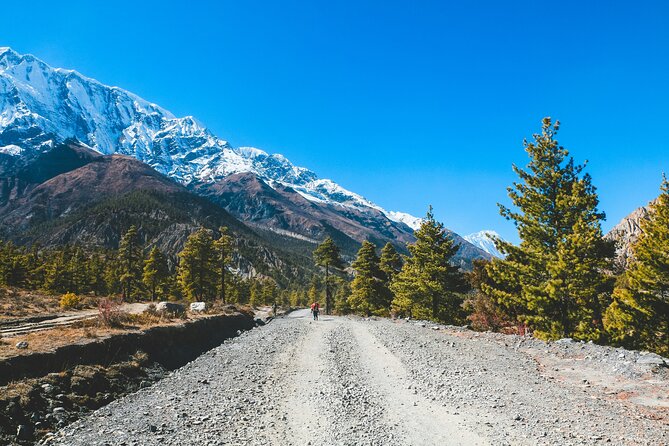
The itinerary is built like a steady staircase: initial valley walking, altitude gain through Manang region, an acclimatisation pause, then the big pass day.
Day 1: Kathmandu to Dharapani (road + jeep)
You drive from Kathmandu toward Besishar along the Trishuli river, then take a jeep to Dharapani for the night. This is a long transit day, but it’s a normal way to get your first taste of the route without starting at the crack of dawn on foot.
Why it works: it helps you settle into the trek plan the same day you leave Kathmandu. If you’re sensitive to travel delays, this “front-load the transfer” style can feel better than arriving and trying to figure everything out later.
Day 2: Dharapani to Chame (Manang District vibe begins)
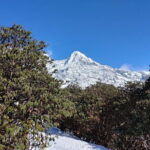
Day two treks to Chame, the headquarters of the Manang District. The description emphasizes that the landscape starts to change as you gain altitude, including rhododendron forests and first glimpses of dramatic peaks.
What to watch for: keep an easy pace. You’re still building altitude, and Chame is often where trekkers start to feel the temperature shift.
Day 3: Upper Pisang (Lamjung Himal first light)
You walk to Upper Pisang at about 3,300m. The highlight is the view and “first light” on peaks as you set out.
Why this day matters: this is where the trek starts feeling more “alpine.” Your breathing might feel different even if the elevation isn’t extreme yet, so pacing early helps later.
Day 4: Upper Pisang to Geru/Manang-area viewpoints (dry air starts)
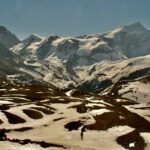
The plan connects Upper Pisang via Geru, with big north-face viewing mentioned for peaks like Annapurna II, III, IV, Gangapurna, Tilicho, and Pisang Peak. You’ll also notice the air gets drier and colder.
Possible snag: cold and dry air can make you feel tighter, especially if you stop for long photo breaks. Dress for movement, not just for standing still.
Day 5: Manang acclimatisation day (Ice Lake option)
Today is your acclimatisation day in Manang, right at the base area with views toward Annapurna III and Gangapurna. The itinerary calls out an optional stroll to Ice Lake.
This is one of the most valuable days on the whole trek. Whether or not you choose Ice Lake, you’re giving your body time to adapt. You’ll thank yourself when you’re heading toward Thorong La later.
Tip: if you go for Ice Lake, treat it like a gentle test. The goal is to feel “working but not broken,” not to sprint to a viewpoint.
Day 6: Yak Kharka (moving north, higher, more remote feel)
From Manang you trek to Yak Kharka, passing through villages like Tenki and crossing streams as you leave the Marshyangdi Valley and move up toward the Jarsang Khola valley.
What to expect: longer effort on steeper terrain. The itinerary gives less detail here, but the route style suggests a day where you’ll notice your energy management more than your views.
Day 7: Thorong Phedi (ridge walking + wooden bridge)
You reach Thorong Phedi, the foot of Thorong La Pass. The day includes ascending to a ridge, descending, then crossing the Marsyangdi river on a wooden bridge, followed by further ascent.
Why this day is key: you’re preparing your legs and sleep schedule for the big early-morning pass attempt. Take the night seriously—rest, hydrate, and don’t treat this as an extra sightseeing day.
Day 8: Thorong La summit morning to Muktinath (high pass day)
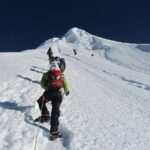
This is the centerpiece. You wake early (around 3 am is mentioned), walk up to the summit of Thorong La, then descend into Muktinath.
Important reality check: this is the day that decides how you feel for the rest of the trek. The plan’s early timing is there for a reason—high-altitude weather and visibility can change quickly. Follow your guide’s pacing and don’t chase speed.
Day 9: Muktinath to Tatopani (jeep + hot springs reset)
You take a jeep for about three hours from Muktinath to Tatopani. After arriving, you can rest at the lodge or visit the hot springs for a swim.
This day is your recovery lever. The pass is behind you; your job now is to loosen up, refuel, and sleep well before you start moving back toward the Ghorepani/Poon Hill region.
From Tatopani to Ghorepani: cultures, river valleys, and the Poon Hill sunrise finale
After Tatopani, the trek shifts from “high pass drama” into “beautiful walking into the Annapurna foothills,” with a well-known sunrise finish.
Day 10: Tatopani to Ghorepani (Thakali settlements + Kali Gandaki)
You walk through ethnic Thakali settlements such as Sikha and Chitre, then reach the east bank of the Kali Gandaki River and climb up to Ghorepani.
Why this is a nice mix: it’s not just scenic. You’re also moving through communities and settlement patterns that make the trek feel rooted in real life, not just mountain milestones.
Day 11: Poon Hill sunrise + ride to Pokhara
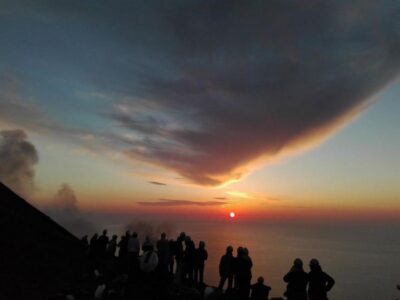
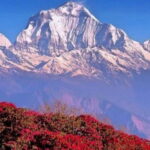
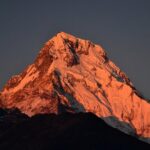
In the early morning you hike up to Poon Hill (3,210m) for sunrise, looking across the Dhaulagiri and Annapurna range—including Machhapuchhre (Fishtail) and Annapurna. After that, you trek from Ghorepani to Birethani and then take a bus to Pokhara.
This day has two modes:
- short, cold, early sunrise hiking (get moving fast, dress warm)
- then the larger “move on to Pokhara” transit day
If you hate tight schedules, this is the day to plan for. But if you love sunrise views, it’s one of the most rewarding ways to close an Annapurna Circuit trek.
Day 12: Pokhara to Kathmandu (bus or optional flight)
After breakfast in Pokhara, you take a tourist bus back to Kathmandu. There’s also an option to depart by flight (about 25 minutes), which costs extra.
This is a good final touch. You’re not stuck hauling gear all the way back late in the day. You get a real end point at a city with more comfortable downtime.
Tea houses, meals, and what guide support changes for you
Most of your nightly stays are in tea house/lodge accommodation, with breakfast, lunch, and dinner included during the trek. Having meals handled is a huge quality-of-life benefit at altitude. It also prevents the common “we ate late, now we’re behind schedule” spiral.
Since the itinerary mentions that the guide’s meals, insurance, salary, and lodging are covered, it also suggests you’re hiring a team whose job is to keep the rhythm steady. In Nepal, that matters. Small delays can grow when your group is at altitude and you’re trying to hit a timing-dependent activity like the Thorong La morning start or Poon Hill sunrise.
From the company’s communications, the team behind Magnificent Himalayan Treks includes people such as Manit, Kumar, and Bhim Panta, and they’re portrayed as responsive during trip planning and as hosts who guide the full arc of the journey. Even if your specific guide varies, it’s a good sign when the provider supports the trip beyond just showing up on day one.
Comfort and “how to choose your effort”
Your comfort on this trek comes down to two things you control: pacing and layering.
- Expect cold, drier air once you’re higher up (the itinerary specifically notes this around the Manang approach).
- Many days are listed around 10–12 hours, which is long. Think of the trekking days as “work days,” not leisurely strolls.
- Tea houses are basic by default. Your included meals keep it simple, but you should still plan for modest facilities.
Porters can help, and they’re available for $20/day carrying up to 20 kg. If your goal is to enjoy the scenery and not dread your pack weight, consider adding one—especially if you’re carrying camera gear or if you’re not used to trekking bags over rocky ground.
Who this Annapurna Circuit trek is best for
This trek fits best if you want a guided Annapurna Circuit with key logistics handled: permits, most meals, and the critical transfer days. It’s also a strong match for people who like a plan with built-in altitude support—like the Manang acclimatisation day and the pass timing structure.
You’ll likely enjoy it most if:
- you’re aiming for a classic Annapurna Circuit experience plus Ghorepani and Poon Hill
- you prefer staying in tea houses/lodges rather than going fully independent
- you’re comfortable with a moderate fitness base and long trekking days
You might want to reconsider if:
- you’re hoping for a low-effort itinerary (this isn’t it)
- you get anxious with early mornings and high-altitude pressure
- you’re not planning for cold weather layers and basic lodge conditions
Should you book this Annapurna Circuit trek?
If you want guided, permit-covered, meal-included trekking that still feels like an authentic Himalayan journey, this one makes a lot of sense. The value isn’t just the low headline price—it’s the fact that it handles the “annoying parts” (ACAP/TIMS, most meals, lodge planning, and major transfers) while still giving you the key highlights: Manang, Thorong La, Muktinath, Tatopani hot springs, and the Poon Hill sunrise finale.
My recommendation: book it if you’re ready for a serious 12-day trekking rhythm and you’ll pack smart (warm layers, hydration habits, and a realistic effort plan). If you’d rather spend your energy on rest than on long hiking days, or if you’re not prepared for the early pass morning, you may want to look at an easier itinerary or add extra buffer days.
FAQ
What does the trek cost, and what’s included in that price?
The price is $1,100 per person for about 12 days. Included items listed are guided trekking (English-speaking guide and guide coverage), tea house/lodge accommodation with meals during the trek, Kathmandu farewells dinner, Pokhara lodging for one night with breakfast, transportation for key route segments, and permits including ACAP and TIMS.
Are trekking permits and area fees included?
Yes. The package includes the Annapurna Conservation Area Permit (ACAP) fee and the TIMS card fee, plus government and local taxes.
How long are the trekking days, and what fitness level is expected?
You should have a moderate physical fitness level. Several days are shown as around 10 to 12 hours of trekking/walking, including long hiking days around the Manang and Thorong La segments.
Do I need to arrange a porter?
Porters are not included. Porters are available for $20/day and can carry up to 20 kg if you choose to add one.
What meals and accommodations are provided during the trek?
Accommodation is in tea house/lodge rooms, and meals during the trek are included: breakfast, lunch, and dinner. Pokhara includes one night of accommodation with breakfast.
How do you get from Pokhara back to Kathmandu?
You board a tourist bus after breakfast on day 12. The itinerary also offers an optional 25-minute flight from Pokhara to Kathmandu for an extra cost that is not included in the package.
Do I need a Nepal visa, and what does it cost?
Yes, a Nepal visa is not included and is obtained on arrival at the airport. The listed costs are 15 days USD 30, 30 days USD 50, and 90 days USD 125.
If I need to cancel, is there a refund?
The experience has free cancellation. You can cancel up to 24 hours in advance for a full refund, but cancellations made less than 24 hours before the start time are not refunded.