REVIEW · KATHMANDU
12-Day Nepal Adventure Trek with Jungle Safari
Book on Viator →Operated by Outfitter Himalaya Holidays P. Ltd · Bookable on Viator
Two weeks in Nepal, packed right.
This 12-day loop pairs Poon Hill sunrise views with Chitwan jungle safari, and you get a guided Kathmandu day at major spiritual sites with pros like Raj or Amrit. It’s a smart mix for first-timers: cities, a classic Annapurna trek, and then wildlife time without feeling like you’re hopping nonstop.
I also like the small-group feel. The tour caps at 14 travelers, you’ll hike at a pace that lets slower trekkers keep moving, and the guide and local team handle the routing, permits, and transportation.
One thing to weigh: you should expect costs and ticketing beyond the $950—especially temple/sight-seeing admissions and the fact that mountain lodges are basic (though usually clean and well-fed).
In This Review
- Quick hits you can plan around
- Kathmandu in one solid day: stupa, temples, and city square
- The $950 value and what’s truly included
- The drive to Pokhara: river roads and the calm reset
- Trek Day 1 from Nayapul: Tikhedhunga and the first rhythm check
- Trek Day 2 toward Ghorepani: steep starts and village by village views
- Poon Hill sunrise plus Tadapani: the big payoff day
- Ghandruk and the easy downhill: rhododendron forests and bird-song
- The last trek day to Syauli bazaar: rice fields and village descent
- Chitwan National Park: Tharu village tour and real jungle time
- Bird watching, then back to Kathmandu
- Guides, pace, and the little things that shape your experience
- Who should book this Nepal Adventure Trek with Jungle Safari?
- Should you book this tour?
- FAQ
- What start time and meeting point does the tour use?
- Is airport pickup included?
- What parts of the trip are included in the $950 price?
- Are trekking permits included?
- Are Kathmandu sightseeing entrance fees included?
- Is a porter included?
- What fitness level is recommended?
- What’s the maximum group size?
- Is Nepal entry visa included?
- What’s the cancellation policy if I need to change plans?
Quick hits you can plan around
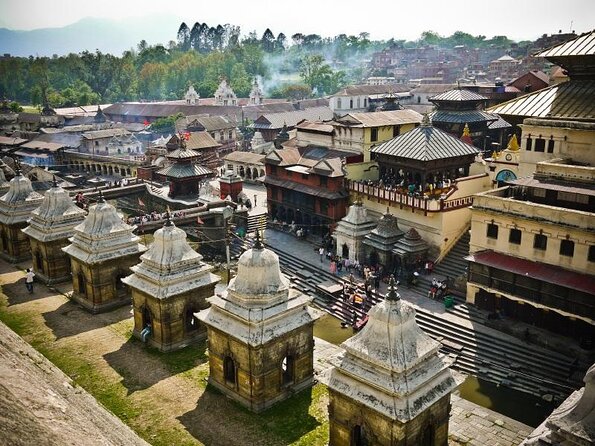
- Poon Hill sunrise: early morning climb for wide views over big Himalayan peaks.
- Chitwan safari day: jungle walking plus safari drives, with Tharu culture built in.
- A real Kathmandu loop: Swayambhunath, Durbar Square, Boudhanath, and Pashupatinath in one day.
- Support for different walkers: porters can be assigned if you need help.
- Mountain days are work: one stretch can feel like a stair workout (one review flagged about 3000 stairs).
- Included trekking permits: TIMS and trekking permits are part of the package.
Kathmandu in one solid day: stupa, temples, and city square
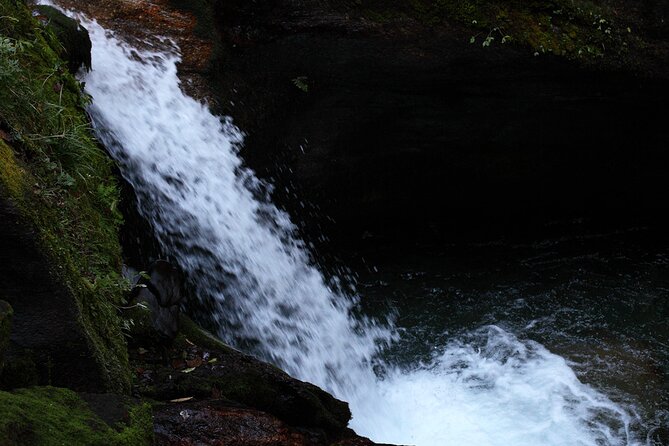
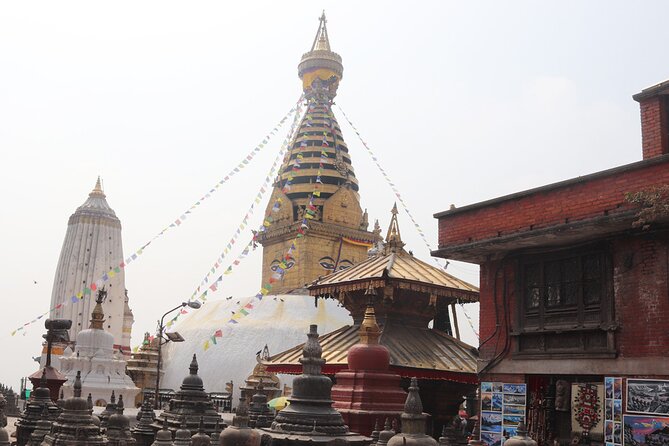
Day 2 is a classic Kathmandu sampler day, built around the big names. You’ll start at Swayambhunath (Monkey Temple), then move through Kathmandu Durbar Square, Boudhanath Stupa, and Pashupatinath Temple. Each stop has a different vibe—Boudhanath feels slow and meditative, while Durbar Square brings more of the city energy.
What I like here is that it’s structured. You get the history on-site via your local guide, but you also have the freedom to look around at your own pace. The itinerary notes admission tickets for these sights aren’t included, so budget for that day.
If you care about getting oriented fast, this helps. By the time you’re heading out of Kathmandu, you’ll already understand the geography and the religious geography that shapes daily life in the city.
You can also read our reviews of more tours and experiences in Kathmandu.
The $950 value and what’s truly included
At $950 per person for 12 days, this is priced for travelers who want organization without luxury costs. Here’s what you’re actually paying for that matters on the ground:
- 11 nights of accommodation across Kathmandu, Pokhara, trekking lodges, and Chitwan
- airport pickup/transfer
- a local guide for the trip
- transport by tourist bus for the long stretches (Kathmandu–Pokhara–Chitwan–Kathmandu)
- trekking permits and TIMS permit
- meals: breakfast (11), lunch (7), dinner (6)
The tradeoff is you’re not getting everything. Nepal entry visa, travel insurance, drinks/snacks like chocolate, and tips aren’t included. Also, entrance fees for Day 2 sights are extra (listed as $25 per person for Swayambhunath and the Day-2 sightseeing places).
Where this price feels strong is in the permits + transport + meals package. Those add up fast on your own, especially when you’re trying to coordinate bus timing and trek logistics.
The drive to Pokhara: river roads and the calm reset
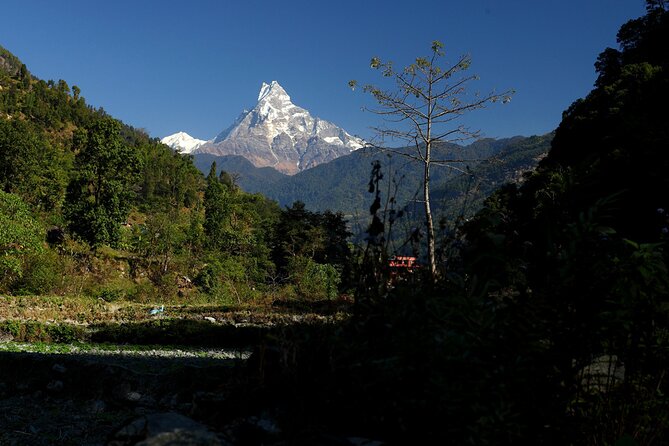
After you arrive and get settled, Day 3 is mostly a road day: a drive to Pokhara along the Trisuli and Marsyangdi River. It takes about 6 hours, and it’s not just time filling—it’s your reset before the walking starts.
Pokhara matters because it’s the launching point for the trek. You’ll feel the shift from Kathmandu’s bustle to a slower lake-area rhythm, and that makes the first hiking days easier to stomach.
Trek Day 1 from Nayapul: Tikhedhunga and the first rhythm check
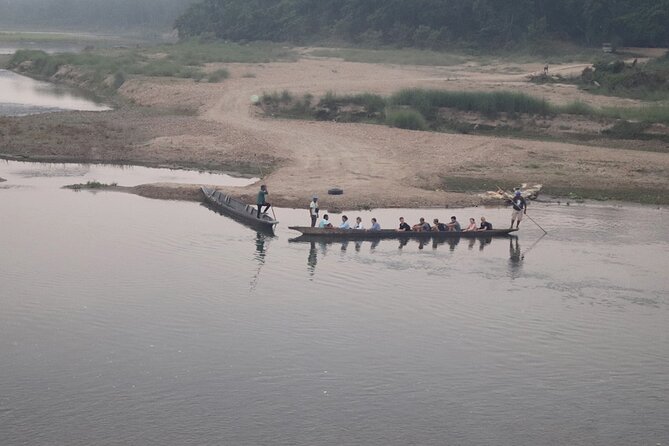
Day 4 starts with breakfast, then drives to Nayapul (about 1.5 hours). From there, you begin hiking toward Tikhedhunga (1577m) via Birethanti (1065m). The day is listed as around 6 hours.
This is the day where I’d mentally check your legs. The climbs aren’t always “technical,” but you’ll feel altitude and effort. If you’re coming in less fit than you want to be, this is a good time to take the first day steady. Most trekking success in Nepal comes down to not burning matches early.
Trek Day 2 toward Ghorepani: steep starts and village by village views
Day 5 brings your first real trekking ascent. You’ll hike to Ghorepani for about 7 hours. The route description highlights steep climbing for the first two hours, then a gentler stretch passing places like Ulleri and Banthanti.
This is where you start to recognize the Annapurna trekking pattern: a mix of hard climbs, calmer intervals, and short village interludes. You’re building endurance, but you’re also building comfort with the rhythm—stop, breathe, drink, repeat.
One review also hinted that accommodations are basic but clean, and that food tends to be plentiful and good. On trekking days like this, that reliability is a bigger deal than you might think.
Poon Hill sunrise plus Tadapani: the big payoff day
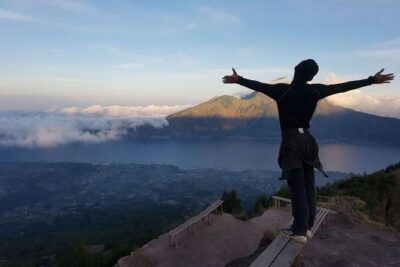
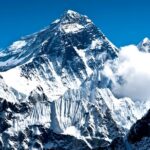
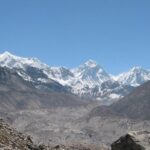
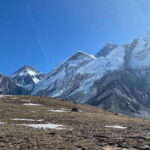
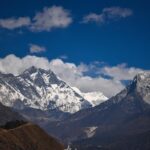
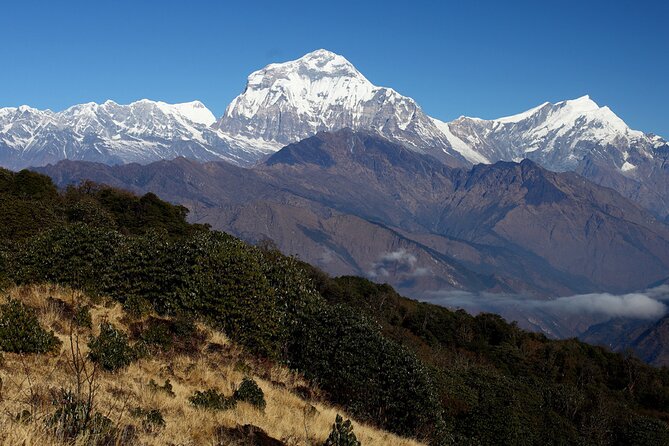
Day 6 is long (about 7 hours) and it’s built around Poon Hill (3232m) for sunrise views. You’ll get that early-morning climb, and the payoff is framed as wide visibility over peaks like Dhaulagiri and Annapurna I, plus others listed in the itinerary.
Even if you’ve seen photos before, sunrise from Poon Hill changes how you feel about Nepal’s scale. It’s not just a pretty view. It’s a moment that makes the days of walking feel worth it.
From there, you continue onward to Tadapani. This means you’re not just doing one short hike. You’re earning the view and then keeping momentum, so plan your energy like a marathon, not a sprint.
Also, a heads-up from real trip feedback: one day can feel like extreme elevation gain, with a single stair-heavy push (around 3000 stairs mentioned in a review). If steps are your weakness, bring trekking poles if you use them, and pace yourself.
Ghandruk and the easy downhill: rhododendron forests and bird-song
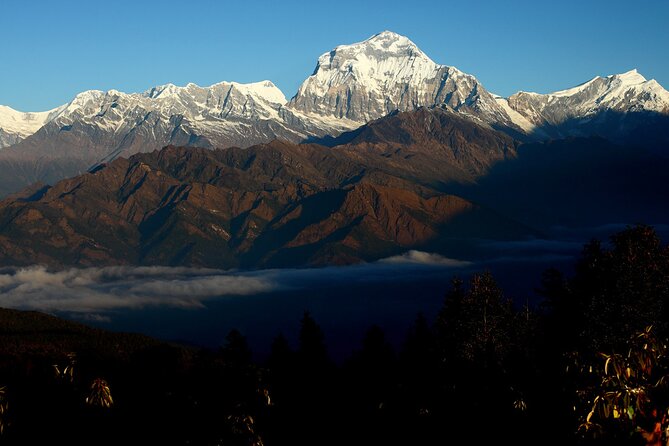
Day 7 shifts gears. You’ll trek to Ghandruk (listed around 4 hours) and the itinerary describes it as easier trekking by descending gently through dense forest types such as rhododendron and oak.
This is the day I’d call your recovery-with-reward day. You’re still moving, still gaining and losing altitude, but it’s more about enjoying the route than surviving it. In the same vein, the itinerary mentions hearing different kinds of birds, which lines up with the feeling you get when you’re out of the toughest climb zones.
And as you walk into places like Ghandruk, you also get a sense of how villages work around trekking routes—local homes, local life, and the trail as an everyday road, not just a vacation path.
The last trek day to Syauli bazaar: rice fields and village descent
Day 8 is the final trekking day, and it’s described as easy by descending gently about half the way through rice fields and local villages to Syauli bazaar (listed around 6 hours). This is ideal if you want to end your trek without a brutal final climb.
This day matters emotionally. You’ll likely feel tired, but the scenery becomes more human-scale—fields, paths through communities, and a gentler pace. It’s also a nice transition from mountain lodge living back into the comfort of a hotel.
Chitwan National Park: Tharu village tour and real jungle time
Day 9 is a big change: you drive to Chitwan National Park (about 6 hours), check into a jungle lodge, and then do a Tharu village tour.
Two things make this worth it. First, Chitwan isn’t just about animals; it’s about the people who live near and with the forest. Second, the village tour gives context for what you’ll see in the next day’s activities.
Day 10 is your full wildlife and jungle experience day. The listed activities include jungle walking and a jungle safari across streams and into the jungles, plus a Tharu cultural stick dance. That combination is a good use of time: you get the animal-searching angle, but you also get culture so it doesn’t feel like a purely mechanical checklist.
Bird watching, then back to Kathmandu
Day 11 is calmer in a good way. You start with a bird watching tour in the morning, then drive back to Kathmandu and check into your hotel. After trekking and then a full safari day, this is a smart recovery segment.
You end the trip by blending nature and city back-to-back. It makes the final day less of a blur and more of a closing ceremony. Day 12 is basically departure, with the trip designed to leave you ready to fly home with stories you’ll actually want to tell.
Guides, pace, and the little things that shape your experience
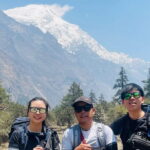
This is where the reviews line up with the itinerary’s design. Guides named Raj and Amrit come through as attentive and practical—constantly looking after needs, keeping people on track, and helping you finish the trek even if fitness isn’t perfect.
A strong theme in the feedback is that it’s not rushed. That matters on treks. When you’re doing long days, your body doesn’t need speed—it needs timing. You also have a group cap of 14, so it tends to feel more like a shared plan than a cattle-car tour.
Lodges along the trek are described as basic but clean, and food is generally noted as plentiful and good. That’s exactly what you want to hear when your day is hours of effort and your reward is a warm meal and a bed that doesn’t feel sketchy.
Who should book this Nepal Adventure Trek with Jungle Safari?
This tour fits best if you want:
- a classic two-week Nepal mix: Kathmandu + Pokhara + Annapurna trekking + Chitwan
- a guided itinerary that handles permits, transport, and meals
- trekking that’s doable with moderate physical fitness, not a mountaineering expedition
- a group size small enough to feel supported
You might think twice if:
- you hate early mornings (Poon Hill sunrise means you’ll rise before the sun)
- you’re expecting lodge comfort at a resort level (mountain accommodations are basic)
- you want all entrance fees and extras covered in the base price (Day 2 admissions are extra)
Should you book this tour?
If you’re planning your first Nepal trip and you want a well-rounded route that hits the big highlights—temples in Kathmandu, a real Annapurna trek with Poon Hill, and wildlife in Chitwan—this one makes sense.
I’d recommend it especially if you value support from a local guide and you like the idea of structured hiking with reliable meals and permits handled. Just don’t treat it like a luxury getaway. It’s an adventure, and the main work is in the hiking.
If you want, tell me your fitness level and hiking experience (and whether you prefer sunrise hikes). I can help you sanity-check whether the Poon Hill and step-heavy days will feel manageable for you.
FAQ
What start time and meeting point does the tour use?
The meeting point is Tribhuvan Airport in Kathmandu, and the start time is 6:15 am.
Is airport pickup included?
Yes. The tour includes airport transfers, with a representative meeting you on arrival and transferring you to your hotel.
What parts of the trip are included in the $950 price?
You get 11 nights of accommodation, a local guide throughout, transport by tourist bus (Kathmandu–Pokhara–Chitwan–Kathmandu), trekking permit and TIMS permit, plus meals listed as 11 breakfasts, 7 lunches, and 6 dinners.
Are trekking permits included?
Yes. The trekking permit and TIMS permit are included.
Are Kathmandu sightseeing entrance fees included?
No. Day 2 sightseeing admissions are not included, and the tour lists $25 per person for Swayambhunath Temple and the Day-2 sightseeing places.
Is a porter included?
A trekking porter is not included unless you need one. If you need a porter, that’s an extra cost.
What fitness level is recommended?
The tour is recommended for travelers with moderate physical fitness.
What’s the maximum group size?
The maximum group size is 14 travelers.
Is Nepal entry visa included?
No. The Nepal entry visa fee is not included.
What’s the cancellation policy if I need to change plans?
You can cancel up to 3 days in advance for a full refund. If you cancel less than 3 days before the experience start time, the amount paid is not refunded.