REVIEW · KATHMANDU
14 days Annapurna Base Camp Trek
Book on Viator →Operated by Asian Heritage Treks and Travels · Bookable on Viator
First you smell the incense, then the altitude hits. This Annapurna Base Camp trek strings together Kathmandu’s UNESCO sites, a Pokhara reset, and a moderate mountain route that ends at one of Nepal’s most famous view platforms. You’ll walk through Gurung, Magar, and Thakali village areas and spend days moving through rhododendron and bamboo forests before the air gets thin.
What I like most is the way the plan builds in high-impact scenery without making every day feel like a punishment—Poon Hill sunrise is the big early win. I also like the practical setup: you’re not just dropped at a trailhead; you get a licensed trek leader, group transport, permits, and porter support so your energy goes toward walking, not logistics.
One consideration: this is still a large hiking commitment, with plenty of stair climbing and downhill steps, plus an optional 3 a.m. wake-up for sunrise at ABC. If you’re sensitive to altitude or you hate early mornings, you’ll want to plan your mindset accordingly.
In This Review
- Key things that make this trek worth your time
- Entering the Annapurna rhythm: what this 14-day plan is really like
- Kathmandu and Pokhara setup: temples first, then the mountains
- Day-by-day trek flow: Ulleri to Ghorepani to Poon Hill
- Chhomrong to Sinuwa to Bamboo Village: big steps and real village life
- Deurali, Hinku Cave, and Macchapuchare Base Camp: less crowded feeling, same big payoff
- Annapurna Base Camp day: sunrise option and the Sanctuary vibe
- Descent to Jhinu and your recovery day in hot springs
- Getting back to Kathmandu: one last movement day, then flight time
- Price and logistics: is $1,028.41 good value?
- Gear, pace, and altitude: how to avoid common trekking regrets
- Who this Annapurna Base Camp trek is best for
- Should you book this Annapurna Base Camp trek?
- FAQ
- Where is the meeting point and what time does the trip start?
- What’s included in the trek package price?
- Are UNESCO entrance fees in Kathmandu included?
- How much luggage will a porter carry?
- Is the tour private?
- How late can I cancel for a full refund?
Key things that make this trek worth your time
- Kathmandu + Pokhara warm-up days so the trek doesn’t start cold
- Poon Hill sunrise timing for panoramic mountain views
- Porter help with defined weight sharing to protect your legs
- Chhomrong to Bamboo Village with a realistic mix of uphills and long steps
- Macchapuchare Base Camp detour for Fishtail views in a quieter stretch
- Jhinu hot springs stop to recover after the hardest walking blocks
Entering the Annapurna rhythm: what this 14-day plan is really like
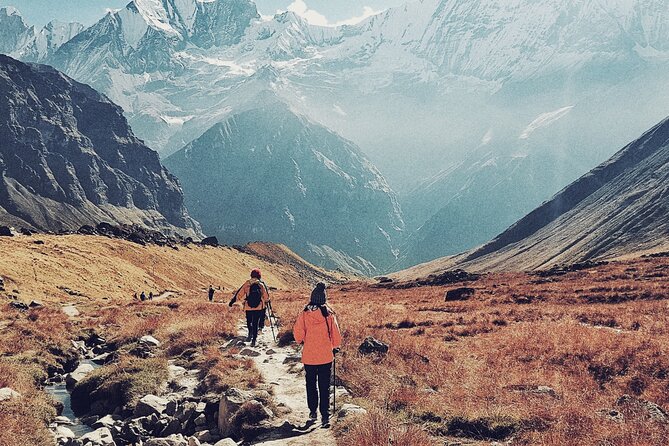
Annapurna Base Camp sounds like one thing: the dramatic end point. But the real value here is the build-up. You start in the cultural capital with temple stops, then shift to Pokhara’s calmer pace, then gradually layer in forest trails, terraces, rivers, and villages.
The itinerary is built for moderate trekkers who can handle long days on foot. You’re hiking from Ulleri into the Annapurna region, working your way through Ghorepani, Poon Hill, Chhomrong, Sinuwa, Bamboo Village, Deurali, and finally into the Annapurna Sanctuary. The mountain walking comes in waves: some days are steady ascents, other days are step-heavy descents that test your knees. That mix is common on Annapurna, and this plan doesn’t pretend it’s anything else.
If you’re looking for a trek that feels organized but still lets you experience the trail’s day-to-day life—tea houses, village paths, and mountain mornings—this route fits well.
You can also read our reviews of more tours and experiences in Kathmandu.
Kathmandu and Pokhara setup: temples first, then the mountains
You begin with pickup offered from Tribhuvan Airport, and your first night is in Thamel. That matters because it keeps you close to food, gear shops if you forgot something, and easy access for your briefing. In the afternoon, you get a briefing at the hotel lobby with the trip info you need.
Day 2 is classic Kathmandu Valley:
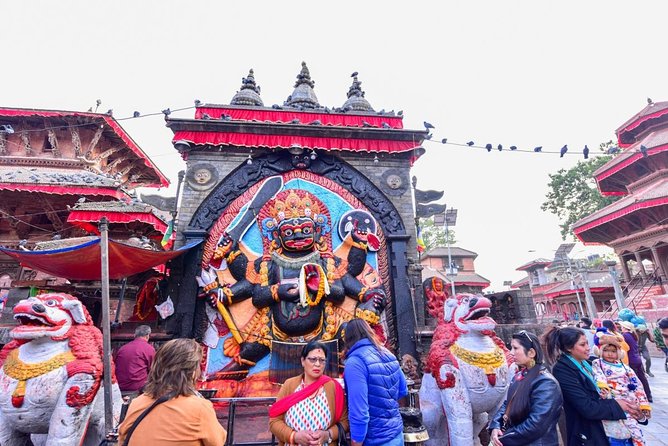
- Kathmandu Durbar Square (UNESCO, and the entrance ticket isn’t included)
- Swayambhunath Temple (Monkey Temple, not included)
- Boudhanath Stupa (also UNESCO, not included)
This temple day is more than box-checking. It’s a good way to get your bearings fast: you’ll learn the general rhythm of the city and how transport works before you face the more structured timing of the trek.
Day 3 moves you toward the trekking mood with a visit to Pokhara Lakeside. You get about four hours to relax and take in the lake views. Even if you don’t do boating or fishing, that “breather” day helps. It’s one less stressed morning when you start hiking the next day.
Day-by-day trek flow: Ulleri to Ghorepani to Poon Hill
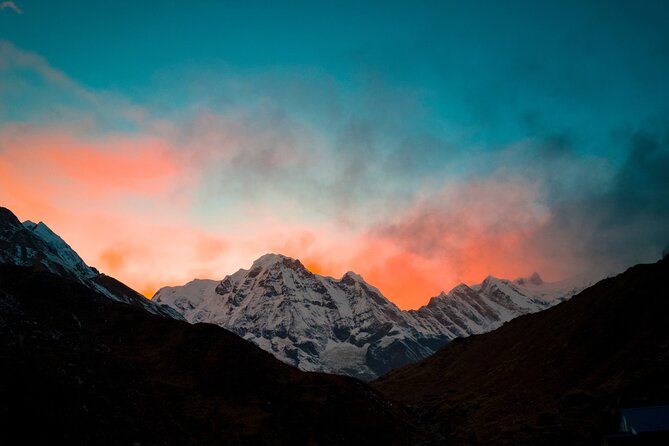
Day 4 is your first real stair-and-slope lesson. You drive to Nayapul (the usual gateway) and then hike to Ulleri. You’ll see terraced farm fields as you ascend, and the route includes Tikhedhunga and a more difficult uphill stretch after that. This is a good “wake up your legs” day, not a day for slow sightseeing.
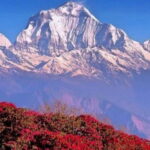
Day 5 shifts into rhododendron and pine forests, with bridges and an easier feel compared with the day before. You continue toward Ghorepani, passing through the Nangethathi low area and reaching the village with views out toward major peaks. The plan specifically calls out strong views of Dhaulagiri from upper Ghorepani, so you’re not just walking for walking’s sake.
Day 6 is a highlight because of the early timing. You start from Ghorepani, go up toward Poon Hill for sunrise views, then continue onward to Tadapani. The point of catching the first light is not just pretty clouds—it’s a classic Annapurna moment where peaks pop into view when the air is clear. Then you return for breakfast before trekking again, this time through rhododendron forest toward Tadapani.
Practical note: sunrise days can be chilly. You’ll be happier if you treat this like a planned physical effort, not an optional stroll.
Chhomrong to Sinuwa to Bamboo Village: big steps and real village life
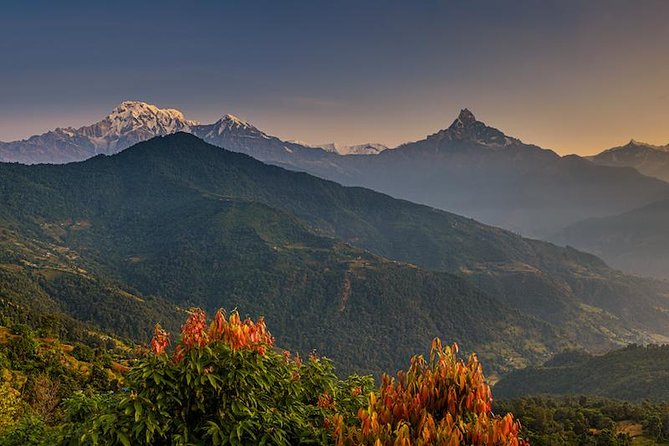
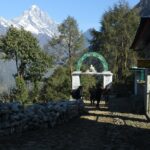
Day 7 takes you from Tadapani down toward the Kimrung River, through rice fields and small settlements, then up to Chhomrong. You also get a meaningful view stop here: Fishtail and Annapurna South are called out from Chhomrong. This is one of the reasons trekkers like this route—your effort connects to specific payoff points.
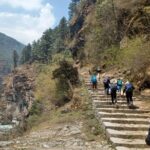
Day 8 is a long walking day that tests your technique. You climb down more than 2,000 stone steps to cross the Chhomrong River, and then you face a strong ascent to Sinuwa. After resting, you descend through rocky steps and bamboo forest to reach Bamboo Village at about 2,300 meters.
Here’s a memorable detail: Bamboo Village is known for lemur colonies, and the route notes that with luck you might spot one. Even if you don’t, bamboo forest walking has a different feel than the open ridge views—cooler, quieter, and often more protected from wind.
You finish the day by continuing onward toward Dovan, keeping the route moving while building altitude gradually.
Deurali, Hinku Cave, and Macchapuchare Base Camp: less crowded feeling, same big payoff
Day 9 continues through forest areas—rhodo and bamboo—then brings you to Deurali via stops including Hotel Himalaya. The plan mentions a steep climb after Hotel Himalaya through a drier forest before you reach Hinku Cave. From there, the trail drops closer to the river and then climbs again to Deurali.
This is also one of the days where the itinerary builds in variety: you’re not stuck in one type of terrain. Then you walk along Modi Khola and continue toward Macchapuchare Base Camp (MBC).
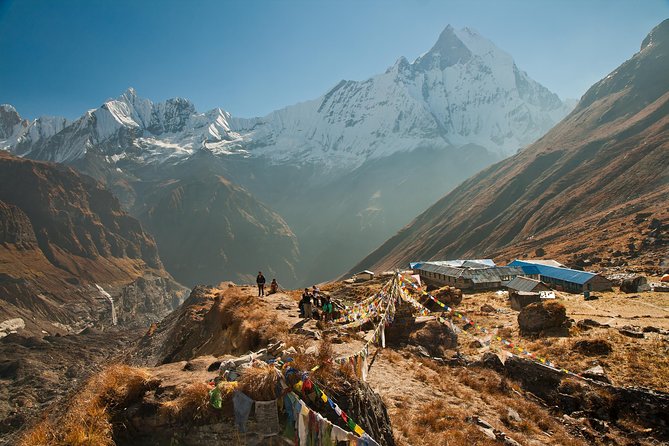
The Fishtail view at MBC is a nice touch because it’s described as changing shape based on your angle. That’s exactly the kind of mountain “optics” you notice more when your movement is slow and deliberate.
Annapurna Base Camp day: sunrise option and the Sanctuary vibe
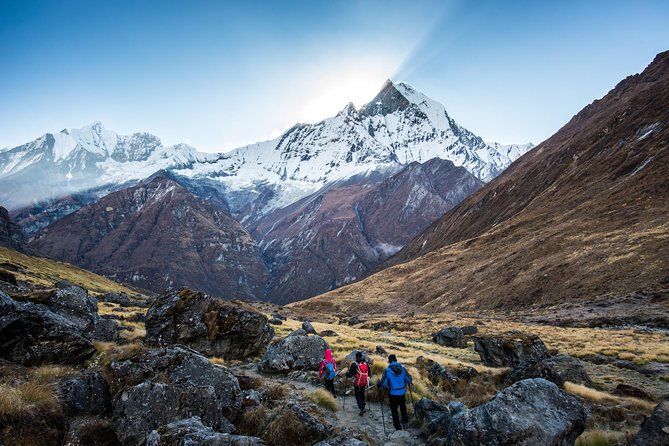
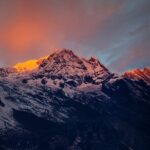
Day 10 is your ABC moment. If you want sunrise, you’ll need to wake early at 3 a.m. and hike for about two hours upward. The itinerary notes altitude caution—so take that seriously. Starting too fast can leave you breathless for the entire day.
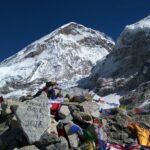
Once you reach Annapurna Base Camp, the scenery is the star. You get views of Machhapuchhre (Fishtail) along with peaks including Hiunchuli, Annapurna South, Annapurna I, Annapurna III, Gandharvachuli, and Gangapurna. The route also emphasizes that ABC sits in the Annapurna Sanctuary, described as an oval-shaped plateau surrounded by a ring of mountains.
What you’ll likely feel here is scale. Not just height—distance. You’re looking across a bowl of peaks, and the mountains feel closer than you expect because you’re sitting in the middle of their drama.
A timing reality check: you’ll want to manage your energy for the return part of the day, even if you’re not fully trekking in the dark. It’s common to feel both excited and exhausted when you reach base camp.
Descent to Jhinu and your recovery day in hot springs
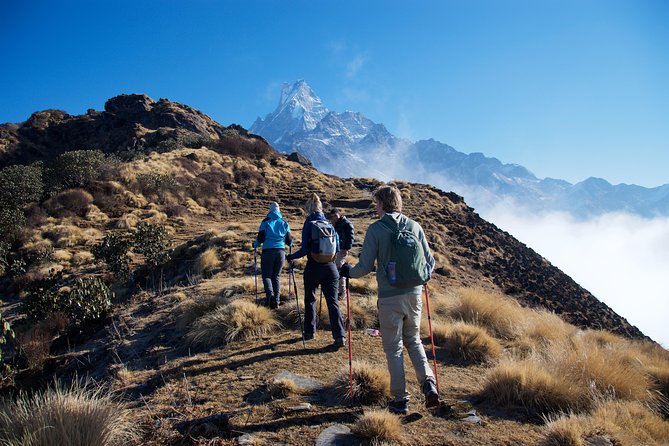
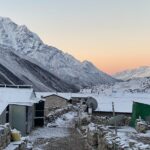
Day 11 starts the “come down” phase. You descend passing through small settlements including Himalaya, Dovan, and Bamboo, then climb stone staircases back toward Sinuwa. After rest, you descend again to the Chhomrong River and then ascend on the left route that leads to Jhinu, famous for hot springs.
Jhinu is one of those recovery stops that actually makes sense after this kind of trekking. After days of step work—especially the stair-heavy sections—hot springs can feel like a reset for sore legs. You’re not just chasing a scenic stop; you’re giving your body a chance to recover.
Day 12 is your final trekking day. You descend through stone steps, pass more villages and tea houses, and see farmland sections and easier terrain patterns before reaching Nayapul. Then the jeep meets you and you transfer toward Pokhara.
Getting back to Kathmandu: one last movement day, then flight time
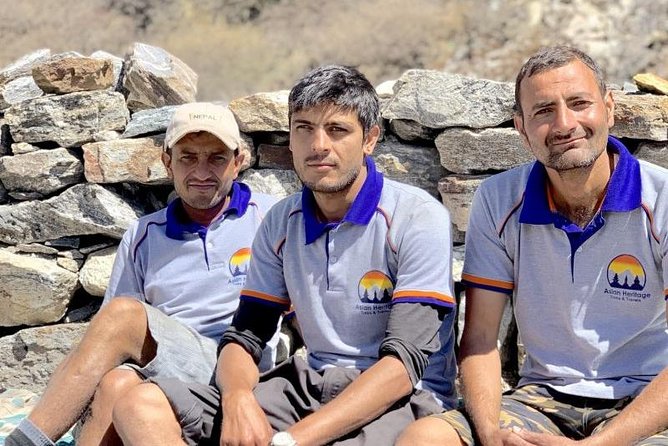
Day 13 continues the travel wrap-up. You have breakfast in Pokhara, then you drive back to Kathmandu. You arrive late afternoon and check into your hotel for the night.
Day 14 is airport time: you’re transferred about three hours before your flight departure, and you’re guided to the check-in hall.
These two days matter. After finishing a trek, you’ll want smooth timing. This plan keeps you from guessing how to get from Nayapul back to big-city transport.
Price and logistics: is $1,028.41 good value?
At $1,028.41 per person for about 14 days, this trek pricing lands in the “organized but not budget-chaos” category. The value comes from the parts you don’t want to handle yourself when you’re already focused on walking:
- Permits are included (including Annapurna Conservation Area permits and TIMS).
- Transportation is included as mentioned in the itinerary, including the Kathmandu/Pokhara/trek transfers.
- You get a government-licensed English-speaking trek leader.
- Porters are included, with a stated carry limit: one porter can carry up to 18 kilo, and that capacity is shared between two clients.
- The package includes accommodations: Kathmandu hotel nights with breakfast and lodge stays on the trek.
What you’ll still pay separately: meals and drinks beyond the included breakfasts, plus tipping, plus UNESCO entrance fees in Kathmandu (these are marked not included), and any personal trekking gear. Also note that emergency rescue evacuation insurance isn’t included, so you’ll want to consider travel insurance if you don’t already have it.
If you’re the type of trekker who wants the trail to feel managed—clear timing, a real team on your side, and less “figure it out” stress—this price looks fair. If you’re a high-independence trekker who already has permits, loves planning everything, and travels light with your own guide system, you could potentially spend less on a do-it-yourself arrangement. But you’d also be taking on more risk and effort.
Gear, pace, and altitude: how to avoid common trekking regrets
This trek requires moderate physical fitness, and the itinerary makes it clear that a large distance hiking commitment is part of the deal. The step-heavy days (like the Chhomrong River descent and many stair sections) are exactly where people feel it in their knees and calves.
Here’s what I’d treat as your three non-negotiables:
- Plan for early starts, including the optional 3 a.m. ABC sunrise.
- Protect your knees on downhill sections. This is where you can blow an otherwise good trek.
- Take altitude seriously even if you feel fine. Your itinerary includes a climb to higher points like Deurali, and the ABC area sits at high altitude where pacing matters.
Also, remember how lodge trekking works: you’re not just buying a room; you’re living in a tea house rhythm. Bring the small comforts you’ll need to sleep in cool temperatures and manage basic meals without getting hung up on menus.
Who this Annapurna Base Camp trek is best for
This tour fits best if you:
- want a moderate Annapurna experience with an organized structure
- like cultural add-ons (Durbar Square, Monkey Temple, Boudhanath) before you hike
- prefer having a trek leader and porter support rather than managing everything alone
- can handle long walking days and stair work without needing constant short breaks
It may feel less suitable if you:
- strongly dislike early mornings (sunrise options and mountain timing)
- have health concerns that altitude could worsen and you haven’t planned medical precautions
- want a lot of downtime with minimal walking (this itinerary keeps moving)
Should you book this Annapurna Base Camp trek?
If you want Annapurna Base Camp with less logistical friction, I’d say this is a solid booking choice. The strongest reasons are practical: permits handled, a licensed English-speaking leader, porter support with a clear carry limit, and a route that includes real viewpoint days like Poon Hill and ABC.
Book if your main goal is: walk a classic route, enjoy the villages and forests, hit the major mountain view moments, and come home with your body intact enough to enjoy Kathmandu and Pokhara afterward.
Skip or rethink if you’re looking for an easy stroll. This is a hike with real elevation, real steps, and real early mornings. The good news is the trek’s structure gives you rewards at the times that matter.
FAQ
Where is the meeting point and what time does the trip start?
The meeting point is Tribhuvan Airport in Kathmandu, Nepal, with a start time of 8:30 am.
What’s included in the trek package price?
The package includes Kathmandu hotel accommodations with breakfast, lodge accommodation during the trek (room only), Annapurna Conservation Area permits and TIMS, transportation as listed in the itinerary, porter support (with a stated carry limit), and an experienced government-licensed English-speaking trek leader. Breakfast is included for 5 mornings.
Are UNESCO entrance fees in Kathmandu included?
No. Entrance tickets for Kathmandu Durbar Square, Swayambhunath Temple, and Boudhanath Stupa are listed as not included.
How much luggage will a porter carry?
One porter can carry up to 18 kilo of luggage, and it can be shared between two clients.
Is the tour private?
Yes. It’s described as a private tour/activity where only your group will participate.
How late can I cancel for a full refund?
You can cancel up to 6 days in advance for a full refund. Any change made less than 6 full days before the experience’s start time is not accepted, and different refund amounts apply if you cancel 2–6 days before.