REVIEW · KATHMANDU
Annapurna Base Camp Trek – 10 Days
Book on Viator →Operated by Himalayan Recreation Treks & Expedition Pvt.Ltd · Bookable on Viator
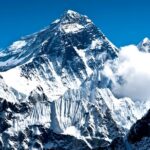
Altitudes and good guides make this trek interesting. This 10-day Annapurna Base Camp trek routes you from Kathmandu to Pokhara, then into the Annapurna region through villages and into the Annapurna Conservation Area, finishing at base camp around 4,130m.
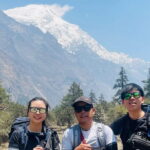
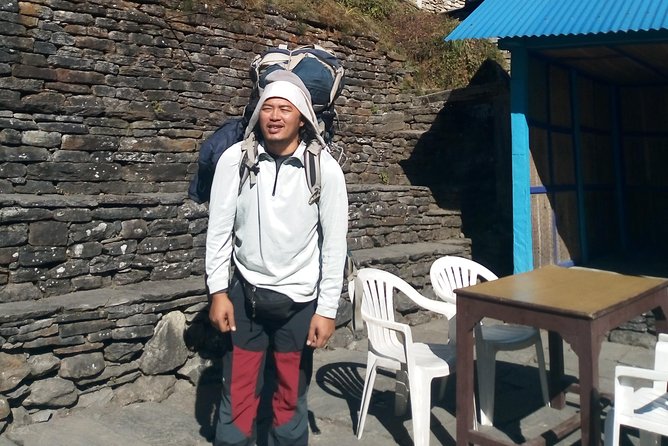
What I like most is the human support. The trek is guided by a government-licensed leader, plus local porter help. In the reviews, I kept seeing the same names come up again and again—Santosh, Asok, and Raju Simkhada (Rash)—and that matters on an ABC trek.
One consideration: you’re dealing with altitude and fast weather changes. The tour notes call out adverse health effects as a real possibility, even if you’re fit—so you’ll want to talk to your doctor and take the acclimatization days seriously.
In This Review
- Key reasons this Annapurna Base Camp trek works well
- Arriving in Kathmandu: culture, easy days, then a real reset
- Thamel and temple time helps you prep your brain
- Pokhara and the trail mindset shift
- First trekking days: Chhomrong and the rhododendron-to-rock feel
- Sinuwa and the 2,500 stone-step moment
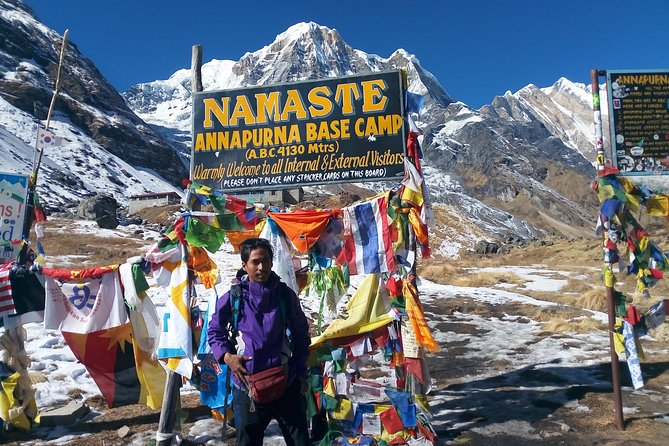
- Base Camp Day: reaching Annapurna Base Camp around 4,130m
- The return from base camp: Sinuwa, bamboo, and a different kind of tired
- Jhinu Danda and the stair rhythm back to Chhomrong
- Back to Pokhara via countryside: Nayapul, Phewa Tal, and Sarangkot
- Final Kathmandu days: Patan Durbar Square, Garden of Dreams, and a museum stop
- Price and value: what you really pay for at $699 per person
- The guide/porter factor: what the reviews keep pointing to
- Altitude reality check: how to approach 4,130m responsibly
- Should you book this Annapurna Base Camp trek?
- FAQ
- What is the duration of the Annapurna Base Camp trek?
- How high is Annapurna Base Camp on this trek?
- Where does the trip start and end?
- What’s included in the tour price?
- Are lunch and dinner included?
- How many nights are you in tea houses during the trek?
- What about travel insurance?
- What fitness level is required?
- Is there a limit on group size?
- Can I cancel and get a refund?
Key reasons this Annapurna Base Camp trek works well

- Small-group feel (max 12 people) with a private setup for your booking
- Tea-house trekking for 6 nights so you’re not carrying a tent through the hard bits
- Base camp at ~4,130m in the Annapurna Conservation Area
- Support staff with real reputations (Santosh, Asok, Rash and local porters mentioned repeatedly)
- Food and comfort managed on the route (reviews highlight good meals and comfortable stays)
- Clear transition between Kathmandu, Pokhara, and the trail with included transfers
Arriving in Kathmandu: culture, easy days, then a real reset
Your trip starts in Kathmandu with a staff member greeting you at Tribhuvan International Airport and helping you get to your hotel. From there, you meet your guide and get your overnight sorted. I like this approach because ABC treks punish delays. Starting with pickup and a plan helps your body and your brain behave on Day 1.
Then comes a light dose of Kathmandu sightseeing—Thamel, Kathmandu Durbar Square, and Pashupatinath Temple. Thamel is practical: it’s where you can handle last-minute gear needs, find simple meals, and adjust to Nepal time. Durbar Square and Pashupatinath are a solid way to see the country beyond trekking ads. If you arrive tired, you can keep the pace easy here and save your energy for the mountains.
A small drawback: Kathmandu can be busy and noisy, and you’ll still be sleeping at low altitude for a night. If you’re sensitive to sleep disruption, plan to go low-effort the evening you arrive.
You can also read our reviews of more tours and experiences in Kathmandu.
Thamel and temple time helps you prep your brain
Day 1 is also about mental prep. You’re going to spend the next stretch on narrow trails, on cold mornings, and at elevations where your body starts negotiating. Time in Thamel and around major sites helps you get your bearings fast—where to buy things, how to move around, and how the day-to-day rhythm feels.
If you’re traveling as a couple, this first day can be surprisingly romantic in a low-key way. You’re not “doing” a trek yet—you’re just settling in. That makes it a better start than jumping straight into early starts and long drives.
Pokhara and the trail mindset shift
The next big step is getting to Pokhara Lakeside and setting up for the trek phase. The plan includes travel from Kathmandu toward the trekking access point (with a bus ride from the city area to the Nayapul route area), and your guide handles the handoff. The scenery on the road is a bonus, but what matters is the timing: Pokhara is where you’ll switch from city time to trail time.
During the Pokhara transition day, you’ll also see a couple of major viewpoint/cultural stops in the Kathmandu-side orbit (Swayambhunath and Chandragiri Hills are listed on the route plan). It’s not just sightseeing filler. These stops remind you this is not a “walk in the woods” trip. You’re moving through a real country with real geography, and the Himalayas are always in the background—sometimes literally.
The main drawback with a day like this: travel days can eat daylight. If you’re the type who needs a slow morning, build in patience for bus schedules and transfer timing.
First trekking days: Chhomrong and the rhododendron-to-rock feel
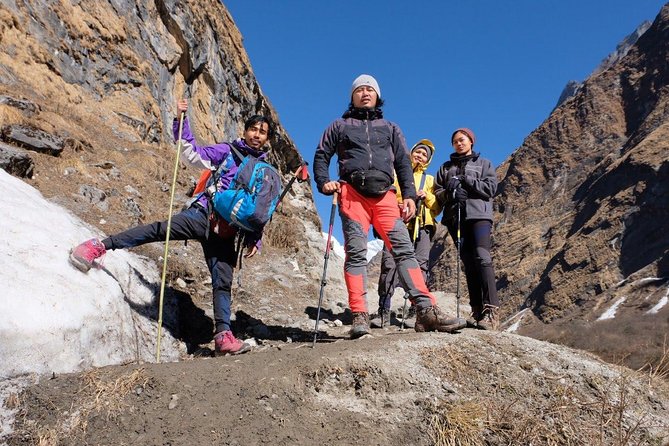
Day 3 heads toward Chhomrong, via a steady uphill-and-downhill climb through woodland and rhododendron terrain. This is a classic ABC-route moment: it teaches your legs how the day will feel later on. It’s not just the altitude yet—it’s uneven trail and fatigue management.
From Ghandruk, you’re looking at a push of effort on uneven ground, then a descent/ascent rhythm that keeps you working. Chhomrong is often where trekkers feel the trek becoming “real.” It’s also a village setting, which means you’ll likely be surrounded by local life rather than isolated wilderness.
If you’re doing this as your first serious trek, take your time today. The temptation is to sprint out of Kathmandu energy. Don’t. You’ll be glad you paced on Day 3 when base camp day gets closer.
Sinuwa and the 2,500 stone-step moment
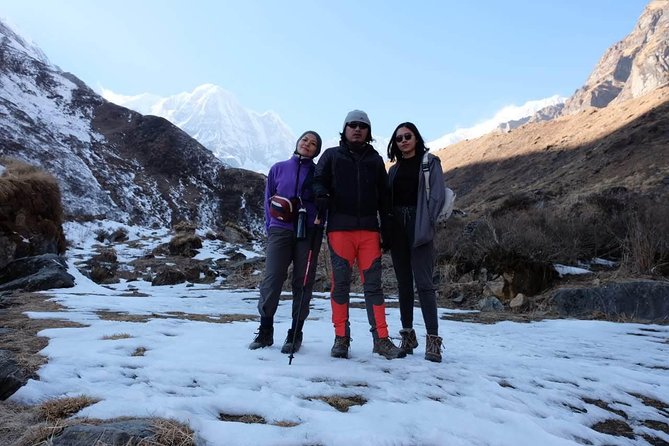
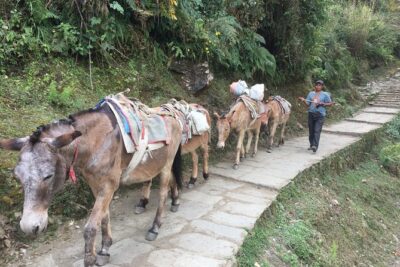
Day 4 continues the journey toward Sinuwa, with a route that includes crossing a river and ascending around 2,500 stone steps carved into the hillside. That’s a big clue about what this trip is really like: the “work” on ABC isn’t only the altitude. It’s stairs, foot placement, and holding steady.
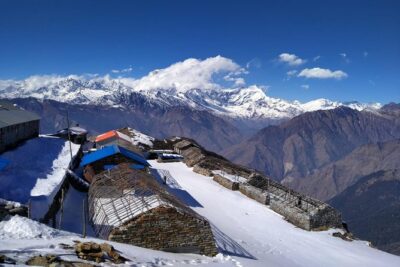
The Sinuwa area is also described with excellent mountain views and a sense of being inside the Annapurna ecosystem. Even if visibility isn’t perfect, the terrain gives you plenty to focus on—stone steps, river crossings, and the feel of the trail winding through the region.
One consideration: if stairs stress your knees, start with shorter steps and slower cadence. It’s the kind of detail that makes a huge difference over several days.
Base Camp Day: reaching Annapurna Base Camp around 4,130m
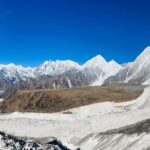
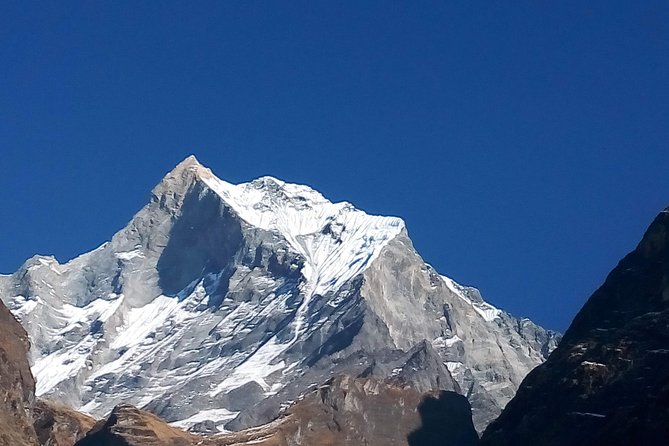
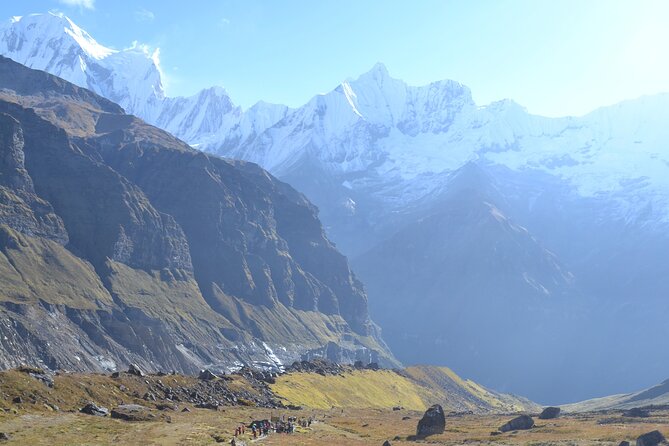
Day 5 is the peak day in terms of distance and effort, and it’s the day everyone talks about: trekking to Annapurna Base Camp, sitting at about 4,130m. The route is described as climbing gently alongside the riverbed at first, then pushing your stamina as you move toward the base camp area. The plan also mentions the Machhapuchhre Base Camp along the way.
This is where your acclimatization choices matter. You’re in an area where weather can shift fast, and the trip description explicitly warns about adverse health effects from altitude. So I’d treat this day as a “go steady” day, not a “race for photos” day.
Also, don’t underestimate the emotional side of ABC. Reviews repeatedly mention feeling cared for by the team along the route, and that can change the whole experience. When you arrive after days of effort, having guides who keep you safe and on pace makes the moment more enjoyable, not just harder.
The return from base camp: Sinuwa, bamboo, and a different kind of tired
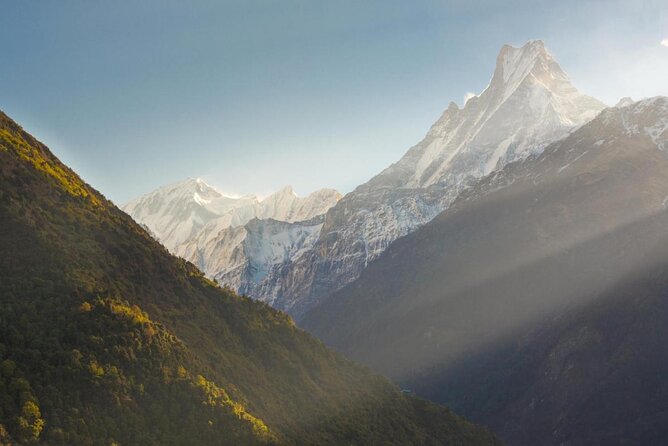
Day 6 retraces steps back toward bamboo, trekking through the sanctuary area and enjoying the feel of the landscape around you. This is not a “free day.” Going down can be easier on breathing but harder on your legs. Your pace may slow anyway as fatigue sets in.
What I like about the way this trek is structured is that you’re not just rushing to the next point. Returning through similar terrain helps you understand what the route was like the first time—and helps you spot where you gained confidence.
The scenery focus here is real. Even when you’re going downhill, you’ll notice how the trail changes atmosphere: wetter, quieter, and very in-the-moment.
Jhinu Danda and the stair rhythm back to Chhomrong
Day 7 brings Jhinu Danda into the mix. The route description notes trekking uphill from bamboo toward Kuldighar and then descending again toward the Chhomrong Khola, with climbs back to Chhomrong via stone steps.
This day has a “repeat offender” vibe—stairs again, but you’re now using them with experience. That’s actually helpful. Your body learns the choreography, and you waste less energy fighting the terrain.
If you’re traveling solo, this is also the day where you may feel the camaraderie with your guide and porter team more strongly. Reviews mention singing and dancing during longer parts of the trek, and that kind of energy tends to show up most after a couple of hard days—when everyone’s past the initial shock.
Back to Pokhara via countryside: Nayapul, Phewa Tal, and Sarangkot
Day 8 shifts from trekking to recovery. You walk from Jhinu back toward Nayapul, then transfer back to Pokhara. The tour notes mention distant Annapurna views and wet farmlands with rice plantations—so even when you’re done with the main climb, you’ll still feel like you’re moving through a living region.
After arriving in Pokhara, the itinerary includes Phewa Tal and Sarangkot. This is a smart pairing. Phewa Tal gives you a calm decompression moment; Sarangkot gives you that classic altitude-adjacent viewpoint energy without the day-after-base-camp misery.
It’s also great for couples. You’ve earned the lazy minutes. You’re not “training” now—you’re soaking in a place that feels different from the trail.
Final Kathmandu days: Patan Durbar Square, Garden of Dreams, and a museum stop
Day 9 drives you back to Kathmandu (your day is described as flexible, including the choice to depart on that day). Patan Durbar Square is included, which is an easy way to keep Kathmandu meaningful without turning your last hours into a marathon.
Day 10 finishes with support for last-minute preparations and dropping you at Tribhuvan International Airport. Along the way, Garden of Dreams and Narayanhiti Palace Museum are listed.
This ending matters more than people think. When you finish a high-altitude trek, you don’t just want transport—you want a smooth transition out of it. Having a final day that isn’t only airport chaos makes the whole trip feel complete.
Price and value: what you really pay for at $699 per person
The listed price is $699 per person, and it can look low or fair depending on what you compare it to. Here’s the value angle: a big chunk of what you’d normally pay separately is already handled.
Included items worth noting:
- Kathmandu and Pokhara nights (2 nights each), plus hotel breakfast
- 6 nights in tea houses
- Transfers from and to the airport
- Kathmandu–Pokhara–Kathmandu by tourist bus, and Pokhara–Nayapul–Pokhara by private car
- A government license holder trekking guide, with the guide’s food, drinks, accommodation, insurance, salary, equipment, transport, and local tax covered
- First aid kit and the provided Himalayas Recreation t-shirt
- Farewell dinner with cultural show
Two costs to plan for:
- Lunch and dinner in Kathmandu and Pokhara: $150 per person
- Gratuities: $50 per person
My practical take: this is a decent value for an ABC trek if you want a guided, structured plan with small-group support and tea-house lodging. It’s less “value” if you’re the type who prefers fully independent trekking or you know you’ll ignore the cultural/sightseeing portion and only care about trekking. You’d pay for support either way.
Also, the tour includes flexibility options in the route description. The itinerary isn’t a strict single-track for everything beyond the core trekking shape, which helps if your group adapts to energy levels and weather.
The guide/porter factor: what the reviews keep pointing to
The most praised aspect in the information you provided is the level of care from the local team. Names that show up include Dibo, Varat, Santosh, Asok, and Raju Simkhada (Rash). What’s consistent isn’t just friendliness—it’s professionalism and support on the ground.
That shows up in a few ways that matter for your experience:
- You’re not guessing about pacing and safety
- Your food and accommodation logistics are handled during the trekking stretch
- Porters and guides reduce the mental load of ABC planning, especially for first-time trekkers
Even if you’re experienced, that kind of support can make the trek more enjoyable because you spend less time managing small problems and more time enjoying the route.
Altitude reality check: how to approach 4,130m responsibly
The trip description is clear: you’ll hike at demanding altitude around 4,130m, and weather can swing hard. It also warns that adverse health effects can happen to anyone, regardless of age or gender, and strongly recommends talking to your doctor before departure.
So here’s the practical way to handle this trip smartly:
- Take acclimatization seriously, especially on the days that include “in-between” trekking segments
- Don’t push pace for bragging rights—ABC is long enough that slow is still progress
- Be honest with your guide if you feel unwell. A good team reacts early.
And one more thing: this is a moderate fitness-level trek, and the minimum age listed is 7. That’s helpful context, but altitude is still altitude. If you have any medical concerns, get your doctor’s input.
Should you book this Annapurna Base Camp trek?
Book it if you want:
- A guided 10-day Annapurna Base Camp experience with small-group support
- Tea-house trekking with built-in lodging and a team that handles the details
- A trip that includes Kathmandu and Pokhara culture plus major viewpoint moments like Phewa Tal and Sarangkot
- The comfort of a professional, licensed guide plus porter assistance, repeatedly praised in the information you shared
Skip it (or ask lots of questions first) if:
- You expect full independence or you dislike any structure
- You want a “no stairs, no challenge” trek. This route has hard climbing moments, including big step sections
If you’re prepared for the altitude and you like the idea of being supported rather than figuring everything out alone, this looks like a strong, practical way to do ABC with excellent service value.
FAQ
What is the duration of the Annapurna Base Camp trek?
The trek is listed as 10 days (approx.).
How high is Annapurna Base Camp on this trek?
Annapurna Base Camp is listed at about 4,130m / 13,550 feet.
Where does the trip start and end?
It starts in Kathmandu and includes the trekking through the Annapurna region, with the return also bringing you back to Kathmandu by Day 10.
What’s included in the tour price?
Included items cover airport transfers, hotel stays in Kathmandu and Pokhara (with breakfast), tea-house accommodation during the trek, guided trekking with a government-licensed guide, a first aid kit, and a farewell dinner with a cultural show.
Are lunch and dinner included?
Lunch and dinner in Kathmandu and Pokhara are not included, and there is a listed additional cost of $150 per person for those meals. The tour also specifies dinner and breakfast as included, but only the Kathmandu/Pokhara meals have a stated extra cost.
How many nights are you in tea houses during the trek?
The tour includes 6 nights in tea houses during the trekking portion.
What about travel insurance?
Travel insurance that covers medical expenses and emergency repatriation is required, and proof must be shown to the tour leader on the first day.
What fitness level is required?
The trip notes recommend moderate physical fitness.
Is there a limit on group size?
Yes. The maximum is 12 people per booking, and the tour is set up so only your group participates.
Can I cancel and get a refund?
Yes, you can cancel for a full refund up to 24 hours before the experience’s start time. Within 24 hours, there is no refund.
If you’d like, tell me your trekking background (first-timer or done ABC/EBC before) and your travel month, and I’ll help you sanity-check pacing and what to prioritize on each day.