REVIEW · KATHMANDU
Annapurna Base Camp Trek
Book on Viator →Operated by Mountain Kick Private Limited · Bookable on Viator
Morning at 10,000 feet hits different. This Annapurna Base Camp trek blends Kathmandu and Pokhara culture with day after day of village walking, forest sections, and dramatic gorges before you finally reach the place locals call the home of the gods at Annapurna Base Camp.
I really liked two things right away. First, the trip runs with local government-licensed guides and a support team that includes porters (one porter per pair of travelers), so you can keep your energy for the trail. Second, the guiding style praised in feedback from the groups I read about was practical and human, including guides such as Kumar Thapa and Jeevan, with lots of flexibility when plans needed adjustment.
One consideration: you’re gaining real altitude, including multiple days above 10,000 feet and a big push to 13,550 feet. Also, you’re responsible for bringing your trekking equipment, and travel insurance is mandatory before you arrive in Nepal.
In This Review
- Key things I’d plan around before you go
- Kathmandu first: get your bearings before the climb
- Pokhara transfer: swapping city noise for mountain air
- Nayapool and Tikhedhunga: your first real taste of the trek
- Ghorepani and the Poon Hill morning: a viewpoint day that feels earned
- Chomrong and Himalaya Hotel: pushing deeper, not just higher
- Annapurna Base Camp day: the “home of the gods” feeling
- Bamboo and Jhinu Hot Spring: where sore legs get a payout
- Back to Nayapool and Pokhara: last walking day, then sightseeing
- Kathmandu wrap-up: farewell dinner and the last night in comfort
- Price and what you’re really paying for at $1,300
- Difficulty and altitude: how to decide if this fits your fitness
- Guide style and group support: why it matters on a trek
- Should you book this Annapurna Base Camp trek?
- FAQ
- How long is the Annapurna Base Camp trek?
- What is the highest altitude on the trek?
- Where does the trek start and what happens before walking?
- Is pickup offered?
- What’s included in the price?
- What isn’t included?
- Do I need travel insurance before I arrive?
- What kind of guides and support staff will I have?
- Can the itinerary change if conditions require it?
- Can I cancel for a full refund?
- Are service animals allowed?
Key things I’d plan around before you go
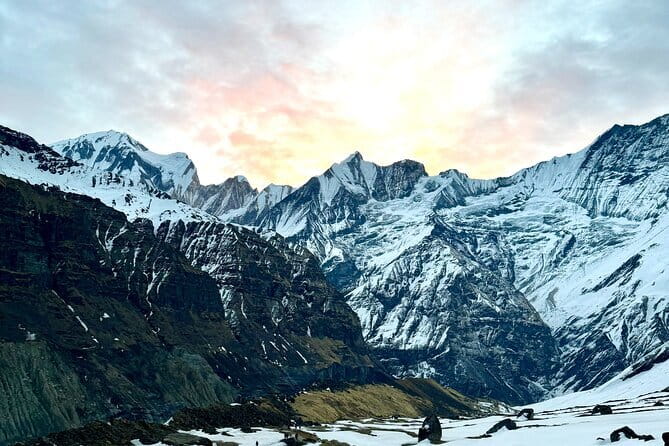
- Licensed guides + porter support: one porter each for a pair helps you trek more comfortably.
- Altitude isn’t optional: expect pressure on your legs, especially on long climbs and the Base Camp day.
- Poon Hill is built in: you’ll hike up for the viewpoint before continuing onward.
- Guesthouses every night: you’ll settle in each evening, typically in simple twin-sharing lodges.
- Flexibility is allowed: itinerary tweaks can happen when the group agrees, with your guide steering the call.
Kathmandu first: get your bearings before the climb
Your trip starts in Kathmandu, and I like that it doesn’t rush you straight onto the trail. After arrival, you’ll sleep at a three-star hotel on a twin-sharing basis, and you get breakfast. The next day is Kathmandu Valley sightseeing plus a pre-trip meeting, which matters more than it sounds.
That meeting is where you’ll confirm how the trek will run, what to expect day to day, and what your guide needs from you. If you’ve got a medical condition, this is also the moment to flag it so your guide and support staff can plan basic precautions (and so you remember to carry your own medicines). In feedback from past groups, the guides like Kumar Thapa and Jeevan are repeatedly described as careful, respectful, and good at keeping things organized.
Practical note: the meeting point start time is 7:45am, so plan to be ready early. If you’re arriving the same day as the trip begins, give yourself buffer time for delays.
You can also read our reviews of more tours and experiences in Kathmandu.
Pokhara transfer: swapping city noise for mountain air
On day three, you take a tourist bus from Kathmandu to Pokhara, around 3,000 feet in the city. You stay overnight at another hotel, then the next day you’re moving closer to the trailhead.
I like this pacing. Pokhara is your in-between world: comfortable enough to reset, scenic enough to get you excited, and close enough that the trek feels like a continuation instead of a hard jump.
Also, this helps logistics. You’ll have the transport stitched together instead of trying to manage it all yourself. That’s part of the value here: the trek is the headline, but the lead-up is what keeps the whole thing from becoming a scramble.
Nayapool and Tikhedhunga: your first real taste of the trek
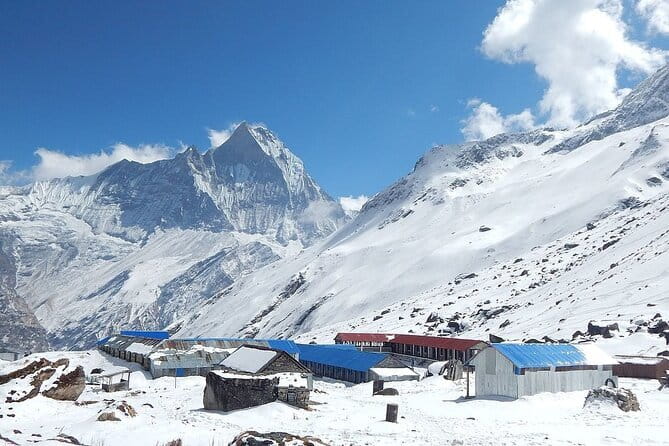
Day four starts with a drive to Nayapool at 3,477 feet, then you trek to Tikhedhunga at 5,060 feet. Even though this is still “early days,” this is where your body starts learning the trail rhythm: steady uphill effort, breaks that matter, and the reality that you won’t be sprinting anywhere.
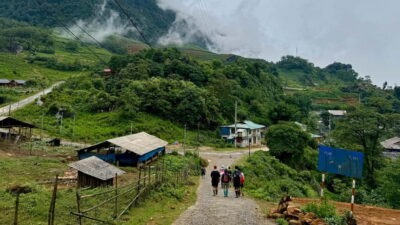
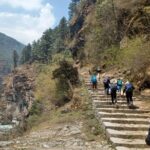
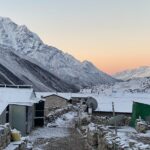
The route is designed to move through hilltop villages and sections of forest and gorges. That matters because it keeps the trek from feeling like one long, boring grind. You get variety—views when you can, shade when you need it, and that steady sense of moving deeper toward the Annapurna massif.
Accommodation is a guesthouse, and you’ll sleep on a twin-sharing basis. Guesthouses in Nepal are simple, and that simplicity is part of the vibe: you’re walking all day, then you recover and talk with your crew over the day’s stories.
Ghorepani and the Poon Hill morning: a viewpoint day that feels earned
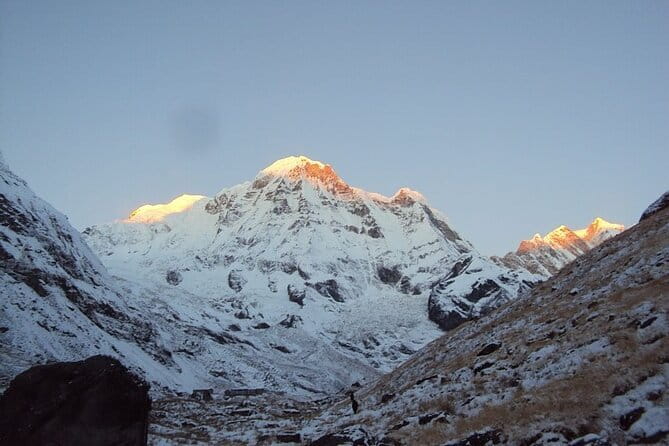
Day five brings you to Ghorepani at 9,416 feet. You’ll feel the altitude more here. It’s not yet the highest part of the trek, but it’s high enough that you’ll want to pace like you mean it.
Then day six is your Poon Hill moment. You hike up to Poon Hill at 10,535 feet, get the viewpoint, and then continue on to Tadhapani at 8,628 feet. This is a classic trek structure for a reason: you get the payoff without needing to spend the entire day at the highest elevation.
What I’d watch for: this is also a leg-tester day. Even if the distance isn’t extreme, the ascent time can be long. The trip’s difficulty description says it plainly—most days are in the lower Himalayas, but you still go over 10,000 feet and climb for hours. So treat Poon Hill as a “slow and steady wins” day, not a try-to-be-hero day.
Chomrong and Himalaya Hotel: pushing deeper, not just higher
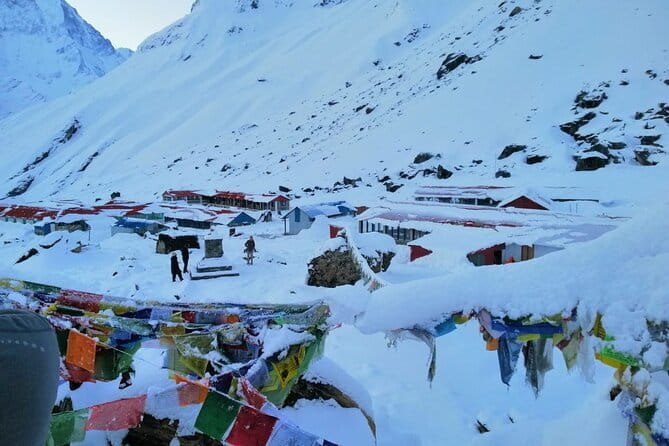
Day seven takes you to Chomrong at 7,120 feet. That drop in elevation compared to Ghorepani and Poon Hill might look like a break on paper, but it’s still trekking: downhills can be as hard on your knees as uphills are on your thighs.
Day eight is to Himalaya Hotel at 9,678 feet. This is one of those stretches where you start to feel fully committed. The trek’s description focuses on the thrill of travelling above gorges and through forests, and the Annapurna region is famous for views that appear when you think you’ve climbed enough for the day. This is where your camera roll starts getting real.
Guesthouses continue here, again on twin-sharing. Food and comfort are usually basic but satisfying on a trek like this, and the feedback I saw consistently highlights the quality of meals and the mountain-view factor at the places you stop.
Annapurna Base Camp day: the “home of the gods” feeling
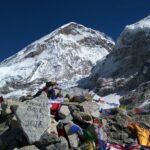
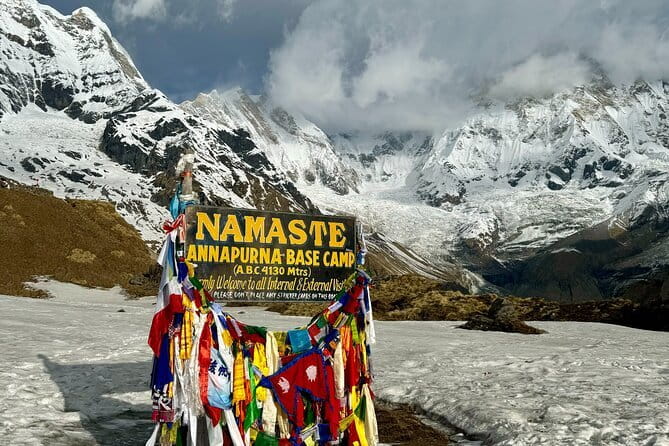
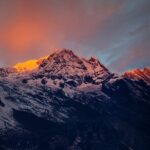
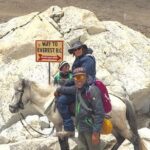
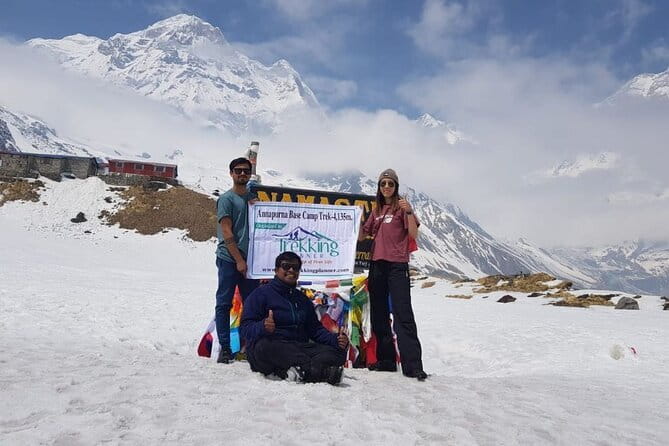
Day nine is the big one: trekking to Annapurna Base Camp at 13,550 feet. This is the day that turns the entire trip into a single mission.
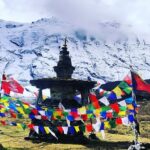
The route is designed to walk on the foot of the Annapurna massif, and the summit push is framed as spiritual by locals—the home of the gods. You’ll hear that as a story before you ever reach it, and when you finally get there, it’s described as having something divine about the place.
I’d also keep expectations real. The “divine feeling” doesn’t mean comfort. It means you’re arriving after effort. You’ll likely feel the altitude in your breathing and legs. Even with acclimatization built into the schedule, this is still a high point—one of the trip’s main reasons it’s rated as a challenge for grit.
Then you sleep at a guesthouse near the base area (still twin-sharing). After the Base Camp day, your guide and support staff will help you keep the day after manageable.
Bamboo and Jhinu Hot Spring: where sore legs get a payout
Day ten takes you to Bamboo at 7,695 feet. Day eleven continues to Jhinu Hot Spring at 5,840 feet. This is your recovery arc, and I’d actually plan your attitude around it.
After a high day like Base Camp, going down can feel fast, but your body still asks for patience. Downhill is tough—ankles, knees, and calves take the hit. The schedule bringing you to a lower elevation and then into hot springs territory helps you recover in a way that’s fun, not just functional.
Even though the hot spring specifics aren’t spelled out in detail, the fact that Jhinu Hot Spring is built into the itinerary is a big deal. It gives you something to look forward to on the days where your legs are already bargaining with gravity.
Back to Nayapool and Pokhara: last walking day, then sightseeing
Day twelve returns you to Nayapool at 3,477 feet, followed by a drive back to Pokhara. You also get sightseeing in Pokhara and another hotel night.
This is the moment you might notice you’re not just climbing and descending—you’re living in a rhythm. Early mornings. Walk. Guesthouse. Food and rest. Then repeat. By day twelve, you’re starting to feel like the mountains are setting your schedule.
The sightseeing piece is smart because it gives you a “normal day” feeling again without losing the trip’s momentum. You’ll be able to enjoy Pokhara beyond trek talk.
Kathmandu wrap-up: farewell dinner and the last night in comfort
Day thirteen drives you back to Kathmandu and includes a farewell dinner. You’ll sleep at your hotel, then day fourteen is final departure.
I like having an actual farewell dinner because it closes the loop. You’ve worked hard together, you’ve got shared stories (and a shared appreciation for the bathrooms you survived), and you can talk through what went well and what you learned.
Also, this is where you can ask your guide for advice on recovery and any gear tweaks you might want for next time, especially if you had to rent or replace items during the trek.
Price and what you’re really paying for at $1,300
At $1,300 per person for about 14 days, this is not a budget trek. But it also isn’t just “pay for walking.” You’re covering a full package that includes:
- three-star hotel stay in Kathmandu (twin-sharing) with breakfast
- trek guesthouses (twin-sharing)
- local government-licensed guides
- porters plus local support staff (one porter per pair)
- transportation (tourist bus Kathmandu–Pokhara and drives to/from trek sections)
- Kathmandu Valley and Pokhara sightseeing
- a farewell dinner
What’s not included is where you need to be careful: travel insurance (required and mandatory before you arrive), international airfare, visa fees, and trekking equipment.
So the value is in the structure. When guides and porters are included, you get a smoother pace, fewer logistics headaches, and more energy for the hard parts. You’re also less likely to be stuck figuring out basic stuff mid-trek.
If you’re the type who enjoys adventure but doesn’t want to play project manager for 14 days, this price starts to make sense fast.
Difficulty and altitude: how to decide if this fits your fitness
The itinerary is built so most days are spent in the lower Himalayas. That’s good. But the trip still includes long climbs and multiple elevations above 10,000 feet, including the big push to 13,550 feet at Annapurna Base Camp.
If you have moderate physical fitness, you’ll likely be okay—as long as you pace and accept that your legs will feel it. The description is honest: going over 10,000 feet and climbing for hours tests your grit.
My practical advice:
- Expect pressure on legs, not just “a little tired.”
- Take breaks when your guide suggests them, even if you feel you could push.
- Tell your guide early if you’re struggling, especially on the higher days.
Also remember: the company notes that you should free up a few days before and after your trip. Flight delays, accidents, and natural hazards can change the itinerary. That buffer reduces stress.
Guide style and group support: why it matters on a trek
The best part of this trip, based on feedback, is not the brochure words. It’s how guides handle real moments: keeping the schedule moving, adjusting when needed, and caring in a way that feels respectful, not transactional.
I saw recurring praise for guides like Kumar Thapa and Jeevan—not just for knowledge, but for patience and humor, and for being the kind of person who makes you feel cared for while still staying practical.
One more thing I appreciate: the trip allows flexibility in itinerary changes as long as there’s no time pressure and everyone consents. That’s a good sign. Mountains don’t read timetables.
And since this is a private tour/activity where only your group participates, you’re not stuck with random strangers dragging the pace in ways you didn’t plan for.
Should you book this Annapurna Base Camp trek?
You should book it if you want:
- a full Kathmandu + Pokhara + Annapurna Base Camp experience in one organized plan
- licensed guiding and porter support so your energy stays for the trek
- a route that includes both village walking and a highlight viewpoint day at Poon Hill
- a team that’s described as patient, flexible, and good at handling issues beyond their control
You might want to think twice if:
- you’re not ready for altitude work (especially days over 10,000 feet)
- you don’t want to bring and manage your own trekking equipment
- you’re missing mandatory travel insurance before arrival in Nepal
If you like practical adventure—hard days with a clear plan and real human support—this trek is a strong bet.
FAQ
How long is the Annapurna Base Camp trek?
The trip is about 14 days.
What is the highest altitude on the trek?
Annapurna Base Camp is listed at about 13,550 feet.
Where does the trek start and what happens before walking?
You start in Kathmandu, with arrival and then Kathmandu Valley sightseeing plus a pre-trip meeting. After that, you travel to Pokhara by tourist bus and then drive to Nayapool before beginning the trekking days.
Is pickup offered?
Yes, pickup is offered.
What’s included in the price?
Included are three-star hotel stay in Kathmandu on a twin-sharing basis with breakfast, twin-sharing guesthouses during the trek, local government-licensed guides, and porters (one each for a pair of travelers) plus local support staff. Transport between key points and sightseeing in Kathmandu and Pokhara are also included, along with a farewell dinner.
What isn’t included?
Not included are travel insurance, international airfare to and from Kathmandu, visa fees for Nepal, and trekking equipment.
Do I need travel insurance before I arrive?
Yes. Travel insurance is mandatory and must be arranged before arriving in Nepal.
What kind of guides and support staff will I have?
You’ll have local government-licensed guides, plus porters and local support staff to help you trek.
Can the itinerary change if conditions require it?
Yes. The itinerary may be altered for reasons beyond anyone’s control, and you can adjust to some degree with guide input as long as there’s no time constraint and everyone consents.
Can I cancel for a full refund?
Yes. You can cancel up to 24 hours in advance for a full refund.
Are service animals allowed?
Yes, service animals are allowed.