REVIEW · KATHMANDU
Annapurna Base Camp Trek
Book on Viator →Operated by Oriental Journeys · Bookable on Viator
One trek can mess with your sense of scale fast. This Annapurna Base Camp journey is built around the Annapurna Sanctuary, with waterfalls, terraced villages, rhododendron forests, and big mountain payoffs along a clockwise route. I especially like how the trek mixes cultural stops (Gurung villages and warm hospitality) with real trail variety, and I like the way the day-by-day plan uses teahouses so you’re not chasing gear every night. A real consideration: high altitude can feel challenging, and some sections are slippery, so good boots and a slow pace matter.
For the money, I also like that the package includes a lot of the stuff that usually adds up: lodge stays during the trek, an English-speaking guide, and the Annapurna Conservation Area fees plus TIMS. On top of that, you get two hotel nights in Kathmandu and a full Kathmandu Valley tour with sites like Pashupatinath, Boudhanath, Swayambhu, and Kathmandu Durbar Square. If you’re hoping for lots of meals included, know that breakfast, lunch, and dinner are included on set days, not every meal, so you’ll still need a budget for tea/coffee and extra snacks.
In This Review
- Quick hits: what makes this Annapurna trek tick
- Annapurna Sanctuary gives you variety, not just a final view
- Getting from Kathmandu to the trail: Pokhara, Nayapul, and timing you can plan
- Ulleri to Chhomrong: stone steps, suspension bridges, and village life
- Bamboo through Deurali: forests, Hinku Cave, and glacial-river drama
- The climb to Annapurna Base Camp via Machhapuchhre Base Camp
- Base Camp morning, then the return to Bamboo
- Bamboo to Jhinu Danda: ups, downs, and a hot spring reward
- From Jhinu Danda to Pokhara, then Kathmandu’s UNESCO circuit
- Price and what you’re getting for $1,440
- What to pack and who this trek is (and isn’t) for
- Should you book Oriental Journeys for Annapurna Base Camp?
- FAQ
- Is domestic airfare included?
- What does the itinerary include during the trek?
- Are park fees and trekking registration covered?
- Do I get help carrying luggage?
- Is there a hot shower included on the trek?
- What’s the starting time for the experience?
- Can I cancel for a full refund?
- Who should avoid this trek?
Quick hits: what makes this Annapurna trek tick
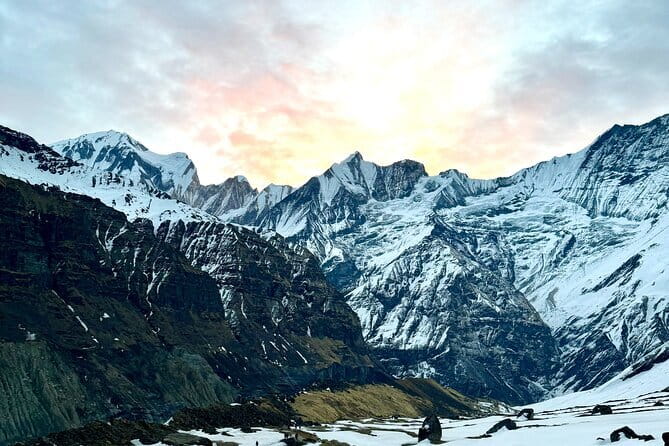
- Clockwise Annapurna Sanctuary route with deep gorges, glacier valleys, and constant scenery changes
- Lodge-based nights (teahouse style) rather than wild camping, which keeps the trek practical
- A real summit-day feel when you reach Annapurna Base Camp, with Machhapuchhre Base Camp views on the way
- Hot spring break near Jhinu Danda after a long day of ups and downs
- Guides with local experience, including feedback that highlights Aneel, Machhindra Achary, and the Oriental Journeys team
- Kathmandu Valley day built around UNESCO sites after you finish in Pokhara
Annapurna Sanctuary gives you variety, not just a final view
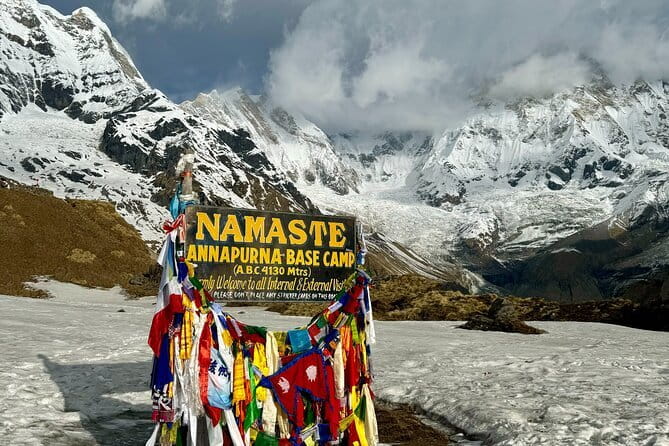
The Annapurna Base Camp trek is often pitched as a single destination. What makes this one satisfying is the shape of the walk: you move through multiple “zones” of the region, from river basins and narrow valleys to colder, higher stretches. You’ll pass waterfalls, ethnic villages, terraced farmlands, and rhododendron forests—so the scenery keeps changing instead of turning into one long sameness test.
I also like that the route is described as clockwise, starting from Nayapul and working through places like Tikhedhunga, Ghorepani, Tadapani, Chhomrung, and Deurali before finishing at Base Camp. Even when a specific day’s schedule focuses on a certain segment (like Ghandruk, Chhomrong, Bamboo, and Deurali), the overall arc is clear: you’re heading deeper into the Annapurna Sanctuary step by step.
One more practical point: the classic trail can be slippery. That’s not a deal-break, but it does mean you’ll want footwear with grip and you’ll want to move like a careful adult in the rain, not like a mountain goat.
You can also read our reviews of more tours and experiences in Kathmandu.



Getting from Kathmandu to the trail: Pokhara, Nayapul, and timing you can plan
Your trek starts after you get your bearings in Kathmandu. Day 1 is arrival at Tribhuvan International Airport, a transfer by Oriental Journeys, and a briefing with your guide so you know how the trek works before you start walking.
Then you fly to Pokhara for the trailhead approach. Here’s the key logistics detail you should not ignore: domestic flights are listed as not included, even though the itinerary uses a short flight to Pokhara. So when you budget, plan for that hop.
From Pokhara, there’s a vehicle drop to Nayapul, then local transport to Ulleri. From Ulleri, your trek begins with a climbing day that ends at Fat Ghandruk (listed at 1,940m). It’s a good warm-up, but it still helps to start early and take your time on uphill sections.
Ulleri to Chhomrong: stone steps, suspension bridges, and village life
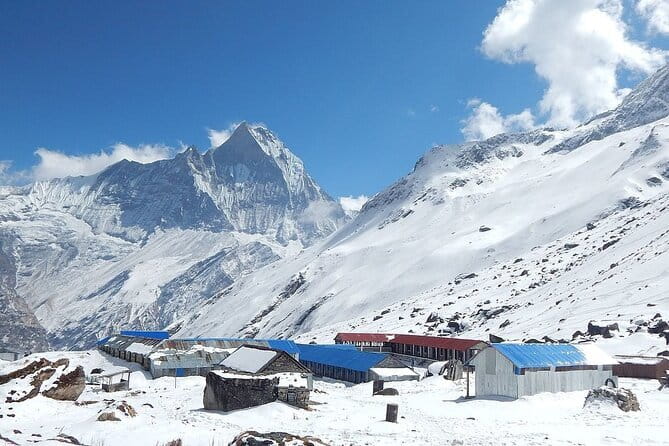
This trek gets going in a very hands-on way. After arriving at the Nayapul/Ulleri entry point, you work your way uphill toward Ghandruk, then continue onward into the Gurung-area villages. The itinerary leans into the human side of the trek—friendly villagers, smiling faces, and community life are part of the attraction here.
On the way from Chhomrong onward, you’ll hit a classic mix of hiking textures:
- Long stone-step descents (the itinerary notes 2,500 steps leaving Chhomrong)
- A suspension bridge crossing Chhomrong Khola, which is both scenic and a little attention-demanding
- Forest sections that feel cooler and more shaded as elevation changes
By the time you reach Bamboo, you’re also getting into the “valley floor” feel—easy walking down in places, then reloading for the next climb.
A small takeaway for you: these kinds of descents are where fatigue builds fast. Even if the day’s schedule looks manageable on paper, your knees will still get the message, especially after long step sequences.
Bamboo through Deurali: forests, Hinku Cave, and glacial-river drama
One of the more memorable “in-between” days is the trek toward Deurali. The route goes through a damp, cold bamboo forest at the start, and the itinerary specifically calls out the glacial river views that show up as you move closer to the water.
There’s also time built in for side interest: you can visit Hinku Cave on the way. That’s a nice moment to break up the steady walking rhythm and add a bit of exploration energy without adding a complicated detour.
Later, the day turns more serious. You’ll climb again to Deurali, with the scenery shifting toward steeper terrain and rock-face cliffs above with wispy waterfalls. It’s not just pretty; it’s also a sign you’re moving into higher country.
If you’re the type who always wants to know how the day’s going to feel, this is likely to be a “steady effort” day. Expect cold and damp early, then gradual uphill work.
The climb to Annapurna Base Camp via Machhapuchhre Base Camp
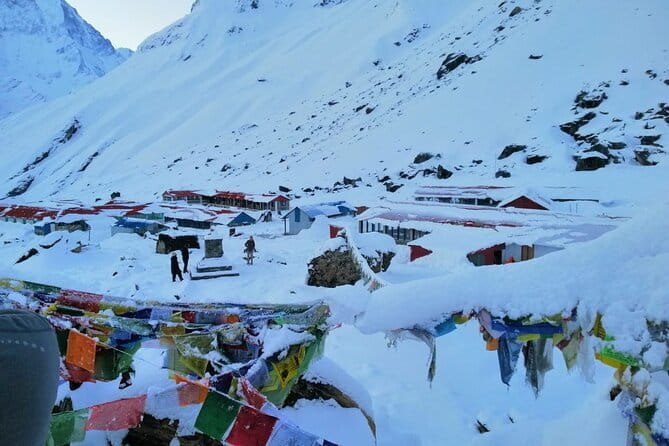
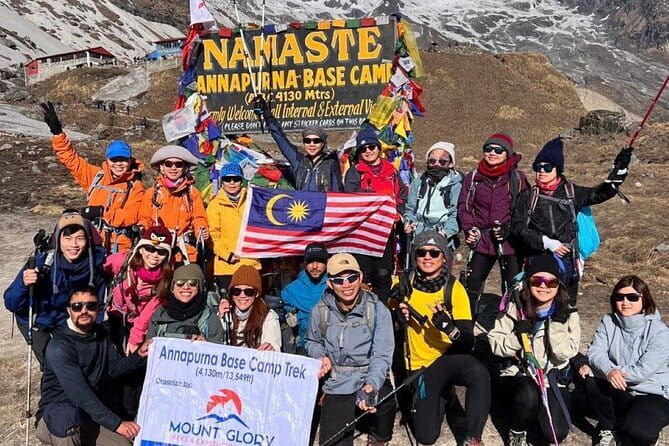
This is the day you remember. The itinerary has Deurali to Annapurna Base Camp (4,130m) taking about 5–6 hours, with a route that also goes past Machhapuchhre Base Camp (around 3,700m).
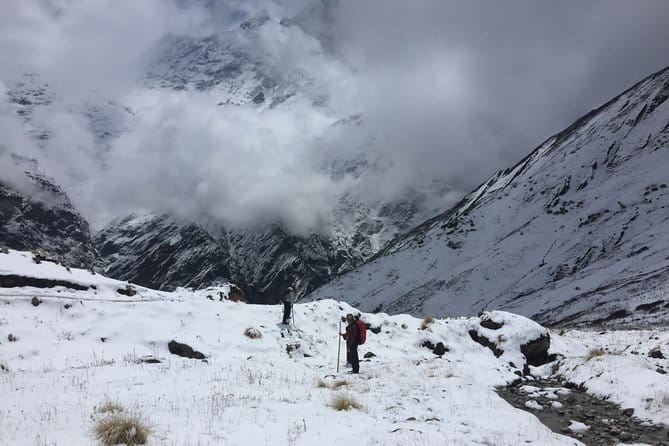
The trail is described as a mix: you climb gently through a river bed area, then you take a steep trail toward the mountain side. That blend matters because it means your pace can vary naturally—some sections let you settle into rhythm, others force you to focus.
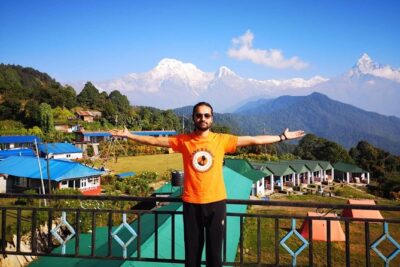
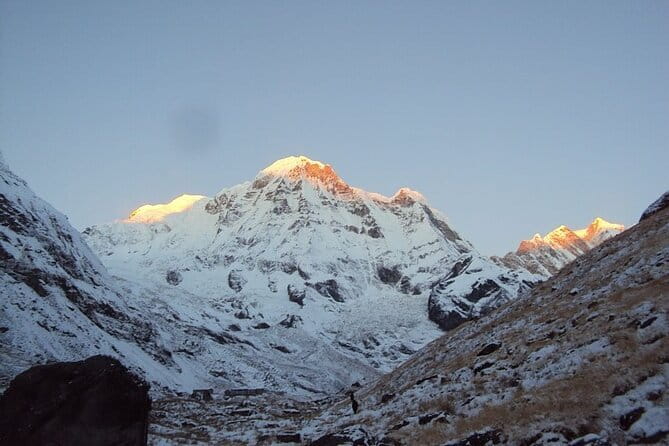
What you’re actually walking toward is the payoff of the region’s mountain lineup. The plan notes views including Machhapuchhre, Hiunchuli, Annapurna South, Annapurna I, Annapurna III, Gandharvachuli, and Gangapurna. That’s a lot of big names in one place, and the itinerary also signals that Machhapuchhre’s presence is special on the approach.
For a practical reality check: this is your highest point experience in the trek, and it happens after you’ve already been hiking for days. In other words, it’s not just a “one-day hike”; you arrive tired, then get rewarded anyway. That’s why people rate this trek so highly.




Base Camp morning, then the return to Bamboo
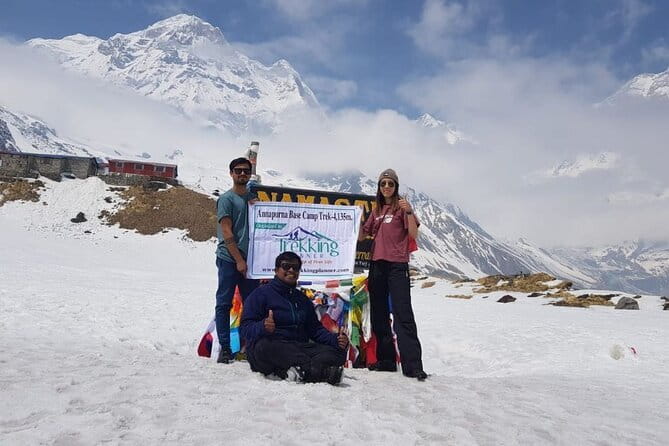
After reaching Base Camp, you get a quiet morning moment—enough time to take photos of the mountains and surrounding area. Then you retrace your steps back to Bamboo, with the itinerary describing it as an easy downhill walk.
This return day is important for your body. Going down can feel good compared to climbing, but it still loads your legs. It’s easy to pick up speed, especially when the air feels calmer. I’d resist that urge: keep it controlled so you finish the return feeling human, not wrecked.
The scenery continues to work in your favor. The itinerary notes extraordinary landscapes on this segment, and you’ll likely feel that even if you’re mostly thinking about your next meal.
Bamboo to Jhinu Danda: ups, downs, and a hot spring reward
Day 8 is a full-on hiking day. The route goes up and down repeatedly: uphill from Bamboo to Kuldighar, down toward Chhomrong Khola, back up to Chhomrong, then continuing down to Jhinu Danda.
What makes this day feel different is that it’s not a simple point-to-point grind. You’re bouncing between sections and dealing with changing ground underfoot. That’s where the earlier caution about slippery trail becomes real—downhill days tend to be when slips are most dangerous.
Then you get the payoff that’s easy to appreciate after a long day: after checking in at the lodge, you can walk down a few minutes to enjoy a hot spring bath. Even if you’re not a spa person, hot springs at the end of a trek are a smart way to reduce the “everything hurts” feeling. It’s also a nice social moment with fellow hikers who are still buzzing from Base Camp.
From Jhinu Danda to Pokhara, then Kathmandu’s UNESCO circuit
Your trek wraps with a descent day to Siwai, then you catch a vehicle to Pokhara. That shift from foot travel to car time can feel like a relief—and also like a gap in your day. It’s a good time to hydrate, eat normally, and stop watching the trail under your feet.
From Pokhara to Kathmandu, you can fly or drive. The itinerary notes if you fly, you’ll have time to visit Kathmandu sites the same day; driving takes about 5–6 hours. Since you’re already walking hard for days, I generally recommend minimizing transfer fatigue where you can.
Day 11 is a full Kathmandu Valley tour with an English-speaking guide from Oriental Journeys. You’ll visit Pashupatinath, Boudhanath, Swayambhu, and Kathmandu Durbar Square. This portion matters because it rounds out the trip: you get history and culture after the mountains, and you’re not stuck thinking about trekking gear while you’re in a real city.
Price and what you’re getting for $1,440
At $1,440 per person for a roughly 12-day package, the value depends on what you compare it to. Here, you’re not just paying for “a place to sleep.” You’re paying for a system: pickup and drops, lodge nights during the trek, 2 nights in Kathmandu (bed and breakfast), an English-speaking guide, and the official trekking fees (Annapurna Conservation Area fees and TIMS).
You’re also getting a schedule that includes breakfast on 7 days, lunch on 2 days, and dinner on 4 days, plus a first aid kit supplied during trekking (noted as compulsory from the agency above 6 pax). That meal mix can reduce your daily cash math. But it’s still not “every meal included,” so budget for tea/coffee and extra snacks.
One more thing to watch: hot shower during trek isn’t included, and “entrance fees any kind of temples/monastery” are also not included. The itinerary does include the hot spring bath near Jhinu Danda, but that’s separate from a regular hot shower, so don’t assume you’ll have full shower access every night.
Finally, domestic flights aren’t included, even though the itinerary uses one to reach Pokhara. That’s a common cost-add for this kind of trek, and it’s worth planning for so the final total doesn’t surprise you.
What to pack and who this trek is (and isn’t) for
This trek is listed as moderate grade, but moderation doesn’t mean easy. You’re walking in highlands where altitude might challenge you, and the path can be slippery. If you’re not used to mountain hiking, take the first days slowly and treat your body like it’s in training, not in a competition.
The dress code hints tell you what you’ll really need: warm layers, down jacket, warm hat, gloves, warm socks, trekking boots, a fleece jacket, and ideally a Goretex jacket. There’s also a long list of practical items like a day bag, water bottle, sun/cold creams, sunglasses, and a headlight.
Health-wise, the package isn’t for everyone. People with back problems aren’t recommended, and those with heart complaints or other serious medical conditions are requested not to take part. It’s also not recommended for pregnant women, and the trek isn’t accessible for wheelchair users.
Also, plan for the carry system. Porter support is described as necessary at a 1 porter for 2 guest ratio, with the porter carrying up to 30kg. Since porter service is listed as not included, confirm what you’ll need and when you’ll pay for it so you don’t end up carrying more than you planned.
Should you book Oriental Journeys for Annapurna Base Camp?
You should book if you want a guided, lodge-based Annapurna experience that’s structured end to end: Kathmandu orientation, a guided push into the Sanctuary, a high payoff at Base Camp, and a return that doesn’t leave you scrambling for rides. I’d also say it’s a good fit if you appreciate local culture in the trek itself, not just a photo stop.
You might skip or choose a different plan if you’re sensitive to altitude or you’re not comfortable with slippery trail conditions. Also, be honest about your budget: domestic flights and some personal expenses aren’t included, and you’ll still pay for parts of the trip that aren’t covered by the set meal days.
If you like hiking with clear steps, a guide team you can rely on, and an itinerary that returns you to city comfort after hard trekking, this is a strong match.
FAQ
Is domestic airfare included?
No. Domestic flights are listed as not included. The trek route uses a short flight from Kathmandu to Pokhara.
What does the itinerary include during the trek?
It includes lodge (guest house) accommodation during the trekking days, plus an English-speaking guide. The plan also lists breakfast on 7 days, lunch on 2 days, and dinner on 4 days.
Are park fees and trekking registration covered?
Yes. The Annapurna Conservation Area fees and the TIMS (Trekker’s information Management System) card are included.
Do I get help carrying luggage?
A porter is described as necessary at a 1:2 guest ratio, with the porter carrying up to 30kg. Porters are listed as not included in the package, so you should plan for that cost.
Is there a hot shower included on the trek?
Hot shower during the trek is listed as not included. You do have the option to go to hot springs near Jhinu Danda.
What’s the starting time for the experience?
The meeting point lists a start time of 7:00 am.
Can I cancel for a full refund?
Yes, free cancellation is offered. You can cancel up to 24 hours in advance for a full refund. Canceling within 24 hours does not get you a refund.
Who should avoid this trek?
The package is not recommended for pregnant women, people with back problems, and people with heart complaints or other serious medical conditions. It also isn’t accessible for wheelchair users.