REVIEW · KATHMANDU
Annapurna Poonhill Trek
Book on Viator →Operated by Himalayan Circuit · Bookable on Viator
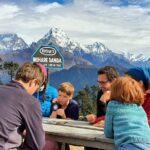
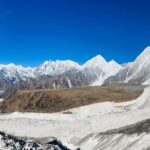
If you want big Himalayan payoff without a month off, this trek fits. The Poon Hill sunrise is the main event at 3,210m, with a classic sightline linking the Annapurna and Dhaulagiri massifs plus peaks like Machhapuchhre and Fish Tail.
I like two things a lot about how this trip is set up. First, it’s private, so you’re not stuck moving at someone else’s pace on stone steps and narrow trails. Second, you get a full meal plan during the trek, which matters when you’re hiking early and trying to pack light.
One consideration: you’ll earn those views with early starts and some steep walking. Day 4 includes a long climb up to Ulleri via stone steps, and mornings begin around 4:00am for the Poon Hill viewpoint.
In This Review
- How this trek “really works” day to day
- Key highlights worth caring about
- Kathmandu start in Thamel: where your trek actually begins
- Kathmandu to Pokhara by private car: long ride, big payoff
- Trek Day 3: from Nayapul to Tikhedhunga via river banks and terraced hills
- Trek Day 4: Ulleri stone steps to Ghorepani’s classic viewpoint base
- Trek Day 5: Poon Hill at 3,210m for sunrise, then Tadapani
- Trek Day 6: Tadapani down to Ghandruk and the Gurung village feel
- Trek Day 7: back toward Pokhara via Dhampus and Phedi
- Pokhara dawn at Sarangkot, then Kathmandu again
- Price and value: what $1,562.67 buys you
- Packing and preparedness: what your itinerary quietly demands
- Weather reality and why it changes plans
- Who should book this private Poon Hill trek
- Should you book this Annapurna Poon Hill trek?
- FAQ
- What is the starting point and start time?
- Where is the trek based?
- How long is the Annapurna Poon Hill trek?
- What’s the highest altitude on this route?
- Are pickup and private transportation included?
- Are meals included during the trek?
- Do I need to bring my own sleeping bag and warm jacket?
- What about trek and park fees?
- Can I cancel for free?
- What if weather is poor?
How this trek “really works” day to day
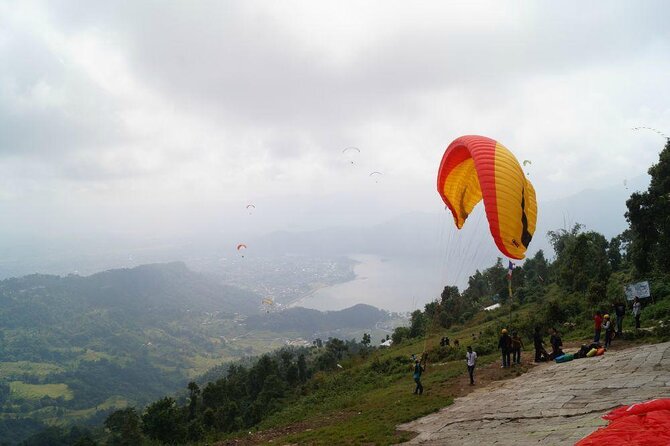
This route is built like a gradual warm-up, then a highlight day, then a scenic descent into a major Gurung village. You start in Kathmandu’s Thamel, head to Pokhara by car, walk up through terraced hills and forests, hit Poon Hill for sunrise, then wind down through places like Ghandruk and on to Pokhara again—before finishing back in Kathmandu.
In practice, you’ll get a mix of village life, forest trails, and constant mountain views. The main drawback is you’re also signing up for road time: the Kathmandu–Pokhara drive is about 7 hours, and Nepal mountain roads are not the place for someone who hates curves.
Key highlights worth caring about
- Poon Hill (3,210m) sunrise timing: you’ll move at about 4:00am for the best chance at clear views.
- Private trek setup: your group stays together, guided end-to-end instead of hopping between strangers.
- Included trek meals: breakfast (4) and dinner (5) are covered, so energy doesn’t depend on your restaurant luck.
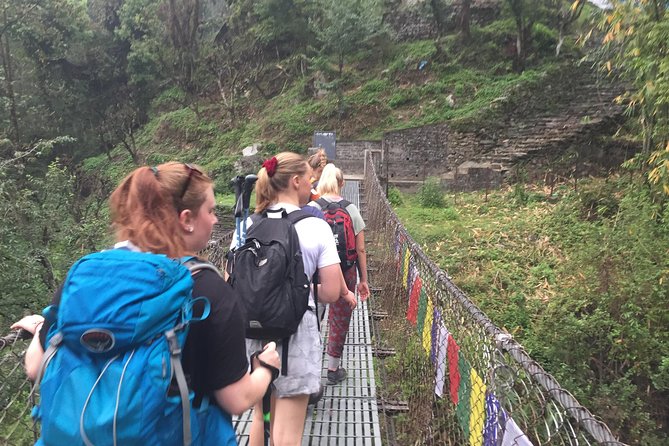
- Teahouse-style route: you’ll pass through villages like Tikhedhunga, Ghorepani, and Ghandruk, where trekking life feels real.
- Forest + village variety: oak and rhododendron sections balance the steepest parts of the climb.
- Bonus sunrise in Pokhara at Sarangkot: a second dawn viewpoint on your way back to Kathmandu.
You can also read our reviews of more tours and experiences in Kathmandu.
Kathmandu start in Thamel: where your trek actually begins
Most trekking trips in Nepal start with chaos. This one starts with order. Day 1 begins in Thamel, and once you clear immigration you’ll meet a representative holding your name card. From there, you ride by car to your accommodation in central Kathmandu.
Why this matters: Thamel is convenient for first-day logistics. You’re not trying to figure out transport, phone cards, or bus stations after a travel day. It’s also a gentle mental shift: you go from airport mode to “we’re planning for sunrise tomorrow” mode.
You also get a clear sense that the trip company is handling the first link in the chain. That’s important in Nepal, where small delays can become big ones when your trekking schedule is built around early morning light.
Kathmandu to Pokhara by private car: long ride, big payoff
Day 2 is basically a drive day, around 7 hours from Kathmandu to Pokhara. The road can be winding, but the description is honest: expect views of hills, river, and mountain scenery along the way.
Pokhara is the second major city on this itinerary, and it’s known for its access to the Annapurna region and its lakes. Even if you don’t have energy to explore much on arrival, you’ll feel the change in tempo. Fewer hours of urban noise, more “trail prep” energy.
What I’d plan for: hydration and a calm attitude on the road. This trek isn’t a grab-and-go day trip. The car transfer is part of the rhythm, and the payoff comes later when you’re walking with mountains constantly in view.
Trek Day 3: from Nayapul to Tikhedhunga via river banks and terraced hills
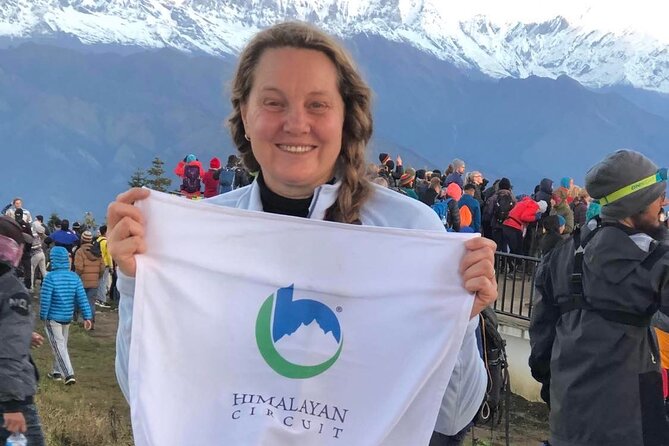
You start trekking from Nayapul, reached after a short drive (about 1.5 hours) from Pokhara. Then the route follows the banks of the Modi Khola and later connects with the Bhurungdi Khola valley.
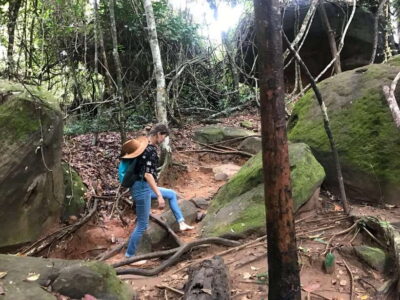
The first real character of this trek shows up here: you’ll pass through Birethanti (1,015m), a village with shops and teahouses, then climb through forest and terraced paddy fields. You’re not just hiking; you’re moving through working farmland zones where the scenery changes as quickly as the altitude.
The day ends in Tikhedhunga (1,570m) after reaching Hille (1,495m). This is one of the more “training wheels” days on the route. It’s still uphill, but it’s described as a short and relatively easy climb—ideal for getting your trekking legs under you before the bigger step-heavy ascent later.
Practical take: this is the day to find your walking rhythm. If you pace aggressively early, Day 4 will feel harder than it needs to.
Trek Day 4: Ulleri stone steps to Ghorepani’s classic viewpoint base
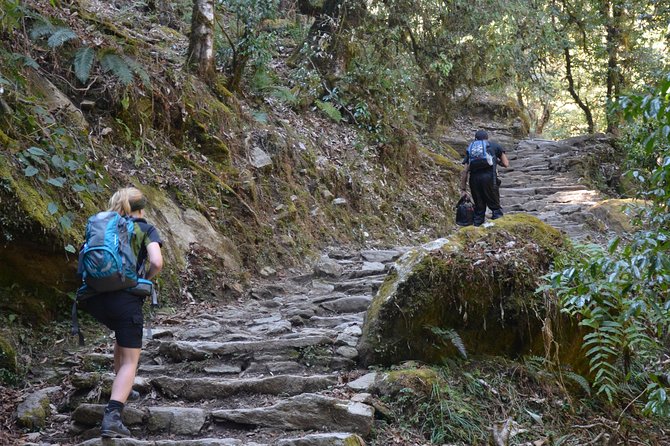
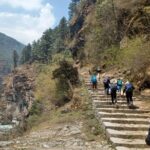
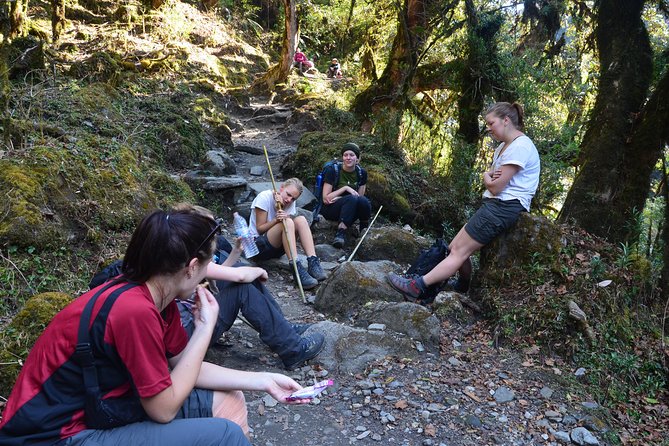
Day 4 is the big climb on the itinerary. It’s about a 6-hour walk, with a long steep ascent for much of the day. The highlight climb is up to Ulleri, a Magar village at 2,070m, reached via innumerable stone steps.
Yes, it’s exactly as intense as it sounds. Steps can be brutally efficient: they gain elevation fast, but your legs feel every one. The good news is you’re not thrown into a cliffy technical hike. It’s steady labor.
After Ulleri, the climb continues more gently through oak and rhododendron forests. You’ll pass through Banthanti (2,250m) and Nangethanti (2,460m) before arriving at Ghorepani (2,840m).
Ghorepani is a relatively large trekking village with excellent views of the Annapurna range, plus Nilgiri and Dhaulagiri. This is a useful place to top off supplies—especially water—because you’re building toward early-morning sunrise the next day.
If you’re the type who likes a plan, this is your day to set up your morning strategy: where you’ll go for sunrise, how you’ll pack layers, and what you’ll do right after you come back down.
Trek Day 5: Poon Hill at 3,210m for sunrise, then Tadapani
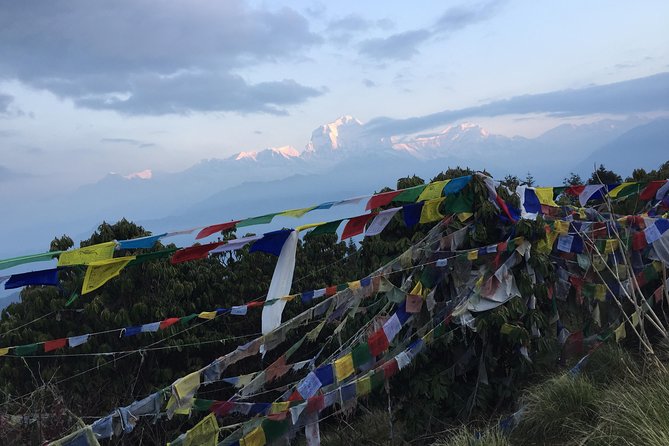
Day 5 is split into two parts: the sunrise push and the descent toward Tadapani.
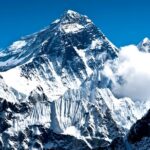
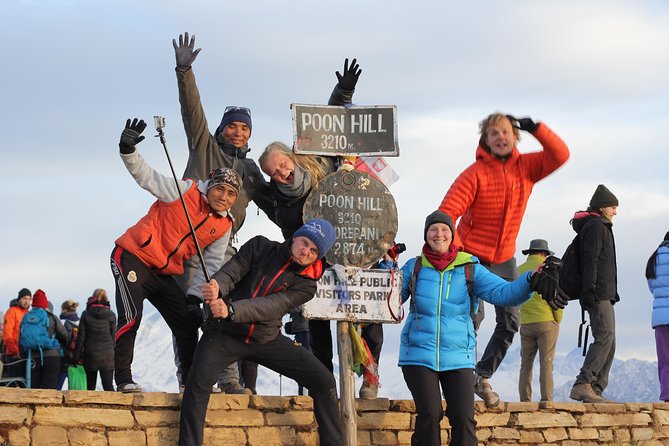
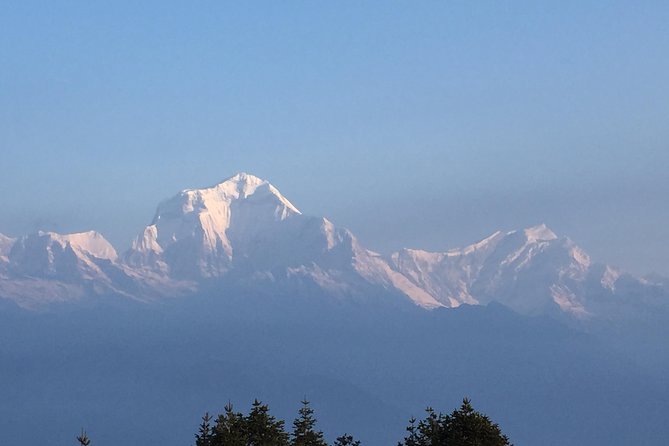
You’ll wake around 4:00am and head from Ghorepani to Poon Hill (3,210m). The route to the viewpoint is short enough to feel manageable, but early enough that you need warm layers. From the top, you’re promised a grand lineup: Fish Tail (Machhapuchhre) at 6,993m, Tukuche Peak (6,920m), Nilgiri (6,940m), Hiunchuli (6,441m), Annapurna South (7,219m), and Dhaulagiri (8,167m), among others.
That list is the reason Poon Hill is famous. You’re not hunting one peak. You’re watching a whole region’s “greatest hits” in one horizon sweep.
After the sunrise viewing, you’ll return to Ghorepani for breakfast, then start trekking to Tadapani. The itinerary keeps the day around 6 hours total. The big idea: you still hike today, but the mountain moment is the anchor.
Suggestion based on how this trek is timed: don’t think of sunrise as a free extra. It’s the main event, so you’ll want to treat it like one—water, layers, and a calm pace.
Trek Day 6: Tadapani down to Ghandruk and the Gurung village feel
Day 6 shifts the tone. It moves from Tadapani toward Ghandruk, and most of your walking goes through subtropical jungle sections.
You start with downhill movement (described as steeply down through rhododendron forests and through pine), then you descend past streams and head into the settlement network that defines this part of the Annapurna region.
Ghandruk sits at about 1,940m and is described as a huge Gurung village, also noted as the second biggest Gurung village in Nepal. This is one of the most meaningful cultural stops on the itinerary—not because you’re doing a formal tour, but because you’ll see how the landscape is lived in.
The view angle matters too. From around here, you get good sights of Annapurna South and Machhapuchhre (the Fish Tail). In other words, the trek isn’t just exercise. It’s also a set of vantage points that keep paying you back for each day’s effort.
Walking time is about 5 hours, which is a comfortable length for a day that includes lots of stops for photos and just plain taking it in.
Trek Day 7: back toward Pokhara via Dhampus and Phedi
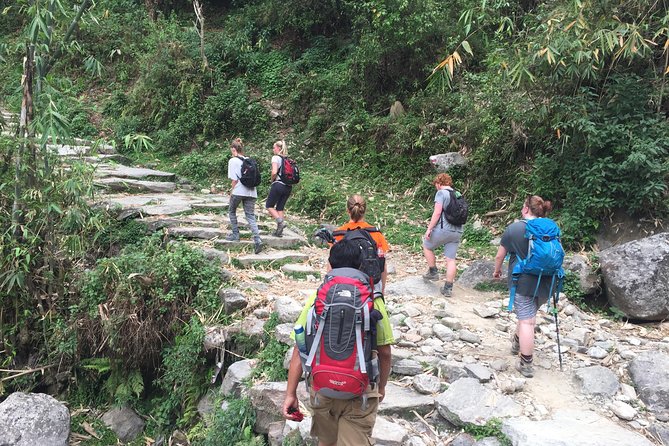
This day is a descent and transfer combo. The route goes down steeply first through villages, then along terraced paddy fields, and back into forest. The itinerary mentions Dhampus and Phedi, with a stop for glimpses of mountain views you might have missed earlier.
You might catch sights of Machhapuchhare, Annapurna South, Lamjung Himal, and Annapurna III during this stretch. The day ends around Phedi, and then you drive back to Pokhara.
The walk time is described as about 5 hours, and the overall schedule keeps it lighter than a maximum-effort hiking day. That makes sense. You’re nearing the end of the trek, and the next two days focus on returning to the cities.
Practical note: treat this day as your chance to slow down. Your body often feels best on the last downhill day, and you’ll likely appreciate the calmer pace more than you think.
Pokhara dawn at Sarangkot, then Kathmandu again
Day 8 adds another sunrise viewpoint: Sarangkot. You wake up at dawn and go up to the hill station for a sunrise view over the Annapurna and Dhaulagiri range. After sunrise, you go back to the hotel for breakfast, then transfer back to Kathmandu and relax in Thamel.
Why this second sunrise is worth including: Poon Hill is your big Himalayan panorama at altitude. Sarangkot is a different angle from a different location, and it gives you a chance to close the trek chapter with another “mountains first thing in the morning” moment.
Day 9 finishes with a transfer to the airport and departure to your next destination. In other words, this isn’t a trek where you feel stranded at the end. You get a clean exit back to civilization.
Price and value: what $1,562.67 buys you
At $1,562.67 per person (for this ~9-day private trek), the price isn’t just for walking. It covers a bundle of services that usually cost extra when you DIY.
Here’s what you’re getting that affects real comfort and real stress levels:
- Private transportation: Kathmandu–Pokhara–Kathmandu by car, plus transfers around the start and finish.
- Full meal plan during the trek: breakfasts (4) and dinners (5) are included. That’s a big deal because trekking mornings are early and hunger hits fast.
- Trek-related fees: Annapurna Conservation fee plus all fees and taxes are included.
- On-the-ground info support: Trekkers Information Management System is included.
- Air-conditioned vehicle: mentioned as part of included transport.
What’s not included is also clear: sleeping bag and warm jackets aren’t provided, and lunches plus Kathmandu/Pokhara lunch and dinner are on you. You also need your own travel and medical insurance, plus Nepal visa fees.
So is it good value? For me, yes if you want convenience and fewer moving parts. This itinerary removes the usual headaches: you’re not hunting transport schedules, negotiating trek permissions, or figuring out fee paperwork at the last minute. The big tradeoff is that private service is pricier than group trekking.
Packing and preparedness: what your itinerary quietly demands
This trek sits at modest-but-not-trivial altitude, with Poon Hill at 3,210m and multiple walking days up and down. The itinerary also asks for early mornings on Day 5 and again on Day 8.
So pack for the rhythm you’ve been given:
- Warm layers for pre-dawn and dawn viewing (sunrise means cold air).
- Comfortable trekking footwear for stone steps and downhill stretches.
- A daypack for water and layers while you walk between villages.
- Plan to cover your own lunches since those aren’t included on the trek days.
If you’re used to traveling light, the one thing to consider is that you can’t solve cold mornings with a single hoodie. You want layers you can adjust.
Weather reality and why it changes plans
The experience requires good weather. That’s not a marketing line; it’s the reason your view can be spectacular or plain cloudy. When weather is poor, the operator offers a different date or a full refund.
Also keep in mind that sunrise viewing depends on visibility. Even with a perfect plan and good timing, clouds can steal the show. This is where a private trek helps—if your schedule has flexibility, your guide can often manage the day with fewer conflicts, as long as conditions allow.
Who should book this private Poon Hill trek
This is a strong choice if you want:
- High-impact views in a shorter itinerary.
- A private trek where your pace and needs matter.
- Included logistics for fees and transport so you spend less time worrying and more time walking.
It’s also a good fit for couples or small groups who don’t want to share the route with a big crowd.
If you hate early mornings or step-heavy climbs, then you’ll want to think twice—Day 4 and the Poon Hill sunrise push will feel intense. But if you can handle “wake up early, enjoy later,” you’ll probably love this route.
Should you book this Annapurna Poon Hill trek?
I’d book it if you want the classic Annapurna viewpoints—Poon Hill sunrise, plus Gurung-village vibes at Ghandruk, and an extra dawn stop at Sarangkot—with private transfers and included trek meals. At this price, you’re paying for smoother logistics and less daily decision-making.
I’d skip it if budget is tight and you’re comfortable arranging transport and treks on your own. You’ll also want to be realistic about the early wake-ups and the stone-step climb day.
FAQ
What is the starting point and start time?
The trek starts in Thamel, Kathmandu (44600, Nepal) with a start time of 8:15 am.
Where is the trek based?
The itinerary begins in Kathmandu, includes a road transfer to Pokhara, and then follows the trekking route through the Annapurna region back toward Pokhara and returns to Kathmandu.
How long is the Annapurna Poon Hill trek?
The duration is listed as 9 days (approx.).
What’s the highest altitude on this route?
The itinerary highlights Poon Hill at 3,210m.
Are pickup and private transportation included?
Yes. The tour includes pickup offered and private transportation, including Kathmandu–Pokhara–Kathmandu by private car.
Are meals included during the trek?
Yes. The package includes a full meal plan during the trek, including breakfast (4) and dinner (5). Lunch in Nepal is not listed as included.
Do I need to bring my own sleeping bag and warm jacket?
Yes. Sleeping bag and warm jackets are not included, so you’ll need to bring them.
What about trek and park fees?
The Annapurna Conservation fee and all fees and taxes are included, along with Trekkers Information Management System.
Can I cancel for free?
Yes, you can cancel for free up to 24 hours in advance for a full refund.
What if weather is poor?
The experience requires good weather. If it’s canceled due to poor weather, you’ll be offered a different date or a full refund.