REVIEW · MOSHI
Best 5 Days Kilimanjaro Bike Trek Tour via Marangu Kilema Route
Book on Viator →Operated by #1 Best Kilimanjaro Bike Tour Operators | BURIGI CHATO SAFARIS C.O L.T.D · Bookable on Viator
Kilimanjaro on wheels is a wild idea. This Best 5 Days Kilimanjaro Bike Trek via Marangu Kilema Route is built for cyclists who want the Kilema option of a summit attempt (Uhuru Peak) with guides, porters, and a support plan that keeps you moving even as the altitude gets serious. I especially like that the trip is designed around the Kilema route and the specific cycling segments that connect key huts on the way up.
What I love most is the way the plan mixes real riding with proper acclimatization pacing, so your summit push happens after you’ve already been staged at the huts. I also like that you get real meal and fee coverage: breakfasts, dinners, lunches, and all fees and taxes are included, so you’re not constantly calculating extras while you’re tired.
One thing to consider: this is not casual cycling. You’ll be dealing with altitude, night climbing, and rough sections where flat tires can happen, so you need the right mindset (and bike/tire readiness) before committing.
In This Review
- Key highlights to look for
- Kilema Route by Bike: what makes this tour different
- The 5-day plan vs. summit reality (5 days, sometimes 6)
- Day 1: From Marangu Gate registration to Horombo Hut by bike
- Day 2: Alpine desert riding loops toward Mawenzi
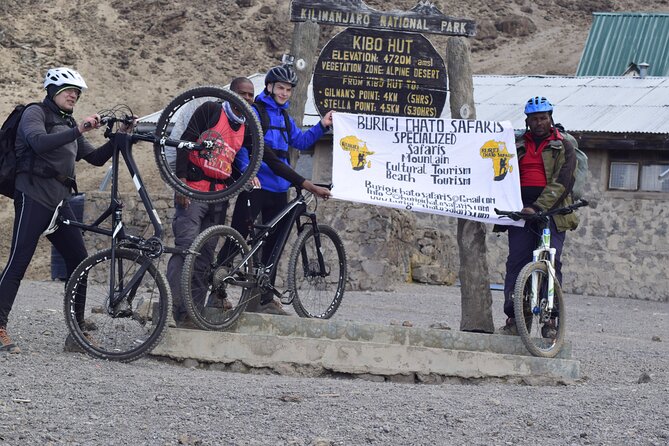
- Day 3: Cycling up to Kibo Hut and preparing for the summit night
- Day 4: Hans Meyer’s Cave, Gilman’s Point, then bike to Uhuru Peak
- Day 5: Final descent to Kilema Gate and check-out at Marangu Gate
- Price and value: what $3,292 covers (and what you must handle)
- Bikes, tires, and the reality of riding at altitude
- Who this tour fits best (and who should think twice)
- Should you book this Kilimanjaro bike trek?
- FAQ
- How long is the Kilimanjaro bike trek on the Kilema route?
- What time does the tour start?
- What’s included in the price?
- What is not included?
- Is bike hiring included?
- Is the trek suitable for me if I’m moderately fit?
- Is cancellation free, and what happens if weather is bad?
Key highlights to look for
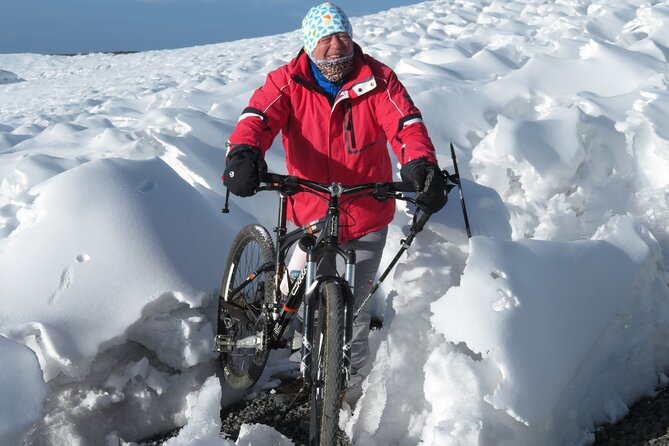
- Kilema route cycling to support the summit attempt: This is the bike-accessible route designed to reach Uhuru Peak.
- Good acclimatization structure: The hut plan gives you time to adjust before the night climb.
- Day-by-day riding rhythm: Shorter riding distances on upper days let you recover and prep.
- Support in a group setting: Past groups mentioned vehicle escort and radio coordination by guides.
- Practical mountain-bike reality: Expect conditions that can punish tires; plan for flats and slow down when needed.
Kilema Route by Bike: what makes this tour different
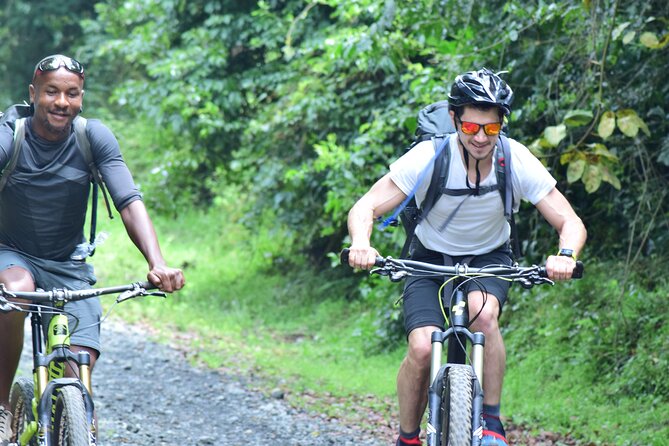
If you’re choosing Kilimanjaro by bike, the big question is simple: can you actually get to the top on cycling gear, not just hike part of the way? The Kilema option is special because it’s the route that bike trek trips use to reach the summit. Instead of fighting your way from one random trail junction to another, the plan is built around meeting porters at key hut points—so you cycle, then your pack/gear system catches up with you.
You should also know what kind of cycling this really is. This is not road cycling. Your time on the bike includes alpine desert vegetation, rocky or sandy footing, and sections where the guide is on their own bike. You’re moving through changing climates as the altitude rises, and you’re doing it at a pace designed to keep your body working with the altitude instead of against it.
Finally, this trip is pitched as minimum-impact adventure—physical effort plus time in the natural environment—so it’s about being outside and working for it, not about checking boxes.
You can also read our reviews of more tours and experiences in Moshi.
The 5-day plan vs. summit reality (5 days, sometimes 6)
The headline duration is about 5 days, but the operator’s approach is clear: a summit attempt with proper acclimatization can take 5 or 6 days. That matters because Kilimanjaro doesn’t care about your calendar. Even with a good itinerary, the timing of the summit night depends on conditions and how you’re feeling.
You’ll see the tour’s acclimatization logic in the hut progression:
- You cycle upward from the start hut zone.
- You spend a night at Horombo Hut.
- You stage at Kibo Hut before the summit push.
That’s the kind of step-up approach that helps reduce the odds of getting wrecked by altitude on summit day. It doesn’t guarantee anything—altitude always keeps the final say—but the structure is aligned with the reality that your body needs time.
Day 1: From Marangu Gate registration to Horombo Hut by bike
Day 1 begins with logistics that make future days easier. You meet your guide and transfer to the Marangu Gate (about 45 minutes). At the park gate, hikers must register at the park office. After signing in, you drive to the Kilema Gate for your biking start.
Then comes the part that feels simple, but it’s actually important: a bike and pack check. You’re told to confirm you have your day-pack basics—especially drinking water, lunch, and extra clothing—then do a final check on your bike. On Kilimanjaro, that pre-ride habit can save you from a bad surprise later.
Your cycling for the day is described as a first section of 16 km, from Kilema Gate (1,950m) to Horombo Hut. This is a strong “start strong, but not reckless” day. Your goal is not speed; it’s getting your body used to moving while the air gets thinner.
Why Horombo matters: it’s one of the main staging points on the route. In the overall tour description, cyclists are said to meet their porters at Horombo Hut and continue toward the summit plan from there.
Possible drawback on Day 1: if you come in too aggressive—fast gear, hard pedaling—you can feel it later, especially once you’re sleeping and breathing at higher altitude. This tour’s distances aren’t huge, but altitude fatigue is sneaky.
Day 2: Alpine desert riding loops toward Mawenzi
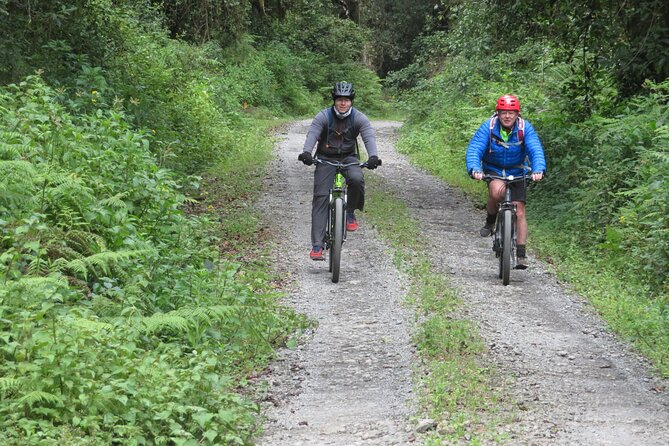
Day 2 starts with breakfast and then you ride through alpine desert vegetation. The description calls out a lot of small stone trail work. That’s key, because it affects how you pedal: you’ll need controlled effort, not brute force.
Today’s ride is shorter in kilometers—about 10 km—and it’s framed as 90% riding on alpine desert vegetation, moving to Mawenzi Hut and then back to Horombo Hut. This “ride out and return” format is a smart kind of day. You get time outside on the bike, you keep your muscles working, and you don’t keep stacking fatigue on top of fatigue.
What you’ll like here is the variety. Even without counting it as sight-seeing tourism, you’ll feel the change in terrain and vegetation. On Kilimanjaro, the environment shifts fast as altitude rises, and the Kilema bike plan seems tuned to keep you experiencing that gradually instead of all at once.
Consideration for Day 2: you’ll want to manage hydration and energy like you’re training, not like you’re on a long weekend ride. If you burn matches early, you won’t have them for the Kibo staging later.
Day 3: Cycling up to Kibo Hut and preparing for the summit night
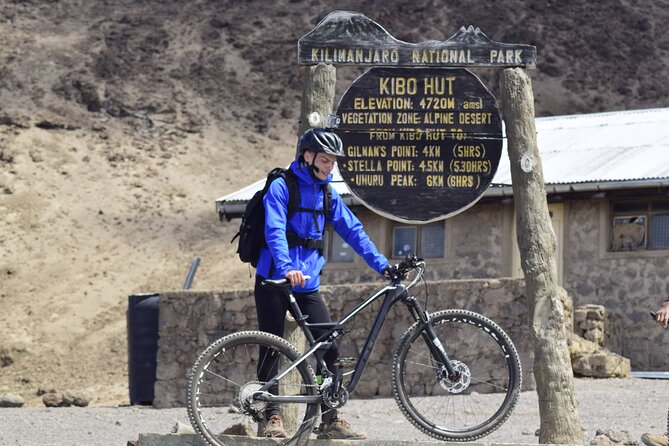
Day 3 is the turning point. It’s early, you pack your duffel bags, and after breakfast you head back up toward Kibo Hut.
The cycling details are specific: the route includes the first 3 km, then the final 7 km to Kibo Hut is described as offering a good biking trail. That’s great news for your legs. By the time you reach Kibo, you’ve had enough ride time to feel engaged, but not so much that you’re cooked.
Once you arrive:
- you’ll get lunch
- you’ll rest
- around 16:00, depending on how you feel, it’s possible to hike partway up the summit path for orientation
That orientation option is quietly valuable. Even if you don’t go far, you’re mentally mapping what summit day will feel like, especially in the dark later.
Kibo Hut is described as a stone-built block house with bunk beds for 60 climbers. This is the kind of setting where you’ll want to keep your gear organized and your sleep as best as possible. The summit (Uhuru Peak) is described as 1,195 m further. The tour notes that your final ascent happens the same night, which means this day is about setting yourself up—thermal layers, equipment readiness, and a calm mind—before the hard climb.
What to watch for on Day 3: if you’re the type who always wants to push further, this is the day to respect rest. Summit success is more about arriving steady than arriving ambitious.
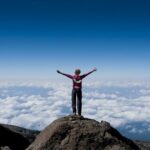
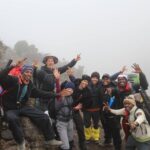
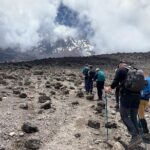
Day 4: Hans Meyer’s Cave, Gilman’s Point, then bike to Uhuru Peak
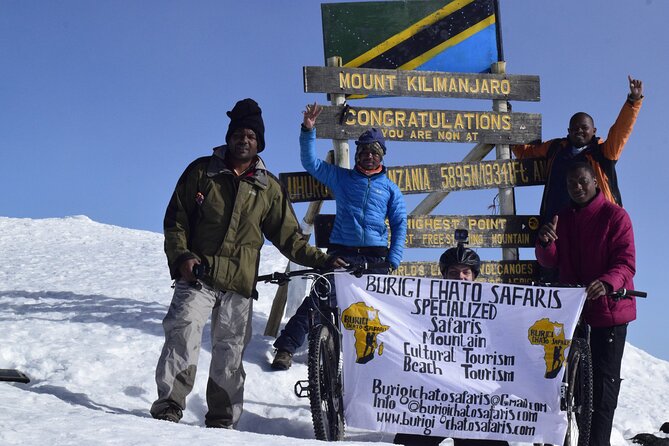
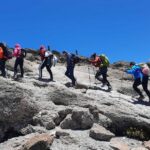
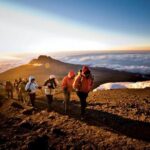
Day 4 starts at 4:00 am. You’ll be awakened by guides to begin the zigzag trek up a long scree slope. This is the moment where many first-time Kilimanjaro folks realize that “bike trek” still includes serious mountain climbing.
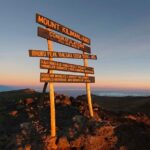
After about two hours, you reach Hans Meyer’s Cave, and from there the gradient gets steeper. After another three hours, you’re at Gilman’s Point. At that stage, the plan shifts: you take your bike from porters and start riding toward Uhuru Peak.
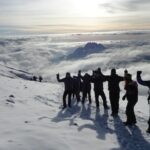
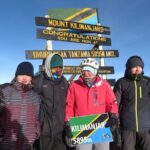
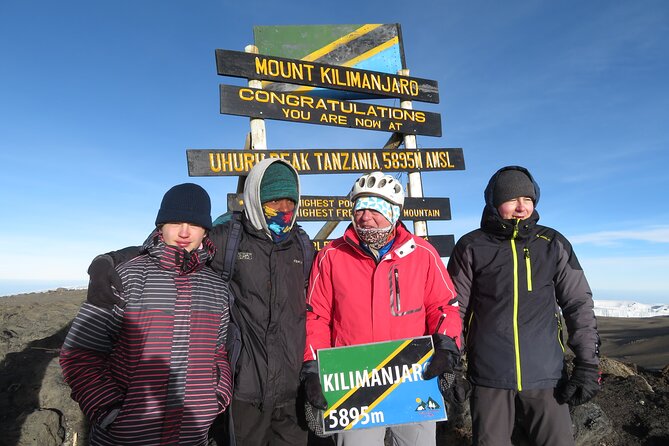
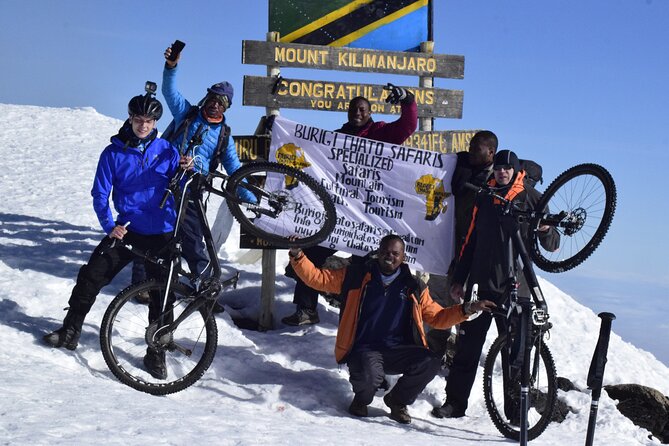
That transition is one of the tour’s biggest draws. You’re not only climbing to the summit—you’re also using the bike to cover the final approach segments. When you arrive at Uhuru Peak, the itinerary notes you’ll spend a few minutes there, including photos. Then you ride down to Stella Point.
After lunch, you ride down to Horombo. The tour description emphasizes the surface and vegetation changes:
- from Kibo to Uhuru (and then back to Kibo) includes alpine desert sections
- from Kibo to Horombo is described as 100% alpine desert vegetation / icecap
That wording is a reminder to pack for cold. Even if the air doesn’t feel icy at the start, the summit area can make you feel it fast. You’ll also want to keep your body warm during stops, because sunrise waiting can chill you out.
Practical drawback to consider: this is a long day—described as 10 hours. Even if your cycling skills are strong, fatigue and cold can slow you down. Ride smoothly, not bravely.
Day 5: Final descent to Kilema Gate and check-out at Marangu Gate
Day 5 is the reset day. After breakfast, you make your final riding down to the Kilema Gate, across alpine and rainforest areas, then you’re transferred to the Marangu Gate for check-out. After that, it’s back to your hotel in Moshi.
The fact that Day 5 crosses vegetation types is one of those “you feel the altitude change” moments. You start in higher-alpine air and end closer to the lush lower slope environment.
The itinerary says the cycling portion is about 2 hours, then you have the transfers. For most people, that makes the final day feel like recovery rather than punishment—which is exactly how it should be, after a summit attempt.
Price and value: what $3,292 covers (and what you must handle)
The price is $3,292 per person. That’s not a bargain price, so you should judge it on logistics coverage, not just the activity.
What’s included:
- Private transportation for gate transfers, plus airport pick up and drop-off
- Experienced tour guide
- Hotel accommodation before and after trekking (bookable either direct or via operator)
- All fees and taxes
- Meals: 5 lunches, 4 dinners, 4 breakfasts
- Admission ticket is free is reflected in the itinerary days, consistent with the fees/taxes included language
- Mobile ticket
- Group discounts are mentioned
What’s not included:
- Flights
- Medical insurance
- Visa
- Personal climbing gears
- Mountain trekking bike hiring
That last point matters. The tour does not list bike hiring as included, so you need to confirm whether bikes are already arranged as part of your package. The info provided says bike hiring is not included, so you should ask the operator what’s provided versus what you’d need to source.
Is the $3,292 good value? For the right person, yes—because you’re paying for the whole machine: transport, fees, guides, meals, and staging accommodations. The biggest savings you can sometimes get on Kilimanjaro tours is by skipping inclusions and then regretting it later when you’re cold or rushed. Here, the goal is to remove those friction points.
Bikes, tires, and the reality of riding at altitude
This is where I’d take a practical lesson from real rider notes. One tip shared for Kilimanjaro bike riding: expect flat tires unless you’re riding something truly built for harsh conditions. Another note mentioned getting a disk-rim of tire (which I read as reinforcing the importance of durable tires and wheel setup for the terrain).
My advice: don’t assume your normal ride kit is enough. Think like a bike traveler, not a casual cyclist:
- make sure your tires are appropriate for rough, rocky surfaces
- ask what tire and repair support you have on the trail
- confirm how flats are handled (swap bike vs. patch vs. porters helping)
Also, pacing matters. One rider tip was to try not to go too fast. That’s not just about safety. On altitude days, too much early effort can turn your summit night into a struggle.
Finally, organization helps confidence. In one group account, support included three vehicles escorting 16 people, and the guide used a radio to coordinate other guides. You can’t assume every departure is identical, but you can ask your operator how they handle group control and communication.
Who this tour fits best (and who should think twice)
This tour is described as requiring moderate physical fitness. That’s the baseline. If you can ride comfortably for several hours and handle rough terrain without panicking, you’re closer to the target.
You should be a strong fit if:
- you want a real physical challenge, not just a guided hike
- you’re a cyclist who likes the idea of mixing riding with high-altitude trekking
- you’re okay with early mornings and long summit-day hours
You might think twice if:
- you’re not comfortable riding technical terrain for long enough to reach hut staging zones
- you hate cold starts and waiting in early morning dark
- you’re not willing to plan for tire issues and cold gear
And because the tour description says it’s designed for summit success with acclimatization, you need patience with the pace—even if your ego wants to sprint.
Should you book this Kilimanjaro bike trek?
I’d book this if you want Kilimanjaro with a cyclist’s twist and you like the idea of a structured hut progression ending with a summit attempt at Uhuru Peak. The big value is that it’s not random biking—it’s a route plan that connects cycling segments with the real mountain stages, with meals, fees, and transport covered.
I’d hesitate if the price feels like you’re paying extra but you’re still missing key parts: comfort on rough mountain riding, willingness to handle cold and night climbing, and clarity on what bike support you’ll have since bike hiring is listed as not included.
If you book, do two homework items first:
- confirm whether bikes/tire setup are fully included for your departure
- ask how tire issues are handled and what your support looks like on the route
Do that, and you’ll be setting yourself up for the kind of Kilimanjaro day that people remember for years.
FAQ
How long is the Kilimanjaro bike trek on the Kilema route?
It runs for about 5 days.
What time does the tour start?
The tour starts at 8:00 am.
What’s included in the price?
The package includes private transportation for gate transfers and airport pick up/drop-off, an experienced tour guide, hotel accommodation before and after trekking, all fees and taxes, and meals (5 lunches, 4 dinners, 4 breakfasts).
What is not included?
Not included are flights, medical insurance, visa, personal climbing gears, and mountain trekking bike hiring.
Is bike hiring included?
No. Mountain trekking bike hiring is listed as not included, so you’ll want to confirm what equipment you’ll have on your specific departure.
Is the trek suitable for me if I’m moderately fit?
The tour is described as suitable for travelers with moderate physical fitness.
Is cancellation free, and what happens if weather is bad?
The tour offers free cancellation if you cancel up to 24 hours in advance. It’s also noted that the experience requires good weather, and if it’s canceled due to poor weather, you’ll be offered a different date or a full refund.