REVIEW · MOSHI
Kilimanjaro Trekking 7Days 6Night Lemosho Route
Book on Viator →Operated by Uprise Africa Explorer · Bookable on Viator
Kilimanjaro rewards the patient climber. This Lemosho route trek links several altitude zones and keeps you moving with a small team, so you get real guide attention instead of feeling like a number in line. You’ll start with a gear check, then drive to Londorossi Park Gate and hike through a forest track led by an armed park ranger, where wildlife like buffalo and elephants may appear close.
What I like most is that the trek cost is set up for fewer surprises on the mountain. The package includes all fees and taxes, camping setup, and daily meals (with lunch every day listed for 7 days, plus 6 breakfasts and 6 dinners), so you can focus on pacing and acclimatization instead of logistics. In reviews, the consistent praise is for the team’s organization and support, with names like Kissima, Sanga, Nguma, Fransis, and Peter showing up again and again for being friendly and steady when altitude starts talking.
One thing to think about before you commit: this route is described as tougher than the Mangaru route, and the hikes you do are long and physical. Expect big hiking days (like 7–8 hours on Day 2) and steep sections (like the Barranco Wall on Day 4). Also, the Tanzania visa is not included, so you’ll still want to plan for that cost.
In This Review
- Key highlights at a glance
- Why the Lemosho route works for people who hate rushing
- Moshi to Londorossi Park Gate: start the trek with a plan
- Day 1 to Day 2: from forest comfort to heather moorland
- Day 3 details you should confirm before you go
- Day 4’s Barranco Wall: short, steep, and very real
- Day 5 to “the South Circuit”: why Barafu is a big milestone
- Day 6 and summit day: you’ll know by Day 7’s altitude
- What’s included at this price (and why it can be good value)
- Guides, food, and the quiet stuff that keeps you going
- Price and logistics: what you should budget beyond the trek
- Who should do this Lemosho trek, and who should think twice
- Should you book it?
- FAQ
- What time does the trek meet?
- How many people are in the group?
- Is airport pickup included?
- What meals and costs are included?
- What is not included in the price?
- Where do you receive summit certificates?
- What happens if weather is poor?
- Who provides the trek?
Key highlights at a glance
- Small-group pace (max 10 travelers): more time with your guide and less rushing between checkpoints.
- Scenery-focused Lemosho route: a more scenic option, with long views when weather cooperates.
- Included mountain support: fees, camping equipment, and meals are built into the trek.
- Wildlife possible early on: Day 1 starts on a forest track with an armed ranger.
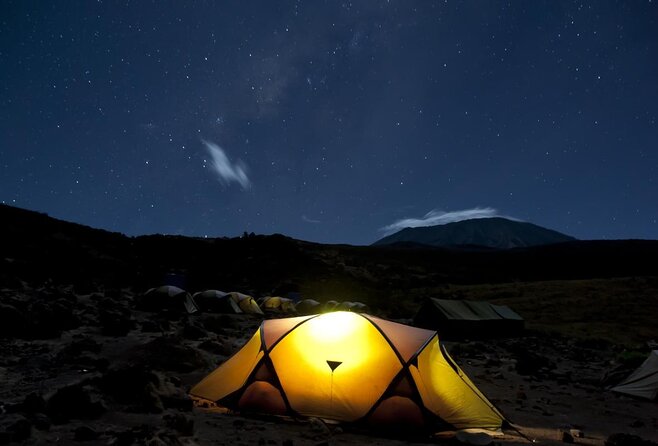
- Real altitude progression: camps at multiple elevations, including Shira 2 (about 3,850m) and later high camps.
- Summit certificates day: you’ll receive your certificate at Mweka Park Gate after the descent.
Why the Lemosho route works for people who hate rushing
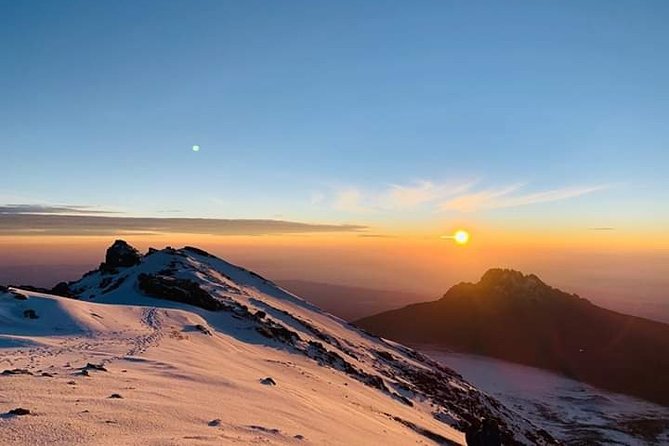
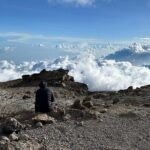
The Lemosho route is popular for one practical reason: it gives you more “moving time” and viewpoints without feeling like you’re just sprinting between camps. Over a week, you’ll pass through different ecological zones as altitude climbs, which keeps the days varied and visually rewarding even before the summit attempt.
This route is also set up for a slower, more deliberate acclimatization rhythm. You can see that in how the day descriptions are written: gradual steepening on Day 2, and then camp changes at higher elevations. That matters because Kilimanjaro isn’t just a cardio test. It’s an altitude test, and a calm approach is often what makes the difference between feeling tense and feeling in control.
The other reason I’d pick Lemosho: fewer climbers and more views. Even if you’re not a “huge photos” person, you’ll appreciate not being surrounded by a constant parade on the trail. A calmer atmosphere helps you listen to your body and keep your pace steady.
You can also read our reviews of more tours and experiences in Moshi.
Moshi to Londorossi Park Gate: start the trek with a plan
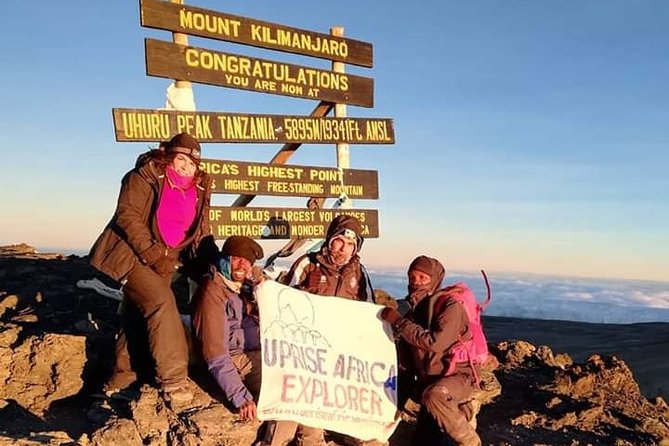
Your day starts with a briefing and a gear check by your guides before you head out. That sounds simple, but it’s the kind of small step that prevents problems later. On Kilimanjaro, you want your essentials ready before you’re cold, tired, and already above the tree line.
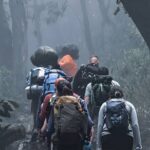
Then you’ll drive about 3 hours to Londorossi Park Gate, where you register and begin the climb. From there, you start Day 1 on a forest track with an armed park ranger. The ranger isn’t just a formality—having that protection around you can also make the early hike feel more organized and secure.
Day 1 hiking is listed as about 2–3 hours (roughly 6 km / 4 miles). You’ll end at Mti Mkubwa campsite at about 2,650 meters. That’s a solid “get your legs under you” start, and it’s the kind of day you’ll be glad you didn’t try to make harder than it needs to be.
Day 1 to Day 2: from forest comfort to heather moorland
Day 1 is about easing in. You’ll hike through that forest area with wildlife possible—buffalo and elephants are specifically mentioned—so even early on, you’re not just walking in silence. If the weather and animals cooperate, it’s a nice reminder that this is a living region, not a theme-park trek.
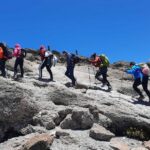
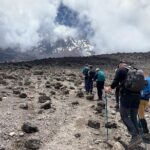
Day 2 is where the route begins to feel more serious. The trek is listed at 7–8 hours (around 16 km / 10 miles), and the trail steepens into giant heather moorland with scattered volcano rock formations. You’ll cross multiple streams, and the day ends at Shira 2 camp around 3,850 meters.
Two view moments are worth paying attention to:
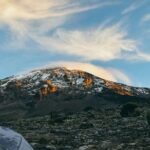
- If clouds behave, you can see Uhuru Peak from the Shira Ridge area.
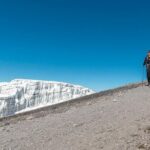
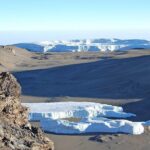
- You may also catch sight of the Northern Ice fields on the western side of the mountain.
Here’s the practical takeaway: Day 2 is a long day, so use the views as motivation, not as a reason to speed up. Slow steps at altitude usually feel boring—but they reduce the odds that your breathing turns into a problem later.
Day 3 details you should confirm before you go
Your itinerary notes Day 3, but the detailed hike description for that specific day isn’t fully spelled out in the information provided. What you can take as reliable here is the big picture: Lemosho is a multi-day acclimatization route, and the provided days clearly show you climbing toward higher camps after Shira 2.
Before you lock in your packing list and expectations, I’d ask the operator for the missing Day 3 and Day 6 day-by-day timing. You’ll want clarity on:
- hiking hours,
- the campsite elevation,
- and whether the day involves any particularly steep sections.
That’s not nitpicking. Having the exact plan helps you decide how aggressively to train before you arrive.
Day 4’s Barranco Wall: short, steep, and very real
Day 4 is described as 3–4 hours (about 5 km / 3 miles), and it includes one of the more demanding chunks you’ll likely face: the Barranco Wall at around 4,250 meters. You leave Barranco Camp behind and hike up the wall, taking about 1.5 hours to reach the top.
Then you transition to a more level area and start descending into the Karanga Valley around 4,050 meters. There’s also a junction mentioned that connects with the Mweka Trail, and you overnight at Karanga Campsite.
Even though Day 4 is shorter than Day 2, it can feel tougher because steep terrain at altitude wears you out fast. This is exactly the kind of day where good guiding matters. The best guides don’t just push you; they help you keep a steady rhythm so you don’t burn through energy too early.
Day 5 to “the South Circuit”: why Barafu is a big milestone
Day 5 is listed as 3–4 hours (about 4 km / 2 miles). You continue up to Barafu Camp, and the text notes you’ve completed the South Circuit, with summit and glacier views from different angles.
At Barafu, you set up camp with views of the summit. That matters because Barafu is often the moment where your mental game switches. Up to this point, you’re thinking about acclimatization and getting to the right camps. After Barafu, the summit story becomes the main event.
One caution: summit-distance excitement can make people forget to conserve energy. If you feel strong, you’ll want to walk faster. Try not to. At high altitude, saving your legs is usually smarter than proving anything on the trail.
Day 6 and summit day: you’ll know by Day 7’s altitude
The itinerary details for Day 6 aren’t included clearly in the provided information. Still, you can infer what happens because Day 7 is described as descent after breakfast and then summit certificates at Mweka Park Gate.
Day 7 starts after breakfast at 3,090 meters, then you hike down to Mweka Park Gate to receive your summit certificates. A vehicle is waiting to drive you back to your hotel.
That tells you something important: by the time you’re at Mweka Gate for certificates, your summit attempt is completed. So the practical goal on the days leading into Day 7 is to reach that point safely and still have enough energy to move downhill with good control.
Downhill can be rough on knees and ankles, too. If you’re the type who rushes the finish line, this is where you’ll want to resist. The certificate is the prize, but the safe descent is the win.
What’s included at this price (and why it can be good value)
The trek price is listed at $3,000 per person. That’s a serious amount of money, so the only honest way to judge value is by what you get that you’d otherwise pay for separately.
Here’s what’s explicitly included:
- All fees and taxes
- Kilimanjaro trekking
- Meals: lunch (7), breakfast (6), dinner (6)
- Camping equipment support is included in the tour features
- Admission tickets are marked as included in the day descriptions
Also noted: pickup offered and mobile ticket. In multiple reviews, people mention smooth airport pickup/drop-off and strong organization from the team.
In plain terms, this package design helps you avoid the most common Kilimanjaro money leak: paying for the mountain logistics piece-by-piece while you’re already stressed and short on time.
It’s also a small-group trek with a maximum of 10 travelers, which is usually where you get better communication, easier pacing, and less waiting around when conditions shift.
Guides, food, and the quiet stuff that keeps you going
What shows up most in the feedback is not just reaching the top. It’s how it feels during the climb:
- Guides are described as professional, upbeat, and supportive.
- Porters are repeatedly called out as helpful.
- Cook teams get praise for food quality at altitude.
- People mention support when altitude symptoms show up, including advice on what to do.
Guide names that appear in the reviews include Kissima, Sanga, Nguma, Fransis (head guide), and Peter (assistant guide). There’s also mention of a cook named Schabari, plus references to a leader called Godwill the boss.
One more detail I like from the reviews: people highlight how communication is easy, including contacting company leadership before the trek. If you’ve ever been on an organized tour where you can’t get answers fast, you’ll appreciate this setup.
Food on Kilimanjaro can be a make-or-break factor. You’re working hard in cold and thinner air. If the meals are good and delivered on schedule, you’re more likely to keep eating consistently—which directly supports recovery.
Price and logistics: what you should budget beyond the trek
The trek itself is $3,000 per person, and the included section covers a lot of mountain-related costs. But you should still budget for what’s not included:
- Tanzania visa: listed as $50 or $100 per person (for American residents) on arrival at the airport.
That’s it for the explicit “not included” list. The rest of the logistics are framed as handled—pickup is offered, and you’re given a meeting start time of 11:00 am.
One more practical note: Kilimanjaro requires good weather. If conditions are poor, the experience may be canceled and you’ll be offered a different date or a full refund. That’s not a flaw in the tour; it’s the mountain being the mountain.
Who should do this Lemosho trek, and who should think twice
This trek fits well if:
- you want a scenic route with long viewpoint potential,
- you’re okay with multi-hour hiking and a slower acclimatization pace,
- you value a small group and stronger guide-to-climber attention,
- you prefer a well-structured plan with meals and camp setup handled.
You might think twice if:
- you’re looking for an easy hike. Day 2’s 7–8 hour hike and Day 4’s Barranco Wall are not “casual walk” territory.
- you’re sensitive to altitude and have no prior hiking base.
- you’re expecting a flexible itinerary with lots of changing plans. This trek is weather-dependent and follows its high-altitude rhythm.
If you’re in your 20s to older adults, this style can still work, but it comes down to preparation and your willingness to slow down when the air gets thin. That’s what guides are for.
Should you book it?
If you want a classic Kilimanjaro climb that’s run like a real operation—with meals, fees, and camp support included, plus a small group—this Lemosho option is a strong candidate. The repeated praise for guide support (names like Kissima, Sanga, Nguma, Fransis, and Peter) and for the team handling the week smoothly is exactly what you want when altitude starts testing patience.
I’d book it if your main priorities are: scenic value, structured mountain logistics, and having experienced people around you. I’d pause and ask questions if you need more clarity on Day 3 and Day 6 schedules, or if you’re unsure whether your fitness matches a “tougher than Mangaru” style.
FAQ
What time does the trek meet?
The meeting start time is 11:00 am.
How many people are in the group?
This trek has a maximum of 10 travelers.
Is airport pickup included?
Pickup is offered, and the trek is described as including transfers back to your hotel at the end.
What meals and costs are included?
Lunch is listed for 7 days, breakfast for 6 days, and dinner for 6 days. The package also includes all fees and taxes, plus Kilimanjaro trekking.
What is not included in the price?
A Tanzania visa is not included. The listed cost is $50 or $100 per person for American residents on arrival at the airport.
Where do you receive summit certificates?
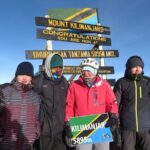
You receive your summit certificates at Mweka Park Gate after your descent.
What happens if weather is poor?
This experience requires good weather. If it’s canceled due to poor weather, you’ll be offered a different date or a full refund.
Who provides the trek?
The experience provider is Uprise Africa Explorer.