REVIEW · MOSHI
6-Day Kilimanjaro Machame Route – A Stunning Trek to Uhuru Peak
Book on Viator →Operated by PINNACLE ADVENTURES & SAFARIS LTD. · Bookable on Viator
You feel Kilimanjaro in every step. The Machame Route from Moshi is one of the most scenic paths up to Uhuru Peak, moving from lush rainforest to high-alpine desert while giving you built-in time to adjust to altitude.
What I like most is the way this trip handles the details that make or break a trek: daily hot water for washing and a team that stays sharp throughout. I also appreciated the steady leadership I’ve heard tied to guides like Justin, plus organization credited to staff such as Frazier.
One consideration: Day 5 is a long, tough climb starting at midnight (often 11–14 hours total), so you’ll want to come in fit and expect the altitude to slow you down.
In This Review
- Key things to know before you go
- Machame Route: The Whiskey Name, and Why the Views Keep Switching
- Moshi start-to-finish: Transfers, meeting point, and what that saves you
- Day 1: Machame Camp and the rainforest “warm start”
- Day 2: Shira Cave Camp and crossing from forest to moorland
- Day 3: Ridge to the Lava Tower (Shark’s Tooth) then down to Baranco
- Day 4: Barranco to Barafu Hut through Alpine Desert
- Day 5: Midnight to Stella Point, then Uhuru Peak
- Day 6: Mweka Trail descent, muddy lower ground, and summit certificates
- Price and what $2,253 covers (and why that can be good value)
- Guides and the human side: professionalism, hot water, and steady calls
- Packing smart for Machame: what to bring vs what to rent
- Who this trek suits best (and who should rethink it)
- Should you book the 6-Day Machame Route?
- FAQ
- How long is the Kilimanjaro Machame trek?
- Where do you start and where do you end?
- Is pickup included?
- What is the highest point on this route?
- Are park fees and tickets included?
- Is emergency oxygen included?
- What meals and drinks are included?
- What gear should I bring, and what can I rent?
- Is a portable toilet included?
- Can I cancel for a refund?
Key things to know before you go
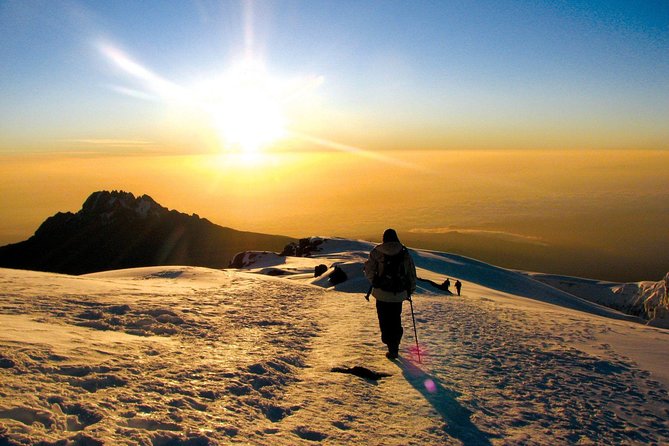
- Whiskey Route scenery changes fast: rainforest, moorland, ridges, then alpine desert
- Acclimatization is built in: you go high, then come down a bit before the final push
- Emergency oxygen is included (not for summit use) with a basic first-aid kit
- Hot water and fresh drinking water keep daily life on the mountain more comfortable
- Camping comfort is included: tents, camp chairs/tables, and sleeping mattress
- Your hardest day starts at midnight with a drive to Stella Point before Uhuru Peak
Machame Route: The Whiskey Name, and Why the Views Keep Switching
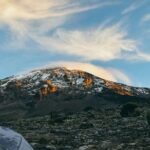
The Machame Route earns its nickname because the hike feels like a series of pours—one dramatic change after another. You start low enough to feel the rainforest’s weight in the air, then gradually climb into cooler zones where the vegetation thins out. By the time you’re higher, the air turns drier and the terrain feels more exposed. Even if you’re not a “mountain person,” you’ll get why this route is popular: the scenery changes so often that the day never feels repetitive.
I also like the pacing goal here: a 6-day plan that gives you time to acclimatize instead of rushing. That matters because Kilimanjaro is not a “marathon pace” climb. It’s a “slow enough to keep breathing” climb. You’ll hike your way up, but the real progress comes from sleeping at the right elevations.
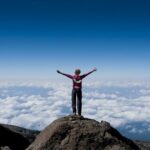
And yes, the headline is the finish at Uhuru Peak, the highest point in Africa. The summit day is the obvious story—but the best memories often come from the ridge days where you can see so much sky that it feels unreal.
You can also read our reviews of more tours and experiences in Moshi.
Moshi start-to-finish: Transfers, meeting point, and what that saves you
This trek starts in Moshi Urban and ends back at the same meeting point. Return transfers are included from Kilimanjaro airport to Moshi and Moshi back to Kilimanjaro airport, which is a big deal in practice. It means less guessing with transport, less time wasted, and a smoother handoff when you’re tired after landing.
Pickup is also offered, so you’re not left trying to coordinate a meeting time on your own. If you’ve ever shown up to a busy town after a travel day, you know why this matters: you want your first priority to be resting, not figuring out logistics.
The trip is also described as private, meaning only your group participates. That can be helpful on a mountain where routines matter—pace, toileting needs, and when you stop for breaks all go more predictably when you’re not sharing your schedule with strangers.
Day 1: Machame Camp and the rainforest “warm start”
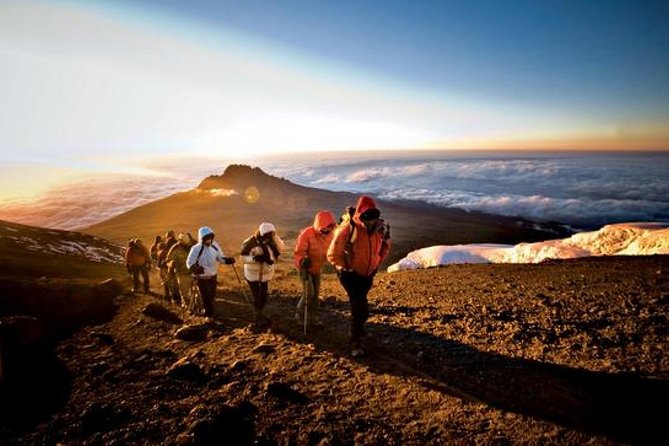
Your Day 1 climbs from Machame Gate into the rainforest, rising from about 1,640m to 2,835m. The hike is roughly 11 km and usually 5–7 hours, which is a solid warm-up day—long enough to get your legs working, but not so intense that you’re already cooked.
What I like about starting this way is the comfort factor. In the lower zones, the body often accepts the effort better. You get to focus on rhythm: small steps, steady breathing, and drinking consistently. You’ll also get early glimpses of Kilimanjaro’s wildlife and local plant life, the kind of stuff you miss when you treat a trek like only a checkbox.
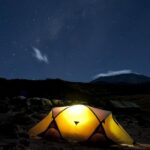
You’ll end at Machame Camp for dinner and overnight. You’re moving to sleeping at altitude early, so treat Day 1 as training for living—not just walking. The itinerary includes camp gear (tents, camp chairs/tables, and sleeping mattress), which helps you avoid the headache of sourcing mountain sleeping equipment.
Day 2: Shira Cave Camp and crossing from forest to moorland
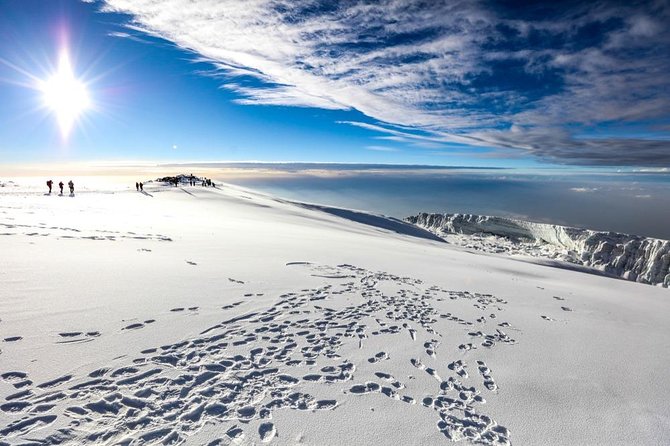
Day 2 moves you to Shira Cave Camp, with an elevation jump from about 2,835m to 3,850m over a shorter 5 km hike. The time estimate is 4–6 hours, and the key theme is transition: you leave the forest and enter steeper moorland.
This is where you feel the altitude start to talk back. The work isn’t only your legs; it’s your breathing pace. The route includes crossing streams, and you’ll get big views—people often notice the sight of Mount Meru and surrounding valleys on days like this.
You end the day camping on the Shira Plateau, likely under a very clear sky. That starry stillness is part of the Kilimanjaro draw: the mountain quiet can feel strangely calm after a long travel day and a big start climb.
Dinner and breakfasts are included in the overall meal plan, and you’ll also have fresh drinking water plus hot water for washing daily. That doesn’t sound like “adventure,” but on summit prep days it feels like a luxury.
Day 3: Ridge to the Lava Tower (Shark’s Tooth) then down to Baranco
Day 3 is one of the best “mountain feels real” days. You start around 3,850m to 4,000m and hike about 10 km for 5–6 hours. The route continues on a ridge eastward, then shifts direction toward the Lava Tower, often called Shark’s Tooth at about 4,650m.
A short while after the tower, you reach another junction associated with the Arrow Glacier area, then the plan turns and you descend into Barranco Camp. Here’s the smart part: you don’t finish the day higher than you began. You end around a similar elevation, which helps your body adjust for the upcoming summit strategy.
This is important for success. Your summit push is not only about strength; it’s about how well your body tolerates altitude. A day like this supports that goal while still giving you a dramatic high point and the kind of views that make you forget you’re tired.
Day 4: Barranco to Barafu Hut through Alpine Desert
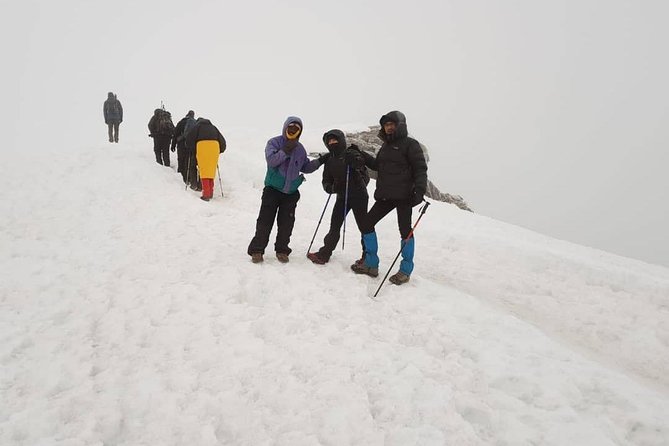
Day 4 is the “summit eve” setup day. You move from Barranco up a steep ridge, passing the Barranco Wall, then continue to Karanga Valley campsite. After that, you connect via a junction toward the Mweka Trail, then climb to Barafu Hut.
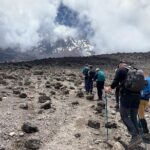
Elevation ranges are listed roughly as 13,000 ft to 15,000 ft, and the habitat is alpine desert. Translation: the air is drier, the ground can feel harsher underfoot, and you’ll likely notice how quiet the vegetation becomes. This is not a day to rush. It’s a day to protect energy.
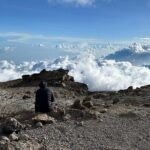
The itinerary notes that you’ve completed the South Circuit by this point, with views of Mawenzi and Kibo from the Barafu position. I like these ridge-to-peak sightlines because they change how summit day feels. Once you can see the route angles from where you’ll sleep, you stop guessing and start preparing.
You’ll rest, eat dinner, and prepare for the midnight start. If you’ve never done an overnight summit push, your biggest challenge is often logistics: timing, snack planning, and keeping warm while still moving enough to stay awake. That’s exactly why you want a well-run team behind you.
Day 5: Midnight to Stella Point, then Uhuru Peak
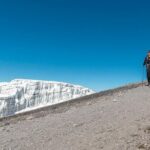
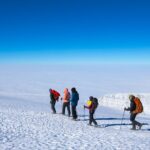
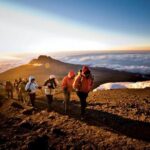
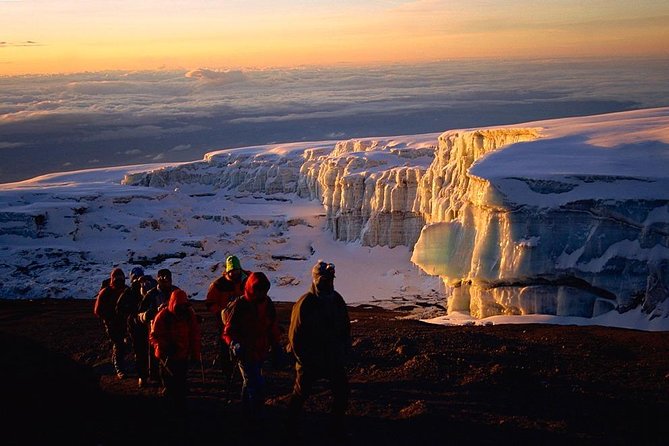
Day 5 is the heart of the trek, and it’s also the hardest. The climb begins at midnight with a push to Stella Point around 5,756 meters, then continues to Uhuru Peak.
This day is listed as roughly 17 km with an estimated 11–14 hours. Yes, it’s long. But it’s also broken into phases: getting to Stella Point, then the final trek. That pacing approach helps because the last stretch is where many people slow down the most.
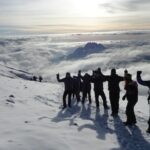
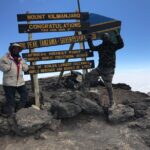
After celebrating at Uhuru Peak, you descend to Mweka Camp for your last night on the mountain. The descent is physically demanding in a different way—your knees and feet take more impact after high-altitude fatigue—but it’s also a huge relief.
The included support matters here. You’ll have qualified mountain guides and assistant guides, plus porters and cooks with their wages included. You also have emergency oxygen for use in emergencies only, which is a comfort even if you hope you never need it. And there’s a basic first aid kit included.
Day 6: Mweka Trail descent, muddy lower ground, and summit certificates
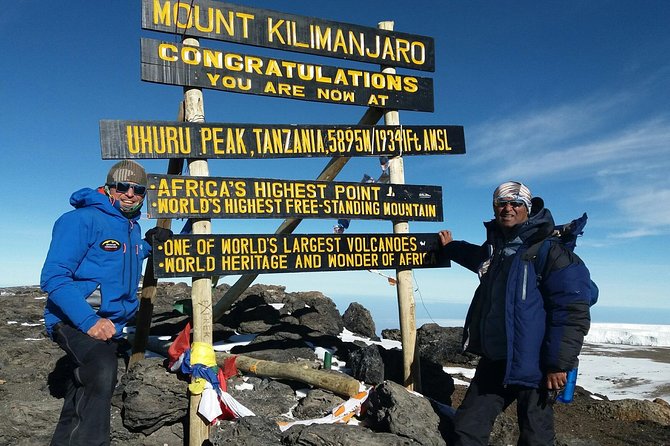
The final day is shorter in distance but still important. You descend from about 3,090m down to 1,680m, with a hike of about 10 km and 3–4 hours.
You go down to the Mweka Park Gate to receive your summit certificates. From there, you continue another hour to Mweka Village. A vehicle meets you at the village to drive you back to Moshi (about 30 minutes).
Lower elevations can be wet and muddy, so plan for slippery conditions. The tour info specifically recommends gaiters and trekking poles. I’ll add a practical thought: even if you’re strong, mud punishes poor foot placement. Poles help you stay stable and keep your descent controlled.
Clothing guidance is also simple and useful: shorts and t-shirts will probably be plenty, but keep rain gear and warmer clothing handy. Weather on Kilimanjaro can shift fast, especially at higher camps earlier in the morning.
Price and what $2,253 covers (and why that can be good value)
At $2,253 per person for about 6 days, this trek is not a budget grab. But it’s also not only a walking fee. A big portion of your money goes to the machine behind the climb.
Here’s what’s included:
- All fees and taxes
- Return transfers between Kilimanjaro airport and Moshi
- Qualified guides, assistant guides, porters, and cook wages
- Camping equipment (tents, chairs, tables, sleeping mattress)
- Fresh water for drinking and hot water for a wash daily
- Meals: breakfast (5), lunch (6), dinner (5)
- Emergency oxygen and a basic first aid kit
That “staff + gear + meals + park fees + transfers” bundle is the heart of Kilimanjaro value. If you tried to piece it together yourself, you’d likely spend time and energy just coordinating what the tour already handles. You also avoid the risk of missing something small but crucial—like not having enough hot water access after a cold camp night.
What is not included matters too:
- Visas and flights
- Travel/health insurance
- Personal hiking gear (gear rental is available in Tanzania)
- Portable toilet (optional but highly recommended)
- Personal medicine and water purifying tablets
- Gratuities/tips
- Other meals/drinks not specified
So the value question becomes: do you want your money tied up in logistics and support, or do you want to DIY? If you want the trek to feel controlled, structured, and guided, this package makes sense.
Guides and the human side: professionalism, hot water, and steady calls
The strongest praise in the feedback I see is about the people running the experience. Names like Justin show up in connection with the help that makes the climb possible, and multiple comments point to a professional team with strong communication and kindness.
You can also see why “organization” gets mentioned again and again. On Kilimanjaro, the schedule isn’t just a timeline. It’s what keeps camp life working, what keeps you fed, and what keeps everyone safe during the bottleneck hours—especially around the midnight summit start.
Two small things also carry big weight:
- Hot water daily: it helps you feel human again. After several cold nights, that matters.
- Food service with consistent routines: when you’re high and tired, predictability helps your body recover.
One review also flagged a paperwork issue related to PCR results and suggested that the company representative stay close until airport entry. I can’t promise your exact situation, but it’s good advice: if you need documentation for travel, ask how support works before you’re standing in line.
Packing smart for Machame: what to bring vs what to rent
Because personal gear is not included, you’ll either pack it or rent it in Tanzania. The tour info is practical about what you’ll likely wear: shorts and t-shirts will probably do most of the time, but keep rain gear and warmer clothing handy. That’s especially relevant because Day 5 starts at midnight and the air at that elevation can feel brutally cold.
I’d also treat the following as non-negotiables:
- Trekking poles (useful for the long descent)
- Gaiters (especially for muddy Day 6)
- A plan for layers, not just one “mountain outfit”
- Any meds you personally rely on, plus water purifying tablets (personal medicine isn’t included)
Portable toilets aren’t included, but they’re called out as optional yet highly recommended. In practice, that can make camp life easier and more comfortable, especially when you’re tired.
Who this trek suits best (and who should rethink it)
This trip is aimed at people with moderate physical fitness. That doesn’t mean “easy.” It means your job is to build enough stamina to keep walking steadily for multi-hour hikes, plus handle a midnight start.
If you like clear structure—camp routines, guidance, and predictable meals—this is a strong fit. It’s also a good option if you want to maximize acclimatization without turning the trek into a long slog.
Who should think twice:
- If you hate long nights and late starts, Day 5 may be stressful.
- If your fitness level is low or you’re new to trekking, the summit day demands patience and pacing. Altitude is a skill, not just a test.
Should you book the 6-Day Machame Route?
I’d book this trek if you want one of Kilimanjaro’s most scenic routes and you value support. The included package hits the stuff that’s hard to DIY: guides, porters, camping gear, meals, transfers, park fees, and emergency oxygen. That reduces the number of things that can go wrong when you’re tired and high on the mountain.
I would not book it if you’re looking for a short, relaxed hike. This is a serious climbing effort, and Day 5 is the long, cold push that defines the experience.
If you’re willing to pace smart, pack layers, and treat acclimatization as part of the climb, the Machame Route offers exactly what people chase: changing scenery, strong organization, and a summit day that stays in your memory.
FAQ
How long is the Kilimanjaro Machame trek?
It’s a 6-day trek, with the itinerary lasting about 6 days in total.
Where do you start and where do you end?
The trek starts in Moshi Urban, Tanzania and ends back at the same meeting point.
Is pickup included?
Yes, pickup is offered.
What is the highest point on this route?
The trek includes a summit attempt on Uhuru Peak, the highest point in Africa, and it also reaches Stella Point during the summit push.
Are park fees and tickets included?
Yes. The trek includes all fees and taxes, and the itinerary notes admission tickets as included (and in some cases free).
Is emergency oxygen included?
Yes. Emergency oxygen is included for emergencies only, not as summit aid, along with a basic first aid kit.
What meals and drinks are included?
The package includes 5 breakfasts, 6 lunches, and 5 dinners, plus fresh drinking water and hot water for a wash daily.
What gear should I bring, and what can I rent?
Personal hiking/trekking gear is not included, but gear can be rented in Tanzania. You’re advised to have items like gaiters and trekking poles, plus rain gear and warmer clothing.
Is a portable toilet included?
No. A portable toilet is not included, but it’s described as optional yet highly recommended.
Can I cancel for a refund?
You can cancel up to 3 days in advance for a full refund (cut-off based on local time). If you cancel less than 3 full days before, the amount paid will not be refunded.
If you want, tell me your age and current hiking routine (and whether you’ve done altitude before). I’ll help you judge if Day 5’s timeline is realistic for your plan and suggest what to prioritize in training.