REVIEW · MOSHI
8 Days Guided Private Trekking in Mount Kilimanjaro
Book on Viator →Operated by Spirit of Kilimanjaro · Bookable on Viator
Uhuru Peak comes with a long night climb. This 8-day guided trek from Moshi pairs small-group intimacy with acclimatization planning, so the altitude gains feel structured from start to finish. You also start inside Kilimanjaro National Park at Londorossi Gate, which sets the tone: proper trekking, not just a walk in the clouds.
I love how the schedule moves you through clear altitude zones, from rainforest to moorland to alpine desert, with camp choices timed to help your body adjust. I also like the people side of this trip: a private setup means you’re not stuck with a random mix of strangers, and you’ll see guide names like Joseph, Zac, Swahele, and William showing up in accounts of successful summits and solid team support.
One possible drawback: the climb asks a lot of your legs and your lungs. Day 7 is the big one, with an early summit push to Uhuru Peak followed by a long descent to Mweka Camp, and the final day still brings a 10 km rainforest walk out.
In This Review
- Key highlights before you commit
- From Londorossi Gate to Uhuru Peak: the backbone of this itinerary
- Day-by-day trek plan: what you’ll do, what it means, and where it can bite
- Day 1: Rainforest start to Mti Mkubwa Camp (Big Tree)
- Day 2: Rainforest to moorland, then Shira 1 Camp
- Day 3: Shira 2 Camp in alpine desert country
- Day 4: Lava Tower altitude work, then Barranco Camp
- Day 5: Karanga Camp panoramas at higher altitude
- Day 6: Barafu Camp, your summit base
- Day 7: Uhuru Peak at sunrise, then down to Mweka Camp
- Day 8: Mweka Gate descent through rainforest and certificates
- Guides, pacing, and why the team details matter (Joseph, Zac, Swahele, William)
- Gear, comfort, and the meals that keep you moving
- Price and value: is $2,310 a fair deal?
- Moshi start point: pickup, getting there, and keeping your plan tidy
- Sustainability and why it matters on Kilimanjaro
- Who this private 8-day climb fits best
- Should you book Spirit of Kilimanjaro’s 8-day private trek?
- FAQ
- Where does this trek start?
- How long is the Mount Kilimanjaro trek?
- Is pickup from Moshi included?
- Is this a private tour?
- Are meals included?
- Is the Kilimanjaro National Park admission included?
- Does the itinerary include a summit attempt?
- Are visas included?
- What is the cancellation window for a full refund?
- Is there a mobile ticket?
Key highlights before you commit
- Private, small-group feel: you get more individual attention than you’d expect in a large group
- Camp-by-camp acclimatization: shifts in elevation and rest stops are part of the plan, not an accident
- Big moments built in: Lava Tower altitude work plus a Barranco Wall challenge before the final push
- Meals are planned for the trek: breakfast and lunch most days, plus dinner, so you’re not guessing your energy needs
- Guides you can trust with real results: Joseph and Zac are names tied to summit success in past trips
From Londorossi Gate to Uhuru Peak: the backbone of this itinerary
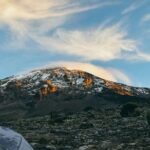
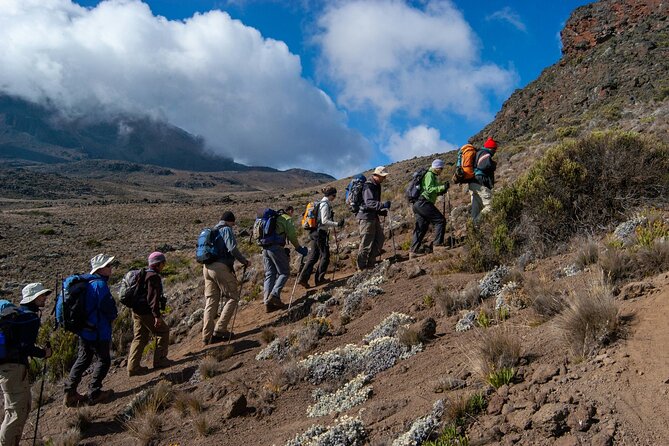
This trek is built like a staircase, not a straight line. You start at Londorossi Gate in Kilimanjaro National Park, then the trail slowly re-maps itself under your feet. Day 1 runs through rainforest. Day 2 and Day 3 shift you toward moorland and then the alpine desert feel. By the time you’re near the higher camps, the air is thinner and you can tell the difference in how your body breathes.
That matters because altitude isn’t just a number on a chart. It changes your pace, your sleep, your appetite, and your mood. This itinerary gives you gradual gains, then intentional high points (like the Lava Tower day) before stepping back down to recover. It’s the same logic used by good mountain guides: go high, let your body get used to it, then keep moving.
It also keeps the days from feeling identical. Even when the distances are similar, the terrain and the “vibe” change fast. Rainforest days feel greener and wetter. Moorland days can feel cooler and more open. Higher days feel drier and sharper—less scenery you can hide in, more sky, wind, and exposure.
You can also read our reviews of more tours and experiences in Moshi.
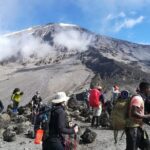
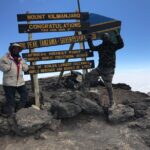
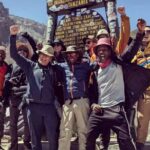
Day-by-day trek plan: what you’ll do, what it means, and where it can bite
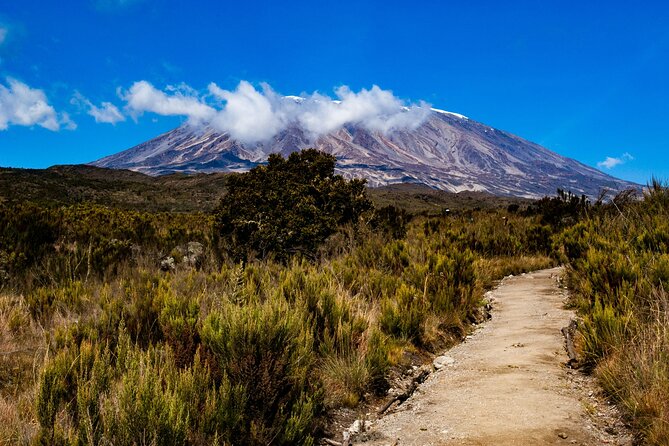
Here’s how the 8 days break down, with the practical “why” behind each step.
Day 1: Rainforest start to Mti Mkubwa Camp (Big Tree)
You begin with park registration at Londorossi Gate, then settle into the rainforest right away. You’re walking around 6 km, and it’s framed as an easy introduction. Your first overnight stop is Mti Mkubwa (Big Tree) Camp at roughly 2,750 meters.
Why this day is smart: you’re not asked to sprint. You’re building rhythm—time on feet, proper hydration habits, and basic trail rhythm—while the elevation isn’t yet punishing.
Possible drawback: even “easy” days in rainforest can feel damp and slow. If you’re prone to blisters, start blister-care early.
Day 2: Rainforest to moorland, then Shira 1 Camp
Today you hike about 8 km, and the environment shifts from rainforest into moorland. You arrive at Shira 1 Camp at around 3,505 meters.
Why this day helps: it introduces a jump you can still manage without immediately going super high. You’ll also start noticing volcanic character in the scenery—Kilimanjaro’s geology starts to show itself.
What to watch: the higher you go, the more your pace should slow. If you treat day 2 like a training run, altitude will punish you later.
Day 3: Shira 2 Camp in alpine desert country
You trek about 7 km to Shira 2 Camp near 3,850 meters. The landscape shifts again into a more alpine desert feel, and you’ll likely notice the thinner air more clearly.
Why it’s there: this is part of building altitude tolerance before you go even higher. This isn’t a rest day, but it’s shorter than the hardest push days, which helps you keep breathing under control.
Practical tip: focus on slow steps and steady breathing. Your goal is consistency, not hero speed.
Day 4: Lava Tower altitude work, then Barranco Camp
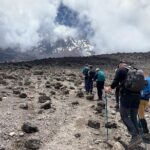
This day climbs up to Lava Tower at about 4,600 meters, then you descend to Barranco Camp around 3,960 meters. You’re covering roughly 10 km total, and the Barranco Wall climb is a highlight.
Why it’s valuable: Lava Tower gives you a high point that boosts your acclimatization, while the descent to Barranco gives you a chance to recover. Barranco Wall adds a real hiking challenge that can build confidence for the summit approach.
Possible drawback: if you don’t like steep, uneven climbs, the wall will feel like work. It’s also a day where trekking poles and good foot placement can make a noticeable difference.
Day 5: Karanga Camp panoramas at higher altitude
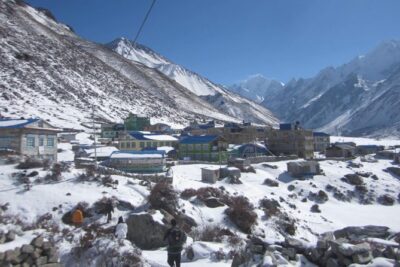
You hike to Karanga Camp at about 4,035 meters, covering around 4 km. The terrain becomes alpine and rocky, and the day brings panoramic views of the surrounding area.
Why it’s staged: after Barranco, this shorter day helps you absorb altitude changes without forcing a long grind. It’s a good “reset” before the final approach day.
What to watch: rocky terrain still tires you. Short distance doesn’t mean easy legs.
Day 6: Barafu Camp, your summit base
Today you move to Barafu Camp at roughly 4,600 meters. The trek is only around 3 km, but you’re not here for distance. You’re here to rest, prepare, and manage your energy for summit night.
Why this works: summit day is mostly about timing, breathing, and endurance. Day 6 is designed to help you sleep and recover instead of adding more suffering.
Practical consideration: you may feel restless with all that time waiting. That’s normal. Use the time to hydrate, eat what you can, and keep your layers ready for cold.
Day 7: Uhuru Peak at sunrise, then down to Mweka Camp
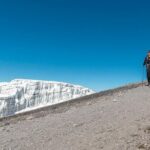
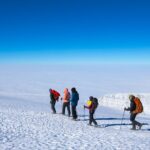
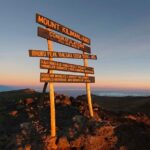
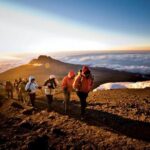
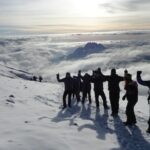
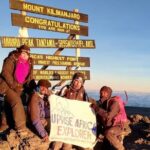
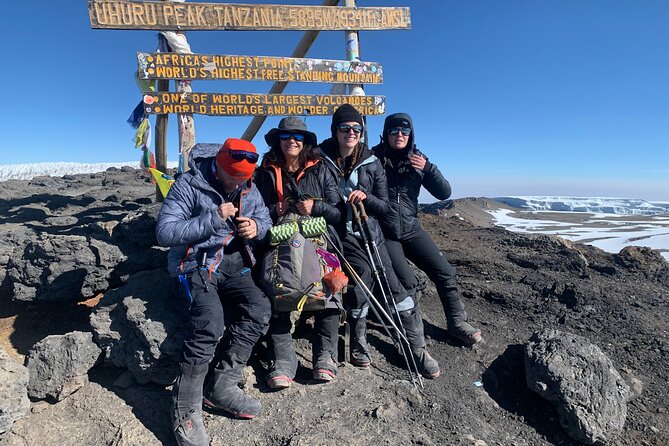
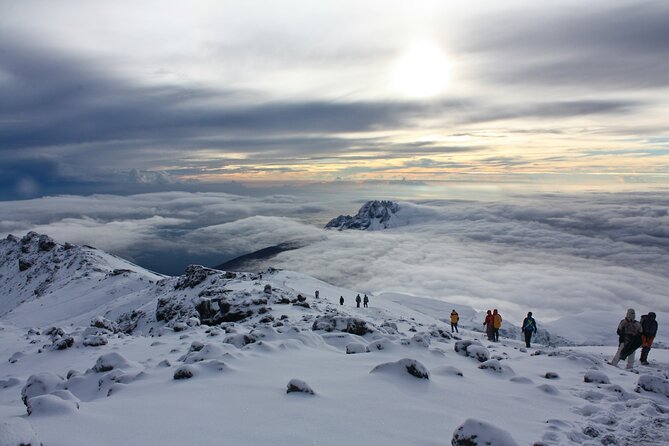
This is the hardest and most rewarding day. You start early with a steep climb to Uhuru Peak, the highest point in Africa, just before sunrise. After celebrating (and yes, you will be tired), you descend to Mweka Camp at about 3,100 meters. Total distance is roughly 18 km.
Why it’s such a big day: summit altitude forces a slower pace, so the day feels long even if the route is “one go.” The descent is demanding too—your knees feel it, and your legs have less grip when you’re exhausted.
What I’d plan for mentally: you need patience for the climb and focus for the descent. Go by rhythm, not by emotion.
Day 8: Mweka Gate descent through rainforest and certificates
You walk from Mweka Camp down to Mweka Gate, roughly 10 km. You descend through the lush rainforest zone and reach the gate where you receive your summit certificates and finish back at the meeting point area with your guides.
Why this last day feels different: it’s still physical, but it’s also a decompression day. You’re moving away from altitude stress and back toward warmer, greener conditions.
Possible drawback: the downhill can still be rough on legs. Take your time and use your trekking poles if you have them.
Guides, pacing, and why the team details matter (Joseph, Zac, Swahele, William)
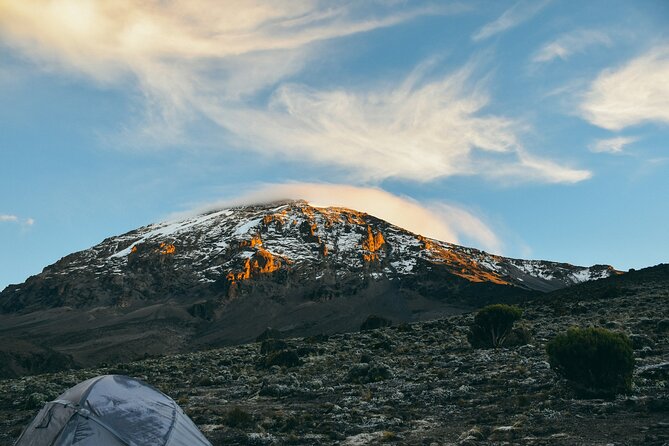
The biggest difference between a good Kilimanjaro trek and a great one often comes down to the guides. Here, the trip is private, and that means your team can respond to your group rather than trying to herd a big mix.
One detail I really like from past climbs associated with this operator is the presence of specific guide names: Joseph and Zac are tied to successful summit outcomes, and Joseph and Swahele have also been mentioned in summit success accounts. William shows up in stories about organizing support for different age groups, including families where someone was about 70 years old.
You shouldn’t assume those exact guides will be assigned to you. But the point is clear: the guiding team has experience managing different bodies and expectations on the mountain. And on Kilimanjaro, that can be the difference between pushing too hard early and keeping a pace that protects you for the summit attempt.
Gear, comfort, and the meals that keep you moving
Your package includes accommodations plus meals throughout the trek. You’re covered with breakfast for 8 days, lunch for 8 days, and dinner for 7 days. That structure helps because you don’t have to make food decisions while your appetite might be off due to altitude.
The overview also says top-notch gear is provided, and that matters more than people think. On Kilimanjaro, temperature swings are real. Even if the sun is out, nights can get cold fast, and you’re spending long stretches above the tree line.
Where comfort shows up in the real world:
- You can focus on the trail instead of logistics
- You eat regularly, which helps energy and hydration
- You get camp-based rest instead of “winging it” between days
If you’re someone who gets picky about food, you’ll still likely find enough basics to keep going. The bigger factor is how your body tolerates food at altitude. The team’s job is to help you keep it simple and consistent.
Price and value: is $2,310 a fair deal?
At $2,310 per person, this is not a bargain trek. But it’s also not trying to be a low-cost, high-chaos climb. Here’s how I look at value for a guided private Kilimanjaro attempt:
What you’re getting for the price:
- A dedicated tour guide
- Accommodations during the trek
- Planned meals (breakfast/lunch almost daily, dinner most nights)
- Park registration and access that’s priced in as park admission being free in the listing details
- A private setup where only your group participates
What isn’t included:
- Visas (so you’ll handle that before you travel)
The biggest value lever is attention. In a small group or private setting, the guide can monitor your pace, hydration, and acclimatization patterns more closely. That’s not just a luxury feeling. It’s a practical safety and performance factor on a mountain where timing matters.
Still, you should sanity-check the price against your travel style. If you hate high structure and want lots of free time, this kind of trek will feel “busy.” If you want a guided plan that reduces guesswork, the cost is more justifiable.
Moshi start point: pickup, getting there, and keeping your plan tidy
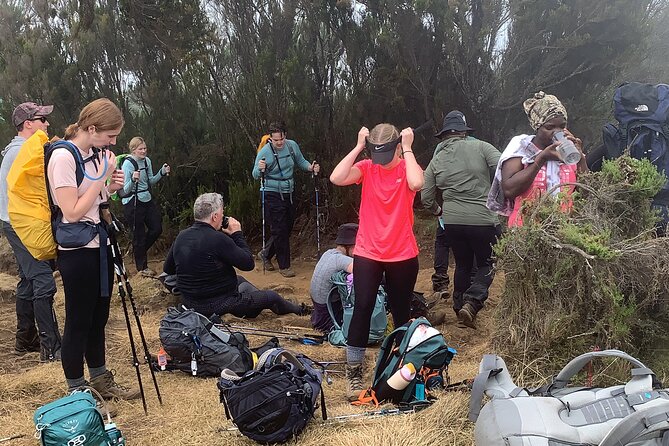
The meet-up point is Panama Garden Resort Tanzania on Shanty Town Road in Moshi. Pickup is offered, which helps because Moshi can be easier if you’re not scrambling to find transport right before the trek.
Because the activity ends back at the meeting point, your trip flow stays simple. You don’t need to figure out a new location to wrap up the last day.
One practical note: the trek begins with park registration at Londorossi Gate. That means day 1 starts with administration, then quickly turns into hiking. Arrive ready to move, not still sorting gear at the last second.
Sustainability and why it matters on Kilimanjaro
You’ll also see a stated commitment to sustainable tourism and protecting the environment. While you won’t measure that day-to-day like a GPS reading, it shows up in the way guides manage waste, camp behavior, and how the operation is set up to benefit local communities.
On Kilimanjaro, that’s not just “nice.” The mountain is under pressure. Your role as a participant is to follow instructions on camp rules and keep your impact small—then the guides and porters can do the same.
Who this private 8-day climb fits best
This trek is a strong fit if you want:
- A guided plan with structured acclimatization
- A private setup where you’re not dealing with constant group friction
- A route that includes real challenge moments (Lava Tower work and Barranco Wall)
- A summit attempt that isn’t rushed in one single leap
Most travelers can participate, but the reality is simple: if you struggle with steep, long days, you should train and plan carefully. Day 7 is long and intense, and even the final descent has distance.
It also looks well-suited for families and mixed-experience groups because the guiding approach can adapt to different needs—based on past stories tied to the team.
Should you book Spirit of Kilimanjaro’s 8-day private trek?
If you want a serious Kilimanjaro attempt with small-group attention, a stepwise altitude plan, and meals handled for you, this is a compelling choice. The schedule is built to support acclimatization rather than just chase distance. And the camp sequence gives you both technical moments (Barranco Wall) and the summit night endurance test.
I’d only hold off if you know you can’t handle early hours, cold nights, and long days—especially the day that includes Uhuru Peak followed by a long descent. That’s not a flaw in the operator. It’s just the mountain.
If you’re deciding now, my practical advice is to ask yourself two questions:
1) Can I pace slowly and consistently through altitude, even when I feel fine early?
2) Do I want a private guided plan that reduces logistics and decision-making?
If your answer is yes, booking is an easy decision. If you’re unsure, a phone call with the team before you pay can save you stress later.
FAQ
Where does this trek start?
The trek meets at Panama Garden Resort Tanzania in Moshi, and the hiking begins at Kilimanjaro National Park registration at Londorossi Gate.
How long is the Mount Kilimanjaro trek?
It’s listed as 8 days (approx.).
Is pickup from Moshi included?
Pickup is offered.
Is this a private tour?
Yes. It’s a private tour/activity, and only your group participates.
Are meals included?
Yes. Breakfast is included for 8 days, lunch for 8 days, and dinner for 7 days.
Is the Kilimanjaro National Park admission included?
Yes. The admission ticket is listed as free.
Does the itinerary include a summit attempt?
Yes. Day 7 is a summit attempt to Uhuru Peak, followed by a descent to Mweka Camp.
Are visas included?
No. Visas are listed as not included.
What is the cancellation window for a full refund?
Free cancellation is available. You can cancel up to 24 hours in advance for a full refund.
Is there a mobile ticket?
Yes, a mobile ticket is listed as included.