REVIEW · KATHMANDU
Multiday Manaslu Circuit Trek
Book on Viator →Operated by Places Nepal Trek & Tours · Bookable on Viator
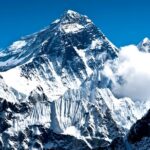
A high pass and quieter trails are a rare combo. This Manaslu Circuit trek threads Buddhist villages, traditional monasteries, and big-mountain drama through a route most people don’t rush through. I love the Larkya La Pass payoff and the fact that you’re paired with a government registered English-speaking local guide—the kind of support that makes altitude days feel less mysterious.
What also stands out is the “figure it out with us” approach: permits and fees are handled, daily meals are included, and even an oximeter is provided to help you monitor your oxygen level. One thing to consider: the trek isn’t a match for every dietary need, and you’ll be doing long hiking days at height—this is a real challenge, not a stroll.
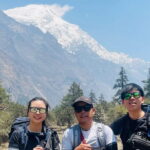
In past trips, guides like Nam, Kapil, Gokul, and Kopil (plus porters such as Ganesh) have been praised for staying organized and caring about the details—exactly what you want when the trail gets steep and the air gets thin.
In This Review
- Key things that make this Manaslu Circuit trek worth your time
- Why the Manaslu Circuit feels different from typical Nepal trekking
- Price and value: what your $1,200 includes (and what it doesn’t)
- Who should do this trek (and who should rethink it)
- From Kathmandu to Machha Khola: easing in on Day 1
- Jagat and the bridges-and-waterfalls vibe on Day 2
- Deng to Namrung to Shyala: forests, fields, and monastery stops
- Samagaun acclimatization: the day you’ll be glad exists (Day 7)
- Samdo on the Tibetan border: rocky terrain and moraine walking (Day 8)
- Dharmasala (Larkya Phedi) on the Budhi Gandaki River: setting up the pass (Day 9)
- Larkya La Pass (Day 10): the big high point that makes the trek
- Bhimthang to Dharapani (Day 11): pine and rhododendron forest walking
- Returning to Kathmandu on Day 12: bus ride and a real send-off dinner
- Guides, porters, and safety: the support that changes how hard it feels
- What the small-group setup really means for your day-to-day
- Should you book this Manaslu Circuit trek with Places Nepal Trek & Tours?
- FAQ
- How long is the Manaslu Circuit Trek?
- What is the meeting point in Kathmandu?
- Is pickup in Kathmandu included?
- What’s included in the trek package?
- Are Kathmandu meals and hotels included?
- What about emergency rescue?
- Do I need travel insurance?
- Is a porter included?
- How many people are in the group?
- What is the highest point on the trek?
Key things that make this Manaslu Circuit trek worth your time
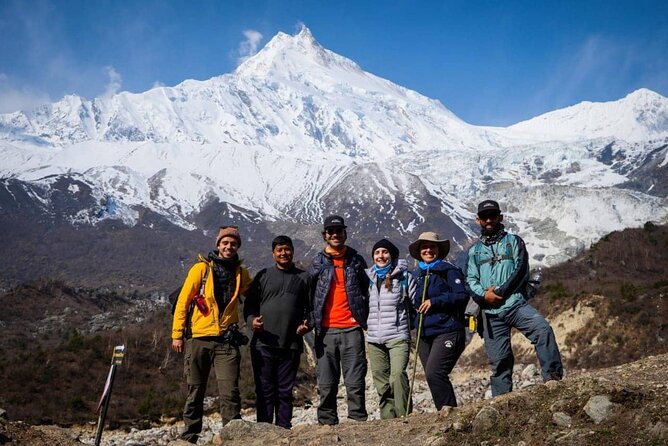
- Larkya La Pass at about 5,106 m with glacier-and-peak views on the hardest day
- Permits and fees included, including restricted-area paperwork for this region
- All meals during the trek included (12 breakfasts, lunches, dinners), so you’re not hunting food daily
- Oximeter + first-aid support included, useful for staying calm and tracking altitude effects
- Max 12 travelers, which usually keeps the group manageable on narrow trails
- Optional acclimatization day choices from Samagaun (Manaslu Base Camp or Birendra Lake)
Why the Manaslu Circuit feels different from typical Nepal trekking
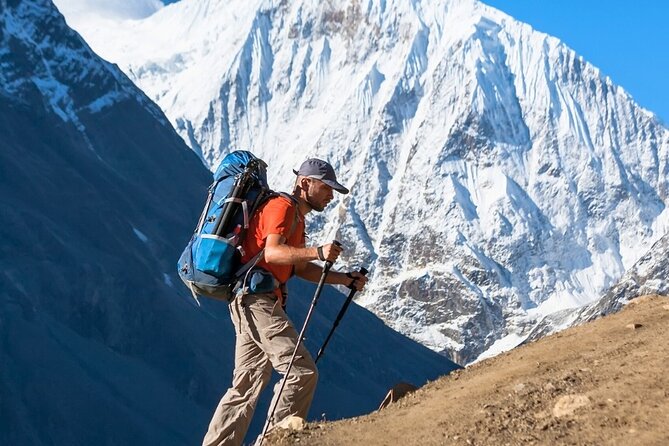
The Manaslu Circuit has a reputation for big scenery and serious hiking—but the part that wins me over is the mix. You’re not only walking past mountains. You’re walking through daily life in Buddhist-influenced communities, through Tibetan-style villages, and alongside monasteries that help explain the region’s rhythm and beliefs.
And it’s not the kind of trek that’s built around major road access. You spend more time on foot and less time reacting to crowds, buses, and tourist stops. That changes the mood. Even when the trail is hard, the experience feels more personal.
You can also read our reviews of more tours and experiences in Kathmandu.
Price and value: what your $1,200 includes (and what it doesn’t)
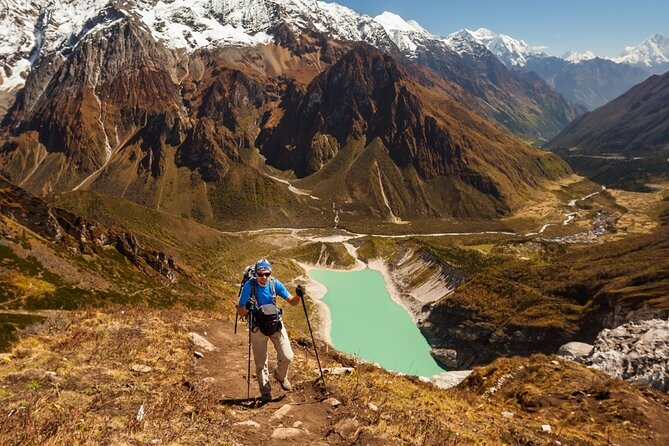
At $1,200 per person for about 12 days, the real value is in how much logistics you don’t have to manage yourself. You’re not just buying hiking days. You’re getting the whole framework: ground transport both ways by local bus, trekking permits/fees (including restricted-area permits), and a government registered English-speaking guide.
Meals are also handled: 12 breakfasts, 12 lunches, and 12 dinners are included during the trek. That matters more than it sounds. At altitude, food decisions can become stressful fast. Having a planned routine helps you stay focused on walking and hydration.
Included extras that feel practical: a duffle bag, sun cap, trek map, and an oximeter for oxygen checks. You also get a first-aid kit in the support plan, plus emergency helicopter arrangements that are paid by your travel insurance company.
Where the budget can grow:
- Your insurance isn’t included, and the helicopter benefit relies on your insurance coverage.
- Tips for the guide are expected (the data doesn’t state an amount, so keep some cash aside).
- If you want a porter, it’s $300 per person. The note says 2 people share 1 porter with a 25 kg max per porter, so think about whether splitting weight makes your trek more enjoyable.
Who should do this trek (and who should rethink it)
This trek is listed for travelers with moderate physical fitness. That’s a useful phrase, but here’s the reality: you’ll be doing multiple days of hours on foot, including a high pass day. If your fitness is mostly city-walking, you’ll need serious training first.
It’s also marked as not recommended for people with certain dietary needs. Since the plan includes set meals (during the trek), people who need specific diets may struggle if options aren’t available as needed.
The trek works especially well if you:
- want a local guide who knows the region and can help with navigation and pacing
- prefer guesthouse nights (not camping) and a steady rhythm of meals
- like small-group trekking; this runs with a maximum of 12 travelers
If you’re the type who needs total control over food choices or very short hiking days, you might find the plan too structured and the walking too long.
From Kathmandu to Machha Khola: easing in on Day 1
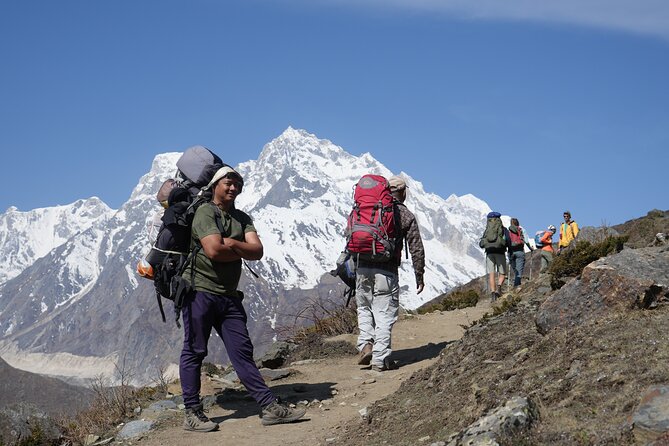
Day 1 starts with a local ride from Kathmandu to Machha Khola, at about 2,965 feet. This is a classic “get your bearings” setup: you’re transitioning from city altitude and routine into trail life.
What I like about this start is that it doesn’t throw you into max-height effort immediately. You still get countryside views and village scenes, but the day functions like a warm-up. You’ll likely be tired from travel, so use the evening to sort your gear, check your layers, and get a feel for how the crew runs the day.
Potential drawback: if you arrive in Kathmandu stressed or sleep-deprived, you’ll feel it. Day 1 is shorter in terms of the big climbing story, but it’s still day one of a long trip.
Jagat and the bridges-and-waterfalls vibe on Day 2
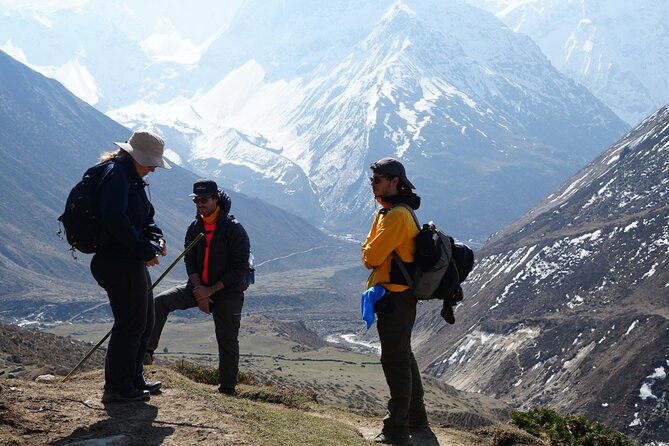
On Day 2, you’ll trek about 19 kilometers to Jagat, gaining roughly 4,400 feet. That’s a real jump in effort from the start. The route includes suspension bridges and waterfalls, which helps break up the grind—fun scenery that also gives your legs a reason to keep going.
Jagat is also a cultural stop. You’re not just moving through; you’re passing places where locals live. You’ll likely feel the difference between high-country trekking and a fully remote expedition here. Guesthouses mean you get a warm meal and a roof, but the pace still belongs to the trail.
Tip for you: plan to keep your breaks short and steady. On long days, the biggest energy savings often come from consistent pacing, not extra sightseeing stops.
Deng to Namrung to Shyala: forests, fields, and monastery stops
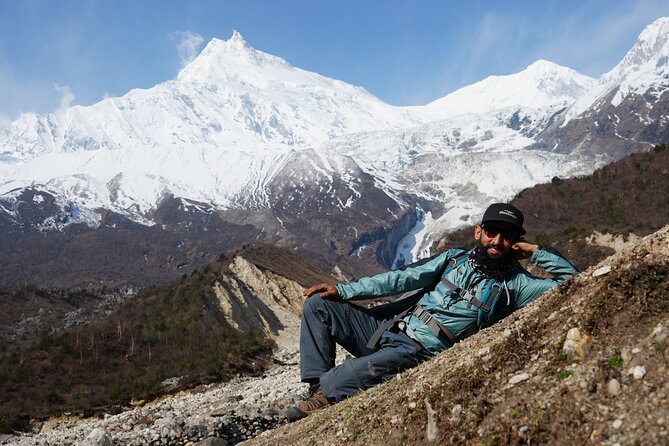
Days 3 to 5 are where the trek becomes more obviously “Manaslu Circuit.” You’re moving through lush forests, terraced fields, and small villages. Day 3 targets Deng, and you’re told to expect panoramic mountain-and-valley views after the hiking hours—so the work pays off with sightlines, not just mud and stone.
On Day 4, you hike from Deng to Namrung. This is the day where the itinerary highlights diverse flora and fauna and the idea of learning along the way—traditional villages and ancient monasteries appear on the route. That’s a big plus if you like cultural context, because monasteries aren’t a side quest here. They help explain why this region has such a strong spiritual identity.
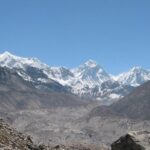
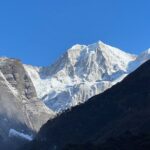
Day 5 climbs from Namrung to Shyala. The route includes a bigger viewpoint element once you reach Lho, with an emphasis on spectacular panorama of the surrounding high peaks. The hiking is still steady-time and breath-control work, but days like this are exactly why people sign up for the circuit.
Possible drawback: these middle days can feel repetitive if you don’t pace yourself. Same backpack rhythm, same guesthouse routine. The trick is to treat it like a slow-motion training hike. Watch for your breathing patterns. If you can stay calm and consistent, the trek feels easier even when the trail doesn’t.
Samagaun acclimatization: the day you’ll be glad exists (Day 7)
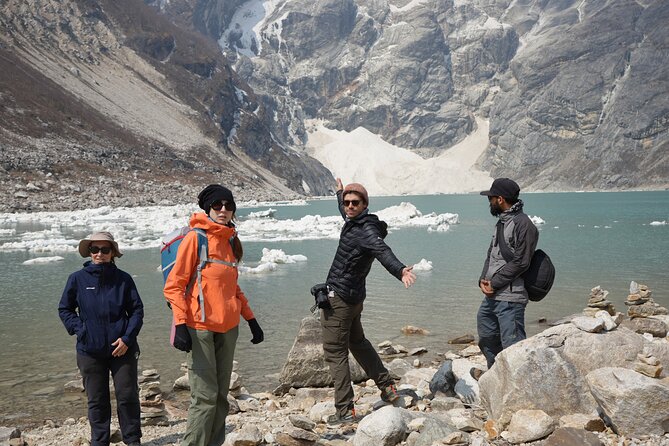
You reach Samagaun on Day 6 after climbing uphill to Pungyen Gompa, then returning to town. This day is about both views and understanding place. You also get time to explore Samagaun and visit Ribung monastery.
Day 7 is your acclimatization focus. That’s huge. The plan offers options for a shorter outing depending on how you feel:
- an optional trip toward Manaslu Base Camp (listed at 15,748 feet)
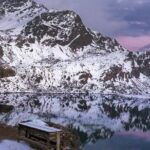
- or a trip to Birendra Lake (listed at 12,109 feet)
The value of this isn’t just “extra hiking.” It’s decision-making. If you feel strong, you can go. If you don’t, you can rest and keep the pace smart. That flexible approach is one of the most practical forms of safety on altitude treks.
If you want my practical advice: treat the acclimatization day like it’s there for your body, not for your ego. Even strong hikers get altitude surprises. Choosing the lower-intensity option can be the smart move.
Samdo on the Tibetan border: rocky terrain and moraine walking (Day 8)
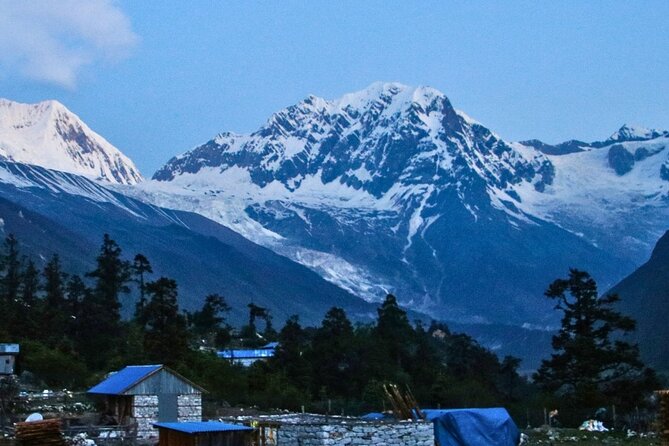
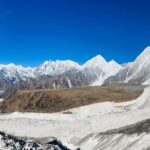
Day 8 takes you from Samagaun to Samdo. This is where the trail vibe shifts. You’re moving through rocky terrain and moraines, which can mean uneven footing and a different kind of tired than a forest path.
Samdo is described as a village on the Tibetan border. That phrase matters. You’re not only gaining altitude; you’re also moving into a cultural zone where Tibetan influences are more visible in how people live, build, and practice Buddhism.
The day can feel long because footing is less forgiving. Keep your steps short, and don’t rush descents. It’s easy to overstep when you’re focused on speed, and that’s when ankles protest.
Dharmasala (Larkya Phedi) on the Budhi Gandaki River: setting up the pass (Day 9)
On Day 9, you trek from Samdo to Dharmasala, following the Budhi Gandaki River. You’ll pass a suspension bridge, which is one of those trail features that breaks up the day and gives you a chance to look ahead.
Dharmasala is also known as Larkya Phedi, and this stop functions as a staging point for the big crossing. The plan notes that you’ll rest for the night before going for Larkya La Pass.
Practical idea: sleep matters here. Try to get to bed early, drink water steadily, and avoid doing anything “extra” that makes tomorrow harder.
Larkya La Pass (Day 10): the big high point that makes the trek
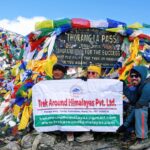
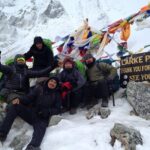
Day 10 is the headline day. You tackle Larkya La Pass, listed in the overview at 5,106 metres (16,752 ft), and in the pass-day details at 16,929 ft. Either way, you’re talking about true high-altitude trekking.
As you ascend, you’re promised panoramic views of surrounding peaks and glaciers. After crossing, you descend to Bhimthang.
What makes this pass day worth it isn’t only the altitude number. It’s the payoff arc. All those earlier days build your legs, and your patience, and your ability to move when you’re breathing harder than usual.
Practical tips for you:
- Use the included oximeter for oxygen checks, but don’t fixate on it every five minutes. Trends and how you feel matter.
- Move slowly on the climb. Big altitude days punish fast starts.
- Bring layers that handle wind. Even if you’re warm walking, cold can hit fast on exposed sections.
Bhimthang to Dharapani (Day 11): pine and rhododendron forest walking
Day 11 descends from Bhimthang to Dharapani. The route includes scenic pine and rhododendron forests, and it’s framed as passing charming villages and terraced fields.
This is the day many people feel a little relief, but don’t confuse relief with easy walking. Descent is still hard on knees and feet. If you’ve trained for downhill, you’ll feel more comfortable. If you haven’t, you’ll want trekking poles and careful step timing.
You arrive in Dharapani for the overnight, finishing the main circuit leg and setting up the return day.
Returning to Kathmandu on Day 12: bus ride and a real send-off dinner
On Day 12, you take a local bus back to Kathmandu. The plan also includes a farewell dinner to celebrate completing the trek.
Two practical notes:
- Kathmandu arrival days can feel physically weird. You might feel tired, not energized, even after finishing.
- Don’t plan a big schedule right after returning. Your body needs time to recalibrate.
From the reviews-style feedback you’re given, one theme shows up: people feel cared for from the airport through the end of the trip. That matters because the final day is part of the overall experience, not just a transfer.
Guides, porters, and safety: the support that changes how hard it feels
This trek is guided by a government registered & English speaking local guide. And support doesn’t stop at “leading the way.” Medical supplies are included (a first-aid kit), and the plan includes oximeter support to monitor oxygen level.
There’s also an emergency mechanism: an emergency helicopter service is arranged, but it’s paid by your travel insurance company. That’s an important detail for your planning. The trek isn’t selling you magic rescue. It’s connecting you to the safety systems your insurance should cover.
Porters are optional but not included. If you hire a porter, the cost is listed as $300 per person, with two people sharing one porter and a 25 kg maximum load. In practice, this is a lever for comfort. If your goal is to enjoy the scenery and save energy for altitude pacing, a porter can turn the trek from “survive it” into “actually enjoy it.”
What the small-group setup really means for your day-to-day
With a maximum of 12 travelers, this isn’t a huge herd. That usually makes it easier for the guide to manage pace, hand signals, and group logistics on steep trail segments.
It also matters for morale. Several praised trips highlight that the guide teams and porters brought humor and professionalism, and that the group chemistry helped keep spirits up when days got tough. That’s not a guarantee for every group, but it lines up with a sensible group size for a high pass trek.
Should you book this Manaslu Circuit trek with Places Nepal Trek & Tours?
Book it if you want:
- a well-supported Manaslu Circuit with permits, meals, and guide support handled
- the specific goal of Larkya La Pass and the high-mountain views that come with it
- a small group and a guide team that has been repeatedly praised for organization and care (names like Nam, Kapil, Gokul, and Kopil show up in the feedback)
Think twice if:
- you have specific dietary needs that require unusual meal accommodations
- you dislike high-altitude trekking days or you’re not ready to train for long, steep walking
- you don’t want to manage extra costs like tips and possibly a porter
If you’re a steady hiker and you like the idea of walking through real villages and monasteries—while still aiming for a serious pass—this is a strong value package for the price.
FAQ
How long is the Manaslu Circuit Trek?
The trek is listed as 12 days (approx.).
What is the meeting point in Kathmandu?
The start and end meeting point is Places Nepal Treks, Medical Chowk, Kathmandu 44600, Nepal.
Is pickup in Kathmandu included?
Yes, pickup is offered.
What’s included in the trek package?
It includes both-way ground transportation by local bus, twin sharing guesthouse accommodations, trekking permits and fees (restricted area permits), an English-speaking local guide, first aid kit, seasonal fruits during the trek, trek map, sun cap, duffle bag, and an oximeter, plus 12 breakfasts, 12 lunches, and 12 dinners.
Are Kathmandu meals and hotels included?
No. Hotel in Kathmandu and all food in Kathmandu are not included.
What about emergency rescue?
There is an arrangement for emergency helicopter service, but it will be paid by your travel insurance company.
Do I need travel insurance?
Yes. Individual travel and rescue insurance is listed as not included.
Is a porter included?
No. A porter is not included. A porter option is listed at $300 per person, with 2 people sharing 1 porter and a 25 kg max load.
How many people are in the group?
The maximum group size is 12 travelers.
What is the highest point on the trek?
The trek culminates in crossing Larkya La Pass, listed at 5,106 metres (16,752 ft), with the pass-day detail marking 16,929 ft.