REVIEW · KATHMANDU
14 Days Annapurna Base Camp Trekking | Best trek for visit Nepal 2020
Book on Viator →Operated by Nepal Treks and Tour · Bookable on Viator
There’s a reason Annapurna Base Camp is on so many lists. This 14-day Nepal plan mixes Kathmandu’s UNESCO sights, mountain villages, and big summit views—with Poonhill sunrise and Jhinu hot springs built into the trek rhythm. You get private transfers, an English-speaking guide, and trekking support gear, so you’re not guessing what comes next.
I especially like the way the route strings together cultures and viewpoints: UNESCO temples in Kathmandu, then Magar and Gurung settlements on the trail, and finally that wide-open base camp panorama. I also like the practical support baked in—sleeping bag and down jacket are complimentary, plus there’s a first aid kit and an English-speaking guide who handles the moving parts.
One consideration: this is still a trek, so you’ll need moderate physical fitness, and the package doesn’t include travel insurance, Nepal visa fees, or tipping for guide(s), porter(s), and drivers.
In This Review
- Key highlights worth caring about
- Kathmandu starts strong: UNESCO sights plus permit prep
- The Pokhara reset: highways, lakes, waterfalls, and easy pacing
- Ulleri to Ghorepani: stone stairs, suspension bridges, and first big views
- Poonhill sunrise and Tadapani: the best early push of the whole route
- Chhomrong and Sinuwa to the last teahouse zone before ABC
- Annapurna Base Camp day: Hinku Cave, Machhapuchhre Base Camp, and the payoff
- The descent that still matters: Bamboo, down-climbing, then Jhinu hot springs
- Back to Pokhara and home bases: rivers, World Peace Pagoda, then Kathmandu
- Price and logistics: why $871 can feel fair here
- Trek support and guide quality: the team effect
- Should you book this Annapurna Base Camp trek?
- FAQ
- What does the tour cost and where does it run?
- Is airport pickup included?
- What’s included in the trekking package?
- What’s not included that you should budget for?
- Is this trip private?
- Can you cancel for a refund?
Key highlights worth caring about
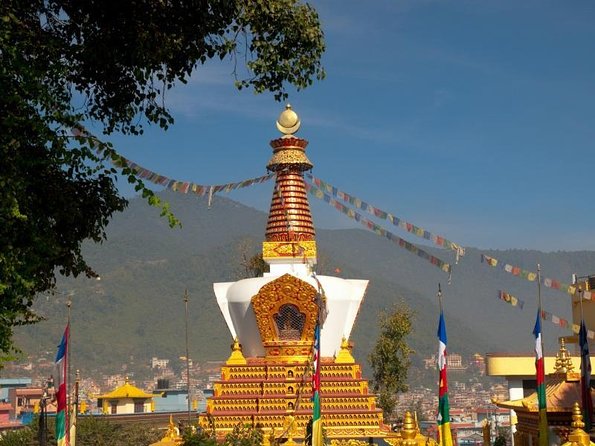
- Kathmandu UNESCO warm-up: Pashupatinath, Swayambhunath, and Boudhanath before your hiking starts
- Pokhara on the way: Phewa Lake and waterfall/cave options help you reset after Kathmandu
- Poonhill sunrise timing: early morning views over Annapurna and the Dhaulagiri range
- Village-to-village trek: Magar and Gurung cultural stops (plus optional homestay learning)
- Annapurna Base Camp focus day: Hinku Cave, Machhapuchhre Base Camp, and big multi-peak views
- Leg recovery at Jhinu: natural hot springs after rugged descent days
Kathmandu starts strong: UNESCO sights plus permit prep
Day 1 is built around a smooth arrival. You land at Tribhuvan International Airport, get welcomed by a company representative, then transfer to your hotel. If you want to get your bearings fast, Thamel is close by for a low-key stroll, and you’ll end the first day with a welcome dinner.
Day 2 is where the trip earns its keep. You head out by private vehicle to major UNESCO World Heritage Sites in Kathmandu—Pashupatinath, Swayambhunath, and Boudhanath—so you’re not trekking culture with jet lag. At the same time, the company handles trek permits and documents, which means your attention stays on the trip instead of paperwork.
A practical note: you also get lunch at authentic Nepali diners. That matters because Kathmandu sightseeing can turn into a snack-only day if food logistics aren’t handled. Here, the plan keeps you fed and moving.
You can also read our reviews of more tours and experiences in Kathmandu.
The Pokhara reset: highways, lakes, waterfalls, and easy pacing
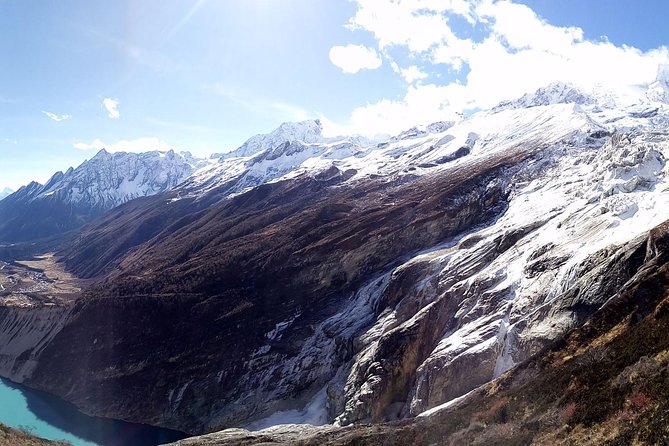
Then you shift gears. On Day 3 you drive to Pokhara along the Prithvi Highway (about 200 km), with hill and river views rolling past the windows. It’s a long travel day, but it’s also a nice “transition” from city time into trekking time.
Pokhara is also your scenic palate cleanser. You can spend time at Phewa Lake and add sites like Mahendra Cave and Davis Falls, with the option of the Bat Cave. The goal isn’t to sprint through everything—it’s to arrive in the Annapurna region feeling refreshed enough to start walking the next day.
On Day 13, Pokhara comes back again with more relaxed sightseeing: Phewa Lake and the World Peace Pagoda are specifically mentioned before you drive back to Kathmandu. That return loop makes the trip feel complete instead of just a one-way trekking setup.
Ulleri to Ghorepani: stone stairs, suspension bridges, and first big views
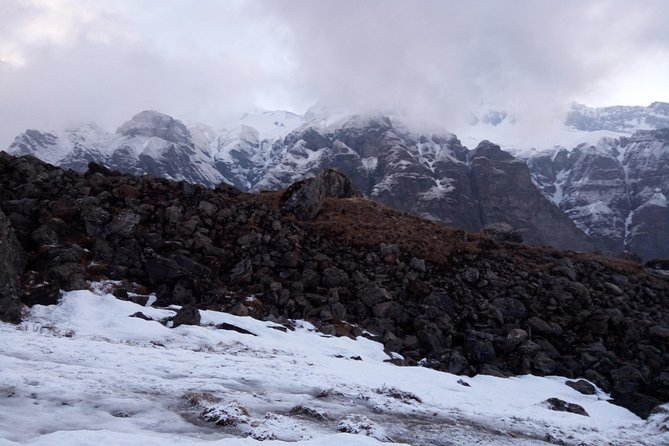
Day 4 begins your hiking in the classic Annapurna style: you drive to Nayapul, then trek toward Ulleri. The route runs through Birethanti and Tikhedhunga, crosses a suspension bridge, and then tackles a stone staircase climb to Ulleri. It’s not a “gentle start,” but it’s a start that sets expectations early.
Ulleri also brings Magar culture into the mix. Even if you just notice local life patterns as you walk through villages, it gives the trek texture beyond scenery. You’re not hiking in a vacuum; you’re moving through working communities.
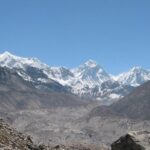
Day 5 carries you to Ghorepani (with about 6 hours of trekking time listed). You pass Banthanti for lunch, then continue to Ghorepani, another Magar village. This is also where you start seeing the Annapurna and Dhaulagiri mountain ranges more clearly, which is a huge morale boost because you can finally connect the names on postcards to real views.
The small win here: your “first real mountain day” is still within a manageable effort range. It’s a smart way to build confidence before the early-morning viewpoint day.
Poonhill sunrise and Tadapani: the best early push of the whole route
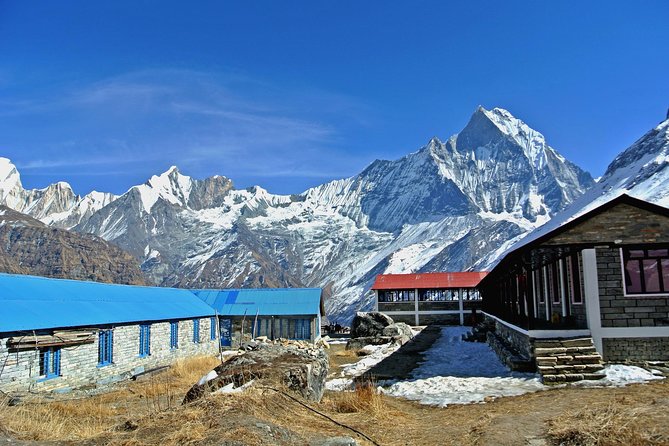
Day 6 is an early wake-up day for a reason. You ascend to Poonhill for sunrise, then descend back toward Ghorepani for breakfast. Poonhill is described as a vintage viewpoint, and the key payoff is that first burst of sunlight across the Himalayas.
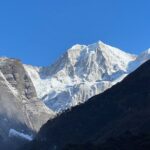
After that, you trek to Tadapani. You’ll move through the region where you can see Annapurna South (7,219m) and Hiunchuli (6,441m), and Tadapani is noted as a Gurung village. If you want a cultural deep breath, the plan even suggests an optional homestay where you can learn more about Gurung life.
This is one of those days where the structure helps you. Sunrise hikes can be brutal if your schedule is sloppy, but here it’s sequenced so you get the viewpoint and then properly continue the trek.
Chhomrong and Sinuwa to the last teahouse zone before ABC
Day 7 takes you to Chhomrong. The trail drops toward Kimrong Khola, then climbs through the forested Modi valley. You pass Gurung settlements like Chulie and Gurjung, stop for lunch at Talung, then climb stairs to reach Chhomrong, described as the largest settlement in the valley and known for agricultural production.
Chhomrong is also a good “anchor point” in your mind. By now, you’ve done enough daily climbing that when you arrive somewhere established and active, it feels like a real base for the next stage.
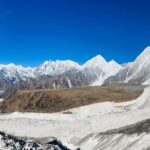
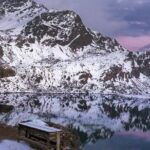
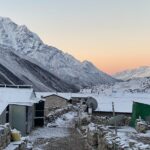
Day 8 continues through Sinuwa, then down to Bamboo. The route passes rhododendron and oak forests, which tend to change the feel of the trail—so you’re not walking the whole time through the same kind of terrain. After lunch in Bamboo, you climb to Himalaya, described as a group of teahouses and lodges, and the trail gets rugged, with snow visible in some parts.
That snow mention is important. You may still be early in the season, but you should treat this day and the ones after as your cold-weather phase. Even with a down jacket included in the package, plan to layer well and keep your core warm.
Annapurna Base Camp day: Hinku Cave, Machhapuchhre Base Camp, and the payoff
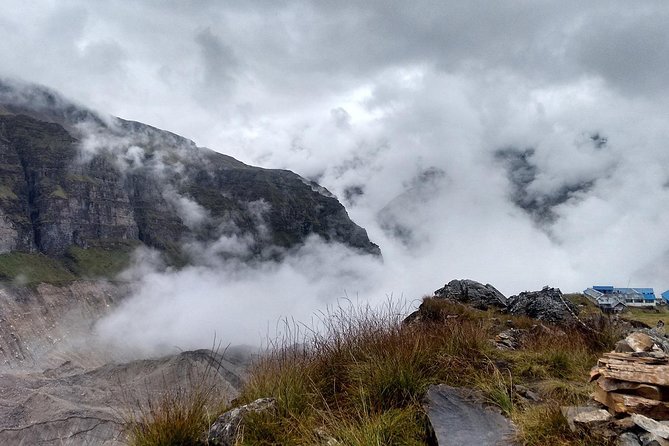
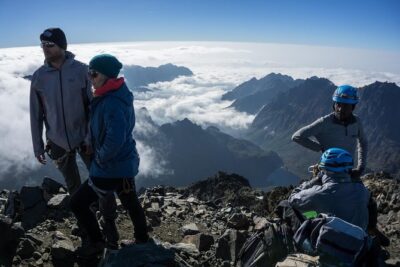
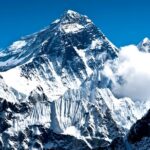
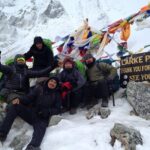
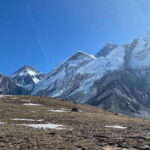
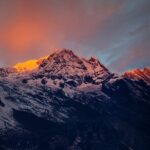
Day 9 is the signature day. As elevation increases, you’ll notice vegetation changes—trees thinning out until you’re in more alpine scrub and bushes. On the way, you explore Hinku Cave, then head toward Machhapuchhre Base Camp, where you can see Machhapuchhre (6,993m) and other trekkers clustered for the same moment.
From there, Annapurna Base Camp is described as only a few hours away. When you arrive, you can interact with campers, and the base camp is positioned as a vantage point to observe Annapurna, Dhaulagiri, and Manaslu.
One practical benefit of this day’s structure: it breaks the approach into sections. You’re not just walking straight to ABC without checkpoints—Hinku Cave and Machhapuchhre Base Camp act like milestones, which helps when weather shifts or your pace slows.
The descent that still matters: Bamboo, down-climbing, then Jhinu hot springs
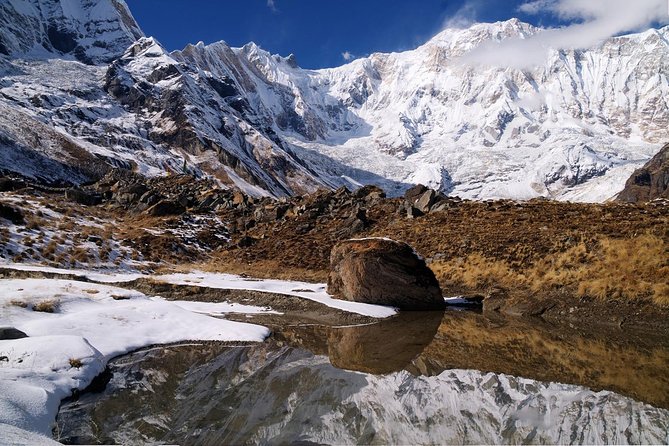
Day 10 starts with views again. You enjoy the morning sunrays on the Himalayas, then say goodbye to ABC and begin descending to Bamboo. The trail is mostly downhill with lots of down-climbing, and that’s where trekking poles (if you use them) and careful footwork pay off. Your legs work hard even when your altitude drops.
Day 11 is where recovery turns into a reward. You climb to Khuldighar, where you can see an experimental sheep farm, then descend through rhododendron fields to Sinuwa. After that, there’s a steep push to Jhinu, where the natural hot springs provide the real treat—helping relax aching body parts after a day built around walking.
This hot springs stop is more than a fun add-on. When a trek includes a clear recovery moment, it’s easier to keep energy for the final travel days.
Back to Pokhara and home bases: rivers, World Peace Pagoda, then Kathmandu
Day 12 brings you down out of the mountains and into a travel rhythm. The trail descends and crosses a river back toward Birethanti, then you continue to Nayapul. Your representative meets you at Nayapul to take you back to Pokhara, and you overnight there.
Day 13 then links the two biggest cities in your story. You do Pokhara sightseeing, including Phewa Lake and the World Peace Pagoda, then drive back to Kathmandu (about 6 hours). After arrival, you can rest, explore the valley, or return to Thamel for shopping.
Day 14 ends simply and neatly. You start with breakfast, get a brief session with the representative, and then you’re dropped at Tribhuvan International Airport for your departure.
Price and logistics: why $871 can feel fair here
The listed price is $871 per person for a 14-day private experience. For many treks, the big unknown is what you’re really paying for: guiding, transport, gear, and administrative work. Here, the package explicitly includes private transportation, all fees and taxes, and an English-speaking guide with his expenses covered.
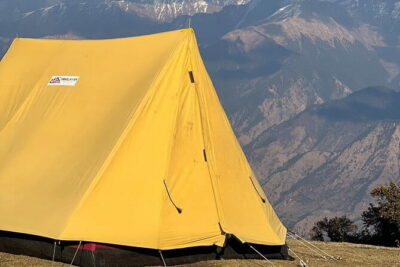
You also get complimentary sleeping bags and down jackets. Even if you travel with your own gear sometimes, this can still be a real cost saver, especially if you’re not planning to buy trek sleeping gear for one trip.
The inclusion of a first aid kit is also the kind of “small thing” that matters when you’re operating far from hospitals. It doesn’t mean problems won’t happen, but it does mean someone has planned for the usual trekking bumps.
What’s not included matters for your budget. Travel insurance, Nepal visa fees, and tipping for guide(s), porter(s), and drivers are on you. If you’ve never trek-tipped before, I suggest setting aside a tipping budget early so it doesn’t become a last-day stress.
Also, this is a private tour/activity, meaning it’s only your group. One review described trekking with a group of 12, so your group size may vary, but the private setup generally keeps the experience from feeling like a crowded bus ride.
Trek support and guide quality: the team effect
A trek like Annapurna Base Camp is hard to run on logistics alone. The human factor is a major part of why this route tends to work for people.
From the feedback you shared, you’ll see the names Saran (coordinator), Nilan and Tika (guides), and Lal (another guide) coming up repeatedly. Porters also get credited, including Bheem, and that points to a real operational focus on taking care of the whole team—not just the person on the map.
That shows up in common themes: people felt safe, treated well, and supported from planning through the trail days. If you want a trip where your guide is part coach, part problem-solver, this operator’s approach seems aligned with that.
Should you book this Annapurna Base Camp trek?
Book it if you want a trek that’s not only about the big ABC photo. I like that you get a full Kathmandu UNESCO start, a Pokhara reset, a sunrise viewpoint day at Poonhill, and that Jhinu hot springs recovery stop. It’s a clear “whole arc,” not a single long hiking day followed by scramble-to-get-back travel.
Consider a different option if you hate early starts or if you’re not feeling confident with moderate trekking fitness. This route includes rugged sections and down-climbing, plus a cold-weather phase near the approach to base camp.
If your priorities are strong organization, private transport, and guided mountain days with real village experiences, this one makes sense—especially for first-time Nepal trekkers who want structure without feeling boxed in.
FAQ
What does the tour cost and where does it run?
The price is listed as $871.00 per person, and the experience is based in Kathmandu, Nepal. The trip is about 14 days long.
Is airport pickup included?
Yes. The trip begins with arrival at Tribhuvan International Airport, and a representative transfers you to your hotel. The meeting point is Tribhuvan Airport, Kathmandu, Nepal, with a start time of 7:45am.
What’s included in the trekking package?
Included items list private transportation, all fees and taxes, a first aid kit, and complimentary sleeping bags and down jackets. It also includes an English-speaking guide and his expenses, plus breakfast (3) and lunch (11).
What’s not included that you should budget for?
Not included are travel insurance, Nepal visa fees, and tipping for guide(s), porter(s), and driver(s).
Is this trip private?
Yes. It’s described as a private tour/activity, and only your group will participate.
Can you cancel for a refund?
The policy says free cancellation is available up to 24 hours in advance for a full refund. If you cancel less than 24 hours before the start time, the amount paid will not be refunded.