REVIEW · KATHMANDU
16 Day Private Manaslu Circuit Trekking
Book on Viator →Operated by Ambition Himalaya Treks & Expeditions · Bookable on Viator
Quiet trails. Big mountain days. Clear support.
This 16-day private Manaslu Circuit trek is built for trekkers who want fewer crowds, less fuss, and steady guidance deep in Gorkha District. I like that Manaslu stays quieter than the Everest or Annapurna main routes, yet it’s still not so remote that you’re forced into carrying tents and massive food loads. Teahouse nights keep things comfortable, and the views keep getting more serious day after day. The main drawback to consider is that the circuit is genuinely tough, with the Larkya La Pass day being the hardest push, so you’ll want a calm body and a stubborn head.
The logistics are also thoughtfully handled, which matters on a trek where timing and paperwork can make or break your trip. I like that your package includes the key moving parts: Kathmandu hotel with breakfast, a guide plus strong porters, required permits, and even down gear like a sleeping bag and down jacket. One possible consideration: the price is not a budget-only option, and you’ll still have personal expenses on the trail and in Kathmandu that are not included.
In This Review
- Key highlights I’d circle before you book
- Why Manaslu feels quieter than the Everest/Annapurna crowds
- The private trek value: permits, people, and real gear support
- Kathmandu prep day in Thamel, plus a quick UNESCO hit
- From Kathmandu to Machha Khola: the road trip that sets your pace
- Days 4-5: Budhi Gandaki valley walking, hot springs, and permit checks
- Days 6-8: Namrung, Lho Village, and the big mountain framing
- Day 9 in Samagaon: acclimatization that actually gives you options
- Days 10-11: Samdo and Dharamshala near Larkya La
- Day 12 over Larkya La Pass: the toughest day, planned for mornings and cold
- Days 13-14: downhill to Tilje, then toward Chyamje and Annapurna country
- Days 15-16: bumpy road realities and the drive back to Kathmandu
- Packing and comfort: what you get, and what you should still bring
- Price and logistics: is $1,098 for 16 days good value?
- Who this trek suits best (and who should reconsider)
- The best reason to book: consistent local operations, not just a route
- Should you book this 16-day private Manaslu Circuit?
- FAQ
- How long is the Manaslu Circuit trek?
- Where does the trek start and where does it end?
- Is airport pickup included?
- What permits are included?
- Are meals in Kathmandu included?
- Is this a private trek or a shared group?
- What gear is included for the trek?
- What’s the fitness level needed?
- What happens if weather causes a cancellation?
- Can I cancel and get a full refund?
Key highlights I’d circle before you book
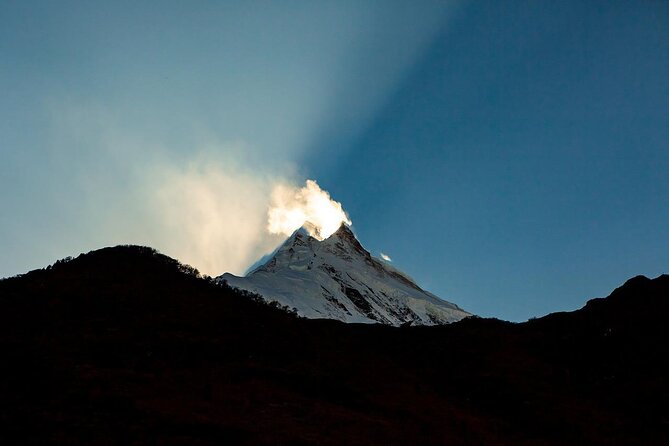
- Manaslu’s quieter feel: far fewer trekkers than Everest and Annapurna corridors, with fewer roadside distractions.
- Comfort without tent trekking: teahouses provide cozy lodging, so you mainly focus on walking.
- Permits and paperwork handled for you: Manaslu, Annapurna, Special Immigration Permit, and TIMS are included.
- Support built in: a trekking guide, strong shared porters (1 porter per 2 paying people), and gear support.
- The Larkya La Pass challenge: early start, icy glacial moraines, and a long day that defines the trip.
- Safety planning included: worst-case rescue and medical evacuation arrangements are part of the package.
Why Manaslu feels quieter than the Everest/Annapurna crowds
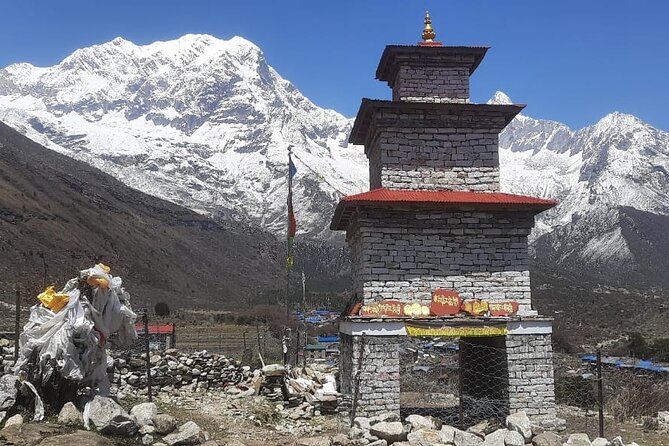
If you’re craving the Himalayas without the “everyone takes the same photo at the same time” vibe, Manaslu is a strong match. It sits tucked inside Nepal’s Gorkha District, and that isolation shows up in daily life on the trail. You still get villages, tea houses, and a functional trekking route, but the overall feel is less pressured.
This matters more than it sounds. When a trek is crowded, you spend mental energy dodging bottlenecks, sharing lodge space, and syncing to other peoples’ pace. On Manaslu, the walking rhythm stays yours more often. You can take breaks when you need them, linger when the mountains do something dramatic, and keep the day from turning into a checklist.
Just know the tradeoff: fewer shops and fewer services mean you should expect limited options compared with high-traffic routes. That’s part of the appeal, but it also means you shouldn’t count on being able to improvise major gear or food problems.
You can also read our reviews of more tours and experiences in Kathmandu.
The private trek value: permits, people, and real gear support
The big “value” here isn’t just the itinerary. It’s the scaffolding around it, the parts that reduce risk and stress while you’re at altitude and far from options.
You’re getting all required permits and paperwork handled: Manaslu, Annapurna, Special Immigration Permit, and TIMS. That’s not glamorous, but it’s the difference between a smooth start and a day lost to administration. You also get a trekking guide, and for groups of over six, an assistant guide.
Then there are the porters. The trek includes strong porters with one shared porter for every two paying people, including the porters’ expenses and insurance. That reduces the load on your body, which matters when your energy is being spent on steep climbs and slow altitude adaptation.
And yes, the gear support is real. You’re provided with key items like a down jacket and a sleeping bag, plus a duffel bag, T-shirt, trekking map, and a first aid kit. That can save you the hassle of renting or buying equipment in Nepal under time pressure.
Kathmandu prep day in Thamel, plus a quick UNESCO hit
You land at Tribhuvan International Airport and get picked up for a hotel transfer in Kathmandu. Most stays are in Thamel, the tourist hub where you can find food, small supplies, and easy meeting points for guides.
Day 2 is a free day reserved for preparation. That’s smart, because it gives you breathing room to confirm logistics, handle any last-minute needs, and get your gear into trek-ready shape. You also have a good nearby option if you want it: Kathmandu Durbar Square and the ancient temples around it, both UNESCO world heritage sites.
This isn’t a “hard sightseeing day.” It’s more of a reset. After a long travel day, walking around Durbar Square helps you get your bearings without draining you before the first real trek segment.
From Kathmandu to Machha Khola: the road trip that sets your pace
On Day 3 you drive out of Kathmandu valley toward the west. The vehicle follows river corridors, climbing toward Malekhu, then crossing and continuing west. You’ll meet the Budhi Gandaki river area at Arughat, and that’s when the mountains begin showing up more clearly in the landscape.
Your first overnight is Machha Khola, reached after driving through spots like Sotikhola/Soti Khola. The trek itself doesn’t start this day in the way the later days do, but you’re building the physical “connection” between road altitude and trekking altitude. It’s the warm-up for your legs and your stomach routine.
One practical note: even on “drive days,” you’re still in a moving vehicle for a long stretch. If you’re prone to motion sickness, take it seriously and pack what you normally use.
Days 4-5: Budhi Gandaki valley walking, hot springs, and permit checks
Once you start trekking for real, the Budhi Gandaki river becomes your guide. Day 4 follows the river upward, with crossings along the way, and you move through villages such as Khorlabesi and Jagat.
There’s a hot water spring (Tatopani) ahead of Khorlabesi. The idea here is simple: when your legs feel like they’re made of stone, a warm pool can do more for recovery than you’d expect. Even if you skip it, the existence of that stop gives you a real “recharge option” mid-route.
Day 5 brings you through Salleri, then Philim. Philim is important because it’s where trekking permits are checked. That’s the moment when your package’s paperwork support can really pay off. If anything is going to be verified on the ground, it’s happening here, so having everything prepared beforehand keeps things calm.
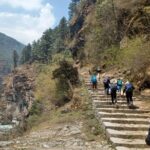
You’ll also notice the trail’s feel changing: terraced fields, barley and millet, forests of pine and rhododendron, and multiple stream crossings. This is classic Manaslu walking—less about one dramatic landmark, more about the steady rhythm of valley travel.
Days 6-8: Namrung, Lho Village, and the big mountain framing
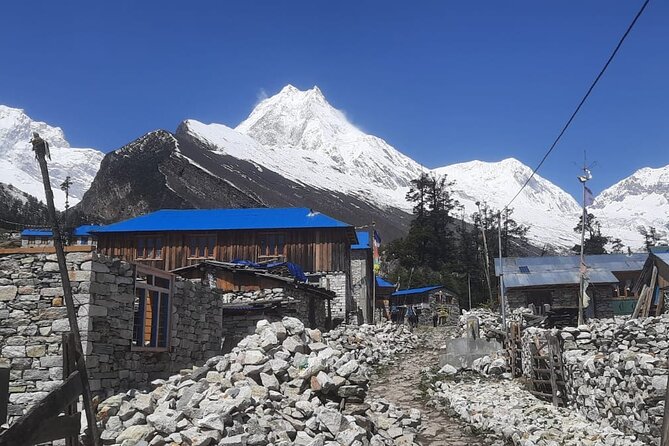
Day 6 moves from Deng toward Namrung after passes through Prok and Ghap villages. You’ll start seeing major peaks more often, including Manaslu and Ganesh (and even Annapurna II in the wider views). By this point, the trek stops feeling like a route and starts feeling like a panorama you’re inside.
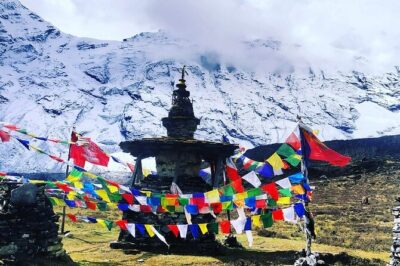
Day 7 is a gentle climb after breakfast toward Lho Gham, then on to Lho Village. This is one of the best kinds of trek moments: you’re walking through pine forest and small settlements, then you arrive at a village with a monastery. The monastery visit is short, but it adds cultural texture and a break from nonstop scenery.
Day 8 continues toward Samagaon. You’ll pass through villages such as Sho and Sama, plus Shyala, which offers big views toward Himalchuli, Manaslu, Peak 29 (Ngadi), and large glaciers. You end up in Samagaon for the night.
This segment is where Manaslu’s “quiet but not cut-off” nature becomes clear. You get enough settlements to keep things practical, while the views remain wide enough that the trek still feels remote.
Day 9 in Samagaon: acclimatization that actually gives you options
Acclimatization day is not wasted time here. Samagaon is a major village in the Manaslu region, with a Buddhist community of Gurung and Sherpa people. That means you can explore at an easy pace rather than just resting and staring at the wall of sky.
You can hike to Pung Yen Monastery as an option. If you’re the kind of trekker who worries that “rest days” mean losing mountain time, you’ll appreciate that there’s another alternative built in: you can skip the acclimatization hike and take a detour toward Manaslu Base Camp, which takes about 5–6 hours and functions like a day trek. You just need to tell your operator in advance so an extra acclimatization day can be planned.
That flexibility is valuable because it respects two different trekking styles. Some people want culture plus rest. Others want base-camp time. The key is timing, and this plan gives you a way to make the choice.
Days 10-11: Samdo and Dharamshala near Larkya La
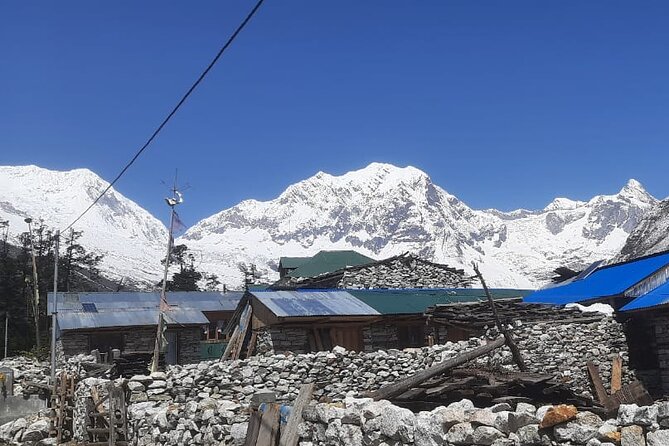
Day 10 takes you farther into the northern border of the Manaslu region. The Budhi Gandaki river remains your thread, but now you’re in higher, colder terrain. A key decision point appears: the route splits toward Manaslu Base Camp or toward Larkya La Pass. You take the Larkya La direction.
Along the way you’ll pass through Kemro Kharka, yak grazing terrain, and then Kani. Samdo is next—a village associated with Tibetan asylum seekers. You also have an option to hike to Samdo Monastery if you want more than just the walk.
Day 11 is relatively short in distance but tough in effort because the terrain near the pass is demanding. You’ll reach Larkya Bazaar, a seasonal market for local people, with monasteries and stupas along the trail. You’ll also cross or pass by multiple rivers and get stunning views of the Larke Glacier near Dharamshala.
Dharamshala is important because it places you at the base of Larkya La Phedi. This is the staging point for the most serious day on the circuit, so use the night well. Eat early. Hydrate. Keep your pack organized so you’re not rummaging around in the morning.
Day 12 over Larkya La Pass: the toughest day, planned for mornings and cold
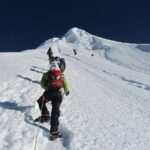
This is the day the whole circuit builds toward. Day 12 is described as long and hard, and it earns that reputation. You start very early so you can navigate icy glacial moraines near Larkya Glacier.
Once you reach Larkya La Pass, you’ll spend time at the high point for photographs. Then the descent begins toward Bhimtang for the overnight.
The view payoff here is clearly spelled out: Larkya Peak, Cho Danda, and wide views that include Manaslu, Himalchuli, Cheo Himal, Gyagi Kunja, Kang Koru, Ganesh Mountain, and Ratna Chuli. That’s a lot of named peaks, which tells you what kind of visibility you’re hoping for on the day.
The practical takeaway is not romantic. It’s logistical. Early starts demand that you keep your layers accessible and don’t leave key items buried. Also, if weather is poor, conditions can get nastier fast. Your operator includes worst-case rescue and medical evacuation arrangements, which matters most on days like this.
Days 13-14: downhill to Tilje, then toward Chyamje and Annapurna country
Day 13 begins with a panoramic morning view, then you move toward Sangure Kharka, a yak grazing field, and mostly downhill terrain. Rhododendron returns to dominate the scenery as you drop altitude. You’ll pass terraced fields and a scenic valley area such as Karche, then you’ll meet a small river flowing out of Dudh Pokhari.
You reach the village of Gho and continue to Tilje for the night. This is where the trek shifts from high-altitude austerity to human-scale village walking. Tilje is one of those places where you can feel the circuit becoming a normal trail again.
Day 14 continues south-east toward villages like Thonje. You’ll also meet the Marsyangdi river, a tributary of Narayani, and see another shift in the drainage system that you’ll later follow by vehicle.
At Dharapani, you’ll also see signs of the Annapurna Circuit influence, since people traveling that route can come through here. Then you finish at Chyamje, which functions like a gateway to upper reaches of Annapurna and Manaslu.
Days 15-16: bumpy road realities and the drive back to Kathmandu
Day 15 is travel-heavy. First, you drive from Chamje to Besisahar, and the road is described as somewhat bumpy. Expect river scenery and waterfalls along the way, with traditional villages dotting the slopes.
Then you continue by drive to Kathmandu. The route goes south, then east, and follows the banks of Marsyangdi and Trishuli rivers, winding through the Mahabharata hill range and entering Kathmandu via the Nag Dhunga Pass. That’s a long ride, but it’s also the best kind of ending: you slowly swap high-altitude air for valley air and close the loop on the region you just walked through.
Day 16 is the finish. You’re dropped back at the airport if you want to fly home, or you can extend the trip to other parts of Nepal.
Packing and comfort: what you get, and what you should still bring
It’s a relief when a package handles key gear. Here, you’re provided with a down jacket and a sleeping bag, plus a duffel bag, T-shirt, trekking map, and a first aid kit. That lowers your risk of arriving without the right thermal layers.
Still, you should plan on personal packing because not everything is spelled out. You’ll have personal nature expenses on the trail and in Kathmandu that are not included, like hot showers, WiFi, laundry, drinks, and charging batteries. If you care about steady communication, also remember WiFi isn’t guaranteed in mountain villages.
The bigger comfort consideration is the schedule. Even with teahouses, some days are long: Day 12 is described as long and hard, and Day 13 and Day 14 have multiple-hour walks too. So you’ll feel tired even if you aren’t carrying tents and bulk food.
Price and logistics: is $1,098 for 16 days good value?
At $1,098 per person for about 16 days, this is not a cheap trek. You’re paying for a lot of “invisible” work that affects safety and smoothness: permits, guide support, strong shared porters, and included down gear like a sleeping bag and down jacket. You’re also getting a private group experience, which usually raises cost compared to shared-only group departures.
The value gets clearer when you compare what’s included. Many less expensive options make you rent gear, handle your own permits, or lose the porter structure. Here you’re covered for Manaslu, Annapurna, Special Immigration Permit, and TIMS, and you have “worst case rescue and medical evacuation arrangements” included. That’s the kind of cost that can quietly skyrocket if you do it yourself.
That said, you should still budget extra. Visa fees are not included, and Kathmandu meals (lunch and dinner) are not included. You’ll also pay for personal expenses like drinks and charging. So treat the $1,098 as the core trek cost, then build a smaller buffer for the stuff you’ll actually want day to day.
Who this trek suits best (and who should reconsider)
This trek suits you if you want:
- a challenging but structured trek with clear staging and support
- a quieter, less crowded vibe than Everest or Annapurna’s main corridors
- teahouse lodging so you can focus on walking, not camping logistics
- permits and planning handled, plus strong porter support
It’s best if you have moderate physical fitness. That doesn’t mean “easy.” It means you can walk for hours on uneven trails and handle altitude gradually, especially with the plan built around acclimatization in Samagaon and the big high point at Larkya La Pass.
You might reconsider if you struggle with long walking days or if you want a more relaxed pace. Day 12, in particular, is described as the most challenging section, with early starts and icy glacial moraines.
The best reason to book: consistent local operations, not just a route
Ambition Himalaya Treks & Expeditions is the listed provider, and the trekking support is built into the price. In past trips with the same company, people highlighted the owner’s hands-on planning and the energy of guides and porters such as Shishir, and guides like Lok and Purna were mentioned in separate contexts. Those names matter because they suggest continuity, not a rotating cast.
I also like that there’s a complementary welcome or farewell dinner in Kathmandu at a typical Nepali restaurant. It’s not a trek requirement, but it’s a nice cultural bridge before and after long hiking days.
Should you book this 16-day private Manaslu Circuit?
Book it if you want the classic Manaslu experience with the hard day (Larkya La) treated seriously, and you want a private-supported setup that takes the admin and heavy carrying out of your hands. The included permits, down gear, guide support, and medical evacuation planning make this feel like a “reduce stress, increase focus on walking” package.
Don’t book it if you’re chasing an inexpensive trek or a super relaxed itinerary. This is a serious circuit. The quieter vibe doesn’t remove the effort, and you’ll still need to budget for meals in Kathmandu, visa costs, and personal expenses on the trail.
If you’re on the fence, ask yourself one question: do you want to trust the planning enough to enjoy the hike, even on the coldest, toughest day? If yes, this is a strong choice.
FAQ
How long is the Manaslu Circuit trek?
The trip is listed as 16 days (approximately).
Where does the trek start and where does it end?
It starts at Tribhuvan International Airport in Kathmandu. It ends back at the meeting point, with an airport drop option on the final day.
Is airport pickup included?
Yes. The package includes airport pickup and drop services by private vehicle.
What permits are included?
The included permits are Manaslu, Annapurna, Special Immigration Permit, and TIMS.
Are meals in Kathmandu included?
Lunch and dinner in Kathmandu are not included. Accommodation in Kathmandu with breakfast is included, and meals on the trek are included.
Is this a private trek or a shared group?
This is a private tour/activity. Only your group participates.
What gear is included for the trek?
You’re provided down jacket, sleeping bag, duffel bag, T-shirt, trekking map, and a first aid kit.
What’s the fitness level needed?
The travelers should have a moderate physical fitness level.
What happens if weather causes a cancellation?
The experience requires good weather. If it’s canceled due to poor weather, you’ll be offered a different date or a full refund.
Can I cancel and get a full refund?
You can cancel up to 3 days in advance for a full refund. If you cancel less than 3 days before the experience starts, the amount paid is not refunded.