REVIEW · KATHMANDU
8 Days Annapurna Base Camp Budget Trek from Kathmandu
Book on Viator →Operated by Welcome Nepal Treks P.ltd · Bookable on Viator
Annapurna Base Camp sunrise is the real hook here. This 8-day trek through the Annapurna region mixes classic ridgeline views with a very human pace: Jhinu hot spring recovery and a guided, lodge-based route that keeps logistics manageable. The possible drawback? You still climb and descend day after day, so if you’re not comfortable with long walking times and high altitude, this won’t feel “easy.”
I also like that the planning is pretty clear-cut: you start in Kathmandu, take the tourist bus to Pokhara, then get shuttled to the trail area before hiking. The group stays small (max 15 travelers), and the day typically starts around 6:45 am, which helps you reach key viewpoints before the weather shifts.
In This Review
- Key things that make this trek worth your time
- Entering the Annapurna region from Kathmandu, the practical way
- Day 1: Kathmandu to Pokhara for a calm start
- Day 2: From Siwai to Chhomrong’s big views
- Day 3: Sinuwa, forest walking, and the Modi River gorge
- Day 4: Hinko cave, Deurali, Machhapuchhre Base Camp, then Annapurna Base Camp
- Day 5: Sunrise at Base Camp, then a long descent to Bamboo
- Day 6: ACAP visitor center, Gurung village passages, and Jhinu hot spring
- Day 7: Second hot spring morning, Nayapul, and back to Pokhara
- Day 8: Pokhara to Kathmandu and the slow fade-out of the mountains
- Price and value: what $853.34 really covers
- The hiking reality: distance, altitude, and how to pace smarter
- What’s the group like, and does that matter?
- Who this trek suits best
- Should you book this Annapurna Base Camp Budget Trek?
Key things that make this trek worth your time
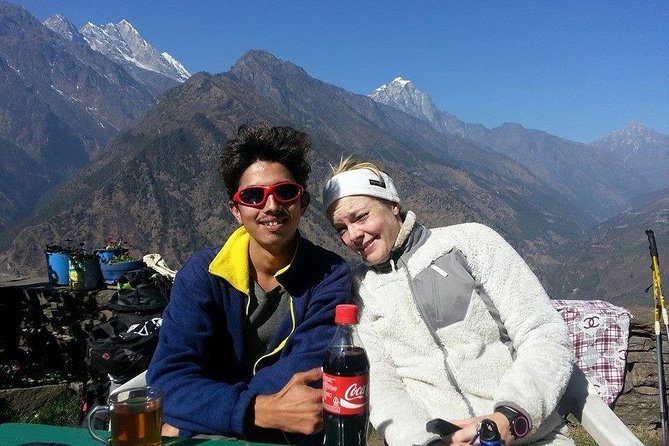
- Hot spring at Jhinu: a warm, easy reward after a tiring descent day
- Base Camp sunrise focus: you get up early to chase clear-morning mountain light
- Lodge and tea-house nights: simple stays along the route, built into the price
- Permits and paperwork included: you don’t have to scramble for admin before hiking
- Small-group feel: max 15 travelers makes it easier to move as a team
- Pokhara recovery time: one full night in town helps you reset after the trek
Entering the Annapurna region from Kathmandu, the practical way
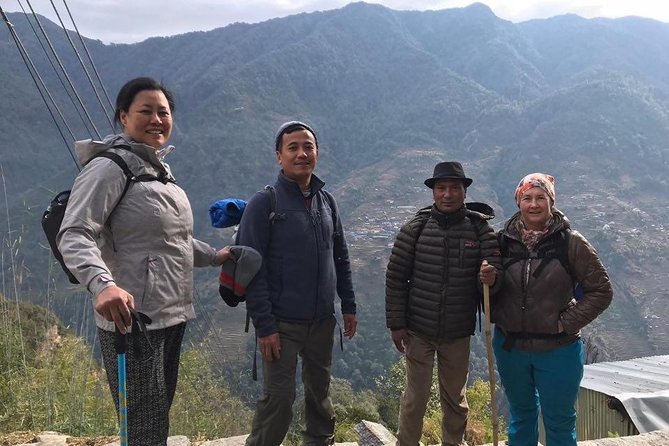
Kathmandu isn’t the high point of this trip, it’s the launchpad. You’ll go from city energy to mountain rhythm quickly, which matters because Annapurna days are best when you start them rested. The trip includes ground transport from Kathmandu to Pokhara by tourist bus (about 5–6 hours for the route distance given), then you’ll sleep in Pokhara before the hike begins.
That Pokhara night is more than a bonus. After a long travel day, you get time to eat something familiar, sort out last-minute gear, and walk off the stiffness around Phewa Lake. It’s also a nice mental shift: you can look at the mountains in the distance and start treating the trek like something you’re about to do, not something you’re watching.
You can also read our reviews of more tours and experiences in Kathmandu.



Day 1: Kathmandu to Pokhara for a calm start
On day one, you drive from Kathmandu to Pokhara. The pace is steady, and once you arrive you get free time to explore on your own.
What I like about this structure: you don’t waste your first morning hiking. You land, stretch, and spend a bit of time near Phewa Lake and the lakeside tourist area. If you use this time well, you’ll sleep easier on the night before trekking.
Possible drawback to note: bus rides in Nepal can be long and a bit bumpy, especially if you’re sensitive to motion. If you’re prone to travel discomfort, pack basics like water, snacks for the ride, and something to help you stay comfortable.
Day 2: From Siwai to Chhomrong’s big views
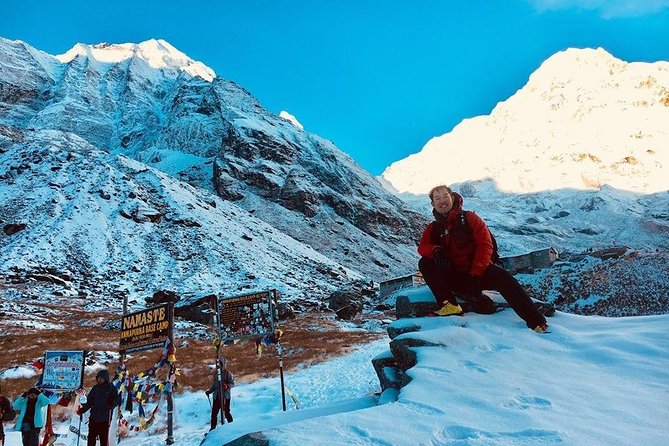
Day two is the first real step into the Annapurna rhythm. You’ll take a shared vehicle to Siwai (about 3 hours) along the drive corridor via Naudanda, Nayapul, and Birethanti. After that, the trek begins.
This is one of those early days where the walking is scenic and the terrain introduces you to the idea of ups and downs without dropping you into the hardest altitude yet. The route goes through smaller farm villages, then crosses a long suspension bridge over Kimrong Khola. That bridge isn’t just a photo stop. It’s a quick taste of the trail’s mix of views, crossings, and changing footing.
Then comes the climb from the terraced fields up toward Jhinu Danda and onward to Chhomrong. Chhomrong is also one of the classic vantage areas on this trek, where you can spot major peaks like Annapurna South, Fishtail (Machhapuchhre), Hiunchuli, and Annapurna III (visibility depends on weather).
Why overnight in Chhomrong matters: it positions you well for the deeper days ahead, while also keeping the schedule manageable. If you’re looking for a trek that doesn’t feel like a constant rushing sprint, this staging helps.
Day 3: Sinuwa, forest walking, and the Modi River gorge
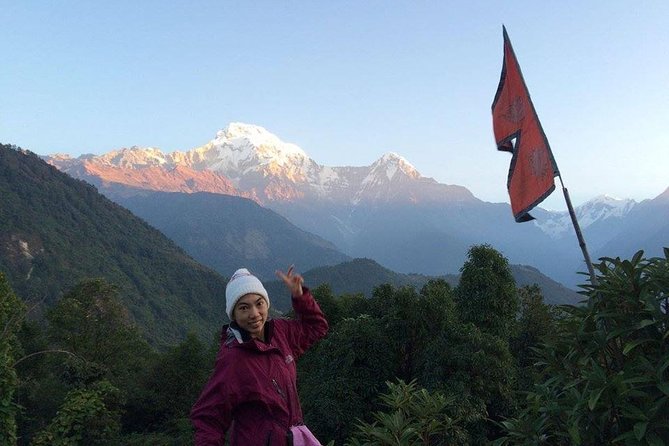
Day three turns the dial from village hiking into forest and river terrain. You start by walking down toward the river and crossing a short bridge, then head up to Sinuwa (listed at about 2,330 m). Sinuwa is described as a quiet spot with a few shops and lodges, which can be comforting when you’re settling into the routine of tea-house life.
From there, the trail moves through cooler forest areas with oak, rhododendron, and pine. You also pass into a bamboo-heavy settlement at Bamboo (described as small, with several lodges) by the Modi River gorge. Later in the day you continue through thick forest and reach Dovan and then the Himalaya Hotel area beneath Huichuli peak.
What to expect emotionally: this day often feels like the trek found its steady tempo. It’s not just about peaks yet. It’s about the rhythm of walking under trees, hearing the river, and watching the trail gradually feel higher and quieter.
Practical note: days like this are easier if you pack snacks you actually like. Lunch isn’t included (only breakfast is), so you’ll rely on tea-house meals and whatever you bring. Having a couple of favorites makes the day feel less “unplanned.”
Day 4: Hinko cave, Deurali, Machhapuchhre Base Camp, then Annapurna Base Camp
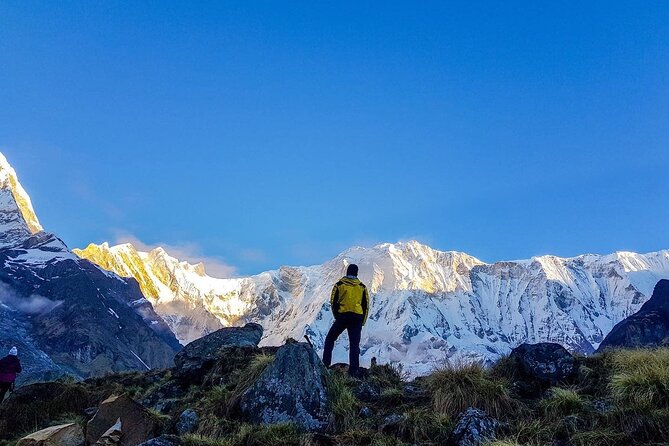
Day four is the big mountain day. The trail continues steeply up toward Hinko cave, then you descend briefly, cross terrain shaped by old avalanches on a rocky moraine, and climb again to Deurali. Leaving the gorge area helps open things up—your surroundings widen, and the air usually feels sharper.
Then the hike follows the Modi River higher and more exposed, heading toward Machhapuchhre Base Camp at about 3,700 m. You’ll reach it beneath the towering North Face of Fish Tail (Machhapuchhre), then lunch at or around MBC before continuing into the famous Annapurna Sanctuary area where Annapurna Base Camp is located.
This is one of the days where your mental payoff has to stay ahead of your legs. You’re mixing altitude gain, change in terrain, and long stretches. If you pace early—slow steps, steady breathing—you’ll arrive in a good place to enjoy the setting instead of arriving wiped out.
Also, note how this trek builds the “arrival moment.” You’re not just dumped at base camp. You’re brought there after passing key points like Machhapuchhre Base Camp, so the final approach feels earned.




Day 5: Sunrise at Base Camp, then a long descent to Bamboo
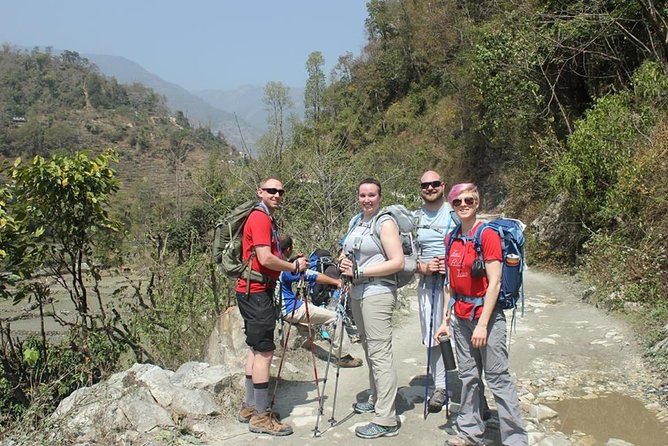
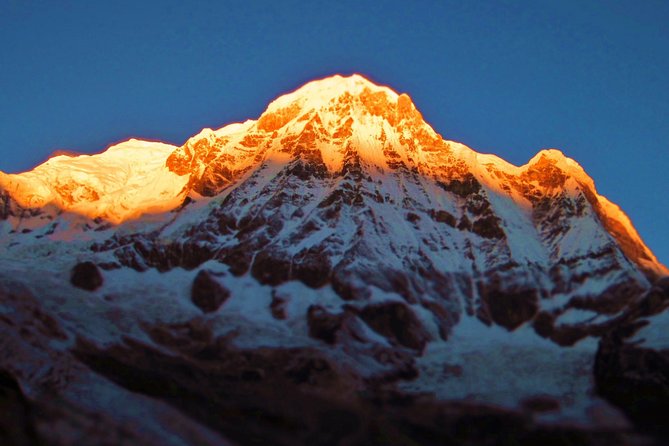
This is the day you wake up for the view. You’ll observe sunrise from Annapurna Base Camp, then have breakfast and start descending.
After that, it’s a return journey that drops you back toward lower altitude, including a descent to Modi Khola at Bamboo. The itinerary notes an elevation drop of about 1,700 m during this day’s hiking. That’s a lot on the body, but for many people it feels like relief after the higher altitude effort.
The bamboo and open mountain areas can feel oddly quiet and open, with lodges and tea-houses spread out. There’s a particular stillness to a place where the trail moves through sparse settlements—like the mountains are letting you take your time.
One caution: downhill is harder on knees than uphill is on breath. If you’re prone to knee pain, go slow on steep sections and consider trekking poles. Even if the trekking feels “mostly downhill,” your legs still do real work.
Day 6: ACAP visitor center, Gurung village passages, and Jhinu hot spring
Day six ties culture and recovery together. From Bamboo, you hike up to Kuldhigar, where the ACAP office and visitor center are located. This is a good moment to pause and remember you’re not just hiking scenery—you’re moving through a protected region with local stewardship.
Then the route descends toward the bridge across the Chhomrong River, passing through Sinuwa again. After crossing, you enter a Gurung village at Chhomrong and continue with a steep descent down to Jhinu Danda.
And then comes the payoff: Jhinu hot spring. The itinerary notes it’s about 15–20 minutes downhill from Jhinu Danda, so you’re not climbing back up out of the spring. It’s set up as genuine recovery rather than punishment.
Why I like this stop: after multiple hiking-heavy days, you get a warm reset. It helps you loosen up and keeps the trek feeling balanced instead of grindy.
Day 7: Second hot spring morning, Nayapul, and back to Pokhara
Day seven keeps things lighter in spirit, even if the walking still exists. You can go to the hot spring again in the morning, then trek down to Nayapul. After that, you drive back to Pokhara for an overnight stay.
This is a smart way to end the trek loop: you don’t rush straight into another long hike without a reset day. Pokhara is your cushion. A comfortable night and a real meal at a normal restaurant style spot is exactly the kind of return to the world that helps your body recover.
If you want to enjoy Pokhara without overthinking it, this is the time to do it. Treat it like a celebration dinner, not a shopping marathon.
Day 8: Pokhara to Kathmandu and the slow fade-out of the mountains
On day eight, you drive back to Kathmandu by tourist bus, taking about 6–7 hours.
This final travel day is where you’ll notice how much the trek has shaped your attention. First you’re counting steps. Then you’re thinking about the last views you saw. And finally you’re back in traffic, looking for mountains out of habit.
Try to keep day eight flexible. Don’t schedule anything demanding in Kathmandu right after you arrive. Give yourself time to rehydrate, eat well, and sleep.
Price and value: what $853.34 really covers
At $853.34 per person for an approximate 8-day trek, the value is strongest when you look at what’s included versus what you’ll pay anyway on a self-organized trip.
Included essentials that matter:
- Guide support (an experienced, helpful, friendly guide is included, with the guide’s salary, food, drinks, accommodation, transportation, and insurance handled)
- Lodges/tea-house accommodation during the trek days
- Permits and paperwork (necessary paper works and conservation entry permits)
- Breakfast included
- Kathmandu–Pokhara round-trip transport by tourist bus
- Ground transportation segments tied to reaching trail start points
- Government taxes, VAT, and service charges
Not included (so you budget for it):
- Standard meals beyond breakfast during trekking (lunch and dinner are on you)
- Gratuities (not mandatory, but expected)
Here’s how I’d frame the math for you: if you already have the stamina and gear, the biggest cost you’d otherwise face on your own is logistics—permits, timing, getting to trailheads, and having someone handle the schedule. This trip spends your money where it reduces friction. That’s why the “budget” label can still feel comfortable.
The hiking reality: distance, altitude, and how to pace smarter
Even without a detailed distance chart, the altitude profile is clear from the points listed.
You reach places like:
- Chhomrong after a day of climbing into higher terrain
- Sinuwa at about 2,330 m
- Machhapuchhre Base Camp around 3,700 m
- Annapurna Base Camp within the Annapurna Sanctuary
This is why the trek says it suits travelers with moderate physical fitness. You’re not being asked to race, but you do need endurance for repeated hiking hours and daily gains.
My practical advice:
- Start slow on every ascent. Your goal is to finish the day feeling like you can still enjoy it.
- Hydrate consistently. High altitude makes “I’ll drink later” a bad plan.
- Plan for the fact that meals beyond breakfast aren’t included. Carry a couple of snack backups so you’re never stuck waiting for food.
- Keep your packing simple. If you’re carrying too much, the trek gets tiring faster than it needs to.
What’s the group like, and does that matter?
This tour caps at 15 travelers, which is a meaningful size for a trek. Small groups usually move with fewer bottlenecks, and they’re easier for the guide to manage when people need breaks or slower pacing.
Meeting time is listed as 6:45 am, which tells you the team starts early. That helps with sunrise timing and generally with cooler, calmer conditions.
Also, pickup is offered and the trip uses a mobile ticket. Those details reduce last-minute stress when you’re working with Nepal’s busy transport rhythms.
Who this trek suits best
This is a good fit if you want:
- Annapurna Base Camp without ultra-rugged camping style logistics
- Lodge/tea-house comfort between hiking days
- A guided route that handles permits and key scheduling pieces
- The hot spring stop at Jhinu Danda as a genuine recovery moment
You might want a different option if:
- You’re not comfortable with long days on foot, including steep sections and real downhill
- You want meals fully included beyond breakfast (this is only breakfast included)
- You expect a lightweight sightseeing pace rather than a working trek routine
Should you book this Annapurna Base Camp Budget Trek?
If you want the core Annapurna Base Camp experience—forest trail days, a sanctuary approach, and sunrise—while keeping logistics under control, this is a strong choice. The price works because it includes the guide, permits, lodge stays, and transportation segments that can become a headache if you do it alone.
I’d book it if your idea of a good trip is: walk, rest, eat, repeat, then soak your tired muscles in Jhinu hot spring and enjoy Pokhara at the end.
I’d think twice if you’re looking for a fully packaged all-meals trek or you know downhill punishes your knees. If those are your issues, plan accordingly (medication, poles, knee support, and smart pacing).
In short: this is a practical way to reach Annapurna Base Camp without turning the trip into a logistics project.