REVIEW · KATHMANDU
Annapurna Base Camp Short trek
Book on Viator →Operated by Himalayan Partner Treks and Expedition · Bookable on Viator
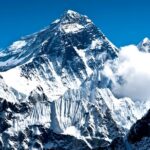
Annapurna Base Camp feels like a promise kept. This short trek threads Kathmandu and Pokhara into the Annapurna Conservation Area, climbing to the famous base camp for that first-light payoff at 4,130m. Along the way you move through villages, rhododendron/oak/bamboo forests, river valleys, and open grassy meadows, with mountain views that change by the hour.
I love how this trip blends real local life with serious trail time, so you’re not only chasing peaks. I also love the early start to sunrise at Annapurna Base Camp, then the satisfying downhill return afterward. The main drawback to plan for: there are long walking days plus plenty of steep stairs and rocky footing, so comfort on descents matters more than you think.
In This Review
- Key highlights you’ll feel on this trek
- The big idea: why Annapurna Base Camp is more than a route
- Getting to the trail: Kathmandu to Pokhara by Prithvi Highway
- Pokhara to Ghandruk and Kimrong: first real altitude, first major views
- Chhomrong, Sinuwa, and Deurali: forests, suspension bridges, and a steady grind
- Toward Annapurna Base Camp: grassy miles, Machhapuchhre Base Camp, then the final approach
- Sunrise at ABC (then downhill to Sinuwa): the view is the reward, but your knees are the rule
- Jhinu Danda hot springs and the Chhomrong detour: the payoff day after the hard day
- From Jhinu Danda to Nayapul and back to Pokhara: farmland calm and a real finish
- Returning to Kathmandu: scenic roads, Thamel night, and a chance to breathe
- Price and what $897.44 really covers (and what it doesn’t)
- The human factor: guides and porters can make or break your ABC
- Who should book this Annapurna Base Camp short trek
- Should you book? My practical take
- FAQ
- What’s the highest point on this Annapurna Base Camp short trek?
- How long is the trek?
- Where does the trip start?
- What’s included in the price?
- Are meals included during the driving days?
- Is travel and medical evacuation insurance included?
- Can I cancel and get a full refund?
- Is this a private tour?
Key highlights you’ll feel on this trek
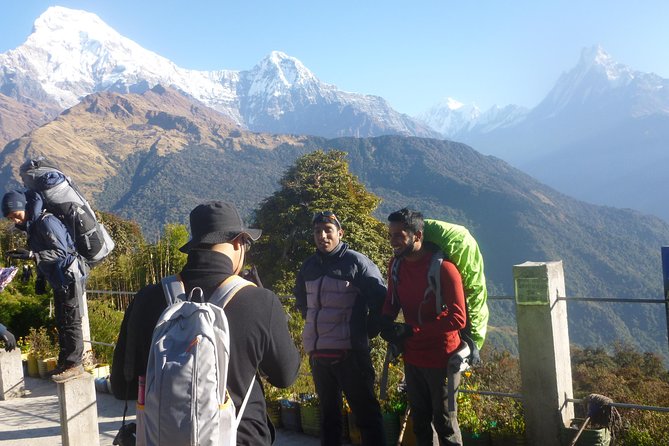
- Sunrise at Annapurna Base Camp (4,130m), then a return that turns hardest work into easier walking
- A lineup of big western Himalaya views, including Annapurna Range, Machhapuchhre, and Dhaulagiri
- Village-to-village trekking, with stops like Ghandruk, Chhomrong, and Sinuwa shaping the experience
- Suspension bridges and long stair sections that add variety but demand sturdy knees
- Pokhara reset time (two nights in a hotel with breakfast) so you’re not trekking nonstop in transit
The big idea: why Annapurna Base Camp is more than a route
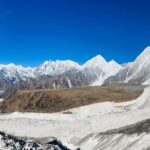
Annapurna Base Camp (ABC) isn’t just a destination on a map. It’s a tradition in Nepal trekking circles because it sits high enough to feel alpine, but close enough that you can experience villages and forests as you climb. You’ll watch the terrain do a slow flip—from greener hills to drier, rockier stretches—while the mountains increasingly dominate your horizon.
This “short” ABC style trek keeps the focus on the essentials: get you to base camp, let you enjoy sunrise, and bring you down safely. You’ll still do real work each day, but the structure helps you avoid the all-too-common problem of arriving exhausted and missing the moment. The highest point is Annapurna Base Camp itself at 4,130m, so you’re aiming for one clear peak experience rather than a complicated multi-pass plan.
You can also read our reviews of more tours and experiences in Kathmandu.
Getting to the trail: Kathmandu to Pokhara by Prithvi Highway
Your trip starts at Tribhuvan Airport in Kathmandu, with pickup offered. First comes the long drive west to Pokhara via the Prithvi highway, and it’s not wasted time. You’ll pass terraced farmland, various towns, and the Trishuli river corridor—useful “moving scenery” while your body wakes up from city life.
When you arrive in Pokhara, you set your luggage and get a breather. The plan includes two nights in a Pokhara hotel with breakfast. There’s also free time mentioned for things like boating and cycling, plus the city of lakes vibe around you.
One practical note: the day of the drive to Pokhara says no meals are included. That means you’ll want to grab snacks and water as you go. On trekking days, meals are covered later—so treat this transit day like a warm-up, not part of your trekking fueling schedule.
Pokhara to Ghandruk and Kimrong: first real altitude, first major views
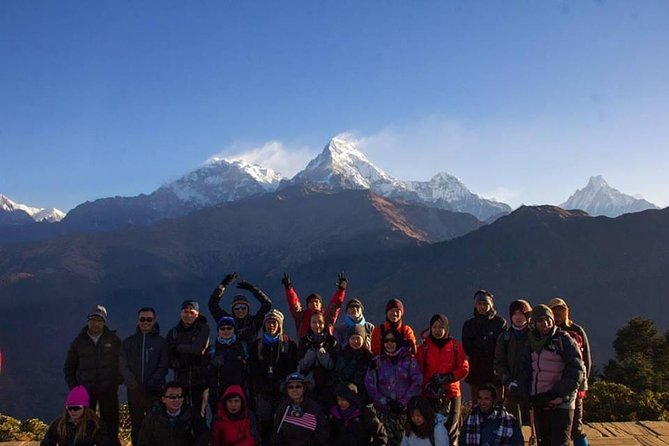
From Pokhara, you drive toward the Gurung village area of Ghandruk. The route is designed for good first impressions: Ghandruk is known for views across the Annapurna range, including Machhapuchhre (Fishtail). If you’re lucky with skies, it’s the kind of moment that snaps you into trekking mode fast.
Then comes a descent into the Kimrong river area, followed by a climb back up to Kimrong village. This is a “learn the rhythm” day: walking time is about 4 hours, but the combination of downhill-then-up gives you a taste of what’s ahead. You’ll get dinner and breakfast/landing meals on this trekking day since BLD is included (breakfast and dinner).
What I like about starting here is that you’re not thrown straight into a nonstop wall of altitude. You’re introduced to the village setting, the trail variety, and the mountain framing early—without waiting days for the first payoff.
Chhomrong, Sinuwa, and Deurali: forests, suspension bridges, and a steady grind
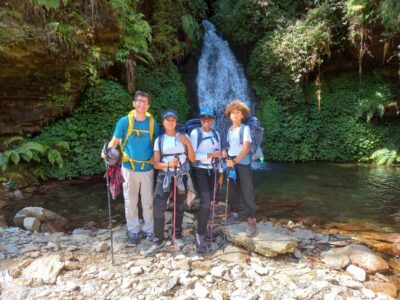
Next you push onward toward Deurali, with Chhomrong and Sinuwa as key waypoints. The route mentions a long descent via stone stair sections, then crossing a suspension bridge—classic Annapurna trail energy. After that, you climb again to Sinuwa, and the walking shifts through bamboo forest and hillside terrain.
This is also where forest cover matters. Shade can be a lifesaver when the sun is strong, and bamboo + mixed forest sections keep the trail feeling less monotonous than bare rock. You’ll walk about 6 hours total on this day and BLD is included again.
If you’re worried about altitude, this stage helps you understand it realistically. Deurali is high enough that you’ll feel a difference, but it still lets you keep a stable pace. And because you’re crossing bridges and moving through forests, your mind stays busy on the trail rather than stuck counting steps.
Toward Annapurna Base Camp: grassy miles, Machhapuchhre Base Camp, then the final approach
Day four is the longest push mentioned—about 8 hours of walking toward Annapurna Base Camp. The trail begins with early starts on rocky sections, then opens up into wide grassy land that continues for miles. This is where the Annapurna peaks start to look shiny and highlighted in the distance, almost like you can see the light “catch” the mountain surfaces.
There’s also a riverside section along the way until you hit a long staircase leading up to Machhapuchhre Base Camp. That stop is a huge visual anchor. Even from a distance, Machhapuchhre’s shape is dramatic; from closer on the trail, it feels much more present—like you’re finally seeing the sculpture, not just hearing about it.
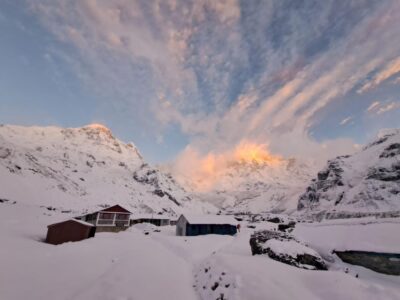
After resting at Machhapuchhre Base Camp, you continue slowly toward Annapurna Base Camp. When you arrive, that change from open grassy quiet to the base camp bowl energy is real. BLD is included, so you’re not juggling meals on arrival—you can focus on breathing, warming up, and taking in the views.
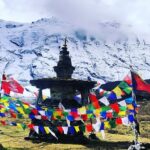
Sunrise at ABC (then downhill to Sinuwa): the view is the reward, but your knees are the rule
The early morning start is built around sunrise at Annapurna Base Camp, watching the Annapurna ranges reflect light. Breakfast comes at base camp, then you start retracing your steps downhill. This direction matters: downhill on the second side of a trek feels easier in terms of altitude gain, even if it can still be tough on joints.
Your walk back is about 7 hours, with BLD included. The route notes you pass through grassland and forest again and reach Sinuwa by dawn. That means you’re likely walking in softer morning light, which can be more comfortable than midday sun.
My practical advice here: treat descents like the main event. In Nepal you’ll walk long stone stair sections and steep trail bits, so take your time, keep a steady cadence, and use trekking poles if you’ve got them. Speed is optional. Staying in control is the win.
Jhinu Danda hot springs and the Chhomrong detour: the payoff day after the hard day
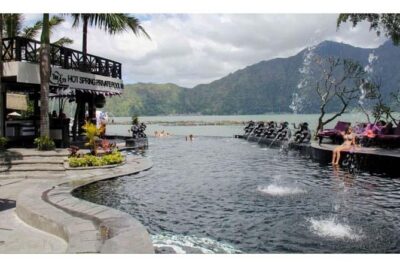
From Sinuwa, you drop down through a long set of stairs to cross a suspension bridge, then climb up again to Chhomrong. After that, you use a different path back, descending steeply toward Jhinu Danda for the famous natural hot spring.
This is the “reward” section of the trek. After several days of steps and altitude changes, soaking is a smart way to reset. The plan includes an overnight inn at Jhinu Danda, with BLD included.
Day six walking time is about 6 hours. It’s not the shortest day, but the hot spring goal changes the tone of the walk. It also adds a culturally local flavor—Jhinu Danda is known for that simple pleasure: warm water, sore legs, and a view that makes the effort feel fair.
From Jhinu Danda to Nayapul and back to Pokhara: farmland calm and a real finish
The next morning you trek through farmland with a pleasant, mostly easy feel since there are no climbs mentioned. You’ll reach Nayapul, then drive back to Pokhara by winding roads along the Modi Khola. The driving section is about 3 hours, and the walking segment is about 2 hours.
In Pokhara you rest your luggage at the hotel and you have time to enjoy the city again. Breakfast is included this day. This is one of the most underrated parts of the trek: you get to transition from mountain rhythm back into city comfort without rushing.
The quality of this finish matters. If you’re doing ABC and then going straight into another intense activity the same day, you often feel wrecked. Here, you get a decompression window so you can actually remember the trek, not just survive it.
Returning to Kathmandu: scenic roads, Thamel night, and a chance to breathe
Finally, you drive back to Kathmandu via the same winding roads. The route notes views of huge hills, white rivers, and terraced farmland from the window. You’ll stop on the highway for lunch and toilet breaks, then arrive in Kathmandu where you can freshen up and stroll around Thamel.
Thamel is where you can turn your trek gear into souvenirs and snacks. It’s also handy for practical errands like SIM cards or last-minute shopping. If you’re the type who likes a little night life after hard days, this is your moment.
Just remember the food coverage: the trek meal plan covers meals on the trail days, plus hotel breakfast(s). The road lunch break is not specified as included, so keep a little buffer.
Price and what $897.44 really covers (and what it doesn’t)
At $897.44 per person, the value here comes from what’s packaged rather than from any single line item.
You’re paying for:
- A professional trekking guide with insurance, meals, and allowances included
- TIMS permits (Trekker’s Information Management System)
- Lodging and trail meals: 3 meals per day and overnight accommodation in hotel/lodge along the trekking trail
- Two nights hotel in Pokhara with breakfast
- Pickup offered and a private setup for your group
That’s a lot of “fixed costs” handled for you, which matters on ABC treks because you’re moving through multiple villages where independent planning can turn into extra admin.
What’s not included is just as important:
- Travel/medical insurance and emergency evacuation costs
- Personal expenses like phone calls, alcoholic beverages, donations, tips
- Tips are expected for guides/porters
So your real budget mindset should be: use the price to cover the core trek machine, then add your personal comfort layer and safety cushion. If you’re booking this for the mountains and don’t want logistics stress, the package makes sense.
The human factor: guides and porters can make or break your ABC
One pattern that stands out from client feedback is consistent praise for the local team’s care. Names that come up include guides like Jog Gurung and Ganesh, and porters such as Phoindra Gurung, Osman, and Hori. People highlight that they were attentive, helpful with everything, and quick to answer questions in detail.
Even if your exact guide differs, the takeaway for you is simple: choose an operator that staffs professionally and supports properly. ABC is a long, stair-heavy trek. When someone helps you pace, navigate decision points, and keep you calm when weather shifts, you feel less like you’re “doing the mountains” and more like you’re enjoying them.
Also, since this is a private tour with only your group, you’re not trapped in someone else’s speed. You can keep a steadier pace and take breaks that actually suit you.
Who should book this Annapurna Base Camp short trek
This is a great fit if you want:
- A classic ABC experience with sunrise at the base camp
- Village scenery (Ghandruk, Chhomrong, Sinuwa) alongside the big peak views
- Lodges/hotels along the route rather than camping
- A structured plan with guide-led logistics
You might hesitate if you:
- Know you struggle with steep descents and lots of stairs
- Hate early starts (sunrise day happens)
- Don’t plan to bring appropriate trekking footwear and use poles if needed
Most people can participate, and the route is set up for groups. But “can” and “will enjoy” aren’t the same. If you train a bit before you go, the trek will feel more fun and less like a leg workout you didn’t order.
Should you book? My practical take
If you’re aiming for Annapurna Base Camp in a shorter, focused format, this tour style is a strong match. You get the sunrise moment, a logical sequence through key villages, and built-in meals and lodge nights so you don’t lose energy to logistics.
The decision comes down to one thing: your comfort with long walking days and stairs. If that’s manageable, you’ll enjoy the mix of forests, rivers, bridge crossings, hot springs at Jhinu Danda, and those big western Himalaya views that keep evolving all week.
If you want, tell me your hiking level and when you’re going. I can help you judge whether this pace fits and what to prioritize in your packing.
FAQ
What’s the highest point on this Annapurna Base Camp short trek?
The highest point is Annapurna Base Camp at 4,130m.
How long is the trek?
It’s listed as 8 days approximately.
Where does the trip start?
The meeting point is Tribhuvan Airport in Kathmandu, Nepal, and pickup is offered.
What’s included in the price?
Included features are two nights hotel in Pokhara with breakfast, TIMS permits, a professional trekking guide, and 3 meals per day plus overnight accommodation in hotel/lodge along the trekking trail.
Are meals included during the driving days?
Breakfast is included in Pokhara hotel stays. The day driving to Pokhara specifically notes no meals included, and meals during trekking days are covered.
Is travel and medical evacuation insurance included?
No. Travel/medical insurance and emergency evacuation costs are not included.
Can I cancel and get a full refund?
Yes. You can cancel up to 24 hours in advance of the experience’s start time for a full refund.
Is this a private tour?
Yes, it’s a private tour/activity, and only your group participates.