REVIEW · KATHMANDU
Annapurna Base Camp Trek- 12 Days
Book on Viator →Operated by Scenic Nepal Treks Expedition Pvt. Ltd · Bookable on Viator
12 days, one extraordinary mountain payoff. This Annapurna Base Camp + Poon Hill trek is built for hikers with limited time who still want the full payoff of altitude, villages, and big Himalayan views. You’ll cover classic viewpoints like Poon Hill, then push on to Annapurna Base Camp at 4,130m.
I like two things a lot here. First, the route hits both the viewpoint trek side (Ghorepani and Poon Hill) and the hard goal (Annapurna Base Camp) without turning the trip into a long slog. Second, this package is designed around smooth logistics—shared tourist hotels in Kathmandu and Pokhara with breakfast, daily meals during the trek, and an English-speaking guide included.
The one consideration: the schedule is tight and the altitudes stack up fast. Expect long walking days (up to 7–8 hours), early mornings, and cold air near Base Camp, with altitude doing most of the work. Also add the extra Kathmandu–Pokhara flight cost to the budget.
In This Review
- Quick Hits: What Makes This Trek Feel Worth It
- What You Really Get for $828 (and What Costs Extra)
- Day 1 in Kathmandu: Set Up Days Can’t Be Skipped
- Day 2: The Fast Hop to Pokhara and First Steps to Ulleri
- Day 3–4: Ulleri to Ghorepani, Then Poon Hill to Chiule
- Day 5–7: Sinuwa and Deureli Bring You to Annapurna Base Camp (4,130m)
- Day 8–10: The Long Descent That Still Feels Like Work
- Day 11–12: Pokhara to Kathmandu and Final Departure
- Guides, Safety, and the Human Side You’ll Actually Feel
- Tea-House Lodges and Meals: Why This Style Works for Short Time
- Pace, Fitness, and the Kind of Hiker This Fits
- Price and Logistics: Where Your Extra Money Might Go
- Should You Book This 12-Day ABC + Poon Hill Trek?
- FAQ
- What is the meeting/start time for this trek?
- Where does this trek start and end?
- How long is the trek?
- Is the Kathmandu to Pokhara flight included?
- What’s included in the price?
- What is not included?
- What are the group size and privacy rules?
- What is the minimum age?
- What documents are required at booking?
- Do I need travel insurance?
Quick Hits: What Makes This Trek Feel Worth It
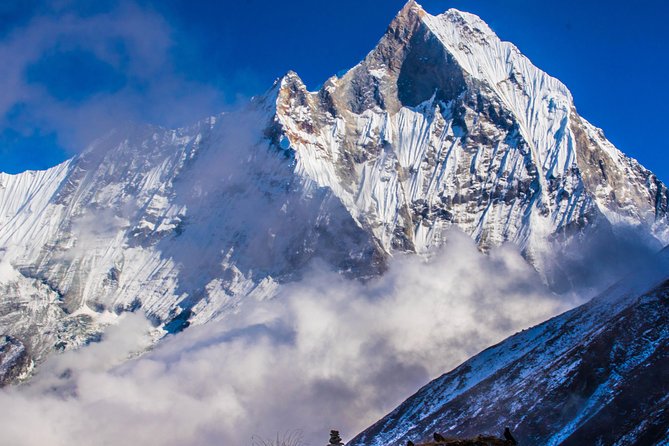
- Two big goals in 12 days: Poon Hill views plus Annapurna Base Camp, without a 2-week trip.
- Strong support built in: a government licensed English-speaking guide, plus first aid kit and daily meal planning.
- Teahouse trekking, not camping mode: you sleep in good tea-house lodges instead of carrying camp gear.
- Real culture along the way: you pass through regions tied to Gurung, Magar, and Tibetan traditions.
- Private group setup: up to 10 people, and it’s private for your group.
- You’ll feel the pace: the route is shorter than the most common versions, so walking days stay long.
What You Really Get for $828 (and What Costs Extra)
At $828 per person for 12 days, you’re paying for the core trekking structure: hotels, transport support, a licensed guide, teahouse lodging, and meals during the trekking days. For many hikers, that matters more than you’d think. You want the trip to run on a clock, not on guesswork.
Here’s what’s included, in human terms. You get shared tourist hotels in Kathmandu and Pokhara (two nights total, with breakfast). During the trek, you’ll sleep in good tea-house lodges and get breakfast, lunch, and dinner each trekking day (the included meals are described as everyday meals during the trek from Pokhara to Pokhara). A guide’s expenses are included too, and you’ll also get a company duffel bag (with the note that it must be returned).
But budget separately for a few items that are explicitly not included:
- Flight fare Kathmandu to Pokhara: listed as US$120 extra.
- Travel/trekking insurance.
- Tips for staff (expected).
- Personal costs like bottle water, hot shower, Wi‑Fi, and charging.
- Bottled drinks and hot drinks on the trek are not included.
So my rule is simple: this price is good when you’re the type of traveler who wants a clear plan and minimal logistics stress. If you hate paying for services you won’t use, you may feel boxed in.
You can also read our reviews of more tours and experiences in Kathmandu.
Day 1 in Kathmandu: Set Up Days Can’t Be Skipped
You start in Kathmandu, with pickup offered (and the trip runs as a private group). You’ll also get a tourist hotel with breakfast for one night, and you’ll be dealing with the basics: confirming details, matching passports, and getting your trek-ready gear organized.
One practical note from the supplied details: you’ll need passport name, number, expiry, and country at booking for all participants. That’s not the kind of thing you want to do at the airport with adrenaline and bad Wi‑Fi.
Also, this trek uses a mobile ticket, which usually helps with keeping things organized once you arrive. The trip’s start time is listed as 6:15 am, so you’ll want an early bedtime.
Day 2: The Fast Hop to Pokhara and First Steps to Ulleri
Day 2 starts with an early flight: Kathmandu to Pokhara takes about 25 minutes. Then it’s drive time to Naya Pul, and you begin walking to Ulleri (2,050m).
This is a long travel-to-trail day: the drive to Naya Pul is about 1 hour, then the trek to Ulleri is listed at 5–6 hours. For many people, this is where pacing matters most. You’re not yet at the highest altitude of the trip, but you’re already working after travel.
Why Ulleri is a smart first overnight. It’s not the easiest day, but it’s a good “warm up” before the more intense walking that comes next. And it sets you up for the classic Ghorepani valley route.
Day 3–4: Ulleri to Ghorepani, Then Poon Hill to Chiule
Day 3 is the move to Ghorepani (2,750m)—listed at 4–5 hours. Ghorepani is part of the region that’s famous for viewpoint trekking. In plain terms: you’re coming here to earn that big morning view.
Day 4 is where your effort turns into the signature moment. You trek from Ghorepani to Poon Hill, then onward to Chiule (about 2,700m). The walking time is listed at about 7 hours.
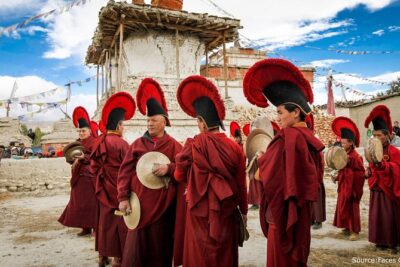
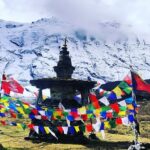
What you’ll love about this segment is the variety. You go from higher village trekking into viewpoint territory, then keep walking to your next lodge stop. It’s also an efficient way to experience the region’s village culture—many routes here are shaped by communities tied to Gurung and Magar traditions, and you’ll notice the human side of the mountains rather than just the rocks.
Possible drawback? Day 4 stacks a lot into one day: viewpoint effort plus a full trek down to Chiule’s lodge area. If you’re the type who needs downtime to recover, you may want to walk steadily and not sprint to the next rest stop.
Day 5–7: Sinuwa and Deureli Bring You to Annapurna Base Camp (4,130m)
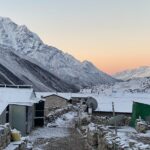
Day 5 takes you from Chiule to Sinuwa (2,340m)—listed at 7–8 hours. Even with some altitude dips, this is still a long walking day. Expect more stairs and a steady grind rather than “easy hiking.”
Day 6 is another push: Sinuwa to Deureli (3,230m) in about 7 hours. This is where the air starts to feel different for many hikers. You’ll want to treat the climb as a controlled effort, not a race.
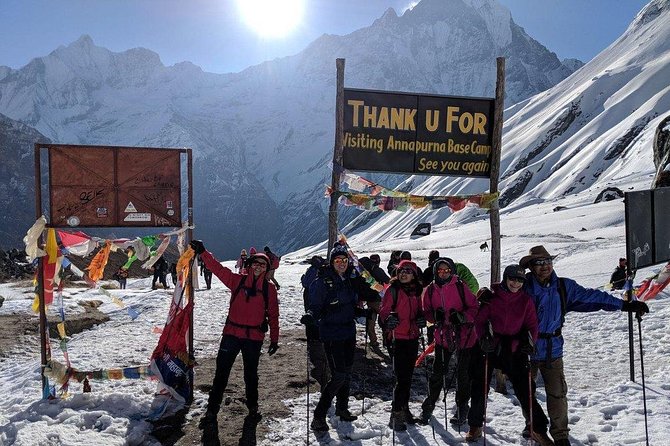
Then Day 7 is your big target day: Deureli to Annapurna Base Camp (4,130m) in 7–8 hours.
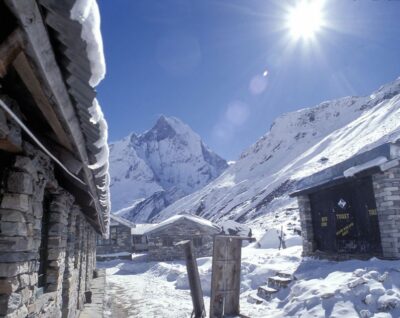
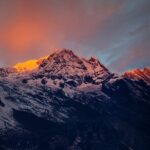
Base Camp itself is the main spiritual and mountaineering focus here. Annapurna is described as a sacred mountain worshiped by locals and referred to as the goddess of harvesting. That matters because the trekking experience isn’t only about hitting a coordinate. You’re walking into a place that local beliefs have shaped for generations.
What you should be ready for at 4,130m:
- Cold mornings and evenings.
- Slower breathing if you’re not used to altitude.
- A day where “steady” wins over “fast.”
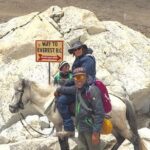
If you’re traveling with family or mixed-age hikers, this is also where the guide and support structure becomes more than a checkbox. In the real-world feedback tied to this kind of trip, safety and attention to older hikers are repeatedly highlighted, including examples of guides staying hands-on when groups range from the 40s to the 60s.
Day 8–10: The Long Descent That Still Feels Like Work
After reaching Annapurna Base Camp, Day 8 is a return step: ABC to Sinuwa (2,340m) in about 7 hours. You’re dropping in altitude, which usually helps physically, but downhill hiking can still punish your knees and feet.
Day 9 goes from Sinuwa to Kyumi (1,340m) in about 7 hours. This is a big altitude drop on paper, which usually means clearer air. But it also means lots of walking time, and the trail surface can make it more tiring than you expect.
Day 10 is Kyumi to Nayapul—listed at 4–5 hours—and then the drive back to Pokhara.
This is a key moment in any trek: you still have to finish. The temptation is to “mentally quit” after the big milestone, but the last days are where good pacing and hydration pay off. The payoff is that you end back in Pokhara with a real reset, instead of being stuck at high altitude for the final night.
Day 11–12: Pokhara to Kathmandu and Final Departure
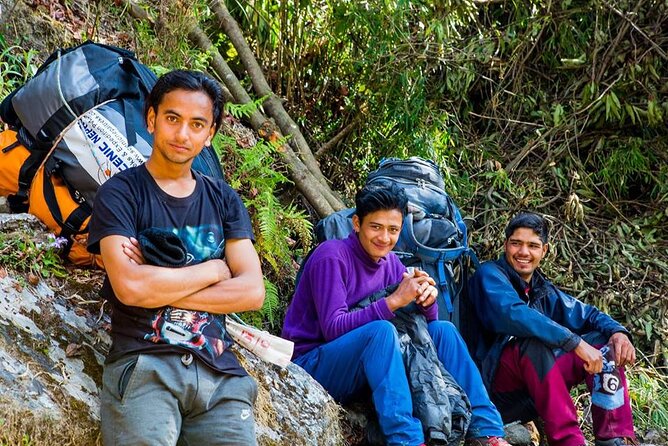
On Day 11, you drive from Pokhara to Kathmandu. You’re back in city rhythm, and the trip ends with Day 12 as your final departure.
This matters because shorter treks still require a buffer for travel days and rest. If you’re someone who likes to pack in sightseeing right away, you’ll want to time it so your legs can recover.
You also have a stated note that extra night accommodation in Kathmandu might be needed due to early arrival, late departure, or early return from the mountains for any reason. That’s one of those “life happens” details worth taking seriously when you plan your overall trip schedule.
Guides, Safety, and the Human Side You’ll Actually Feel
This trip is supported by a government licensed English-speaking guide, and the guide’s expenses are included. You also get a first aid kit on the trip, but the instructions note that you should use your own recommended medicines.
In the feedback tied to this kind of service, safety is a headline theme—especially for groups that include travelers in their 40s through 60s. One guide name that shows up in those experiences is Mr. Kumar, described as both attentive and supportive for mixed-age groups.
Another name you’ll see mentioned in connection with these ABC experiences is KK, along with strong praise for porters and overall comfort. That’s important: on a multi-day trek, how the team handles the small stuff (pace adjustments, helping with needs, keeping the day running) can make or break your energy.
A planning point comes up too: Dipendra is referenced as responsive and helpful in the lead-up, including picking travelers up at the airport and advising during the stay. Rajan also appears as part of the long-term planning process, including patience around adjustments over time.
You don’t need to become a mountain expert to appreciate this. You just need a team that takes care of the details so you can focus on walking, acclimating, and enjoying the views.
Tea-House Lodges and Meals: Why This Style Works for Short Time
One of the best values in this package is how much is pre-set. You’re doing tea-house lodge trekking, which means you’re not managing tents and kitchen systems. You get good lodges and everyday meals during the trek from Pokhara to Pokhara.
That changes the feel of the experience. Instead of spending your energy deciding what to eat, where to charge your phone, or how to handle a meal plan, you spend your energy moving and resting.
Still, don’t assume comfort is free. Personal costs like bottle water, hot showers, Wi‑Fi, and phone/camera charging are listed as not included. You’ll likely pay extra for some of those conveniences, so budget a little for the comforts you care about most.
Also, bottled drinks and cold or alcoholic options on trek are listed as not included. That’s not a dealbreaker, but it’s a good signal: don’t pack your expectations like this is a hotel upgrade. It’s mountain travel.
And yes: the company provides a duffel bag that you need to return. That’s a small logistics detail, but it’s also part of why the trek can stay organized.
Pace, Fitness, and the Kind of Hiker This Fits
This is for people with moderate physical fitness. The route includes days that are 7–8 hours and a Base Camp target at 4,130m. It’s not technical mountaineering, but it’s still a serious walk.
A few other fit notes based on the provided details:
- Minimum age is 10 years.
- Maximum group size is 10 per booking.
- The trek is private for your group.
- You’ll start early (meeting/start time is 6:15 am).
If you’re traveling solo, a shorter ABC route can be a great fit because you get structure and a guide-led pace. If you’re with a mixed group (for example, older hikers plus fit younger hikers), paying attention to pace and safety becomes extra important, and that’s one of the reasons people choose guided support.
Price and Logistics: Where Your Extra Money Might Go
Even with a solid included package, this is where you should look closely before booking.
1) The flight to Pokhara is extra
The trip lists Kathmandu to Pokhara flight fare at US$120. That’s straightforward, but it does change the true cost if you compare it to land-based options.
2) Insurance is on you
Travel/trekking insurance is not included, and the notes say you should have good insurance for your trek. In practice, this is non-negotiable for a trek reaching 4,130m.
3) Tips are expected
Tips aren’t included. The note explicitly says tips for staff are expected. Even if you don’t love tipping culture, set aside money so you’re not scrambling at the end.
4) Personal expenses add up
Bottle water, hot showers, charging, and Wi‑Fi are listed as personal expenses. These costs are often small day-to-day, but across 12 days they add up.
If you can afford the extra items—and you like a planned structure—this package is good value for a short schedule.
Should You Book This 12-Day ABC + Poon Hill Trek?
I’d book it if you want the big Annapurna Base Camp moment but you can’t spare the time for a longer trek. The combination of Poon Hill viewpoints plus an Annapurna Base Camp high point in a compact format works well for people who plan carefully and like having daily meals and lodges handled.
I’d think twice if you:
- Are very sensitive to altitude or have trouble with long walking days.
- Need lots of downtime between trekking days.
- Hate paying for extras like the Kathmandu–Pokhara flight, tips, and personal costs on trek.
If you’re a steady walker with moderate fitness and you’re serious about seeing the Annapurna Base Camp in one trip, this is a strong choice.
FAQ
What is the meeting/start time for this trek?
The start time is listed as 6:15 am.
Where does this trek start and end?
It starts in Kathmandu and includes driving and flying between Kathmandu and Pokhara, then returns to Kathmandu for final departure.
How long is the trek?
The duration is listed as 12 days (approximately).
Is the Kathmandu to Pokhara flight included?
No. The flight fare from Kathmandu to Pokhara is listed as an extra US$120.
What’s included in the price?
Included items are shared tourist hotel nights in Kathmandu and Pokhara (with breakfast), private transport excluding Pokhara–Kathmandu by tourism bus, good tea-house lodge during the trek, an experienced government licensed English-speaking guide, guide expenses, everyday meals during the trek from Pokhara to Pokhara, a duffel bag from the company (to return), an adventure certificate, a first aid kit, and an air-conditioned vehicle.
What is not included?
Not included are extra nights in Kathmandu, personal expenses (water, hot shower, Wi‑Fi, charging), flight fare (US$120), travel/trekking insurance, bottled drinks and hot drinks on trek, lunch and dinner during overstay in Pokhara and on the mountain, emergency expenses, and tips for staff.
What are the group size and privacy rules?
It’s a private tour/activity and up to 10 people per booking. A minimum of 1 person per booking is required.
What is the minimum age?
The minimum age is 10 years.
What documents are required at booking?
Passport name, number, expiry, and country are required for all participants.
Do I need travel insurance?
Yes. Travel/trekking insurance is not included, and you’re advised to have good insurance for the trek.
If you want, tell me your travel month and hiking experience level, and I’ll suggest whether the 12-day pace feels realistic for you (and what kind of energy budget to plan for).