REVIEW · KATHMANDU
Upper Mustang Classic Trek with Local guide
Book on Viator →Operated by Himalayan Wander Walkers · Bookable on Viator
Upper Mustang feels like a time capsule. This private, 15-night guided trek (with a Kathmandu warm-up) takes you into a remote Buddhist kingdom where you’ll visit monasteries, cave sites, shrines, and get serious face-time with daily local life. I love the local guidance (some groups have been led by guides like Norbu, born in the Upper Mustang area) and the fact that your logistics are largely handled—transfers, tea house stays during the trek, guides/porter, and permits. The main catch to think about is the extra cost: the Upper Mustang Special Permit is listed as not included (USD 500 per person for 10 days), and weather can affect flight timing.
A second thing I like: the pacing is built for real moments, not just checkboxes. You’ll start with Kathmandu’s big sacred sites (Boudhanath, Patan, Swayambhunath), then move into Mustang with a mix of driving days and walking days so you can go at your own pace with personal attention. If you’re expecting everything to be effortless, plan for long travel blocks, plus a moderate fitness level for the trekking days.
In This Review
- Key things that make this trek worth your time
- Upper Mustang: why this “remote kingdom” is a real draw
- Price and logistics: what $2,500 buys (and what it doesn’t)
- Day 1 in Kathmandu: Boudhanath, Patan, and Swayambhunath
- Day 2: Pokhara by tourist bus (slow, but it sets the mood)
- Day 3: Lupra village and a Bon monastery
- Days 4–8: Mustang-region village trek and driving blocks
- Day 9: Thukchen monastery chanting, yak herds, and Tiji festival timing
- Day 10: Yara village and Luri Gompa
- Day 11: Charang village, monastery visit, then Jomsom
- Day 12–13: flight to Pokhara, city tour, then back to Kathmandu
- Tea house comfort and meals: what to expect on the trek
- What to pack (and how to train) for this specific style of trek
- Should you book this private Upper Mustang trek?
- FAQ
- How long is the Upper Mustang Classic Trek?
- Does the package include Kathmandu sightseeing?
- What permits are included?
- Are flights included?
- Is this a private tour?
- What does the trek accommodation look like?
- What meals are included?
- Is there a guide and porter?
- What fitness level do I need?
- When does the tour start?
Key things that make this trek worth your time
- Local perspective in Upper Mustang: Guides from the region help you read what you’re seeing—monasteries, cave spaces, and village life.
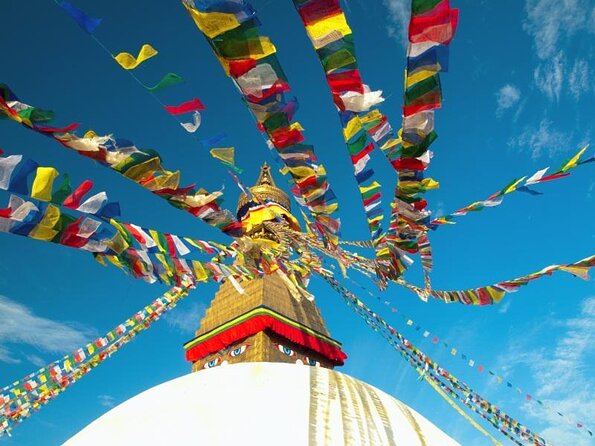
- Kathmandu sacred-site starter: Boudhanath Stupa (admission included), Patan Durbar Square and its museum (ticket included), then Swayambhunath on a hill with a famous stairway view.
- Early-morning monastery moments: The plan includes an early start for monk chanting at Thukchen monastery.
- Tiji festival timing (when it lines up): Some departures are timed to see festival moments, including the last day.
- Most meals and tea house lodging handled: You’re not living out of a backpack every night.
- Pokhara–Jomsom flight included: The itinerary uses domestic air to connect you back efficiently.
Upper Mustang: why this “remote kingdom” is a real draw
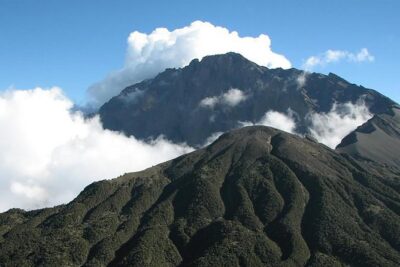
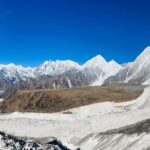
Upper Mustang sits in a rain-shadow zone of the Dhaulagiri and Annapurna mountains, which is part of why it feels drier and more distinct than the more crowded trekking corridors. This isn’t just another hike with a scenic reward—it’s a journey into a part of Nepal where Tibetan Buddhist culture is strongly visible in monasteries, wall paintings, and daily religious rhythms.
What makes this trek especially compelling is the blend of spiritual and practical travel. You’ll move from Kathmandu’s giant, polished stupas into smaller, quieter monastery stops. You also get a route that mixes walking with land transfers, which matters because it lets you spend energy on the parts that actually change your day—village visits, gompas, and canyon-side viewpoints—rather than pure transit.
One more reason I’d steer you toward this specific style of trip: it’s set up as a private experience. That usually means the day-to-day flow can match your group’s pace better, instead of you being swept along on someone else’s timeline.
You can also read our reviews of more tours and experiences in Kathmandu.
Price and logistics: what $2,500 buys (and what it doesn’t)
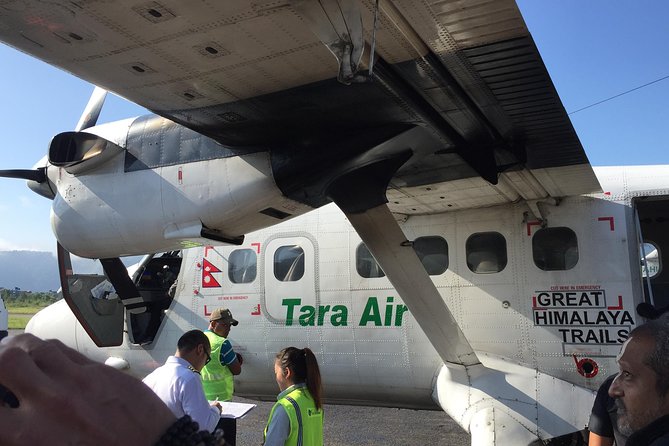
At $2,500 per person for roughly 16 days, this is positioned as an organized, lower-stress option—especially because the trekking portion includes tea house accommodation, and your guide/porter are part of the package.
Here’s the value math that matters:
- Included: private transportation, a domestic flight, a trekking guide and porter, ACAP permit, and tea house accommodation during the Mustang trek. You also get breakfasts throughout (16), plus lunch and dinner during key trek/logistics days (11 each listed).
- Not included: travel insurance, and the Upper Mustang Special Permit is listed separately as USD 500 per person for 10 days.
So your real all-in cost depends on your exact permit needs, and it’s smart to budget for the permit early so there’s no surprise at the end. Also remember that even when flights are included, mountain weather can still shuffle schedules. The good news is the plan is built around having a guide and local logistics to handle normal day-of adjustments.
Day 1 in Kathmandu: Boudhanath, Patan, and Swayambhunath
Most people treat Kathmandu as an airport city. This itinerary treats it like a spiritual orientation.
Boudhanath Stupa is first. You get admission included, and the stop is focused on the details you’d otherwise miss: the gold polish, the white dome, the mani-wheel surrounds, and the way locals (including Tibetan pilgrims) complete circumambulation. It’s one of the best places in Nepal to understand that Buddhism here is a shared public life, not just something behind temple doors.
Next is Patan Durbar Square. You’ll see fine wood and metal craft in doorways, windows, and palace struts, plus courtyards with standout temple structures. The Patan museum inside the palace complex is highlighted in the plan, and it’s a good place to connect what you see on the trek later—materials, design choices, and the patient work behind religious art.
Finally, Swayambhunath closes the loop with one of Kathmandu’s oldest religious sites. Admission is listed as free here, and you’ll head up the hill for the broad views of the valley. The stairway legend (about 365 steps) is included in the plan, and whether you count them or not, it helps you see Swayambhunath as a climb that’s part of the ritual experience.
Day 2: Pokhara by tourist bus (slow, but it sets the mood)
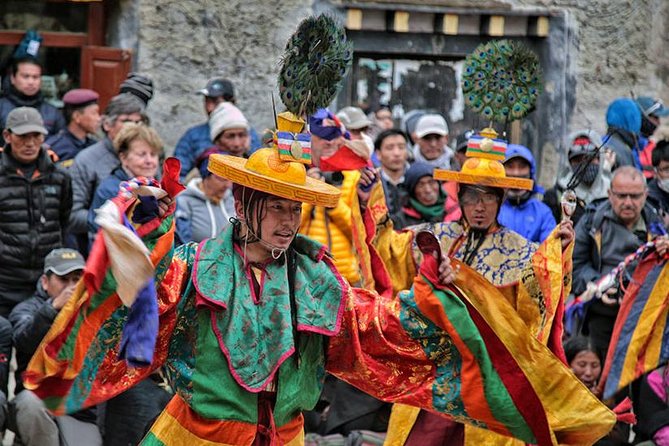
Day 2 is a long drive—about 6–7 hours—to Pokhara. This isn’t a thrilling segment, but it’s a useful transition day. It gives your body a chance to re-set from Kathmandu bustle and helps you mentally shift from city sights to mountain travel.
You’ll likely feel this as you head out of the Kathmandu valley. The bus portion is also practical: it keeps costs down and positions you for the domestic flight connections later. If you’re prone to motion sickness, pack what you need—this leg is a lot of hours in a single sitting.
Day 3: Lupra village and a Bon monastery
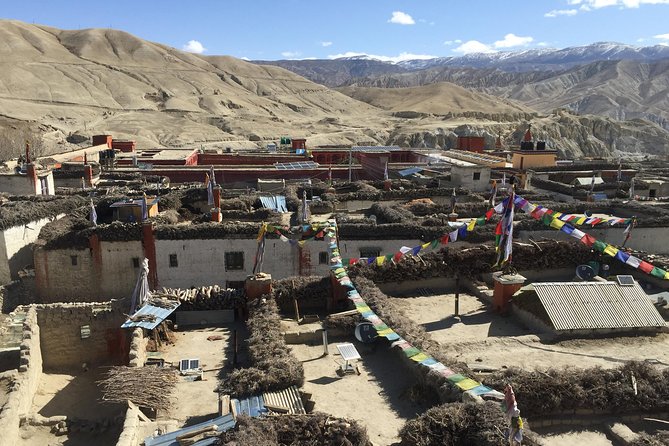
Day 3 brings you into Lupra and a Bon monastery. That’s a meaningful choice because Bon traditions aren’t what most first-time visitors expect in the Tibetan-Buddhist shadowland of Mustang. If your interest is culture, not just photos, this stop helps broaden the story.
The plan includes a few hours for this day, and the timing matters: it’s early enough in the journey that you can absorb the rhythm of daily life before the itinerary gets deeper into trek logistics.
Days 4–8: Mustang-region village trek and driving blocks
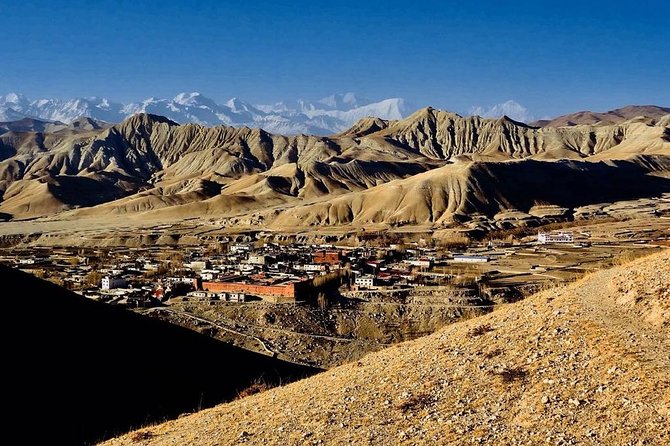
From Day 4 onward, the itinerary shifts into Mustang rhythm—mixing land transfers and walking time. Day 4 starts with a drive to Chhuksang village, then trekking onward toward Samar, via Chele and Gyakar Village.
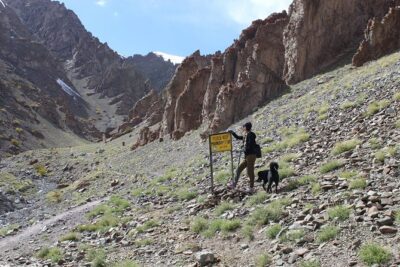
After that, Days 5 through 8 are all listed as Mustang-region days with multi-hour blocks (roughly 6–7 hours on most of those days). The details on these specific days aren’t fully specified in the plan you provided, but the pattern is clear: you’ll be moving through settlements and routes where monasteries and religious sites show up because they’re part of community life, not because a checklist says so.
How to think about these middle days:
- You should expect the trek to feel more like “journeying through places” than a straight mountain corridor.
- Your local guide’s decisions will matter here—route choice often responds to group energy, weather, and how fast villages can be visited without rushing.
This is where private guiding pays off. If your group needs slower steps or a longer break, it’s easier for your guide to shape the day.
Day 9: Thukchen monastery chanting, yak herds, and Tiji festival timing
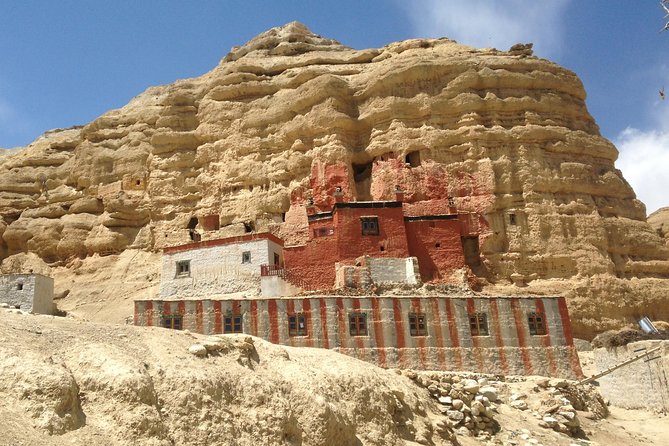
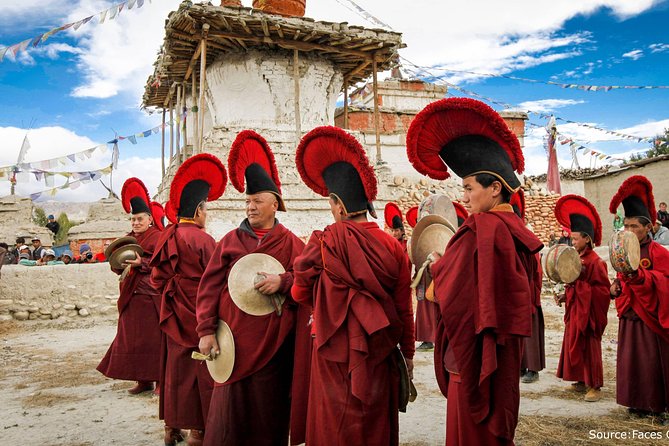
Day 9 is one of those days you remember because it’s active and early. You’ll go out around 6:00am to Thukchen monastery to see how monks chant in the morning. This isn’t a passive viewing stop; it’s a “be there when it happens” moment.
After breakfast, the plan continues into a short drive to a nomadic yak area, with time to see how life is organized around herding. Then you return for lunch and watch the last day of the Tiji festival (timing depends on the departure matching the festival calendar, but the plan explicitly includes this).
If you’re traveling for cultural intensity, this day is a core reason to pick this itinerary style. It connects ritual practice (chanting) with everyday survival and mobility (yak herding), then lands you back in the festival world that brings ceremonies into public space.
Day 10: Yara village and Luri Gompa
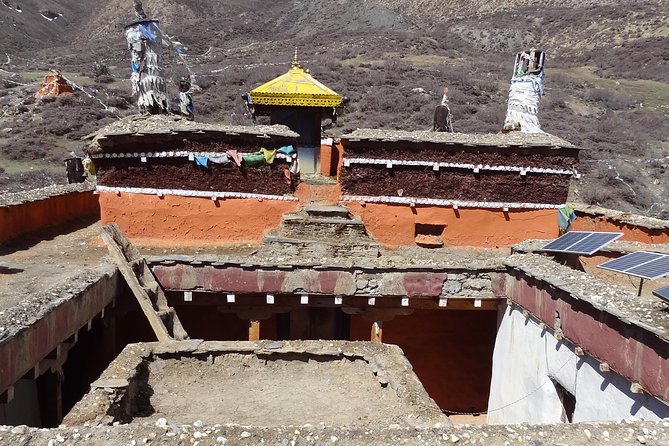
Day 10 is a drive into Yara village in eastern Upper Mustang, with time to enjoy the views and the Kali Gandaki river corridor as you go. After lunch, the plan includes a visit to Luri Gompa, described as an amazing monastery.
This is a good “depth day.” You’re not just passing by; you’re stopping at a religious site with enough time to look around and take in how the monastery fits into its surrounding settlements.
Also, the Kali Gandaki river area is a natural story guide. You can think of it as Nepal’s spine in this region: travel routes and settlement patterns follow the river system because it’s where movement and resources concentrate.
Day 11: Charang village, monastery visit, then Jomsom
On Day 11, breakfast happens in Yara, then the plan continues with a drive to Charang village for another monastery visit. From Charang, you drive to Jomsom.
If you’re wondering why the itinerary includes these village hops: it helps you understand Upper Mustang isn’t just one “destination.” It’s a chain of communities, with monasteries serving as cultural and religious hubs you can actually reach by road and short treks.
Jomsom is also a practical turning point. It’s where the itinerary pivots toward getting you back to the easier logistics of Pokhara.
Day 12–13: flight to Pokhara, city tour, then back to Kathmandu
Day 12 starts with an early morning flight to Pokhara, then breakfast in Pokhara followed by a city tour. This is a nice recovery rhythm: after multiple days of trekking-and-driving, you get a smoother travel day plus a chance to reset your routine.
Day 13 is then a drive by tourist bus back to Kathmandu (about 7 hours). You’ll feel the change here. Kathmandu isn’t “quiet nature,” but it’s a good place to catch your breath, do a few last meal runs, and store extra layers before departure.
Days 14–16 in the plan you provided are labeled but not fully described in detail. What I can tell you from the structure: you should expect additional travel blocks and/or shorter finish-up days before the tour ends, rather than a final big trekking push of unknown length.
Tea house comfort and meals: what to expect on the trek
The itinerary lists tea house accommodation during the Mustang trek and includes most meals: breakfast for all 16 days, plus lunch and dinner on 11 days each. That’s a big deal because in Upper Mustang, eating and sleeping are part of your pacing strategy.
In real terms, tea houses tend to be simple but dependable. Your comfort will mostly come from:
- getting your warm layers right,
- choosing early enough in the evening so you’re not rushing to eat before the dining room closes,
- and using your guide/porter’s schedule so you’re at the right place before dark.
Your guide and porter also change the experience here. Instead of bargaining for every logistical detail, you’ll likely have a clearer daily flow. That’s especially valuable in remote regions where the margin for error is smaller.
What to pack (and how to train) for this specific style of trek
The data says you should have moderate physical fitness. That doesn’t mean “no training.” It means you’ll likely handle multi-hour walk days with some variation in terrain, but the real test is consistency—walking day after day and managing altitude and cold.
Pack for cold mornings and big temperature swings. Even if the air feels clear, night temperatures can bite. If you’re unsure, plan to bring:
- a warm insulated layer,
- a windproof shell,
- gloves and a hat,
- good traction shoes for uneven paths,
- and a small daypack with water, snacks, and basics.
Because your route includes monastery days and village visits, you’ll also want something respectful and comfortable for entering sacred spaces (layers that you can add/remove without drama).
Should you book this private Upper Mustang trek?
You should seriously consider booking if you want:
- private guidance and the ability to keep a pace that works for your group,
- an itinerary that blends religion and everyday life (not just viewpoints),
- Kathmandu sacred-site context before you head north,
- and mostly handled logistics, including tea houses during the trek and domestic air between Jomsom and Pokhara.
You might think twice if:
- you’re budget-sensitive once you add the Upper Mustang Special Permit (USD 500 per person for 10 days),
- you dislike long travel days (including bus legs and flight segments),
- or you need a very lightweight itinerary with minimal early starts.
If you do book, pick your departure window with intention—this route can line up with Tiji festival moments on festival-timed dates, and those cultural days are often the difference between a nice trek and a “remember this for years” trip.
FAQ
How long is the Upper Mustang Classic Trek?
The tour is listed as 16 days (approximately), with 15 nights described for the Upper Mustang trek segment.
Does the package include Kathmandu sightseeing?
Yes. Day 1 includes stops at Boudhanath Stupa, Patan Durbar Square, and Swayambhu as part of the Kathmandu portion.
What permits are included?
The package includes an ACAP permit. The Upper Mustang Special Permit is listed as not included, at USD 500 per person for 10 days.
Are flights included?
Yes. Domestic flights are included, including the Pokhara–Jomson connection (and the itinerary shows an early flight from Jomsom to Pokhara).
Is this a private tour?
Yes. It’s described as a private tour/activity, so only your group participates.
What does the trek accommodation look like?
The package includes tea house accommodation during the Mustang trek.
What meals are included?
The inclusions list breakfast (16), lunch (11), and dinner (11).
Is there a guide and porter?
Yes. The package includes a trekking guide and porter.
What fitness level do I need?
The tour says travelers should have moderate physical fitness.
When does the tour start?
The meeting/start time is listed as 12:15 am.