REVIEW · KATHMANDU
Annapurna Base Camp Trek
Book on Viator →Operated by Overland Trek Nepal · Bookable on Viator
One look at the Annapurna Base Camp map and you get it: this is a proper mountain mission. The value here is that you’re not just hiking—you’re also getting the planning pieces sorted (permits, guide, porters, ground transport), so you can focus on the trail and the views.
I like two things a lot. First, the route is built to move you through classic villages and ridgelines, finishing at 4,130m before easing down through Bamboo and Jhinu Danda’s hot springs. Second, the support is real: English-speaking guide, porter support (1 porter between 2 people), and a medical kit for the team.
One thing to consider: this trek asks for moderate fitness and you’ll be dealing with altitude and long walking days. If you’re sensitive to heights or prefer fully guided “easy mode” days, you should think carefully before booking.
In This Review
- Key highlights I’d plan around
- Entering the Annapurna rhythm: what this trek actually delivers
- Kathmandu and Pokhara: you get real breathing room before the trail
- Day 2-3: Pokhara to Nayapul, then your first big village climb to Ghandruk
- Day 4-6: Ghandruk to Chomrong/Sinuwa, then Deurali, then ABC at 4,130m
- Day 7-8: ABC to Bamboo, then down to Jhinu Danda and the hot spring reset
- Day 9-10: Jhinu Danda back to Nayapul, then Pokhara and Kathmandu
- Tea houses and meals: what’s included (and what you’ll still handle)
- Price and logistics: where $1,099 makes sense (and where it doesn’t)
- The team matters: guides, porters, and on-trail support
- Pace, fitness, and altitude reality checks
- What to pack, and what you’ll likely pay for separately
- Should you book the Annapurna Base Camp trek with this operator?
- FAQ
- What is the start time and meeting point?
- How long is the Annapurna Base Camp trek?
- What’s included in the trekking price?
- Are transport and hotels included outside the trek?
- Is this a private group trek?
- What parts of the budget are not included?
Key highlights I’d plan around
- Annapurna Conservation Area permit and TIMS card included, so you’re not scrambling for paperwork.
- Tea house accommodation during the trek, which keeps things simple and budget-realistic.
- Hot spring stop at Jhinu Danda for a welcome leg reset.
- Support structure: English-speaking guide plus porter service (shared porter).
- Past groups praised strong organization and friendly, energetic help from the team (one review credited a guide named Nick).
Entering the Annapurna rhythm: what this trek actually delivers
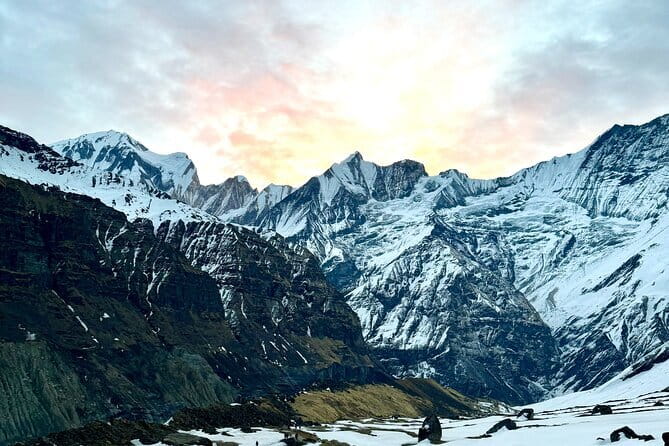
The Annapurna Base Camp Trek is the kind of route that builds momentum. You start in Kathmandu, then work your way out to the trailhead via Pokhara and Nayapul. As you gain altitude, the days keep changing—busy village sections, quieter forest stretches, and then that big open-area feeling as you approach the higher camps.
What I appreciate is that the experience is handled like a real trek package. You get a guide and porter structure, you sleep in tea houses, and you’re given set meals during the trek. That matters because ABC can’t be done well if you’re constantly solving logistics mid-hike.
And the payoff is obvious. Even without chasing summit drama, ABC is famous for panoramic views of the Annapurna massif. One group described seeing that panorama as the trip’s headline moment—and that tracks with how people talk about ABC once they’re standing at the base camp area.
You can also read our reviews of more tours and experiences in Kathmandu.



Kathmandu and Pokhara: you get real breathing room before the trail
Day 1 is Kathmandu: arrive, transfer to your hotel, and prepare for trekking. The tour includes two nights in Kathmandu with breakfast, so you’re not stuck racing around trying to fix gear, cash, or timing on the first night.
Then Day 2 is a tourist bus ride to Pokhara (820m) with an overnight there. Pokhara is the practical reset point for many trekkers because it’s calmer than Kathmandu and usually easier for getting your trek rhythm going.
Why I like this setup: it gives you a small buffer. The trek isn’t “land, hike, hope.” You get a couple of nights in each hub (Kathmandu and Pokhara), so you can handle small problems—like snacks, layers, or a restless first night—without turning it into a disaster.
Day 2-3: Pokhara to Nayapul, then your first big village climb to Ghandruk
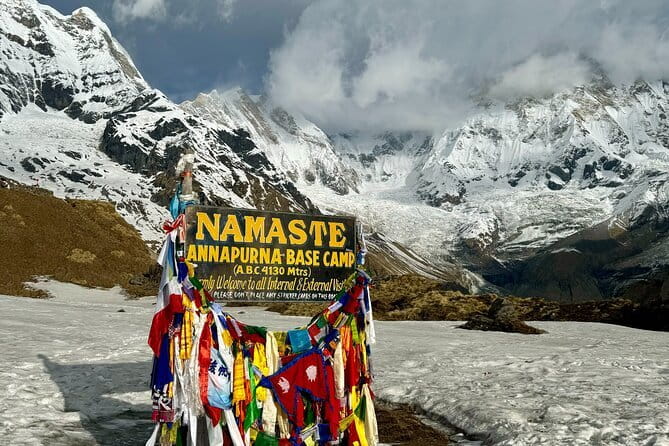
After the Pokhara arrival, you move to Nayapul by private transport (about 1.5 hours). From there, you hike to Ghandruk (1,940m).
Ghandruk is a classic stop because it feels like a real community rather than a random viewpoint dot. You also gain elevation steadily enough to start understanding your pace. If you’ve never done a multi-day trek before, these first days teach you two lessons fast: you need a steady pace, and you’ll want to keep your layers ready as temperatures shift.
Possible drawback: Day 3 is an active start. If you arrive tired or underpacked with basics (warm layers, good footwear), your first day out of Nayapul can feel harder than it should.
Day 4-6: Ghandruk to Chomrong/Sinuwa, then Deurali, then ABC at 4,130m
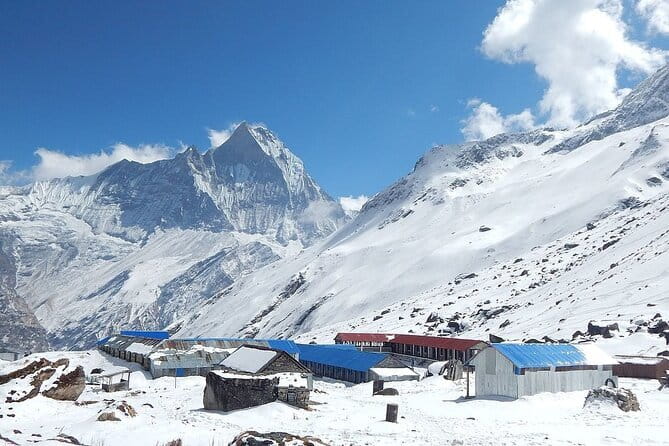
From Ghandruk, Day 4 heads toward Chomrong (2,230m) or Sinuwa. The point of this section is simple: you keep moving through the high trail corridor where views gradually widen.
Day 5 takes you from there to Deurali (3,230m). Day 6 brings the big target: Trek Deurali to A.B.C (4,130m).
This is where ABC earns its reputation. Being at 4,130m is the whole mission—your legs do the work, but your reward is the panoramic Annapurna massif view that many trekkers pin as their trip highlight. One past group specifically called out the Annapurna massif panorama as memorable and credited the professionalism and organization of the team as key to getting there comfortably.
One practical note: the higher you go, the more you’ll notice how everything feels slower—walking, breathing, even deciding what to eat. You don’t need to panic. Just keep your effort consistent and let the altitude do its altitude-things.
Day 7-8: ABC to Bamboo, then down to Jhinu Danda and the hot spring reset
After reaching ABC, Day 7 goes from A.B.C to Bamboo (2,310m). Day 8 continues to Jhinu Danda (1,780m), including a hot spring stop.
I love this part of the trek because it balances the emotional high of reaching base camp with a physical “okay, now we recover” day pattern. Hot springs at Jhinu Danda are one of the most common ways to earn back feeling in your legs after several altitude days.
If you’re the kind of person who wants to celebrate milestones, this is your chance. You’ll likely finish Day 8 tired, sore, and happiest about warm water.




Day 9-10: Jhinu Danda back to Nayapul, then Pokhara and Kathmandu
Day 9 takes you from Jhinu Danda to Nayapul, and then you travel by transport to Pokhara for an overnight. Day 10 is Pokhara to Kathmandu by tourist transport, returning to the city base.
This is the section where your brain switches from “trail mode” to “I want a shower and real comfort” mode. It’s also where you’ll feel how much the trek has taken out of you—especially your quads on the downhill portions earlier in the week.
Day 11 is departure day or extra time in Kathmandu for relaxed sightseeing and shopping if you’ve got it.
Tea houses and meals: what’s included (and what you’ll still handle)
You’ll sleep in tea house accommodation on the trek. The package also includes staff support and team medicine, which helps you feel taken care of without overpaying for a fully catered expedition.
Meals included during the trek come in a set schedule: 10 breakfasts, 8 lunches, and 7 dinners. On top of that, you get trekking snacks (biscuit/oreo cookie/peanut) and dessert as fruit (apple/pomegranate). There’s also a Snickers chocolate included for each person during the trek.
Why this matters for value: ABC treks can get expensive if you’re forced to buy snacks and meals every day at trekking-stall prices. Here, you’re given a structure that keeps costs predictable, and you still get the normal tea house vibe where you can choose your pace at mealtimes.
Still, expect that you’ll want a water bottle and basic personal snacks if you’re picky or need extra calories beyond what’s listed.
Price and logistics: where $1,099 makes sense (and where it doesn’t)
At $1,099 for about 11 days, you’re paying for more than a view. You’re paying for the planning system behind the view:
- permits (Annapurna conservation area entry permit),
- TIMS card handling,
- an English-speaking guide,
- porter support (shared between two people),
- medical kit support for the team,
- tea house lodging during the trek,
- and two nights each in Kathmandu and Pokhara with breakfast,
- plus ground transportation (not flights).
That package coverage is a big reason this trek can feel easier to manage than DIY planning.
What’s not included is also important for budgeting. You’ll need to budget for:
- your Nepal entry visa fee and international airfare,
- travel insurance and any emergency evacuation costs,
- tips for guide and porter (tipping is expected),
- personal equipment,
- water bottle and cold drinks,
- and extras like hot water battery charging and donations.
So the value question becomes: do you want to pay for simplicity and support, or do you want to pay in time and effort to plan everything yourself? If you want the trail to be the main job, this kind of package price is usually fair.
The team matters: guides, porters, and on-trail support
The trek is run with an English-speaking guide and porter service (1 porter between 2 people). You also get a medical kit and insurance for staff. Past experiences credited the team with professionalism and help on the trail, including friendly, high-energy support.
One review highlighted that a guide named Nick and his guides/porters made the trek feel smoothly organized. I can’t promise who you’ll get, but the structure is consistent: someone is guiding the route, and someone is helping carry gear. That support can be the difference between a trek that feels like a test and one that feels like a shared mission.
If you’re worried about being slowed down, this is where choosing the right company structure helps. You’re not walking completely on your own, which keeps the pace safer.
Pace, fitness, and altitude reality checks
The tour calls for moderate physical fitness. That’s a useful signal: this isn’t a stroll, but it also isn’t described as a technical climbing expedition.
Still, consider the altitude progression:
- You start at low elevation in Kathmandu and Pokhara,
- then build up to the main base camp stop at 4,130m,
- and you return down to lower elevations (Bamboo and Jhinu Danda).
Even if you’ve hiked before, you’ll want to treat the first days as training for the higher days. Keep your effort controlled, drink water, and don’t treat every walking day like you’re racing a clock.
What to pack, and what you’ll likely pay for separately
Your tour includes support and many trekking essentials, but you’re still responsible for personal gear. The package doesn’t include:
- personal equipment,
- a water bottle,
- cold drinks,
- tips,
- and some trekking extras like hot water charging.
In real terms, that means you should bring your own comfort items:
- layers for cold conditions at higher altitude,
- a dependable day pack,
- and the kind of footwear you trust for rocky trail days.
If you’re unsure about packing, it’s smart to ask the provider what they expect you to bring versus what they provide. The listed inclusions cover a lot, but “what counts as personal equipment” is where misunderstandings usually happen.
Should you book the Annapurna Base Camp trek with this operator?
Book it if you want:
- a well-structured trek with permits, guide, porter support, and ground transport already arranged,
- tea house lodging instead of a fully catered lodge/hotel setup,
- and a route that hits ABC plus Jhinu Danda hot springs without forcing you into complicated logistics.
Skip it (or ask a lot of questions first) if:
- you’re looking for a very easy walking schedule,
- you don’t handle altitude well,
- or you prefer handling permits and transport yourself to save money.
If you want Annapurna Base Camp without turning it into a planning project, this package style is a strong fit.
FAQ
What is the start time and meeting point?
The start time is 6:45 am, and the meeting point is Serene Himalaya Treks & Expedition at P896+27M, Chaksibari Marg, Kathmandu 44600, Nepal.
How long is the Annapurna Base Camp trek?
It’s listed as 11 days (approx.), starting in Kathmandu and finishing with departure from the international airport or extra days in Kathmandu.
What’s included in the trekking price?
Included items cover airport pickup and drop, TIMS card, Annapurna conservation area entry permits, tea house accommodation, an English-speaking guide, porter service, medical kit, staff insurance, and some trek snacks plus included meals (10 breakfasts, 8 lunches, 7 dinners). Ground transport and two nights each in Kathmandu and Pokhara with breakfast are included too.
Are transport and hotels included outside the trek?
Yes. You get two nights in Kathmandu with breakfast and two nights in Pokhara with breakfast, plus ground transportation such as Kathmandu to Pokhara, Pokhara to Nayapul, and the return transfers.
Is this a private group trek?
It’s described as a private tour/activity, and only your group will participate.
What parts of the budget are not included?
Not included are Nepal entry visa fee, international airfare, travel insurance and emergency evacuation costs, personal equipment, water bottle and cold drinks, tips for guide and porter, and some extras like hot water battery charge and donations.