REVIEW · KATHMANDU
Annapurna Base Camp Trek
Book on Viator →Operated by Mission Himalaya Trekking · Bookable on Viator
Annapurna Base Camp rewires your sense of time. This trek mixes classic Himalayan scenery with real village life, then tops it off with sunrise views and a final overnight at base camp. You also get a smooth start in Kathmandu with temple stops, a welcome dinner, and a trekking briefing that gets you organized fast.
What I love most are the two support anchors: first, the Kathmandu day includes a trekking guide intro and an equipment check so you know what you’re doing before you hit the trails. Second, the guide team quality gets strong mentions—names like Pradeep, Bikas, and Santosh show up repeatedly for being attentive and good at keeping people calm and moving.
One consideration: this route includes long walking days and tough moments like 3400 steps early on, plus the cold and altitude at higher elevations. If you’re even slightly on the edge physically, you’ll want a slower pace and realistic expectations.
In This Review
- Key highlights you should know
- Kathmandu warm-up: temples, welcome dinner, and your trekking briefing
- The road to Pokhara: a long transfer that sets the mood
- Ulleri and the first big test: forests, river crossings, and 3400 steps
- Ghorepani and Poon Hill: sunrise payoff with a hot coffee moment
- Chhomrong and Bamboo: rhododendron forests, terraced fields, and suspension bridges
- Deurali and Hinku Cave area: chilly bamboo forest and a bigger altitude feel
- The big day: Machapuchare Base Camp views and reaching Annapurna Base Camp
- Sunrise again, but with momentum: returning to Doban via MBC and Deurali
- Jhinu Danda and the walk back toward culture and valleys
- Pokhara reset and the final Kathmandu day: celebrate, then fly home
- Price and value: what $995 covers, and what you still pay yourself
- Guide quality is the difference between tough and doable
- Who this trek suits best (and who should rethink)
- Should you book this Annapurna Base Camp experience?
- FAQ
- How long is the Annapurna Base Camp trek?
- Where does the trip start?
- Do I get a guided equipment check before trekking?
- What is included in the price?
- Are airport transfers included in Kathmandu?
- Is travel insurance included?
- Do I need to pay entrance fees for the temple stops?
- Is tipping included?
- What cancellation window is allowed for a full refund?
- What fitness level do I need?
Key highlights you should know
- Kathmandu prep day: temples plus a briefing and equipment check before trekking
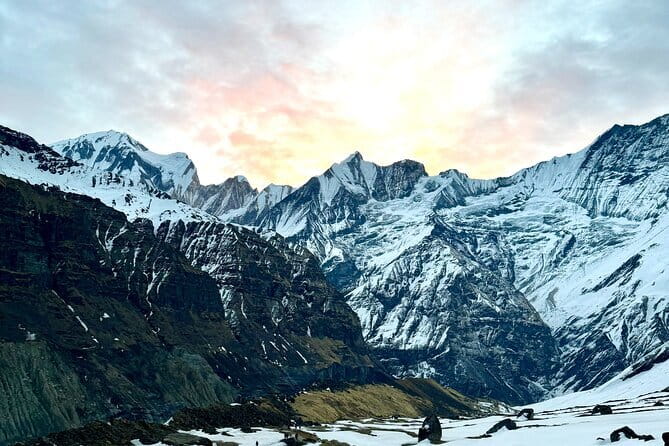
- Poon Hill sunrise: pre-dawn climb and views over Annapurna and Dhaulagiri ranges
- A real base camp night: steady climb to Annapurna Base Camp after Machapuchare Base Camp
- Guides who manage pace: repeated praise for taking care of knee pain and adapting plans
- Lodge-based comfort: nights in villages like Ghorepani, Chhomrong, Bamboo, Deurali, and ABC
- Trek-to-relax rhythm: Pokhara to unwind after the mountains
Kathmandu warm-up: temples, welcome dinner, and your trekking briefing
Your experience starts in Kathmandu, and the first day is all about getting your bearings. You’re met at the airport with your name on a sign, then taken to a hotel by private car. After you settle in, you go to a cultural restaurant for a welcome dinner plus a Nepali dance show. It’s a fun reset after travel, and it also gives you a clear sense of what Nepal looks and feels like off the trail.
On day two, you get the Kathmandu Valley highlights with temple and heritage stops. You’ll visit Pashupatinath, Bouddhanath, Swyambhunath (often called Monkey Temple), and Kathmandu Durbar Square. These places are religious, historical, and very alive—especially Bouddhanath and Swyambhunath, where locals move through their routines and you can watch daily faith in action.
Then you get the part that matters for trekking: the tour briefing, the introduction to your trekking guide, and an equipment check. I like this because it reduces the big stress risk on day three. Instead of discovering problems halfway into the trek—like missing layers, rain protection, or gear that doesn’t work—you handle it up front.
Practical note: the temple day includes a mix of included and free admissions, so you’ll want to follow your guide’s instructions and keep an eye on what you’re carrying and what you’re required to show at each stop.
You can also read our reviews of more tours and experiences in Kathmandu.
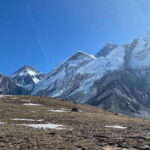
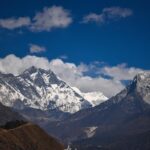
The road to Pokhara: a long transfer that sets the mood
Day three is your travel bridge from the city to the trekking world. You leave early by tourist bus, riding for about 7 to 8 hours. The route passes hills and the Trishuli River, and you stop for lunch around Malekhu and Ghansikuwa.
After that long bus day, you arrive in Pokhara around 3 pm. You’ll stay in a hotel near Fewa Lake, which is a great place to decompress. In plain terms, this is where you do two key things: let your body recover from the ride, and get comfortable with the pace of the trip ahead.
If you’re prone to feeling stiff after travel, use this afternoon to walk gently, eat something light, and prep your bag for the first real hiking days.
Ulleri and the first big test: forests, river crossings, and 3400 steps
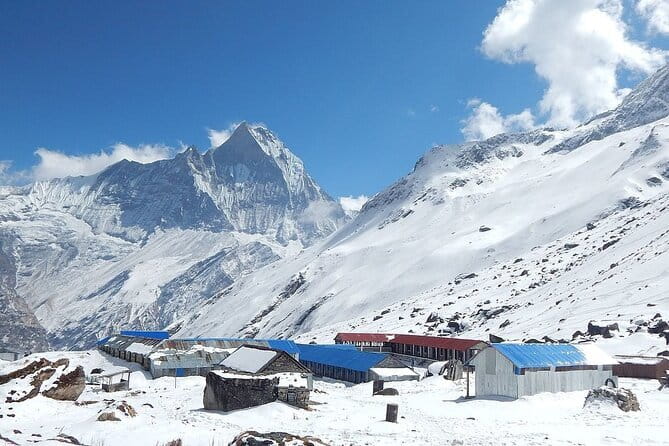
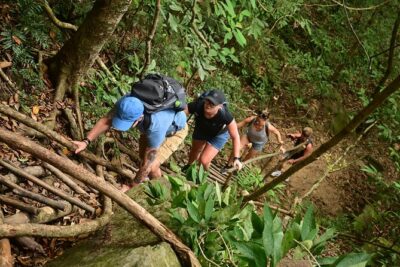
Day four starts the trek in a serious way. You travel from Nayapul into the trek proper, walking through a valley forest and crossing the Bhurungdi Khola River. Then you reach Tikhedhunga, and the trail becomes a climb-focused workout: a reported 3400 steps and boulders.
That’s not a typo-level detail—it matters because it shapes how you should approach the whole trek. Early steps like these can be surprisingly hard on your knees and heart if you go too fast. I’d treat this day as your warm-up strategy: steady effort, short breaks, and focus on foot placement on uneven stones.
You end the day in Ulleri after about 6 hours of hiking. This is a good “first landing” village—tough day done, still close enough to the Annapurna region that the views and mountain energy are starting to hit.
Ghorepani and Poon Hill: sunrise payoff with a hot coffee moment
Day five moves you toward Ghorepani. You hike after breakfast to Ghorepani village, with scenic stops along the way, including glimpses of Mt. Annapurna South. Your trail runs past waterfalls and small villages, and then you continue up to Upper Ghorepani for wide mountain views, including Annapurna South and Nilgiri.
This is where the trek becomes more than just movement. The higher you go, the more “layered” the scenery becomes—peaks, ridgelines, and valleys all stacked at different distances.
Day six is the classic highlight: Poon Hill sunrise. You go up early to catch the first light over the Annapurna and Dhaulagiri ranges. Poon Hill is famous for views that feel close enough to touch, and you even get a simple reward: hot coffee while the mountains wake up.
After sunrise, you descend back to Ghorepani for breakfast, then keep trekking through rhododendron forests and cascading waterfalls to Tadapani. The day is about 7 hours, so you get a long mountain day plus that pre-dawn climb. If you want the sunrise, you’ll need to accept the early start.
Chhomrong and Bamboo: rhododendron forests, terraced fields, and suspension bridges
Day seven takes you through rhododendron forest and into terraced fields. The trail includes varied uphill walking—about 5 km uphill after the forest trail ends. You’ll pass waterfalls and reach a suspension bridge, a very common Himalayan Nepal sight that’s both scenic and a reminder that balance matters.
You finish in Chhomrong, nestled below Mt. Annapurna, for your night. Chhomrong often feels like a turning point: you’re past the easiest “warm-up” stage, and the Annapurna massif starts to look more imposing.
Day eight moves you downward from Chhomrong through lots of stone steps to the Chhomrong Khola River. You cross a swinging bridge, then climb to Sinuwa along a forest path through Kuldihar. Finally, you descend gently to Bamboo for the night. This is about 6 hours, and it’s the kind of day where careful pacing pays off because you’re mixing step-downs and step-ups.
Lodge life here is part of the charm. You’re not chasing luxury; you’re chasing warmth, food, and rest, with mountain rhythm doing the heavy lifting.
Deurali and Hinku Cave area: chilly bamboo forest and a bigger altitude feel
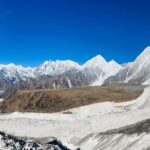
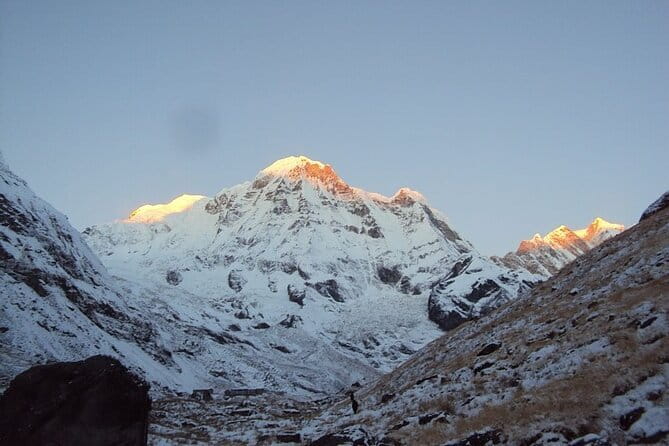
Day nine starts in a chilly bamboo forest, then turns into a steep climb on a dry, higher-feeling trail. You reach the Himalaya Hotel area, where the forest opens and sunlight hits, with views of a glacial river below.
Then you continue climbing through a drier forest until reaching the Hinku Cave area. After that, the trek alternates: you descend to a river and ascend to Deurali. This is where the scenery shifts again—greener earlier on, more open and view-heavy higher up, with river and cliffs and waterfalls.
You end the day at a lodge in Deurali after about 5 hours. Even with shorter day time, this section often feels mentally heavier because your body is adjusting to cold and thin air. I recommend treating this day as “steady is smart.” No hero pacing.
The big day: Machapuchare Base Camp views and reaching Annapurna Base Camp
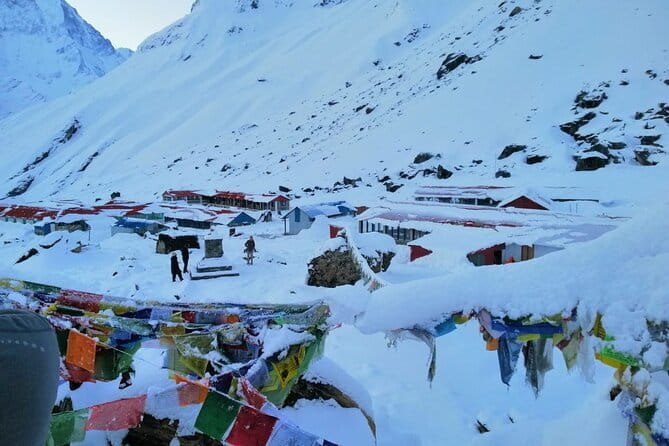
Day ten is your summit goal day—Annapurna Base Camp. The climb is described as steady, along a valley trail with rocky cliffs and occasional steep sections. When the trail flattens for a bit, use that time to reset breathing and keep your legs fresh.
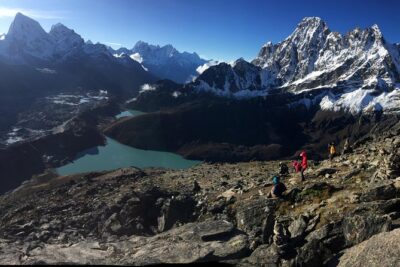
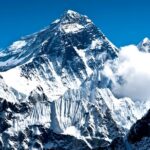
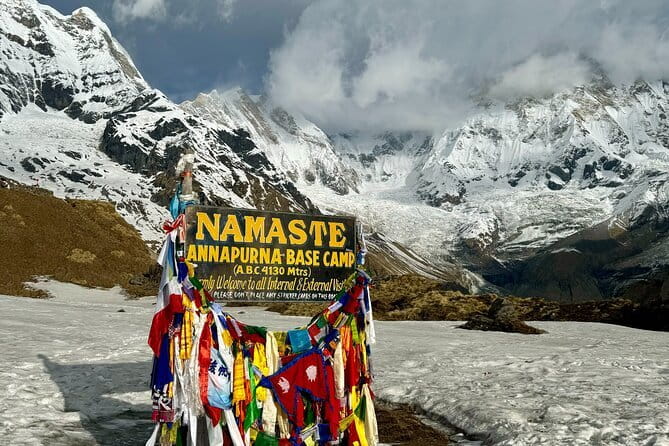
You pass through to Machapuchare Base Camp (MBC). From MBC, you get broad views of peaks including Mt. Hiunchuli, Annapurna South, Annapurna I, Annapurna III, Gandharvachuli, and Gangapurna. Then you continue upward to Annapurna Base Camp (ABC). This is the final destination, and it’s framed as a lifetime moment for trekkers, because the area access comes through the gorge you’ve been walking through.
The practical payoff is huge: this isn’t just “reach a viewpoint.” You spend the night at ABC, so you get time to take in the full experience—light changes, colder air settling in, and that rare feeling of being at the edge of a dramatic peak region.
Plan on careful warmth management here. Nights at higher elevations can be brutal even when daytime feels manageable.
Sunrise again, but with momentum: returning to Doban via MBC and Deurali
Day eleven starts early again for a sunrise at ABC, which is described as a pinnacle moment of the journey. After breakfast at ABC, you descend to MBC, then move through Deurali and the Himalaya Hotel area before reaching Doban for the night. The day is about 6 hours and is framed as a relatively easier downhill trek.
“Easier downhill” still means you’ll be using your knees and calves. You’ll want to keep your stride controlled and avoid overlong steps on uneven ground. If you’ve had knee pain before, this is the section where you’ll appreciate any guide who can manage pacing and stops.
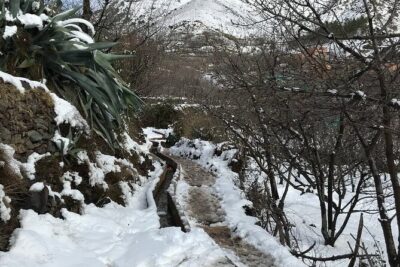
A useful clue from past guests: guide teams on this route are praised for handling knee pain with motivation and care, and for adjusting plans when conditions shift. That matters because snow and weather changes are real in the Himalayas.
Jhinu Danda and the walk back toward culture and valleys
Day twelve brings you back toward Chhomrong. You start after breakfast, retracing steps and pausing for lunch, then negotiating the challenging stone steps you climbed earlier. After that, the trail descends to Jhinu Danda for your overnight.
This day is about 6 hours, and it’s described as a stroll through farmland and rainforest. That’s a nice psychological shift: you’re moving away from the coldest, highest feel of the route and heading back into warmer, more human-scale terrain. It also helps you mentally file away the experience as something you survived and owned, not just something you passed through.
Pokhara reset and the final Kathmandu day: celebrate, then fly home
Day thirteen finishes the trek loop. You walk from Jhinu Danda toward Nayapul, with lunch along the way. Once you reach Nayapul, you drive back to Pokhara. The trip ends for the trek portion with a night in Pokhara.
Day fourteen returns you to Kathmandu. You’ll either take a flight or drive from Pokhara, then get transportation to your hotel. You also have a free day to explore or shop for souvenirs. Day fourteen ends with a farewell dinner where you can share trekking moments before you depart the next day.
Day fifteen is straightforward: a representative takes you to the airport about three hours before your scheduled flight. You say goodbye, and the mountains fade back into memory—but the routine shifts usually stick.
Price and value: what $995 covers, and what you still pay yourself
At $995 per person for an approximately 15-day program, you’re paying for more than “a guide.” The included items list matters:
You’re covered for all fees and taxes, permits and entrance fees as required, and you get breakfast, lunch, and dinner across the days (14 breakfasts, 10 lunches, 10 dinners are listed). That’s big value because food planning in mountain villages can get messy fast if it’s not handled. You’re also getting multiple transfers: airport meets in Kathmandu, a private car for hotel transfer, a tourist bus ride to Pokhara, and the drive back later.
What’s not included is also clear: personal expenses, drinks, travel insurance, and tipping. My advice here is simple: budget for travel insurance and keep a tipping plan in mind. Those are the only avoidable “surprise” line items if you plan ahead.
Also check your own group needs. Since the program mentions group discounts and a private tour structure where only your group participates, this can be strong value if you’re traveling with friends or a small group and want flexibility.
Guide quality is the difference between tough and doable
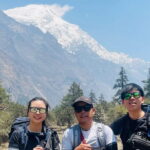
Trekking is physical, but the comfort comes from how your day is managed. Across the available feedback, the guide teams get strong praise for professionalism, care, and clear support. Names that show up often include Aashman, Birendra, Lal, plus Pradeep, Bikas (also mentioned as Bikas Lama), and Santosh.
What you should take from this as a decision-maker: you’re not just buying access to a trail. You’re buying someone’s ability to keep your group informed, organized, and emotionally steady when conditions get cold or legs get tired. There’s also specific mention of flexibility with changing plans when snow affected an 8-year-old in the group—so if you’re traveling with kids, you want a team that can adjust without panic.
If you’re bringing someone with knee pain, that’s another reason to care about guide quality. The route can be hard on knees due to steps—especially the early climb with thousands of steps and the repeated descents later.
Who this trek suits best (and who should rethink)
This Annapurna Base Camp trek is a strong fit if you want a bucket-list destination with a real support system: briefing, guide support, lodge nights, and meals handled. The program also explicitly expects moderate physical fitness, which is a helpful benchmark for what “doable” can look like when you pace properly.
You’ll likely enjoy it most if you’re okay with:
- long walking days (several days are around 6–8 hours)
- cold mornings for sunrise climbs
- step-heavy sections like the 3400-step day early on
- simple lodge accommodations
You might want a different plan if you’re looking for an easy hike, or if you know you can’t handle descents on uneven steps. The trek is achievable for many people, but it’s not a casual stroll.
Should you book this Annapurna Base Camp experience?
Book it if you want a classic Annapurna Base Camp route with careful preparation in Kathmandu, strong guide support, and a schedule that builds toward sunrise moments and a base camp overnight. The $995 price feels most reasonable when you factor in permits, meals, and the covered transfers.
Consider passing (or switching to a lighter plan) if your priority is comfort-first hiking with minimal steps. Also, if you have medical concerns, treat insurance as non-negotiable and talk through your limits with your guide before you start.
If you want Annapurna Base Camp as a real experience—balanced, organized, and memorable—this program is a solid bet.
FAQ
How long is the Annapurna Base Camp trek?
The duration is listed as about 15 days.
Where does the trip start?
It starts in Kathmandu, Nepal, with airport pickup and a hotel transfer on day one.
Do I get a guided equipment check before trekking?
Yes. On the Kathmandu briefing day, the group introduces you to the trekking guide and checks your equipment.
What is included in the price?
Included items list: all fees and taxes, required permits/entrance fees as per the itinerary, and meals (breakfast, lunch, dinner in the amounts listed).
Are airport transfers included in Kathmandu?
Yes. You’re met at the airport and escorted to a private car for your hotel transfer, and transportation to the hotel is also arranged when returning to Kathmandu.
Is travel insurance included?
No, travel insurance is not included.
Do I need to pay entrance fees for the temple stops?
Some admissions are included and some are listed as free. Your guide will handle the itinerary stops as scheduled.
Is tipping included?
No. Tipping is not included.
What cancellation window is allowed for a full refund?
You can cancel up to 3 days in advance for a full refund. If you cancel less than 3 full days before the experience starts, the payment is not refunded.
What fitness level do I need?
The guidance provided is moderate physical fitness.