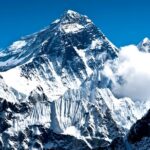
Everest sounds bigger than life. This 14-day Everest Base Camp trek runs on a clear plan: you fly to Lukla and then work your way along the Khumbu valley, staying in lodge tea houses with meals on the trail. One thing to plan for: weather can delay Lukla flights, and any added time higher up means extra costs are not covered.
I also like the built-in help. You get an experienced guide and a porter setup (1 porter for 2 clients), plus the organizer handles TIMS permits and Khumbu valley fees, so you spend less energy on paperwork and more on walking and looking up.
In This Review
- Key things that make this Everest Base Camp trek tick
- Getting started in Kathmandu: transfers, hotel nights, and permits handled
- Lukla flight day: the moment the trek stops being a plan
- Phakding to Namche Bazaar: your first taste of Sherpa life and steep valley views
- Acclimatization in Khumjung: day 4’s best job is letting you breathe
- Tengboche to Dingboche: monasteries, bigger views, and higher sleeping levels
- Dingboche to Lobuche: where the trail climbs toward the pass zone
- Lobuche to Gorakshep and Everest Base Camp: the long day with the big payoff
- Kalapatthar at 5,545m: why this viewpoint is worth the extra push
- Retracing steps: Pheriche back to Namche and the Lukla return
- Price and value: what your $1,800 is really paying for
- Guides and support: why people keep coming back to this operator
- Lodges, meals, and the comfort reality of tea houses
- Who should book this Everest Base Camp trek?
- Should you book this 14-day Everest Base Camp trek?
- FAQ
- What’s the meeting point and start time?
- How do flights work on this trek?
- What meals are included during the trek?
- Are permits and national park fees included?
- What’s included in the Kathmandu portion?
- What’s not included in the price?
- Is this tour private, and what are the age and group requirements?
- Can I cancel for a full refund?
Key things that make this Everest Base Camp trek tick
- Lukla flight routing built into the trip: it removes a lot of hassle versus DIY travel planning
- Two acclimatization days: Khumjung (with Hotel Everest View) and Dingboche to help your body adjust
- Permits and national-park fees included: TIMS and Khumbu valley fees are part of the package
- Tea-house comfort with full meal support on trek days: lunch, dinner, and breakfast while you’re hiking
- A real support team: an experienced guide plus porter support and travel/rescue arrangements
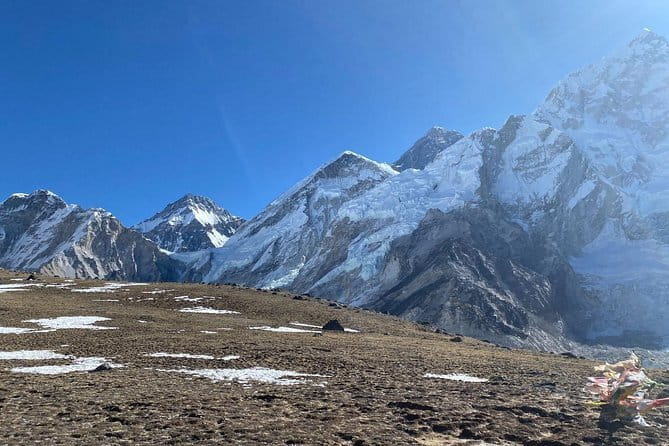
- Everest viewpoints included: Everest Base Camp plus Kalapatthar for that close-to-the-horizon payoff
Getting started in Kathmandu: transfers, hotel nights, and permits handled
Day 1 is your Kathmandu warm-up. You land at Tribhuvan Airport, then you’re picked up and transferred to your hotel by private vehicle. You also get two nights in a 3-star Kathmandu hotel with breakfast, which matters because jet lag plus altitude dreams is a rough combo.
On paper, permits and paperwork can feel like a chore. Here, the organizer includes the TIMS permit and Khumbu valley fees, plus all necessary paper work. That means you’re not trying to sort documents while you’re already thinking about flight timing and pack weight.
You’ll also get a duffle bag arrangement that’s returned after the trek. That’s a small detail, but it often makes the difference between carrying an extra-awkward pack up and over rocks versus just walking comfortably.
You can also read our reviews of more tours and experiences in Kathmandu.
Lukla flight day: the moment the trek stops being a plan
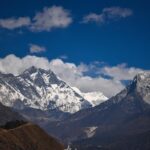
The day you fly to Lukla, you’ll gain serious altitude fast. You’re scheduled to fly from Kathmandu to Lukla (about 2,860m), then hike down to Phakding (about 2,610m) for roughly 3–4 hours.
This is one of the big realities of Everest Base Camp treks: a lot of your success depends on flight timing. The good news is the trip includes the Kathmandu-to-Lukla flights in the package, so you’re not scrambling for transport. The caution is weather. If Lukla flights shift, you might be stuck longer than planned, and extra days higher up are not included if it happens for reasons like bad weather.
After you touch down, the trail starts gently. Phakding is a solid first-day landing zone because you’re moving but not smashing your altitude all at once.
Phakding to Namche Bazaar: your first taste of Sherpa life and steep valley views
Day 3 is a longer effort: Phakding to Namche Bazaar (around 3,446m) for about 6–7 hours. It’s a classic day of rhythm-building—walk, pause, check your breathing, and repeat. You follow the Dudh Koshi River corridor part of the way, and that river valley feel gives you constant orientation.
Namche is where the Everest dream becomes a living town. You’re at a height where you’ll notice changes quickly—less effortless breathing, more frequent breaks, and a stronger urge to walk slower than your muscles want to.
This trek also brings you through Sagarmatha National Park areas on the way forward, so you’re not only walking scenery. You’re moving through protected zones that help explain why the Khumbu region looks and feels the way it does.
Acclimatization in Khumjung: day 4’s best job is letting you breathe
Day 4 is labeled an acclimatization day, but it’s not just rest. You visit Khumjung Village and Hotel Everest View (around 3,880m) as part of the day. This matters because Namche can feel busy and exciting, and you might want to “push through” the altitude. A scheduled reset day helps you avoid that trap.
Khumjung adds cultural context to the trip. You’re not only hiking toward a glacier and a base camp. You’re also seeing how Sherpa communities live and how local institutions shape day-to-day life in the Himalaya.
Also, the pace of an acclimatization day is a useful training tool for you. If you learn what slow feels like here, you’ll have an easier time later when the trail starts climbing into the higher pass country.
Tengboche to Dingboche: monasteries, bigger views, and higher sleeping levels
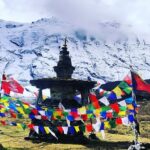
Day 5 takes you from Namche to Tengboche (about 3,860m) in roughly 5–6 hours. Tengboche is a key spiritual stop on the Everest route. The value here isn’t just the view—though you’ll likely get plenty of that—it’s the sense of place. Nepal’s mountain faith is visible in how these communities build and gather.
Day 6 continues to Dingboche (about 4,360m) for another 5–6 hours. The air feels thinner here, and your body starts demanding a slower pace. Lodges at this height help, too, because you’re sleeping higher after a tough walk, not after a casual stroll.
Then comes another acclimatization day: Day 7 in Dingboche (about 4,360m). This is the second “give your lungs time” checkpoint, and it’s one of the main reasons this specific 14-day structure works better for most people than shorter versions. You still stay active, but you do it with a goal: adjustment, not achievement.
Dingboche to Lobuche: where the trail climbs toward the pass zone
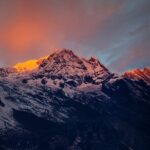
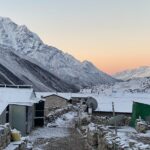
Day 8 runs from Dingboche to Lobuche (around 4,910m) for 5–6 hours. This is a step up again, and you’ll feel it in your recovery. Your legs may be fine, but your breathing can lag behind.
The route also includes crossing Thukla Pass, listed at 4,830m in the trek description. Even if you don’t think about the pass number each time you see it on the map, you’ll feel what passes do: they force steady effort before you gain altitude again toward the base-camp glacier zone.
Lobuche is where the landscape turns more severe. The ground can feel more exposed, and the air is less forgiving. This is a day where you’ll appreciate having meals included at each lodge stop—hunger at altitude is not a good workout bonus.
Lobuche to Gorakshep and Everest Base Camp: the long day with the big payoff
Day 9 is two major goals in one stretch. You trek from Lobuche to Gorakshep and then to Everest Base Camp (Gorakshep about 5,160m, EBC about 5,360m) for 6–7 hours. That’s why people remember this day: you’re higher, colder, and mentally focused.
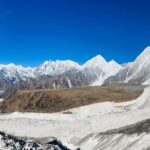
The trek follows the approach toward the Khumbu Glacier area on the way to the base camp zone. Base Camp itself is a surreal point on a trek—no matter how many photos you’ve seen, it hits differently when you’re standing there with real altitude in your lungs and cold on your hands.
After you arrive, you’ll likely want time for photos and just looking around. Even if the day feels long, the included support system matters here: you’re not left managing logistics on your own, and your guide can help pace you so you don’t burn out before the view.
Kalapatthar at 5,545m: why this viewpoint is worth the extra push
Day 10 is the classic Everest Base Camp follow-up: Gorakshep to Kalapatthar (about 5,545m) and then down toward Pheriche (around 4,371m) for about 4–5 hours.
Kalapatthar is the other big “moment” on this route. Base Camp is impressive, but Kalapatthar is where the Himalaya feels closer and sharper—especially on clearer days. This is also where you’ll want to manage your energy carefully. At this height, your body can feel slow even when your legs want to race.
Then you descend to Pheriche. That drop helps you recover, which is important because you’re not done yet.
Retracing steps: Pheriche back to Namche and the Lukla return
Day 11 brings you from Pheriche to Namche Bazaar (about 3,446m) in roughly 6–7 hours. It can feel like a victory lap, but don’t treat it as easy. Your body has already spent time at higher altitude, and fatigue can sneak in.
Day 12 goes from Namche Bazaar to Lukla (about 2,860m) for 5–6 hours. This is your final mountain walk. When you reach Lukla, you’ll probably feel a mix of relief and a weird sense of time ending too fast.
Day 13 is the flight from Lukla back to Kathmandu, then Day 14 is departure from the airport. The package includes a farewell dinner at an authentic Nepalese restaurant with cultural performance the last night. That part is simple, but it helps you land the whole experience with a sense of closure.
Price and value: what your $1,800 is really paying for
At $1,800 per person for this 14-day trek, the value is less about the bed and more about the system behind the trek.
You’re paying for key pieces that cost real money and real effort:
- Kathmandu hotel nights (two nights in a 3-star hotel with breakfast)
- Flights between Kathmandu and Lukla (as included by the trip)
- Meals while trekking (breakfast, lunch, and dinner on trek days)
- Lodge/tea-house accommodations during the hike
- TIMS permit and Khumbu valley fees, plus paper work
- Guide and porter support, including a porter ratio of 1 porter for 2 clients
- Travel and rescue arrangements and medical supplies (first aid kit mentioned)
If you DIY this route, you’d have to price out flights, permits, local logistics, and a support team. This package tries to bundle those elements so you can focus on altitude, pacing, and the route.
The one place where cost planning needs attention: extra expenses if bad weather makes flights shift or if you need extra hotel nights because of early/late timing. The trek is structured to reduce these surprises, but the Himalaya doesn’t always follow schedules.
Guides and support: why people keep coming back to this operator
This operator’s reviews point again and again to one theme: the team’s follow-through. Names that show up include Bhagwat Simkhada, Prakash Adhikari, and Sherpa co-guide Urken Sherpa. Other guides mentioned include Nima and Badri, which suggests your exact team can vary by departure date, but the training style stays consistent.
You also see practical safety support in the feedback. One account describes a medical emergency handled with emergency evacuation and hospitalization coordination. That kind of response matters because altitude trips are not just about views; they’re about risk management.
On this trek, you’ll feel that support in small ways: how your guide plans pacing, how the group moves through key passes and steep sections, and how lodging and meals are arranged at the end of each day.
Lodges, meals, and the comfort reality of tea houses
This trek uses lodges/tea houses throughout. Those places are basic by Western standards, but they’re tuned to the trek routine: eat, warm up, sleep, repeat. Because lunch, dinner, and breakfast are included during trekking, you don’t have to hunt for meals after a long day at altitude.
Still, you should expect extra costs for things that are not included. The trip lists personal expenses in the mountains such as bottle or boiled water, hot shower, phone calls, laundry, and battery recharge. It’s worth carrying some cash and thinking about your daily spending before you feel tired and cold.
Also, the tour operates in all weather conditions, which sounds reassuring until you remember that weather can mean cold, wind, and reduced visibility. Dress for that reality.
Who should book this Everest Base Camp trek?
You should consider this if you have moderate physical fitness and you want a guided Everest route with support. The minimum age is 8 years, and it’s a private tour, so you’re not squeezed into a random group where nobody matches your walking pace.
This also suits you if you like structure. The trip includes acclimatization days (Khumjung and Dingboche), major altitude milestones, and a clear plan back down to Lukla.
If you want a completely independent adventure with zero scheduling, this might feel too organized. But if you’re hoping for a smooth logistics layer under your feet, this kind of package is a good fit.
Should you book this 14-day Everest Base Camp trek?
I’d book it if you want a guided, permit-covered, meal-supported Everest Base Camp route with acclimatization built into the pacing, not just added at the last minute. It’s also a strong choice if you value having a team that handles travel/rescue planning and keeps the day-to-day running.
I would think twice if you have strict budget limits for weather disruption. Since bad weather can delay Lukla flights and extra higher-altitude nights are not covered, you’ll want either flexibility or a financial cushion.
If your goal is a classic Everest experience—Lukla flights, Namche and Tengboche culture, Everest Base Camp at 5,360m, and Kalapatthar at 5,545m—this is the kind of trek that turns the dream into a real, walkable plan.
FAQ
What’s the meeting point and start time?
The meeting point is Tribhuvan Airport in Kathmandu, Nepal, and the start time is 7:00 am.
How do flights work on this trek?
You fly from Kathmandu to Lukla early in the trip, and you fly from Lukla back to Kathmandu near the end. The trip also notes Kathmandu/Ramachap to Lukla and Kathmandu by flight.
What meals are included during the trek?
During trekking, lunch, dinner, and breakfast are included. Kathmandu meals are not included.
Are permits and national park fees included?
Yes. The trip includes the TIMS permit and Khumbu valley fees, plus all necessary paper work.
What’s included in the Kathmandu portion?
You get pickup and private transfer to your hotel, plus two nights in a 3-star hotel with breakfast. You also get a last-night farewell dinner with cultural performance.
What’s not included in the price?
Not included: Nepal visa fee, international airfare, extra Kathmandu nights if timing changes, travel and rescue insurance, personal expenses in the mountains, and tips for the guide and porter.
Is this tour private, and what are the age and group requirements?
It’s a private tour/activity, with only your group participating. Minimum age is 8 years, and a minimum of 2 people is required per booking.
Can I cancel for a full refund?
Yes. You can cancel up to 24 hours in advance for a full refund. If you cancel less than 24 hours before the experience starts, the amount paid is not refunded.