REVIEW · KATHMANDU
Manaslu Circuit Trek
Book on Viator →Operated by Alpine Luxury Treks Pvt Ltd · Bookable on Viator
Manaslu Circuit can feel like you’re walking off the map. This 17-day trek loops around the Manaslu massif (8163m), mixing big mountain views with days of gradual altitude and small village culture. I love how remote the route feels, and I like that the essentials are handled for you (including trekking gear like a down jacket and sleeping bag). The one drawback to flag up front: you’ll be dealing with a serious altitude climb and the 5160m Larkya La pass, so you need strong fitness and a steady pace.
What really helps is the way the trek is run. You go with a licensed English-speaking guide and a porter (1 for every 2 trekkers), in a small group with a maximum of 10 people. You also get clear structure from Kathmandu to the trail and back—plus Kathmandu Valley sightseeing and welcome/farewell dinners—so you can focus on the hike instead of logistics.
In This Review
- Key highlights that matter on the ground
- Manaslu Circuit Trek: the big idea in plain terms
- Kathmandu prep day: why that first taste is more than sightseeing
- Days 3–6: from Sotikhola to Deng, the slow rise begins
- Days 7–9: Namrung, Lho, Samagaon—getting closer to Manaslu
- Day 10 acclimatization at Samagaon: the smartest day on the calendar
- Days 11–13: Samdo, Larkya Phedi, and the Larkya La pass
- Days 14–16: Bimthang to Dharapani, then the drive back to Kathmandu
- Price and logistics: what $2,300 gets you (and what it doesn’t)
- Guides, porters, and how the small details affect your trip
- Who should do this Manaslu Circuit trek, and who should pause
- Should you book the Manaslu Circuit Trek?
- FAQ
- How long is the Manaslu Circuit Trek?
- Where does the trek start and when?
- What’s the highest point on the route?
- Do I stay in hotels or teahouses during the trek?
- Are trekking meals included?
- Do I get trekking gear like a sleeping bag?
- How many people are in the group?
- What about permits and a guide?
- Is the visa fee included in the price?
Key highlights that matter on the ground
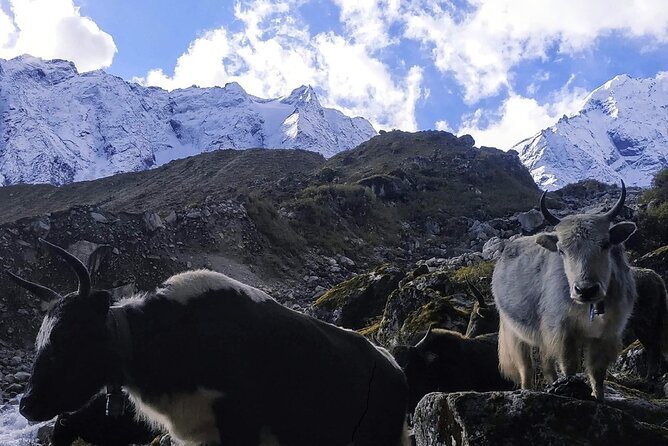
- Small-group pace (max 10 travelers): you’re not just one face in a huge crowd.
- Real high-point goal: Larkya La at 5160m: it’s the trek’s altitude moment.
- Gear is included: down jacket and sleeping bag come with the trek (returned after).
- Porter support: one porter for every two trekkers helps you keep energy for walking.
- Teahouse nights with full trek meals: you’re not guessing where dinner goes.
- A scheduled acclimatization day at Samagaon: you don’t rush the altitude.
Manaslu Circuit Trek: the big idea in plain terms
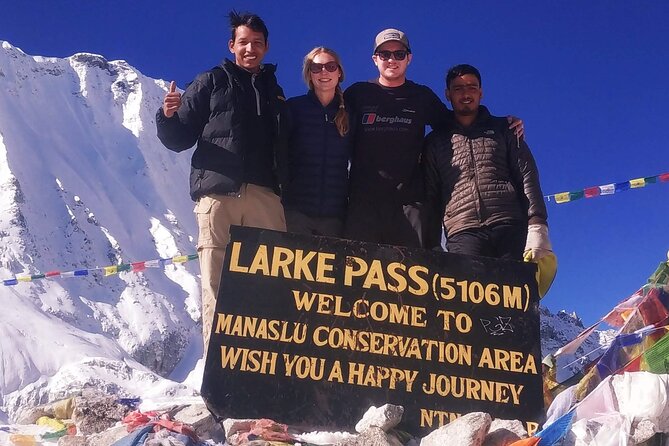
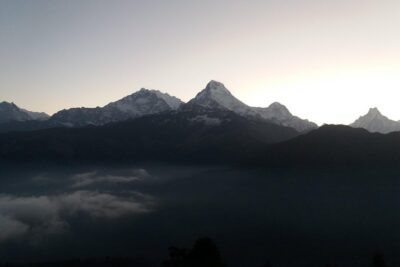
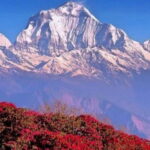
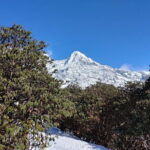
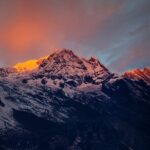
This trek is built around a simple concept: walk a circuit around the Manaslu region, step by step, while the mountains keep getting closer. You start in low country near 700m and work upward through a sequence of villages and valleys, reaching a high mountain pass at Larkya La (5160m). Along the way, you get repeated chances to see the Manaslu massif and the peaks around it—so the trek keeps rewarding you even when the day is long.
What makes Manaslu special (for me, the way this route is paced) is that it’s not just about one dramatic moment. Yes, the pass is the headline. But the approach is what turns it into a journey: long-ish trek days, steady gains in elevation, and nights in teahouses where you slow down, eat well, and reset.
The altitude is the main “watch this” item. Your highest day is at the pass, and you’ll also hit a high sleeping area around Larkya Phedi (Dharamsala) at 4460m. The itinerary includes an acclimatization day for a reason: altitude doesn’t care about motivation. If you’re prone to getting winded or headachy at elevation, this is where you need to be extra careful and follow the guide’s pacing.
You can also read our reviews of more tours and experiences in Kathmandu.
Kathmandu prep day: why that first taste is more than sightseeing
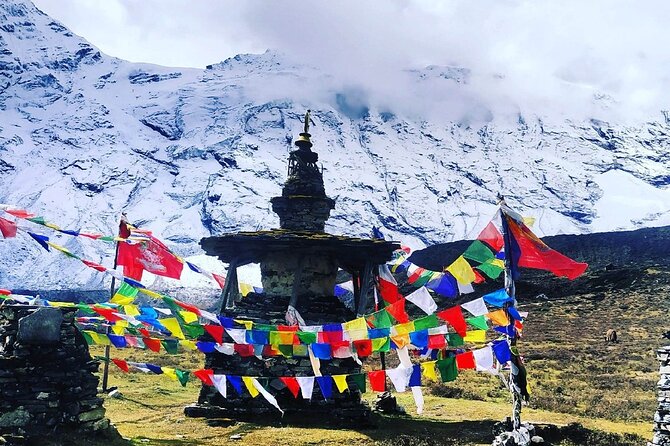
Your trek begins in Kathmandu with a private transfer and an organized start. You arrive on Day 1 (1334m) and transfer to the hotel. On Day 2 you get Kathmandu Valley sightseeing and a preparation day, which is useful for two reasons: you get your bearings fast, and you’re not trying to figure out trekking routines after a travel day.
You’re staying in a 3-star hotel in Kathmandu on a twin-sharing basis with breakfast included. The meeting point is at Hotel Thamel Park Pvt. Ltd. in Thamel, and the start time is 6:15am. That early start matters because Day 3 begins with a long drive toward the trailheads, and you’ll want your body ready for the first walking day afterward.
If you’ve ever done a trek where the first day feels like confusion, this structure helps. Having permits and paperwork handled, plus a guide who’s already lined up the trek flow, keeps your energy where it belongs: in your legs and lungs, not in figuring out admin.
Days 3–6: from Sotikhola to Deng, the slow rise begins
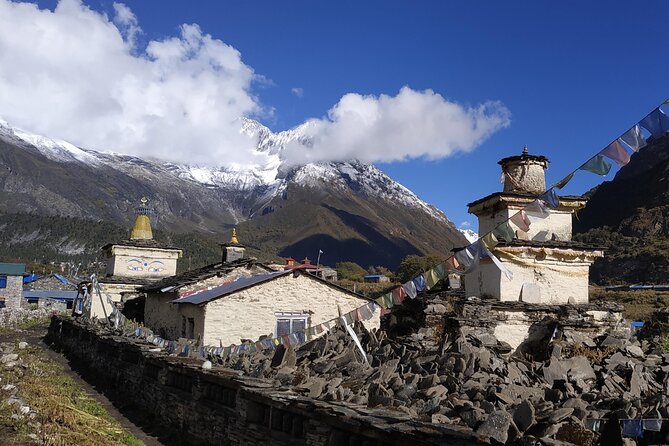
After the Kathmandu-to-trail movement, Day 3 takes you to Sotikhola (around 700m), and you start trekking again on Day 3–4 through Machha Khola (869m). Then you climb toward Jagat (1340m) on Day 5, and push onward to Deng (1860m) on Day 6.
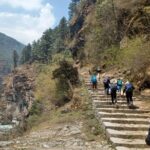
On paper, these are “just” distance and elevation numbers. In real life, this stretch is where your body learns the new rhythm. Trekking at roughly 6–8 hours per day with teahouse stops means you’re practicing what you’ll need later: steady steps, small pauses, and conserving effort for the next rise.
Why I like this section (and why you’ll probably appreciate it too) is that it doesn’t throw you straight into the high zone. You get multiple chances to adjust—both physically and mentally. Plus, each stop is high enough to keep the scenery changing as you go, but low enough that you can keep moving without immediately feeling the pass looming over everything.
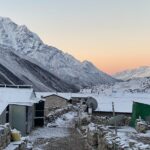
Teahouse nights keep things practical. You sleep at the village level you reach that day, and you can focus on recovery instead of searching for meals or transport. The trek meals are included during the walking days (breakfast, lunch, dinner), which is a big deal when you’re tired.
Days 7–9: Namrung, Lho, Samagaon—getting closer to Manaslu
Day 7 goes from Deng to Namrung (2630m). Day 8 takes you to Lho (3180m), and Day 9 pushes to Samagaon (3520m). These are shorter on paper than later days (for example, Day 8 is around 4–5 hours), but the air is thinner, so the effort feels different.
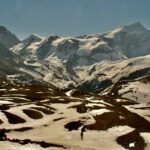
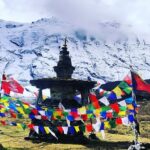
This is also where the trek transitions from “getting started” to “settling into the Manaslu region.” You’re climbing into areas where mountain views tend to become more frequent, and where village life and local culture feel more present. Since the overall trek is marketed as a route around Manaslu with community traditions, the higher villages are where that idea becomes real—people, places, and routines start looking less like scenery and more like daily life.
The route keeps rewarding you without needing to sprint. You’ll likely find it’s the slow, consistent days that set you up for the big altitude choices ahead. If you tend to rush early, you might pay for it later. On this trek, being patient usually works better than being fast.
Day 10 acclimatization at Samagaon: the smartest day on the calendar
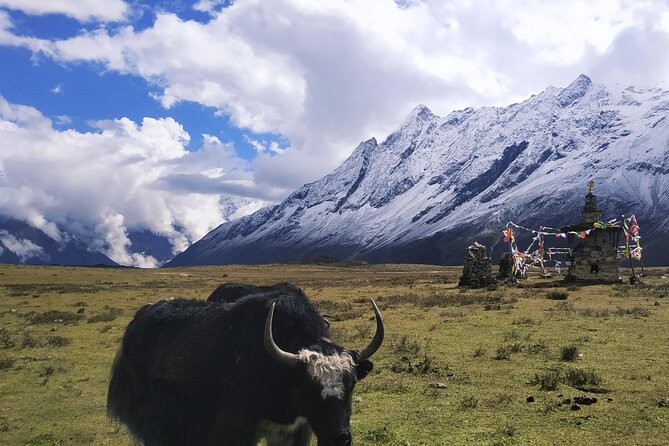
Day 10 is an acclimatization day at Samagaon (3520m). That’s not filler. It’s part of the plan because after this, you’ll go higher faster: Samdo at 3875m, then Larkya Phedi at 4460m, and eventually the pass at 5160m.
What you do on acclimatization days varies by trek and group, but the purpose is consistent: your body needs time to adjust before the higher climb. I think this is one of the best-managed parts of the trek design because it gives you a built-in buffer. Even if you feel fine the day before, altitude has a way of humbling you later.
If you’ve never done altitude treks, here’s the practical takeaway: acclimatization days don’t just help you stay comfortable. They help you keep moving as the itinerary stacks higher elevations. In other words, it protects your ability to finish strong.
Days 11–13: Samdo, Larkya Phedi, and the Larkya La pass
Day 11 heads from Samagaon to Samdo (3875m) in about 4–5 hours over roughly 8km. Day 12 moves you up to Dharamsala / Larkya Phedi (4460m) for another 4–5 hours around 8km. By the time you’re near 4460m, you’re in the zone where cold and altitude can start to hit harder.
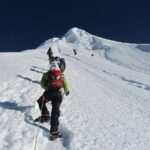
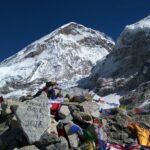
Then comes Day 13, the heart of the trek. You go from Larkya La (5160m) down toward Bimthang (3590m) in about 6–7 hours over roughly 12km (with a big altitude swing). This is the day you need to respect.
Here’s how to think about it: the pass day is not only about reaching the highest point. It’s about how you manage effort under thin air, cold exposure, and a steep climb that tests your pacing. You’ll have a guide and porter system in place, and it’s smart to follow their rhythm instead of trying to match a faster group.
Also, note the gear support. The trek includes a down jacket and sleeping bag (returned after the trek). That helps you avoid the cost and hassle of bringing bulky insulation. At high elevations, where nights and mornings can feel sharp, having the right insulation matters.
Days 14–16: Bimthang to Dharapani, then the drive back to Kathmandu
Day 14 goes from Bimthang to Dharapani (1963m) over about 7–8 hours and roughly 15km. The elevation drop is dramatic. That’s a relief for altitude stress, but it can be tough on your knees and ankles because descents often feel worse than climbs.
Day 15 transitions into a longer drive: Dharapani to Besisahar by road (about 80km, 5–6 hours). Day 16 then brings you back toward Kathmandu (1334m) by private transportation for about 150km and around 6–7 hours.
This sequence is one reason the trek works as a whole trip. You’re not forced to hike every day until you reach the end. After the pass and descent, the transportation gives you time to recover. When you finally return to Kathmandu, it’s a clean reset: you can sleep in a normal bed, eat a proper meal at your own pace (lunch and dinner in Kathmandu are not included), and breathe easier at lower elevation.
Day 17 is flight time back home, ending back at the meeting point area.
Price and logistics: what $2,300 gets you (and what it doesn’t)
At $2,300 per person for about 17 days, the value depends on what you’d otherwise pay for on your own. The trek includes a lot of the expensive, annoying parts: permits and paperwork, an experienced English-speaking government-licensed guide, porter support (1 porter for 2 trekkers), trekking meals during the trail, and teahouse accommodation during the trek.
You also get Kathmandu logistics handled: airport pickups and drops in a private vehicle, Kathmandu hotel accommodation with breakfast, and Kathmandu Valley sightseeing with entrance fees covered as per the schedule. On top of that, there’s a medical kit included, plus welcome and farewell dinners.
For gear, the trek gives you a down jacket and sleeping bag for use during the trek (returned afterward). That can reduce your packing pain and your need to rent or buy specialized insulation.
What’s not included is also clear, and you should plan for it:
- Nepalese visa fee
- Travel and rescue insurance
- International airfare
- Lunch and dinner in Kathmandu
- Personal expenses like phone calls, laundry, charging batteries, WiFi
- Tipping
One more practical note: this experience is non-refundable and can’t be changed for any reason. That’s normal in trekking contracts, but it matters if your plans are fragile.
Guides, porters, and how the small details affect your trip
The biggest difference between a good trek and a great one is often the human side: pacing, communication, and how smoothly your day runs. In past departures from this operator, guides like Ram, Mingma, and Jeet (and also Madhav) have been highlighted, along with porters such as Keshap and Shiv.
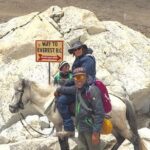
Even without naming every role, the pattern is consistent: organization before and during the trek, clear communication leading up to departure, and a guide who can explain what you’re seeing. You’ll also appreciate the way the porter system is set up for weight support. Since a porter is included (1 for 2 trekkers), you can pack with the real goal of walking comfortably rather than hauling everything yourself.
The trek is also designed around daily structure: transportation is arranged for the start and finish, and you get hotel and sightseeing coverage in Kathmandu. That removes the risk of spending time negotiating or searching while your energy is already stretched.
Who should do this Manaslu Circuit trek, and who should pause
If you’re looking for a classic Himalayan circuit with a serious high point—Larkya La at 5160m—and you want a guided setup with most necessities included, this fits well. You’ll likely enjoy it if you:
- have strong physical fitness
- like multi-day walking with teahouse stops
- want the structure of permits, meals, and lodging handled
- prefer a small group (max 10)
You might want to think twice if your altitude tolerance is uncertain. This route includes a clear acclimatization day, but the itinerary still climbs to high sleeping and pass elevations. If you’re likely to push too fast, you’ll need to consciously slow down and trust the plan.
Also, remember that the experience requires good weather. If weather forces changes, you’ll either get offered a different date or a full refund, but the underlying dependency on conditions is real.
Should you book the Manaslu Circuit Trek?
I think this is a good booking choice if you want the Manaslu region’s circuit experience with strong logistics and a small-group feel. The price isn’t low, but you’re paying for the parts that are usually hard to DIY: licensed guiding, permits, a porter system, teahouse nights, and full trek meals. That’s a lot of stress removed.
Book it if you’re ready for altitude, you’re comfortable with teahouse trekking, and you value having a plan you can follow day after day. Consider skipping it (or choosing a different trek) if you’re uncertain about high-altitude effort or you can’t afford a non-refundable commitment.
FAQ
How long is the Manaslu Circuit Trek?
It’s listed as 17 days approximately.
Where does the trek start and when?
You start at Hotel Thamel Park Pvt. Ltd., Chaksibari Marg 594-16, Kathmandu. Start time is 6:15 am.
What’s the highest point on the route?
The highest point mentioned is Larkya La pass at 5160m.
Do I stay in hotels or teahouses during the trek?
You stay in teahouses during the trekking days. In Kathmandu, you get 3-star hotel accommodation with breakfast.
Are trekking meals included?
Yes. During the trek, three meals per day (breakfast, lunch, dinner) are included.
Do I get trekking gear like a sleeping bag?
Yes. A down jacket and sleeping bag are provided for use during the trek, and they are returned after the trek.
How many people are in the group?
The maximum group size is 10 travelers.
What about permits and a guide?
You get trekking permits and necessary paperwork included. You also have an experienced, English-speaking, government-licensed trek guide.
Is the visa fee included in the price?
No. The Nepalese visa fee is not included. Travel and rescue insurance and international airfare are also not included.