REVIEW · KATHMANDU
Manaslu Circuit Trek
Book on Viator →Operated by Ace the Himalaya · Bookable on Viator
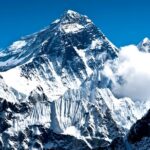
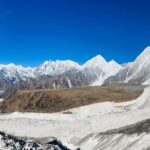
Manaslu feels remote, even for Nepal. This 15-day circuit with Ace the Himalaya brings you into a controlled trekking region with fewer crowds and standout mountain days along Nepal’s border country vibe. You get the kind of authenticity you came for—small villages, monastery stops, and long Himalayan sightlines.
What I like most is the way the trip is set up so you can focus on walking, not logistics. You’re paired with a licensed English-speaking guide, supported by a porter for every two people, and you’re also given key gear like a down jacket and sleeping bag (returned at the end).
The tradeoff is physical effort and weather. Expect long trekking days and a serious high pass segment around Larkya La, and the whole plan depends on having good weather.
In This Review
- Key things that make this trek tick
- Manaslu Circuit’s draw: a controlled route that still feels wild
- Ace the Himalaya setup: transfers, permits, and small-team support
- Kathmandu warm-up: hotel nights, sightseeing, and your pre-trek meeting
- From Kathmandu to Machha Khola: a long road day before the real walking
- Tatopani to Deng and Ghap: hot springs, bamboo, mustard fields, and stone art
- Lho to Samagaon: monastery mornings and a smart acclimatization pause
- Samdo and Dharmashala (Larke Phedi): quiet settlements before the pass
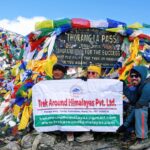
- Larkya La Pass day: steep climb, huge panorama, and controlled descent
- Tilje to Tal: paddy fields, rhododendron forests, and a suspension bridge finish
- Back to Kathmandu: 4WD ride via Besisahar and your last big day
- The $1,900 value: what’s included and what you must still plan
- What to expect physically: moderate fitness, but days are long
- Who this Manaslu Circuit trek suits best
- Should you book this Manaslu Circuit trek with Ace the Himalaya?
- FAQ
- How long is the Manaslu Circuit Trek?
- Where does the trek start and when?
- What is the maximum group size?
- Are airport transfers included?
- Do I get a guide and porter support?
- Are trekking permits included?
- What kind of lodging is provided during the trek?
- Are meals included?
- Is trekking gear provided?
- What happens if the trek can’t run due to poor weather?
Key things that make this trek tick
- Controlled Manaslu trekking permits included so you don’t have to wrestle with restricted-area entry
- Porter support: 1 porter per 2 clients to keep your pack lighter on steep sections
- Down jacket + sleeping bag included (to be returned), helping you pack smarter
- Built-in acclimatization in Samagaon with options like Birendra Tal or a base-camp day
- High point day via Larkya La Pass with a big panoramic reward and a steep descent afterward
- Small-group format (max 15), and you may even end up in very small groups depending on who books
Manaslu Circuit’s draw: a controlled route that still feels wild
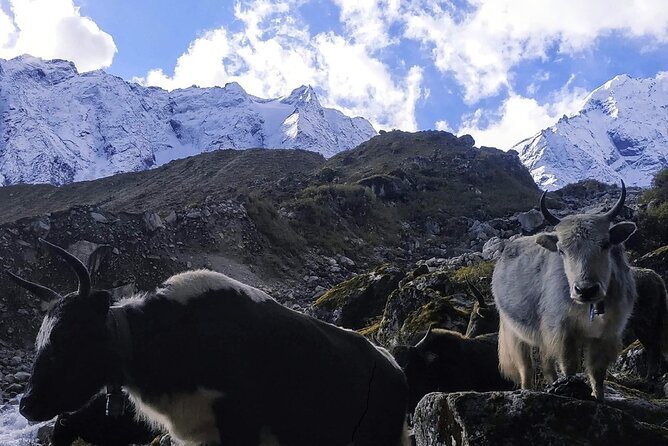
The Manaslu area is special because it’s not treated like a high-volume conveyor belt. Manaslu has been open for trekking since 1991, but it’s now run as a controlled trekking route, meaning organized groups with the right permits enter an area that still feels relatively untouched compared with many famous trails.
In plain terms, that translates into more quiet walking days. You’ll move through forested valleys, terrace farms, and remote settlements where life is built around the trail—but not around nonstop crowds.
Also, the natural setting is a big part of the appeal. The region is described as exceptionally rich in biodiversity, with plenty of plants and wildlife in the mix. On a trek like this, that matters because the scenery changes for reasons you can feel: forest shade, bamboo and rhododendron zones, glacial-fed river moods, and those high-altitude viewpoints that only show up when you’ve earned them.
You can also read our reviews of more tours and experiences in Kathmandu.
Ace the Himalaya setup: transfers, permits, and small-team support
Ace the Himalaya handles a lot of the “stop worrying” stuff for you. You get airport transfers in Kathmandu, and you’ll also have trekking-related permits included, including the restricted-area component.
On top of permits, the staffing structure is worth paying attention to:
- Licensed English-speaking trekking guide
- Porter support at a 1 porter per 2 clients ratio
That porter ratio is a big deal on a circuit like this. Even when the trail is scenic, steep days can turn into pack-heavy misery fast. With this setup, you’re more likely to arrive at tea-time feeling like a hiker, not a carry-all.
The reviews also line up with what you’d want from a guide: calm reassurance and clean logistics. Names that come up repeatedly include guides like Sunil and Shyam, plus Janu and Sushanta. Porters mentioned in successful trips include Dilip, Ajit Gurung (Vanja), and Rohin/Ronan, with the common theme being attentive care and a good working rhythm between guide and porter.
Finally, the group size ceiling helps. The trip runs with a maximum of 15 travelers, and some groups have ended up tiny—one past trip described a private group of two. That’s not a guarantee, but the framework supports a quieter feel.
Kathmandu warm-up: hotel nights, sightseeing, and your pre-trek meeting
You start in Kathmandu with a representative waiting at Tribhuvan International Airport. You’ll be transferred to a three-star hotel for two nights, using a twin-share or double room setup.
Either Day 1 or Day 2, there’s a pre-trek meeting in Ace the Himalaya’s office. This is where you meet your guide, and you’ll want to be ready with:
- Your passport
- Three copies of passport-size photos
- A readable copy of your travel insurance policy
- Any remaining balance, if applicable
- You’ll sign legally binding trip paperwork and a non-liability disclaimer
They also do guided Kathmandu sightseeing, with entrance fees included. That’s a practical win: you’re less likely to waste your first day trying to figure out transport and ticketing while jet-lagged.
One small note: Kathmandu meals aren’t fully covered. Breakfast is included on trek days, but lunch and dinner in Kathmandu are listed as not included.
From Kathmandu to Machha Khola: a long road day before the real walking
Day 2 is where you feel Nepal’s roads for the first time. You drive from Kathmandu to Dhading Besi in about 3 to 4 hours on a paved road, then switch to a dirt, winding stretch to Machha Khola that can take 5 to 7 hours depending on traffic and conditions.
Altogether, the day’s drive is roughly 8 to 10 hours. The good news is you’re not doing this in a cramped public setup—there’s a private 4WD vehicle with an experienced driver.
Why this matters: a heavy travel day can make later trekking feel harder than it needs to be. Plan a calm evening after you arrive, and treat Day 2 like the warm-up it is.
Tatopani to Deng and Ghap: hot springs, bamboo, mustard fields, and stone art
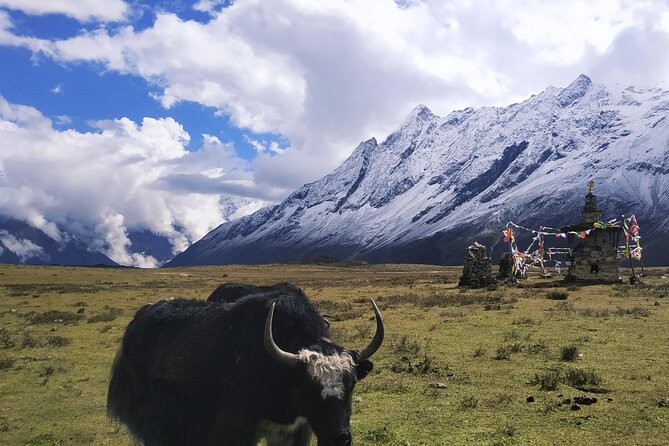
The trail starts once you’re past the river crossings and into the lower valley rhythm. Day 3 includes Tatopani, a hot spring stop, before the path runs through forest toward Dovan and along the massive Budi Gandaki river system.
Then you gain altitude and you also gain scenery variety. By Day 4, you’re ascending terraced hills and moving through bamboo forest, with the walk continuing upstream of the Deng River to a tiny village called Deng.
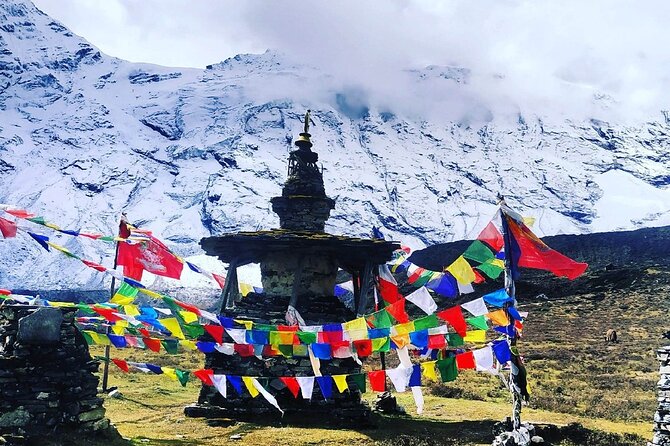
Day 5 is one of your first “this is getting real” days in the schedule. It’s described as longer and harder, and you pass flowering mustard fields along the way. You reach Ghap at 2,660 m and you’ll hear a waterfall, plus see ancient writings and art carved or marked in stones.
That combination—wild beauty plus visible human traces—makes this portion memorable. It’s not only about views. You’re watching how people have marked places for centuries.
Lho to Samagaon: monastery mornings and a smart acclimatization pause
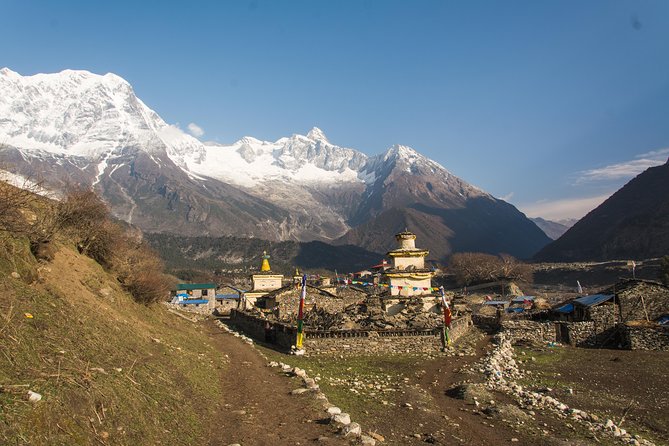
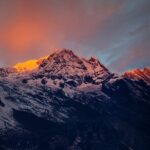
Day 6 focuses on moving toward Lho Gaon with a lunch stop in Namrung. The views from here are a highlight: you’ll get mountain sightlines including Ganesh and Siringi Himal, and your route crosses the Hinan River (originating from the Linda Glacier). Then you continue on to Sho and ultimately reach Lho Gaon, noted for its view of Mount Manaslu.
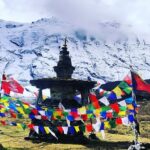
Day 7 brings another culture-and-views mix. From Lho, you can see Naike Peak, Manaslu North, and Manaslu itself, and you also visit the Buddhist monastery Ribung Gompa. Then you walk onward to Samagaon.
Day 8 is your acclimatization day, and that’s a big reason this trek is set up the way it is. You stay in Samagaon and choose between:
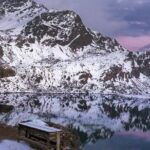
- A 4 to 5 hour side trip to Pungyen Gompa and glacial Lake Birendra Tal, or
- A 7 to 8 hour walk to Manaslu Base Camp and back
This isn’t “busy tourism.” It’s about giving your body a chance to adapt before the route gets higher and more demanding.
Samdo and Dharmashala (Larke Phedi): quiet settlements before the pass
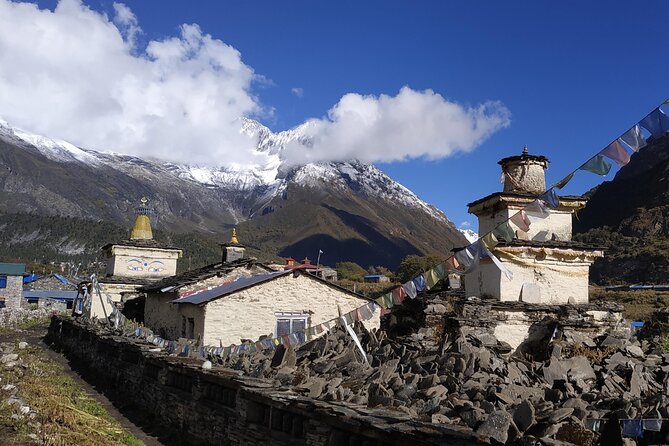
Day 9 heads to Samdo, described as a remote permanent settlement. The route includes climbing a terraced hill on the opposite bank of the Budhi Gandaki River, then moving toward that higher, calmer place.
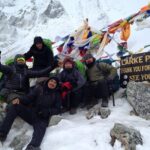
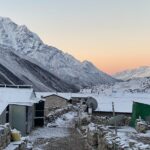
Day 10 takes you to Dharmashala, also called Larke Phedi. This is a turning point in your mindset because the accommodations shift toward basic simplicity. There’s one small stone guesthouse here with basic facilities, and lodging is dormitory styled.
If you’re the type who likes comfort, this is where you should set expectations in advance. You’ll feel it when you arrive, but you also feel why people like this section: it’s quiet, focused, and close to the pass approach.
Larkya La Pass day: steep climb, huge panorama, and controlled descent
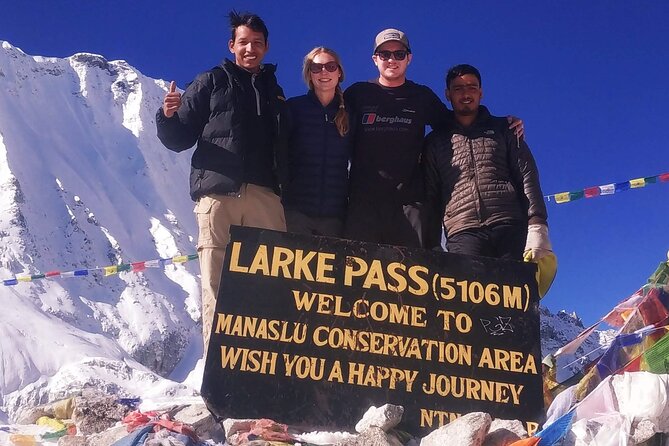
Day 11 is the high drama. You climb toward Cho Chanda and then work slowly but steeply uphill toward the snowed-up pass.
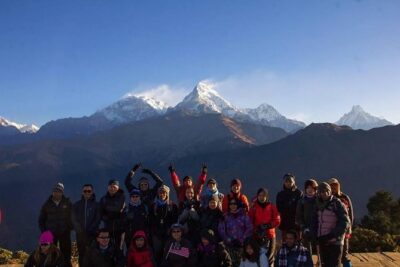
At the top, the panoramas are listed clearly: Himlung Himal, Cheo Himal, Gyagi Kung, Kang Kuru, and Annapurna II. After that, the descent is steep and goes through moraines toward Bhimtang.
Practical tip for this day: don’t treat the pass summit like the whole goal. Your legs do the real work on the descent too. If your pace is steady earlier, you’ll thank yourself on the downhills.
And yes, weather can shape what you see. Even in trips where everything runs smoothly, mountain visibility may come and go depending on conditions. That’s normal in this region, and it’s part of why good pacing and good shelter habits matter.
Tilje to Tal: paddy fields, rhododendron forests, and a suspension bridge finish
Day 12 is described as easier. You start with a gentle climb through paddy fields toward the small Karcha La Pass, then descend through fig trees and rhododendron forests to Tilje.
Day 13 shifts toward denser village sections and then into the Annapurna Circuit segment. You pass through streams and fields of wheat, cross a suspension bridge over the Marshyangdi River, and arrive at Tal. Tal sits on the riverbank, with a large waterfall you can watch.
This is a rewarding day because it’s not just harder altitude moving upward. It’s also the satisfaction of transitions—forests changing into farms, the river getting louder as you get lower, and the route pulling you back toward livable village energy.
Back to Kathmandu: 4WD ride via Besisahar and your last big day
Day 14 brings a long transport day. You hop onto a 4WD vehicle to reach Kathmandu via Besisahar. The road is rough and bumpy up to Besisahar, then it’s smoother afterward. Expect 8 to 9 hours of drive as you watch hills and rivers along the highway.
Day 15 ends with an airport drop-off in Kathmandu for your final flight out.
This is a moment where you should plan to move slower than you think. Even when you’re “done hiking,” your body is still recovering from altitude and daily walking. Hydrate, eat, and give yourself time to decompress.
The $1,900 value: what’s included and what you must still plan
At $1,900 per person, this trek is priced like an all-in mountain service package. But the real question is what’s baked into that number.
What you’re getting included:
- Airport transfers
- Kathmandu hotel for two nights (three-star; twin-share/double)
- Guided Kathmandu sightseeing plus entrance fees
- Trek guesthouse accommodation for 12 nights (twin-share and dormitory rooms)
- Licensed English-speaking guide
- Porter support at 1 porter for every two clients
- All required permits, including restricted-area trekking
- Transfer support by 4WD for key route legs between Kathmandu and the trek
- Down jacket and sleeping bag for the trek (to be returned)
- Meals on the trek: breakfast (14), lunch (13), dinner (13)
What’s not included:
- Travel insurance (including emergency high-altitude rescue and evacuation)
- International airfare
- Nepal entry visa
- Lunch and dinner in Kathmandu
- Alcoholic and other drinks
- Personal trekking equipment
- Tips for trekking staff and driver
Value check: if you tried to build this yourself, you’d still need permits, a licensed guide, a porter arrangement, and the right gear. This price also covers meals and lodging throughout most of the route, which removes a lot of everyday uncertainty.
The one big “do not skip” item is insurance. The trek explicitly calls out that high-altitude rescue and evacuation coverage is not included, so you’ll want a policy that actually matches this type of terrain and altitude risk.
What to expect physically: moderate fitness, but days are long
The trek asks for moderate physical fitness, and that’s consistent with the itinerary’s day lengths. Some days are around 4 to 7 hours, while others stretch to 8 to 9 hours. The pass day includes a steep uphill segment and a steep descent, which is where stamina matters most.
Also, remote guesthouses can mean simpler meals and sleeping conditions. That doesn’t make the trek harder in a technical sense, but it changes recovery. If you arrive already drained from jet lag, you’ll feel it sooner.
Given the porter ratio, you won’t be hauling everything, but you still need to do the walking. Think of this as a hiking-focused trip where the guides handle pace management and logistics so you can keep moving safely.
Who this Manaslu Circuit trek suits best
You’ll likely love this trek if:
- You want a quieter Manaslu experience rather than a crowded trail
- You’re excited by culture stops like Buddhist monasteries (Ribung Gompa, plus optional gompa visits)
- You like the idea of acclimatization day choices (Birendra Tal or base-camp day)
- You appreciate a guided setup where someone else handles permits and daily planning
It’s also a good fit for first-time trekkers who are serious about following guidance, because the team structure is strong and the porter support helps you keep your energy for the trail. One review story even mentioned a first-time trek feeling challenging but rewarding with reassurance from their guide.
You might think twice if you:
- Are sensitive to basic lodging (especially around Dharmashala/Larke Phedi)
- Get stressed by weather visibility changes
- Want lots of private comfort during remote nights
Should you book this Manaslu Circuit trek with Ace the Himalaya?
If you want Manaslu’s mountains with fewer crowds, this is a smart way to do it. The combination of permits handled, a licensed guide, porter support, and included trekking gear coverage makes it easier to focus on the trail instead of admin and packing.
I’d book it if you’re comfortable hiking long days, ready for a serious pass day, and willing to plan for high-altitude insurance. I’d hesitate only if your travel style needs heavy comfort or if you’re not prepared for weather to affect what you see on top days.
If you match those basics, this trek is the kind of experience that sticks for the right reasons: quieter villages, genuine mountain time, and a team that helps you keep it all moving.
FAQ
How long is the Manaslu Circuit Trek?
The trek is listed as 15 days approximately.
Where does the trek start and when?
It starts at Tribhuvan Airport in Kathmandu, with a start time of 8:00 am.
What is the maximum group size?
The tour/activity has a maximum of 15 travelers.
Are airport transfers included?
Yes. Airport transfers are included.
Do I get a guide and porter support?
Yes. You’ll have a licensed English-speaking trekking guide, and you’ll also have a porter for every two clients.
Are trekking permits included?
Yes. All permits for trekking, including restricted area permits, are included.
What kind of lodging is provided during the trek?
You’ll stay in guesthouses with twin-share and dormitory styled rooms for 12 nights.
Are meals included?
Yes. Breakfast (14), lunch (13), and dinner (13) are included on the trek. Lunch and dinner in Kathmandu are not included.
Is trekking gear provided?
Yes. A down jacket and sleeping bag are included for the trek, and they are to be returned.
What happens if the trek can’t run due to poor weather?
The trek requires good weather. If it’s canceled due to poor weather, you’ll be offered a different date or a full refund.