REVIEW · KATHMANDU
Manaslu Circuit Trek
Book on Viator →Operated by Touch The Himalaya Treks & Expedition · Bookable on Viator
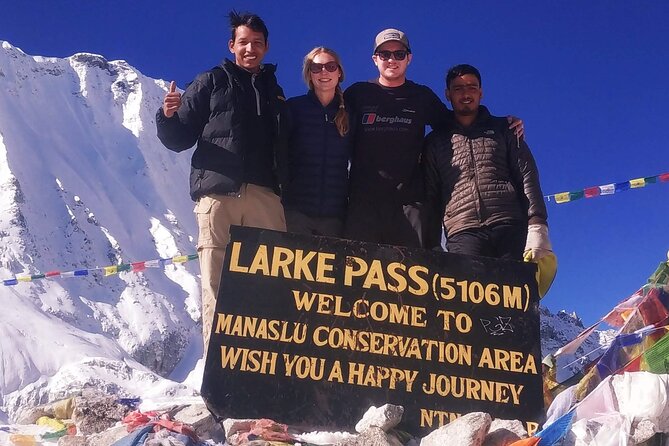
Manaslu Circuit feels like Nepal before the crowds. You’ll trek through Tibetan-influenced villages, cross multiple suspension bridges, and aim for the big showpiece: Larkya La at about 5,106m, with serious mountain panoramas waiting on clear days.
Two things I especially like here are the built-in acclimatization around Samagaun (so you’re not just sprinting uphill) and the extra support structure, with an expert local guide plus an assistance guide for each small group. The small, less-frequented rhythm of the route also means you spend more time in villages and less time in a traffic jam of trekkers.
One possible drawback to consider: this is a restricted-area trek, so you’ll need the right permits and a registered guide, plus you should expect a more “self-managed” feel for your daily comfort. Food and drinks during the trek are not included, and there’s no promise of hot showers or reliable charging power.
In This Review
- Key highlights worth planning for
- Why Manaslu Circuit feels quieter and more personal
- Price and logistics: what the $589 covers (and what it won’t)
- Day-by-day trail feel: from Machha Khola to the first valley villages
- Day 1: Kathmandu pickup, then straight to Machha Khola
- Day 2: Jagat, forests, mani walls, and wildlife breaks
- Day 3: Philim to Deng with suspension-bridge moments
- The Ganesh–Shingri–Kutang view corridor: Namrung and Lihi days
- Day 4: Namrung with a clear-view aim
- Day 5: Through oak, fir, and rhododendron to Lho
- Samagaun and Shyala: where Manaslu looks big enough to touch
- Day 6: Sama/Samagaun and Shyala’s 360-degree views
- Day 7: Acclimatization day at Samagaun
- Samdo: slower climbing and a Tibetan refugee camp vibe
- Day 8: Samdo village and optional Samdo Peak
- Dharmasala and Larke Bazaar: building up to Larkya La
- Day 9: Dharmasala (Larkya Phedi), plus a seasonal Tibetan market
- Larkya La pass day: the big moment at about 5,106m
- Day 10: Early start, pass views, then downhill to Bhimtang
- Bhimtang to Tilje: long downhill hours and a sunrise teahouse reward
- Day 11: Ghoa, Tilje, and a possible sunrise moment
- Exit day: from trail dust to Besisahar comfort
- Day 12: Back to Besisahar by jeep after reaching Dharapani
- Who this trek fits best (and who should rethink it)
- The guide and support angle: what “good logistics” actually looks like here
- Should you book this Manaslu Circuit trek?
- FAQ
- What is the highest point on this trek?
- How long is the Manaslu Circuit trek?
- What’s included in the tour price?
- Are meals and accommodation during the trek included?
- Do I need a guide and permits for this restricted area trek?
- What about WiFi, battery charging, or hot showers?
- When does the trip start in Kathmandu?
- Is there a minimum number of travelers?
- Is this a private group trek?
Key highlights worth planning for
- Larkya La crossing: early start, high pass day, then a long downhill payoff to Bhimtang
- Tibetan-influenced villages: mani walls, monasteries, and market culture near Larke Bazaar
- Acclimatization built in: Samagaun gives you time to hike around before the big altitude push
- Samdo and refugee camp context: Tibetan refugee camp atmosphere with standout Manaslu views
- Small-group support: an expert guide and an assistance guide for each group of five trekkers
- Remote teahouse logistics: practical on-route comfort, but you’re still trekking for days
Why Manaslu Circuit feels quieter and more personal
Manaslu has a different vibe than the more famous Nepal routes. Part of that is location and access: you’re working within the Manaslu Conservation Area and a restricted zone that requires permits and a registered guide. The result is a trek where villages feel lived-in, and the mountains feel closer because you’re moving through them instead of over them like a postcard ride.
Another big draw is the variety packed into a compact 12-day plan. You start by following the Budhigandaki River, then climb through forested lower slopes and into high-altitude country where the air changes and views get sharper. Even on days that are shorter on paper, you’re often walking through fresh scenery, not just repeating the same valley.
You’ll also notice how culture and religion show up on the trail. Mani walls and monastery stops are not just decoration; they’re part of the walking landscape. This route also gives you Tibetan-market atmosphere near the pass region, which helps you understand why this trekking region feels distinct from standard “mountain walking” routes.
You can also read our reviews of more tours and experiences in Kathmandu.
Price and logistics: what the $589 covers (and what it won’t)
At $589 per person for roughly 12 days, the value comes from what’s included before you even step onto the trail. Your price covers transport around the trek start/end (including Kathmandu to Machha Khola by bus, plus the return transfer), the required permits (including ACAP, MCAP, Manaslu Restricted Area Permit, and TIMS), and an expert local guide with their meals, accommodation, salary, and insurance. It also covers taxes and an achievement certificate.
What’s not included is the day-to-day stuff that usually budgets decide first. You’ll pay for your own foods, drinks, and teahouse accommodation during the trek, unless you choose to add it as an extra service. WiFi, hot showers, and battery charging are also not included. You can buy meals at tea houses, and having the option to bring light snacks like energy bars is smart for long walking days.
So here’s my practical take: this is a “pay for support and permits, then handle your daily comfort on-route” kind of trip. If you want fewer decisions and more included meals, ask about add-on plans before you commit. If you’re okay planning your own tea house routine, $589 can feel like a fair deal because permits and logistics are handled.
Day-by-day trail feel: from Machha Khola to the first valley villages
Day 1: Kathmandu pickup, then straight to Machha Khola
The trip starts early with hotel pickup in Kathmandu and a drive toward the bus park or private vehicle. From there, you transfer to Machha Khola, where the trek begins. One detail I like: the route is planned to follow the Budhi Gandaki River, so the walking has a natural rhythm from the start.
Machha Khola itself is tiny, known for trade connected to the northern side of the Gorkha District. You’ll notice a Buddhist and Hindu mix in daily life, and the river will be your constant companion.
Night one is at Machha Khola, likely in a simple lodge setup designed for trekkers.
Day 2: Jagat, forests, mani walls, and wildlife breaks
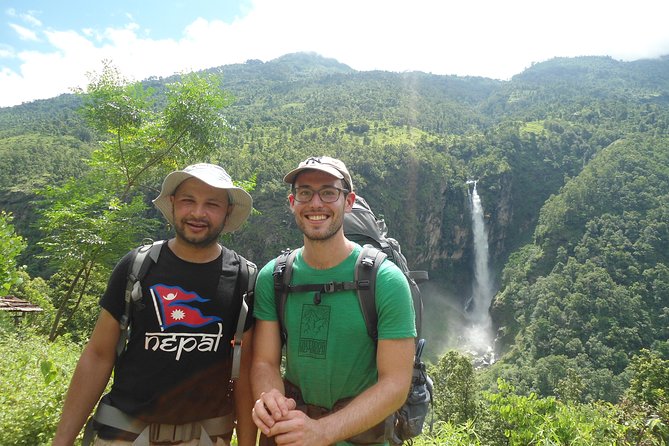
You’ll trek from Machha Khola toward Jagat, and the trail starts with a forest stretch. This is one of those days where you can look up and look around: you might spot monkeys, birds, and deer, plus waterfalls along the way.
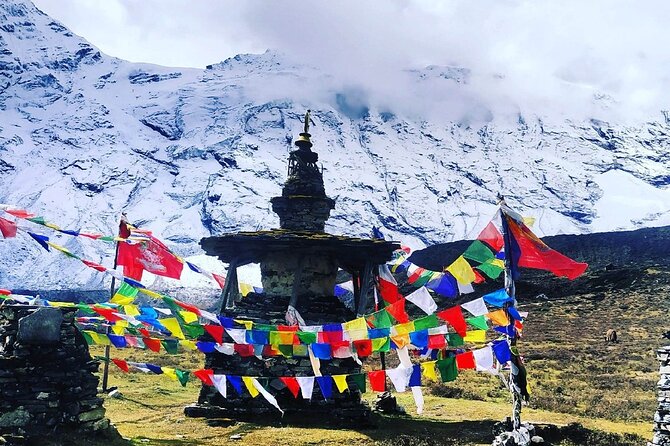
You’ll also pass a mani wall—stones inscribed with Buddhist prayers. These details make the walk feel connected to place, not just altitude.
Jagat is a classic overnight stop with teahouses and lodges. If weather cooperates, you get views of the Ganesh and Shingri Himal. Short evening decompression after dinner is the goal because the next few days keep climbing.
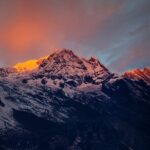
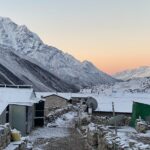
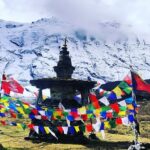
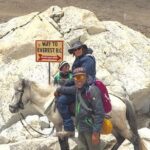
Day 3: Philim to Deng with suspension-bridge moments
This is a “steady but not brutal” day. The trail gently climbs, then opens up onto plateaus before you hit a river crossing.
You’ll use a suspension bridge over the Bhudi Gandaki River into Philim, then continue uphill toward Ekle Bhatti and another suspension bridge down into Deng. Deng sits in a valley and has multiple teahouses, so it’s comfortable in the practical sense: you’re not searching for shelter at the end of a long day.
It’s also a good day to practice your altitude pacing. Even without a huge ascent on paper, you’ll feel the change if you walk fast.
The Ganesh–Shingri–Kutang view corridor: Namrung and Lihi days
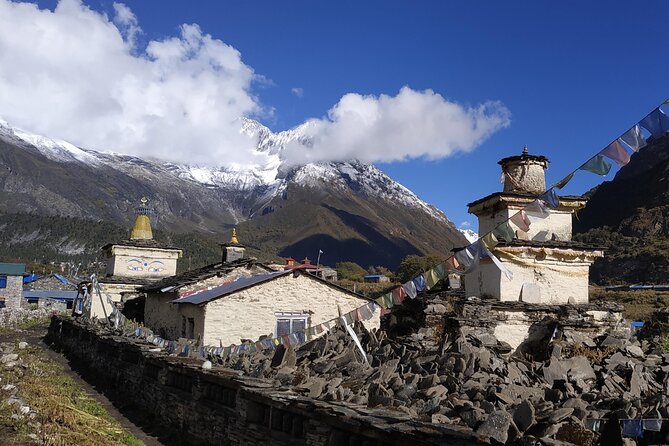
Day 4: Namrung with a clear-view aim
You start by heading down to the riverside, crossing, and then climbing toward Ranagoan. From there, you continue to Bihi Phedi. The trail splits, and you take the right-hand option toward Ghap before climbing up to Namrung.
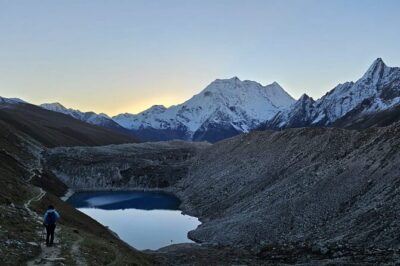
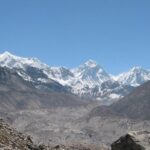
This is a view day. You’re walking into a zone where you’re more likely to see the Ganesh, Shingri, and Kutang Himal clearly. That’s not just nice for photos—it’s motivation. When you can see your goal region in the distance, you’ll often manage the effort better.
Day 5: Through oak, fir, and rhododendron to Lho
Today starts in forest—oak, fir, and rhododendron—then you reach a permit check post where you show your trekking permit. After that, you pass villages including Lihi Gaon and Sho Goan.
You’ll reach Lho at about 3,280m, where lunch is taken at a local restaurant and dinner is at your lodge. Lho is a good waypoint because it’s high enough to make acclimatization real, but not yet the thin-air grind.
If you’re sensitive to altitude, this is the day to slow down even more than you think you need.
Samagaun and Shyala: where Manaslu looks big enough to touch
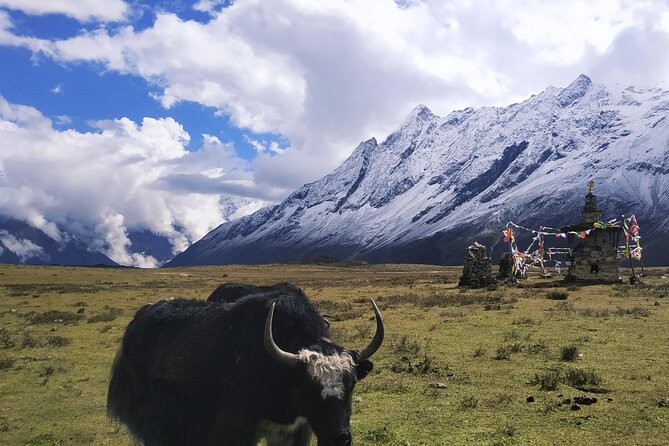
Day 6: Sama/Samagaun and Shyala’s 360-degree views
You trek up to Sama (Ryo) with a stop in Shyala, which is framed as a standout viewpoint for 360-degree mountain views. If skies are clear, this is when the region really shows you what you came for.
From Shyala, you continue to Samagaun (Sama). The views are described as broad: Manaslu, Himal Chuli, Nadi Peak, Naike Peak, Kutang Himal, and Pangbuche Himal.
This day matters because it balances effort and reward. It’s also a mental reset: you’re not only walking; you’re arriving.
Day 7: Acclimatization day at Samagaun
This is the altitude safety valve. You’ll hike around rather than push deeper. You have a choice: a hike around Birendra Lake and Manaslu Base Camp, or a hike to Pungen Gumpa.
Two hours of hiking time is listed for the day plan, but the real takeaway is that you can choose your intensity. Talk with your guide about what fits your fitness and comfort level. If you’re anxious about the pass later, you’ll probably want the less demanding option.
The end goal is that your body handles the next rise without turning the rest day into a recovery project.
Samdo: slower climbing and a Tibetan refugee camp vibe
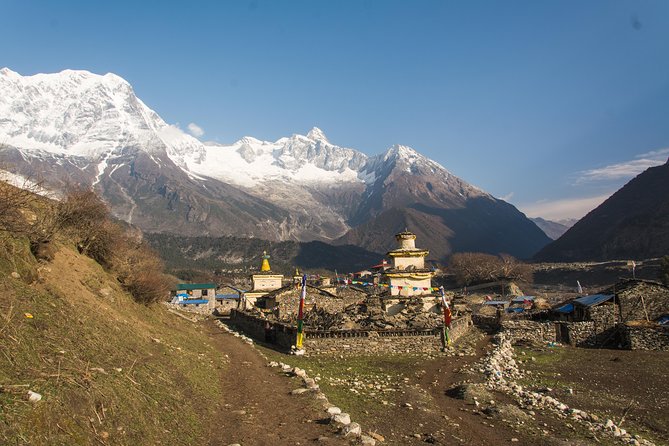
Day 8: Samdo village and optional Samdo Peak
You move to Samdo, which is a higher-elevation stop and treated as a slow-and-steady climb. With altitude, that’s not just advice—it’s how you’ll stay functional.
Afternoon options include a hike to Samdo Peak if you have the stamina. The views of Mt Manaslu from here are described as incredible, and Samdo is noted as a well-known Tibetan refugee camp. That gives the village a different feel from purely “tourist treks” stops. You’re walking through a living community shaped by history and mountain life.
Rest and hydration become your main tasks once you arrive.
Dharmasala and Larke Bazaar: building up to Larkya La
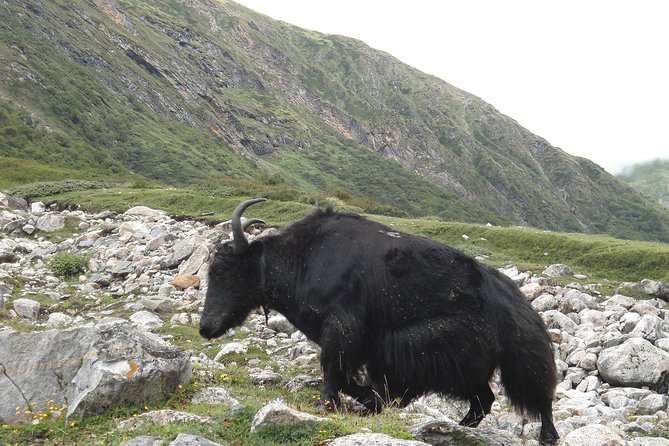
Day 9: Dharmasala (Larkya Phedi), plus a seasonal Tibetan market
From Samdo, you continue toward Dharmasala, also called Larkya Phedi. The trail leads you gradually upward until your overnight stop.
You’ll pass a seasonal Tibetan market called Larke Bazaar beside the Budhi Gandaki River, plus monasteries along the way. This is a “culture-and-country” day, not a day to race.
Also, this sets up tomorrow’s pass crossing. Your plan notes that you should rest well and prep camera batteries because the pass is coming early.
Larkya La pass day: the big moment at about 5,106m
Day 10: Early start, pass views, then downhill to Bhimtang
This is your signature day: wake early, breakfast, and head to Larkya La. The climb goes slowly until you reach the pass, where you take a break for views before continuing downhill to Bhimtang.
Your return-to-breathing payoff is the valley descent, but don’t treat it like an easy finish. Downhill days can still be hard on knees and energy, especially after high-altitude exertion.
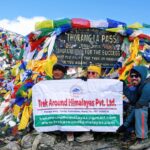
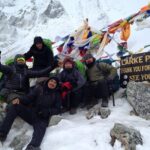
The view list is the reason you’ll remember the day: from Larkya La, you get big sightlines toward Cheo Himal, Gyaji Kung, Kang Guru, and Annapurna II (all described as above 6,000m). Even if visibility isn’t perfect, you’ll still feel the scale.
The plan lists around 7–8 hours for the day. For many trekkers, that’s the toughest timing challenge: not only the walking, but keeping yourself steady as the day gets cold and demanding.
Bhimtang to Tilje: long downhill hours and a sunrise teahouse reward
Day 11: Ghoa, Tilje, and a possible sunrise moment
You hike downhill for much of the day. After about four hours, you reach Ghoa, then continue down to Tilje for the night.
There’s a small but useful tip here: waking up early allows for an amazing sunrise view from the teahouse. Also, Tilje is noted as a place where you may find free WiFi after crossing the mountain, which can be a welcome morale boost after a pass day.
Don’t count on it as a guarantee, but it’s a decent check-in point for staying in contact and uploading a few photos.
Exit day: from trail dust to Besisahar comfort
Day 12: Back to Besisahar by jeep after reaching Dharapani
You depart from your hotel in Dharapani, then follow the trail down through pine forests and small villages. You’ll have lunch in Dharapani, which sits at the confluence of the Marsyangdi and Trishuli rivers.
After lunch, you arrange a jeep to Besisahar for about two hours, then check into a hotel.
This last day is about transition. You’ll trade trekking time for road time, and it usually feels oddly quiet after days of walking. Make it count: a proper meal and a real bed go a long way.
Who this trek fits best (and who should rethink it)
This is for you if you want a remote trek with strong mountain views and a route that’s actively managed through permits and guided support. The pace is designed with acclimatization in mind, and the day-to-day mix of forest walking, village stops, and high pass effort suits trekkers who like varied terrain.
You should think twice if you’re not comfortable handling long days on your feet, even when the daily hiking time looks “reasonable.” The pass day and the high-altitude segments still demand a steady body and careful pace.
This is also a good choice for people who enjoy cultural context: mani walls, monasteries, and the seasonal Larke Bazaar stop are part of the experience, not side notes.
The guide and support angle: what “good logistics” actually looks like here
One thing that keeps showing up in this trek’s success is the human layer. Guides such as Roshan, Arjun, Kumar Neupane, Bishnu, and Raju are repeatedly credited with making permits, timing, and pacing feel smooth. You’ll likely feel the difference in how they manage the high-altitude days and how they handle flexibility when conditions change.
Support matters too. The plan includes each 5 trekkers one assistance guide, which can help with smaller-group management and keeping the trip organized.
Even if you’re confident physically, good support makes the difference between a stressful trek and a controlled one.
Should you book this Manaslu Circuit trek?
If you want value that goes beyond a view-only promise, I think this one makes sense. You’re paying for permits, transfers, and real guiding support, and the route is built around a responsible approach to altitude with an acclimatization day at Samagaun and a high pass crossing at Larkya La.
Book it if:
- you’re excited by Tibetan-influenced villages and monastery culture
- you’re okay buying your own teahouse meals and drinks
- you want a structured, permit-required trek that stays remote
Skip it (or ask for advice) if:
- you need guaranteed hot showers and charging everywhere (the plan does not include that)
- you’re not ready for a serious pass day followed by downhill hiking
If you’re the kind of traveler who enjoys earning big views one step at a time, this trek can deliver exactly that.
FAQ
What is the highest point on this trek?
The big pass crossing is Larkya La, listed at about 5,106m (the day plan also mentions Larkya La around 5,160m as the approach reaches the pass area).
How long is the Manaslu Circuit trek?
It’s scheduled for 12 days approximately.
What’s included in the tour price?
Included are airport pickup and drop-off, transfers between Kathmandu and Machha Khola, the permits (including ACAP Permit, MCAP Permit, Manaslu Restricted Area Permit, and TIMS), an expert local guide with their meal, accommodation, salary, and insurance, local taxes, and an achievement certificate.
Are meals and accommodation during the trek included?
No. Foods, drinks, and accommodation during the trek are not included (they can be provided with an additional charge).
Do I need a guide and permits for this restricted area trek?
Yes. Because it includes a restricted trekking area, it requires a special permit and a registered guide.
What about WiFi, battery charging, or hot showers?
These are listed as not included. WiFi may be available at times in some villages, but it’s not guaranteed and isn’t part of the included services.
When does the trip start in Kathmandu?
The start time listed is 6:45 am, with the meeting point at Touch The Himalaya Treks & Expedition JP Rd, Kathmandu.
Is there a minimum number of travelers?
Yes. The experience has a minimum of at least two travelers.
Is this a private group trek?
Yes. It’s described as a private tour/activity, with only your group participating.