REVIEW · KATHMANDU
Manaslu Circuit Trekking – 17 Days
Book on Viator →Operated by Annapurna Foothills Treks Expedition Pvt. Ltd. · Bookable on Viator
The Manaslu Circuit pushes you, then rewards you. One of the big reasons to do this trek is the Larkya La crossing, around 5,213–5,215 m, often with snow, plus the huge peak views all the way around. I also like how the route moves from alpine terrain down toward tropical growth, so the scenery and walking feel like they change with the altitude. The one drawback to think about up front: this is a stamina test, and the trip needs good weather to run smoothly.
For value, I like that most of the trek essentials are bundled in: 13 nights in local lodges with breakfast, lunch, and dinner, an English-speaking Sherpa guide, porters, and the required permits. At $1,600 per person, that’s not a cheap stroll, but it can feel fair compared with the amount of logistics you get handled. My main caution is planning around altitude: there’s an acclimatization day at 3,541 m and then a long, high pass day that can run 10–12 hours.
In This Review
- Key Highlights at a Glance
- Big Himalayan Views With a Route That Changes Mood
- Price and Logistics: What You Pay For (and What You Still Need to Plan)
- Your Trek Starts in Kathmandu: Prep Day and Simple Comfort
- Soti Khola to Namrung: Finding Your Pace on the First Climb
- Lho and Sama Gaon: The High-Village Middle and Acclimatization Work
- Samdo to Larkya Phedi: When Snow Can Become Part of the Plan
- Crossing Larkya La Around 5,215 m: The Long Day With a Real Payoff
- The Return Descent: Marsyangdi Valley to Tal, Then Back to Kathmandu
- Guide, Sherpa, and Porter Support: The Difference Between Hard and Miserable
- Value Check: Meals, Snacks, Permits, and What Comfort Really Costs
- Packing and Fitness Reality: You Need Stamina, Not Just Motivation
- Should You Book the Manaslu Circuit Trek (17 Days)?
- FAQ
- What is the highest point on this trek?
- How many days is the Manaslu Circuit Trek?
- Where does the trek start and end?
- Is Kathmandu included before the trek?
- Are lodge stays and meals included?
- Do I need permits, and are they included?
- How do you handle transportation to and from the trek?
- What should I budget for that is not included?
- Is this trip private?
Key Highlights at a Glance
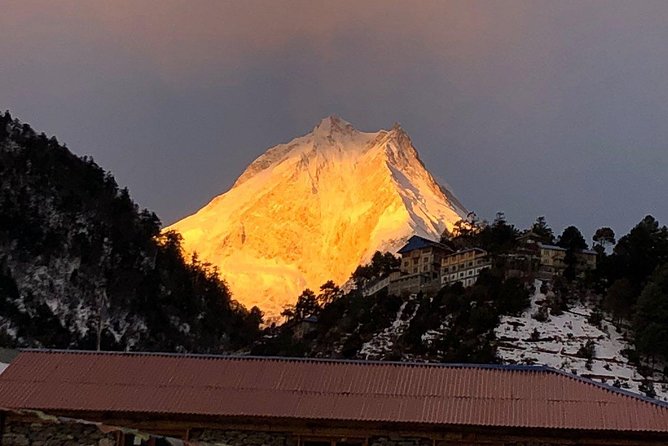
- Larkya La at about 5,215 m: a snow-country pass day with a long 24 km push and a major descent after.
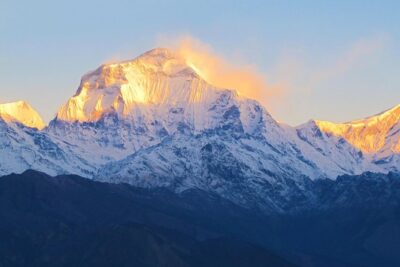
- Big-peak ring views: Himal Chuli, Manaslu, Cheo Himal, and Himlung Himal show up repeatedly as you climb.
- Real altitude pacing: you get an acclimatization day at Sama Gaon (3,541 m) before going higher.
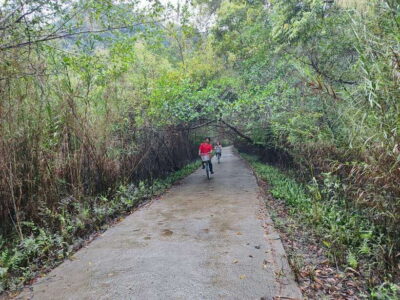
- Alpine-to-tropical change of scenery: from snow and mountain air down toward ferns, bamboo, waterfalls, and other lush growth.
- Lodge-based comfort with meals included: local lodges, 13 nights, with breakfast/lunch/dinner included.
- Support that matters on tough days: the operator’s team is praised for being responsive and caring, including support when a traveler fell sick.
Big Himalayan Views With a Route That Changes Mood
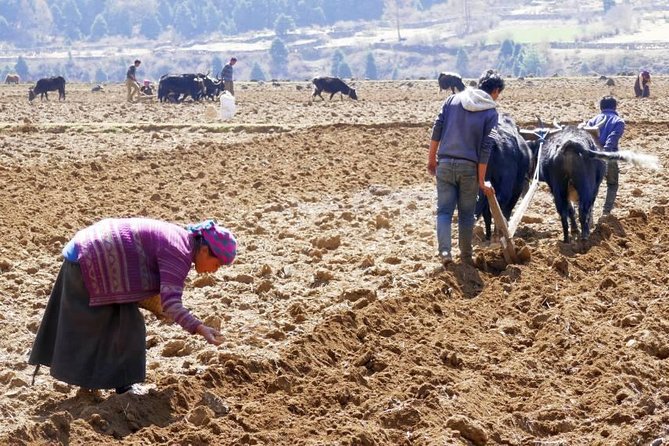
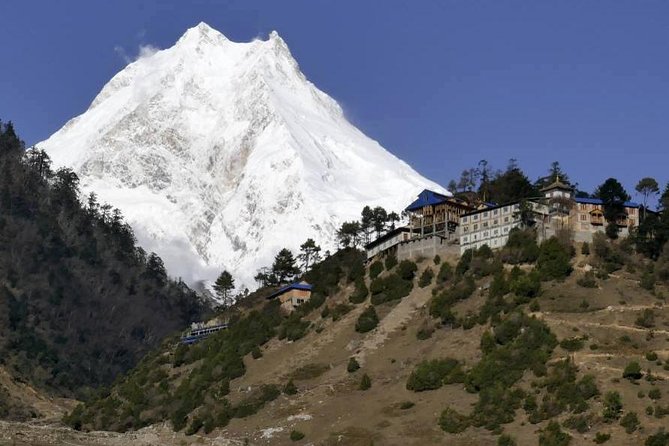
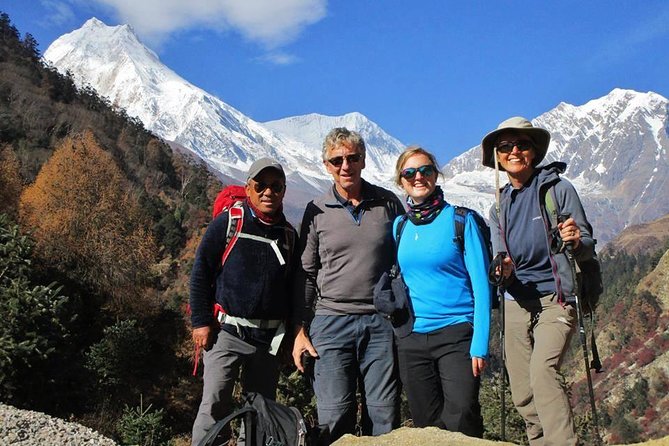
Manaslu Circuit trekking feels like a slow rewrite of your sense of what the Himalaya look like. You’re treated to towering peaks circling you, including Himal Chuli, Manaslu, Cheo Himal, and Himlung Himal. Then the trail does something you don’t always get on long treks: it doesn’t just climb. It also drops you from alpine zones down into lower areas where you start seeing a very different mix of plants and water features.
That change of mood is a big reason I think this trek works so well. You’ll likely feel it in your body first (breathing, pace, energy), and then you’ll see it in the scenery: the vegetation thickens, and the valleys start to look more humid and alive, with waterfalls and blue-green lake scenes described on the journey. It’s not one static postcard. It’s a progression.
There’s also a cultural payoff. You’re moving through Nepalese villages and valleys that sit on the edge of major trekking routes, and you eventually connect with the popular Annapurna Circuit trail. That last part matters: it adds energy to the final stretch because you’ll see other trekkers enjoying those Annapurna-range views.
You can also read our reviews of more tours and experiences in Kathmandu.



Price and Logistics: What You Pay For (and What You Still Need to Plan)
This trek costs $1,600 per person for a 17-day program based in Kathmandu. On paper, that can look like a lot until you break down what you’re getting: 13 nights in local lodges with breakfast, lunch, and dinner included, an English-speaking Sherpa guide who’s government trained/licensed, and staff support including salaries, insurance, equipment, and their food and accommodation.
You also get permits handled. The package includes special permit fees and TIMS permits plus other required official documentation. That’s one of those “quiet” parts of trekking planning where errors can waste time and money. Having it included lets you focus on the walking and acclimatization instead of chasing paperwork.
There are extras you’ll need to budget for:
- Nepal entry visa fee and your own personal travel insurance.
- Lunch and dinner in cities (you should allow about $10–$14 per meal in tourist restaurants).
- Beverages along the trail (soft drinks, mineral water, boiled water, beer).
- Tips for guide, porters, and driver (customary).
If you want a smoother ride in and out, the standard plan uses local buses for ground transfers. There’s also an upgrade option to private jeep (Kathmandu to Soti Khola) for $210 total and another upgrade (Tal to Besi Shar to Kathmandu) for $280 total. Those upgrade totals are for the group, not per person, so it can be worth considering if you’re traveling with others.
Your Trek Starts in Kathmandu: Prep Day and Simple Comfort
Most treks fail on the last step before the trail starts, so I like that you get a full preparation day in Kathmandu. Day 1 is arrival around 1,300 m (about 4,265 ft), and you’re based in Thamel with three nights on a bed-and-breakfast plan.
Thamel is a practical place to start because it gives you easy access to trekking shops, pharmacies, and money services. After a day or two, you can spend the prep day sorting your gear, buying any small extras you forgot, and getting your head right for long days on foot.
Then comes the transition day: you travel from Kathmandu down to Soti Khola (710 m) via Arughat, which takes 8–9 hours over about 145 km. This is a long road day, but it sets the trek’s rhythm: you go from city recovery mode into real trail time with your first overnight at lower altitude.
Soti Khola to Namrung: Finding Your Pace on the First Climb
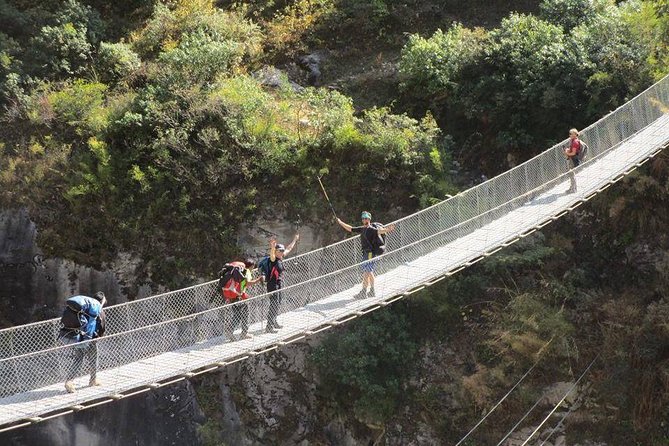
From Soti Khola, you start trekking toward Machha Khola (900 m) in about 6 hours over roughly 15 km. The next day you push to Jagat (1,340 m), a 6–7 hour walk and about 22 km. Then you continue to Deng (1,860 m), again about 6–7 hours and about 20 km.
This early stretch matters because it trains your legs for the days ahead. It’s long enough to take work seriously, but it’s not the highest terrain in the program yet. You’ll be learning your pace, your hydration habits, and the way your body reacts to elevation before you reach the higher villages.
Day 7 is Namrung (2,630 m). Expect 7–8 hours and about 19.5 km. This is usually where the trek starts feeling more Himalayan and less village-trail. The higher altitude also means you’ll likely feel the cold more at rest, especially in the mornings and evenings.
If you’re someone who tends to start fast, this section is where I’d practice starting calm. Save your legs for Larkya La later. The mountains are not going anywhere, but your energy can disappear quickly if you go too hard too soon.
Lho and Sama Gaon: The High-Village Middle and Acclimatization Work
After Namrung comes Lho (3,200 m) in about 6–7 hours and around 10 km. Then Sama Gaon (3,541 m) takes 5–6 hours and about 8.5 km. Notice the pattern: some days are shorter distances, but the altitude is rising.
Day 10 is your acclimatization day at Sama Gaon (3,541 m). This is a key part of the plan. You’re not just resting because you’re tired; you’re resting because your body needs time to adjust. On high pass treks, that matters more than comfort. It can be the difference between feeling steady and feeling punished.
Also, high villages tend to make the trek feel more “settled.” You’re spending nights at a consistent altitude band, so you get better sleep routines and more predictable daily rhythm. Just don’t treat acclimatization day as permission to ignore the cold. Move slowly, drink properly, and keep your expectations realistic.




Samdo to Larkya Phedi: When Snow Can Become Part of the Plan
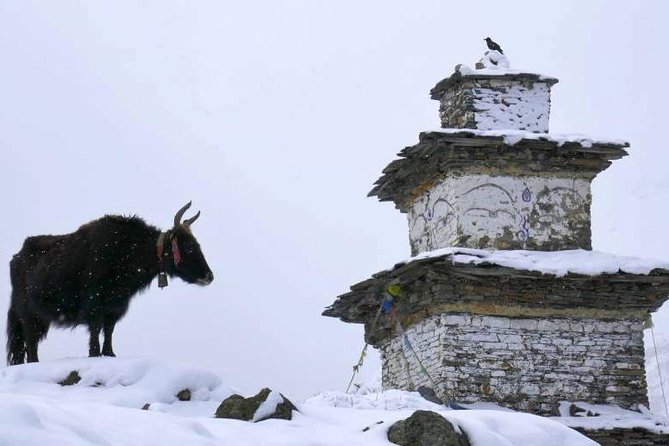
From Sama Gaon you go to Samdo (3,872 m) in 4–5 hours over about 7.5 km. Then you head to Larkya Phedi (4,500 m) in about 4–5 hours and around 7 km.
This is the part of the trek where “stamina test” becomes literal. Higher than 4,000 m, most people feel the effort more sharply: slower breathing, less appetite, and the need to pace every step. The program description specifically calls out crossing Larke La (often written as Larkya La) on snow, so it’s smart to assume winter conditions could show up depending on the season and weather.
Larkya Phedi is also a psychological checkpoint. You’re close enough that you can’t ignore the upcoming pass day, but you’re not on it yet. I suggest treating this day like the calm before a long exam: keep your gear organized, pack carefully, and plan to wake early.
Crossing Larkya La Around 5,215 m: The Long Day With a Real Payoff
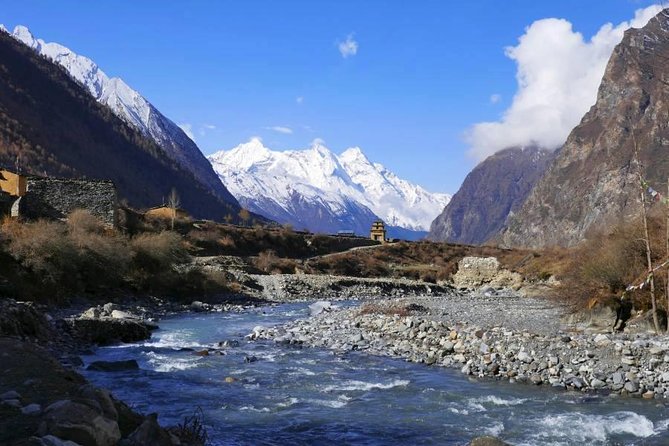
This is the headline day. You trek from Larkya Phedi (4,500 m) over Larkya La (about 5,215 m) and descend to Bhimphedi (3,590 m). The day is long: 10–12 hours, about 24 km.
A few practical realities to know:
- You’re going up to just over 5,200 m, where cold and altitude stress can hit hard.
- Even experienced trekkers often feel slower on the climb part, so don’t judge your pace by early minutes.
- The payoff comes after: the descent gives you a chance to regain control of your breathing and stride.
This day also ties into why this trek is special for views. You’re surrounded by major peaks, and crossing a high pass like this gives you a different perspective than lower trail sections. Then the descent brings you out of the snow and into lower terrain, where the world can feel warmer and greener.
When you finally drop to Bhimphedi, the key is recovery. This is where trekking discipline pays off: easy steps, keep moving to stay warm, and don’t rush tomorrow’s planning while you’re exhausted.
The Return Descent: Marsyangdi Valley to Tal, Then Back to Kathmandu
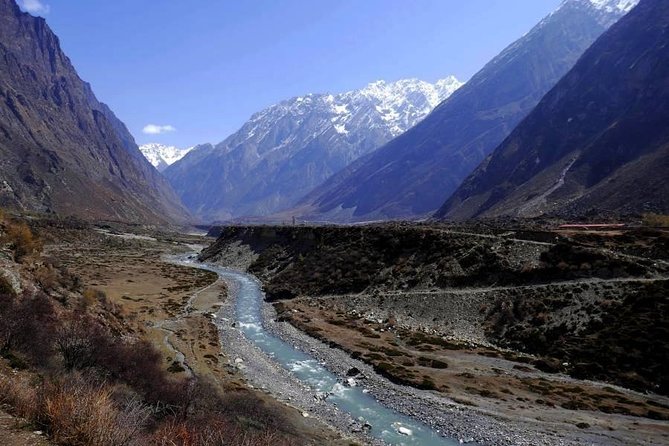
After the pass, you’ll work your way down. On Day 14 you reach Gho (2,515 m) in 6–7 hours covering about 22 km. Then Day 15 takes you to Tal (1,700 m) in 5–6 hours and about 15 km.
This is also where the trek’s ecological “afterlife” becomes clear. The description you’ll hear about the trek often mentions shifting into heavily forested areas and moving through a valley linked to the Marsyangdi River. That kind of descent changes what you notice: fewer high-alpine moments, more water sounds, more forest shade, and more life at the trail level.
Finally, you drive back. Day 16 is a long road day from Tal through Besi Shar back to Kathmandu around 1,300 m. It’s 8–9 hours and about 220 km.
So you end with both extremes: a high pass day, then an easier set of walking days, and then vehicle recovery. By the final Kathmandu night, you’re not just done with the trek. You’re ready to eat like a person who has a functioning appetite again.
Guide, Sherpa, and Porter Support: The Difference Between Hard and Miserable
This trek’s quality depends on people, not just peaks. You’ll have an English-speaking Sherpa guide, government trained/licensed. If your group size is more than 4 trekkers, you’ll also have one Sherpa guide-assistant. Porters are assigned as one porter for every two trekkers, which can be a big deal if you want to keep your own load reasonable over long days.
The human side is what the operation is praised for. One account highlights a warm welcome to the airport from Ngima and strong follow-through from Jangbu (also spelled Jangu). That same traveler described support that went beyond expectations when they got sick. Another account focused on how the guide and sherpa took great care of the group, making the trip feel smooth even when conditions weren’t perfect. And there’s also the reality check: a past trip faced landslide diversions after rain, with the team working through uncertainty.
You should still plan for your own health and decision-making, but having a guide and support staff who handle the unexpected makes a noticeable difference on a trek this long. This is especially true on the day you cross a very high pass.
Value Check: Meals, Snacks, Permits, and What Comfort Really Costs
One of the easiest ways to judge value on this trek is to look at what’s included in your day-to-day life.
You get:
- 13 nights in local lodges
- Breakfast, lunch, and dinner during the trek
- Energy supplies (Snickers, Mars, Bounty) on the trail
- First aid medicine kit
- Permits and official documentation
- Ground transfers Kathmandu to Soti Khola and Tal to Kathmandu by bus (with optional private upgrades)
That matters because it reduces “spending surprises” at altitude. You’re paying up front, and then you can focus your daily budget on beverages and personal items rather than full meals and transport logistics.
What costs extra:
- Drinks, including mineral water and beer
- City meals
- Your own travel insurance and Nepal entry visa
- Tips
My practical take: if you want to keep the whole trip predictable, this package helps. If you know you’ll want lots of bottled drinks every day, start budgeting now. Also remember that local lodge space and heating can be limited, so your comfort will depend heavily on layers you bring.
Packing and Fitness Reality: You Need Stamina, Not Just Motivation
This trek is for travelers with strong physical fitness. The walking schedule includes long days (up to 7–8 hours early on) and then one massive pass day (10–12 hours). You’ll also be at high altitude for multiple nights, including an acclimatization day and then continued climbing.
Pack for a cold pass. Even if snow isn’t guaranteed at every season, you should assume the pass area can be snowy given the trek description. Think about layering for daytime exertion and nighttime cold.
Also, don’t ignore the road days. The program includes two major ground transfer days with long travel times (8–9 hours each, plus one around 220 km). If you’re prone to getting travel-sick on buses, bring what you need and don’t plan to do intense sightseeing the day you arrive.
Should You Book the Manaslu Circuit Trek (17 Days)?
Book it if you want a classic Nepal trekking arc: big peak views, a very high pass crossing, and a route that changes from alpine conditions down into greener, lower valleys. If you like having meals and key logistics handled, this package structure makes the trek easier to manage.
I’d think twice if you’re not comfortable with high altitude pacing. The Larkya La day is the obvious challenge, but the lead-up is also demanding, and you’re trekking for close to three weeks total.
If you do book, choose your gear and hydration plan carefully, take the acclimatization day seriously, and be ready for a long, cold pass day that tests your stamina but also delivers on the scenery.
FAQ
What is the highest point on this trek?
The highest point is Larkya La (also written Larke La), at about 5,213–5,215 m.
How many days is the Manaslu Circuit Trek?
The trek is about 17 days total, including Kathmandu and travel days.
Where does the trek start and end?
It starts at Thamel, Kathmandu and ends back at the same meeting point.
Is Kathmandu included before the trek?
Yes. You have Day 1 arrival in Kathmandu, Day 2 preparation day, and 3 nights in Kathmandu on a bed-and-breakfast plan.
Are lodge stays and meals included?
Yes. During the trek you get 13 nights in local lodges with breakfast, lunch, and dinner included.
Do I need permits, and are they included?
Yes, permits are required. Special permit fees and TIMS permits (plus other required official documentation) are included.
How do you handle transportation to and from the trek?
Ground transfers Kathmandu to Soti Khola and Tal to Kathmandu are included by local bus. Private jeep/car upgrades are available for set total prices.
What should I budget for that is not included?
Not included are Nepal entry visa fee, your personal travel insurance, lunch and dinner in cities (about $10–$14 per meal), beverages on the trek, and tips for guide, porters, and driver.
Is this trip private?
Yes. It’s described as private, with only your group participating.