REVIEW · KATHMANDU
10 Days Annapurna Base Camp Trekking
Book on Viator →Operated by himalayan sanctuary adventure private limited · Bookable on Viator
One trek, two unforgettable mountain moments. This 10-day walk to Annapurna Base Camp pairs classic Himalayan scenery with real Nepali village life, and I love the way it mixes scenic flight time with manageable hiking days. I also like the included licensed English-speaking guide + porter support, which keeps the pace sensible. One consideration: the days around higher altitude still feel steep and stony, so you’ll want solid knees and patience.
You’ll start in Kathmandu with a pickup and hotel night, then fly to Pokhara to begin from Nayapul, stepping into tea houses for breakfast, lunch, and dinner during the hike. If you want the Annapurna Sanctuary without an open-ended schedule, this route is built for that time-wise goal. I also appreciate the coordination vibe showing up in past feedback, with mentions of guide Ganesh and driver Prem Ale for smooth handoffs.
In This Review
- Key Highlights You’ll Notice Fast
- Kathmandu Arrival and the First Night in Thamel
- Flying to Pokhara, Then Easing into Ghandruk
- Chhomrong: Big Mountain Angles and Stony Footwork
- Deurali and the Modi Khola West Bank: Bamboo and Steps
- The Annapurna Sanctuary and Base Camp at 4,130m
- Back Down to Bamboo: Leg-Day, But Manageable
- Jhinu Danda Hot Springs: Recovery With a Reward
- Pokhara Reset via Naya Pul and the Modi Khola Walk
- Fly Back to Kathmandu and Share the Farewell Dinner
- Price, Value, and What’s Actually Included
- Who Should Choose This ABC Trek (and Who Should Reconsider)
- Packing and Pacing Tips That Fit This Route
- Should You Book This Annapurna Base Camp Trek?
- FAQ
- What is the duration of this Annapurna Base Camp trekking trip?
- Where does the trek start and end?
- What is the meeting time?
- Are airport transfers included?
- How do you get to the trekking area?
- What are the maximum altitude and key landmarks?
- What kind of lodging do you get during the trek?
- Is a guide included?
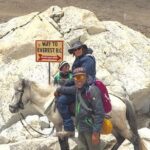
- Is there porter support?
- What costs are not included in the price?
Key Highlights You’ll Notice Fast
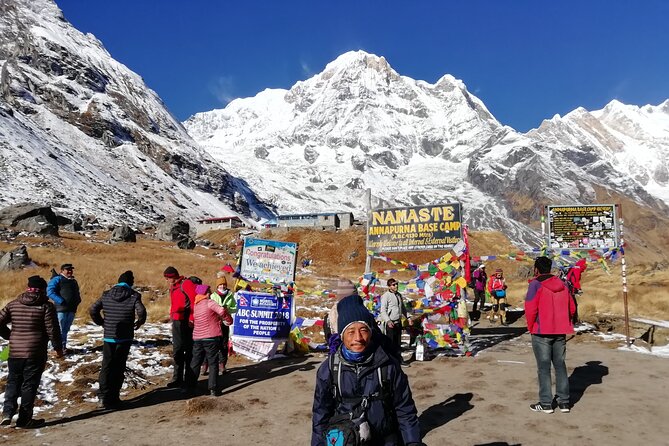
- Annapurna Base Camp views at 4,130m with the Sanctuary feeling when vegetation thins out
- Machhapuchhre (Fishtail) angle via Machhapuchhre Base Camp lunch stops
- Village trekking through Gurung communities, including Ghandruk’s cultural stop option
- Tea-house meals included on the trek days, so you’re not budgeting mid-hike
- Real support logistics: one porter for two people plus a government-licensed guide
Kathmandu Arrival and the First Night in Thamel
Your trip starts in Kathmandu, with a representative waiting outside the international arrivals terminal. You get transferred to a 3-star hotel and sleep in the city before the trek rhythm begins. In practice, this matters because Kathmandu is where you need to get organized fast: buy any missing essentials, confirm your boots feel good, and sort the last few paperwork items.
Starting time is set for 6:15am, so you’ll want an easy morning and an early bedtime the first night. You’ll likely be staying around Thamel, which is handy for last-minute shopping and supplies before you head uphill. Also, a quick human note from prior trip feedback: people have praised how smoothly airport pickup and transfers are handled, which reduces that first-day stress.
You can also read our reviews of more tours and experiences in Kathmandu.
Flying to Pokhara, Then Easing into Ghandruk
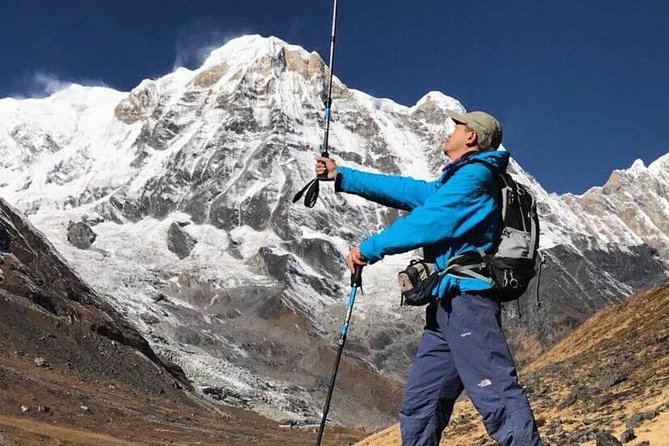
After breakfast, you’ll take the early scenic flight from Kathmandu to Pokhara, then drive to Nayapul to start trekking. The flight is timed so you can catch big views of the Himalayas from the right side of the plane, which is a nice bonus before you ever hit a trail.
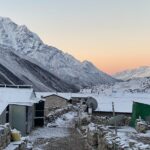
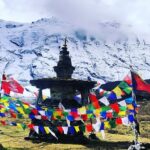
Nayapul to your first overnight tea house is a gentler intro. The trek starts mostly along wider paths/roads, with some uphill work near the end. This is a good setup day if you’re coming in with jet lag or you’re still finding your hiking stride. You’ll end at Ghandruk, a village largely inhabited by Gurung people. If you have time in the evening, there’s an option to visit the Gurung museum—an easy way to connect the dots between what you’re hiking through and how local communities live.
What to watch for on this day: don’t go out too fast just because it feels easy at first. The body is still adjusting, and the trail later gets more stair-like. Keep your effort steady and save your biggest push for the middle days.
Chhomrong: Big Mountain Angles and Stony Footwork
The next walking day brings you toward Chhomrong, with views over Annapurna South, Hiunchuli, Machhapuchhre (Fishtail), and Gangapurna. This is one of those stretches where the scenery feels close and the trail feels busy—there’s a pattern of steep descent, then uphill sections, then a gentler walk into the village.
Chhomrong sits on the lap of the Annapurna massif, so you get that classic “we’re really in it now” feeling. Expect another tea-house overnight, which helps because you’re not juggling meals on the fly. In real terms, this day is where your trekking rhythm locks in: pace, breathing, water planning, and foot care. If you’re prone to sore calves, take the downhill parts seriously and step short.
Deurali and the Modi Khola West Bank: Bamboo and Steps
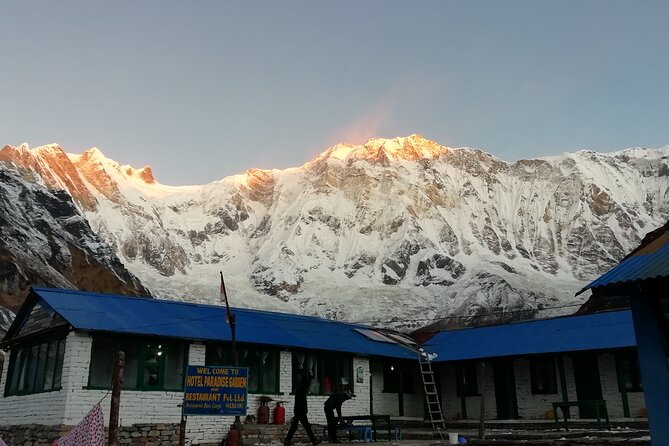
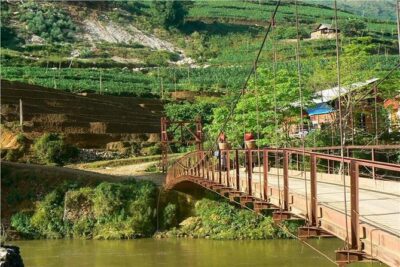
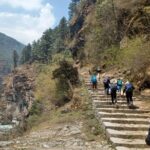
Day after Chhomrong, you head toward Deurali. The route crosses a river on a suspension bridge, then you start climbing on the west bank above the Modi Khola. This is where the trail starts leaning into that Annapurna style: ascending through valleys, dealing with stone stairs, and moving through bamboo forest stretches.
You’ll pass through Kuldi (listed around 2,340m) via Tilche and Sinuwa, then work along a steep stone staircase toward bamboo where lunch is served. After that, the trekking continues through dense bamboo forest, with occasional drops to cross tributary streams, but the overall movement keeps pulling upward.
You’ll also pass Hinko Cave on the way up and eventually reach Doban before finishing at Deurali (with Deurali noted as roughly 30 minutes away once you clear the higher cave area). The walk time is about 5 hours, but altitude makes “5 hours” feel different. This is a good day to use trekking poles if you have them and to focus on controlled breathing rather than speed.
The Annapurna Sanctuary and Base Camp at 4,130m
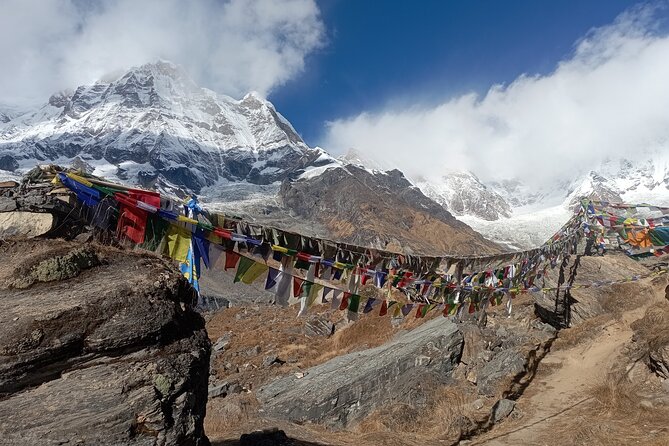
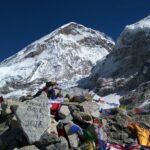
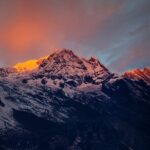
This is the day most people dream about: reaching Annapurna Base Camp (4,130m / 13,549 ft.). The approach starts with a climb through stone stair sections and a steady move toward Bagar. You continue toward an area described as an avalanche spot, and then you get the feeling that the mountains are suddenly much, much closer.
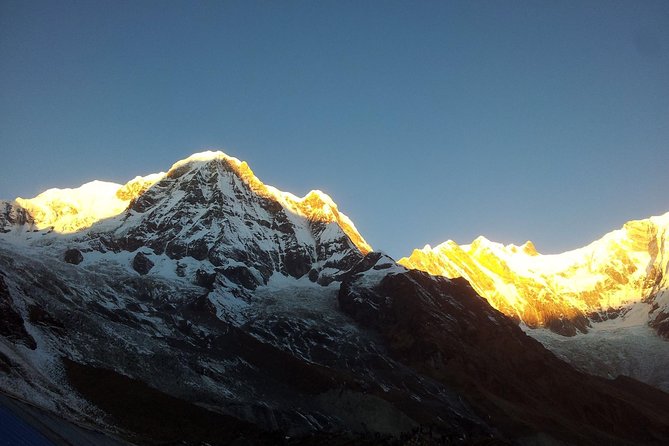
A key feature here is Machhapuchhre Base Camp (around 3,700m / 12,135 ft.), where lunch happens. After lunch, you push on to ABC as the trail widens and you enter the Annapurna Sanctuary area. In practical terms, the Sanctuary feeling is that shift from villages and thick vegetation to a more barren, glacier-and-rock dominated world. You’ll reach the base camp area to see the near-vertical south face of Annapurna rising above the Sanctuary.
This section also comes with a specific historical nod: the near-vertical south face has been associated with the 1970 expedition climbed by Don Whillans and Dougal Haston under an expedition led by Chris Bonington. Even if you’re not a climbing history person, it adds meaning to what you’re seeing—this is not just pretty scenery, it’s part of a real mountaineering story.
One more reality check: ABC day is noted as both exciting and the most difficult day, and that tracks with the terrain + altitude jump. You’ll want an early start, an easy first hour, and a firm plan for pacing. If you’ve ever rushed on hikes and paid for it later, this is the day to do the opposite.
Back Down to Bamboo: Leg-Day, But Manageable
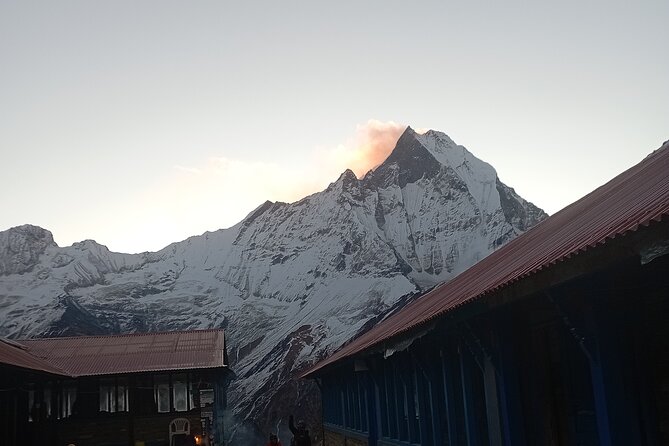
After your ABC overnight tea-house night, you retrace your route back toward Bamboo. The walk is mostly downhill and uses the same path you used to get up. This sounds like a break day, but downhill is its own workout—especially for knees and ankles.
Expect a longer walk (about 6–8 hours). You’ll pass back through landmarks like Machhapuchhre Base Camp and Deurali along the way. The upside is you know the route now, so there are fewer navigation moments. The downside is the legs can feel heavy as the day goes on. If you’re hiking smart, you’ll keep your steps short, avoid locking your knees, and use trekking poles for the worst of the stair-like sections.
Jhinu Danda Hot Springs: Recovery With a Reward
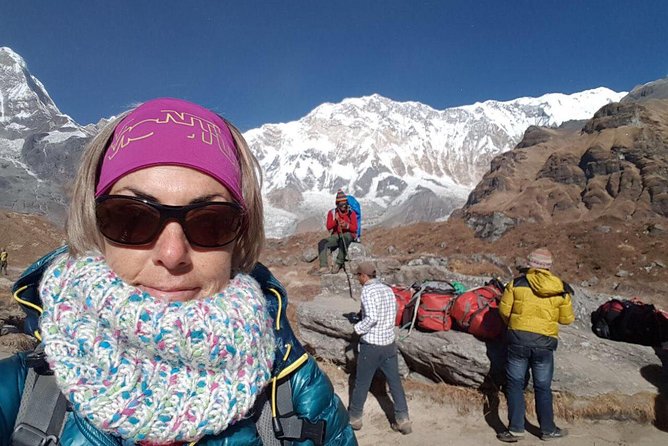
Next you head toward Jhinu Danda, a place known for natural hot water springs. The day starts with an ascent to Khuldigarh, then a descent toward Chhomrong Khola, and finally continues downhill to Jhinu Danda. The descent includes tricky stone steps, and this day is a good test of whether you’ve cared for your feet in the days before.
Once you arrive, you can spend time soaking in the natural hot springs to help aching bodies. That recovery moment is one of the best “payoff” experiences on the whole trek—after days of stairwork, you finally get to loosen up without thinking about altitude charts.
If you’re cautious about timing, plan your soak earlier rather than later so you’re not hurrying when you’re tired. Overnight stays are in tea houses, keeping your energy stable for the next travel leg.
Pokhara Reset via Naya Pul and the Modi Khola Walk
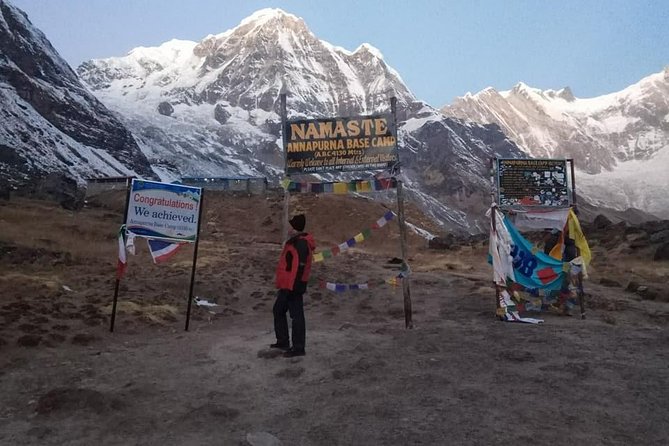
From Jhinu Danda, you trek toward Naya Pul, then drive back to Pokhara. This is the final big transition day: you’ll go through hill country and stop for lunch along the way (Birethanti is listed around 1,065m). Birethanti is a riverside hub for many treks starting and finishing, so it can feel like the point where walking stories collect.
The route details include passing through Shauli Bazaar (around 1,140m) and doing an easy walk along the Modi Khola riverbank to Birethanti. From there, it’s back to Nayapul and then a car ride into Pokhara. In the evening, you get free time to relax and do last-minute shopping. It’s a nice contrast: earlier days are steep and rhythmic, while Pokhara is about food, showers (where available in your own planning), and unwinding.
Fly Back to Kathmandu and Share the Farewell Dinner
You’ll fly from Pokhara to Kathmandu in the morning (about 25–30 minutes). After landing, your driver transfers you to your hotel in Thamel for an overnight. You get time for last-minute shopping, and then in the evening there’s a cultural dinner with a Nepali family to mark successful completion.
The second Kathmandu night is a good buffer. You’re tired, but you’re not rushing. Then on your final day, your driver takes you to the international airport about 3 hours earlier than your flight time, which is smart in a country where airport timing can be unpredictable.
Price, Value, and What’s Actually Included
At $1,290 per person, this trek price covers a lot of the expensive logistics that often surprise people on their own: private transfers, domestic flights (Kathmandu to Pokhara and back), and a licensed guide. It also includes tea-house/lodge accommodations with breakfast, lunch, and dinner during the trek, which is a big value because meals at altitude can add up quickly.
Included also means permits and paperwork support (TIMS permit listed) and the nitty-gritty: guide salary, food, drinks, accommodation, and insurance, plus porter support (one porter for two people). That porter ratio is practical. It won’t turn a trek into a walk in the park, but it can save your shoulders and keep you from arriving exhausted to camp-to-camp transitions.
Where the price doesn’t reach:
- Nepal entry visa fee (listed as $40 with 2 passport-size photos)
- International airfare and your travel insurance
- Lunch/dinner in Kathmandu and Pokhara
- Drinks like tea/coffee, bottled drinks, and sweets
- Hot shower and camera battery charging during the trek
- Tips for guide and porter
So the best way to think about it: you’re paying to reduce uncertainty. The structure is built around your core hiking experience, not around nickel-and-diming you each day for basic needs.
Who Should Choose This ABC Trek (and Who Should Reconsider)
This trek is described as suitable for people with moderate physical fitness, and it’s also framed for those who want to hike to the base camp but have time-wise restrictions. If you can handle steep stairs, high-altitude walking, and long days around the middle of the trek, you’ll likely feel good about choosing it.
It’s also a solid match if you like cultural stops and village life rather than only summit photos. Ghandruk’s Gurung culture option and the farewell dinner are part of the package identity.
Who might reconsider? If you want a totally easy hiking plan with minimal altitude impact, this isn’t the route for that. ABC days include the hardest effort, and downhill days still tax your legs.
Packing and Pacing Tips That Fit This Route
Keep your plan simple and practical:
- Bring layers for cold mornings at higher elevations. The trek climbs from well below to 4,130m.
- Use trekking poles if you have them, especially for the downhill from ABC back to Bamboo and the stairwork days.
- Expect limited extras: hot shower is not listed as included, and battery charging can cost extra.
- Carry cash for the items not included in the price, including the visa amount if you’re arranging it on arrival.
- Plan your pace around your breathing, not your ego. ABC is the day you’ll earn your reward, and you’ll feel it most if you go out steady.
One more practical note: the trek uses tea houses. That means your comfort is mostly about what you pack and how you manage the cold at night—not about finding hotel-grade luxuries.
Should You Book This Annapurna Base Camp Trek?
If your goal is the classic Annapurna Base Camp experience with a guided, supported setup—domestic flights, licensed guide, porter help, and tea-house meals—this tour is a strong fit. It’s especially attractive if you want a structured schedule that still feels like a real trek, not a rushed sightseeing loop.
Before you commit, do your homework on costs beyond the listed price: the visa fee, your insurance, and the reality that drinks, charging, and hot showers won’t be automatically included. If that math works for you, booking makes sense.
If you’d like, tell me your hiking background (and whether you’re going solo or with a partner), and I’ll suggest a realistic pacing plan for the hardest days.
FAQ
What is the duration of this Annapurna Base Camp trekking trip?
It’s listed as about 10 days.
Where does the trek start and end?
You start in Kathmandu, trek through the Annapurna region to Annapurna Base Camp, and then return via Pokhara back to Kathmandu.
What is the meeting time?
The start time is listed as 6:15am.
Are airport transfers included?
Yes. You get pickup at Kathmandu’s international arrival terminal and transfers during the trip, including a driver drop to the international airport on the final day.
How do you get to the trekking area?
You fly from Kathmandu to Pokhara, then drive to Nayapul to begin trekking.
What are the maximum altitude and key landmarks?
Annapurna Base Camp is listed at 4,130m (13,549 ft.). The route also references Machhapuchhre Base Camp around 3,700m.
What kind of lodging do you get during the trek?
You stay in tea houses/lodges during the trek, with breakfast, lunch, and dinner included during the trekking days.
Is a guide included?
Yes. The package includes an English-speaking trained, government-licensed guide, with guide food, accommodation, insurance, and salary covered.
Is there porter support?
Yes. A porter is included on a ratio of one porter for two people.
What costs are not included in the price?
Not included are Nepal entry visa fee, international airfare, travel insurance, lunch/dinner in Kathmandu and Pokhara, drinks (including tea/coffee and bottled drinks), hot shower, camera battery charging, and tips for the guide and porter.