REVIEW · KATHMANDU
Annapurna Base Camp Trek
Book on Viator →Operated by Red Carpet Journey · Bookable on Viator
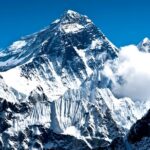
If you want mountains fast, this trek delivers. What I really like is the Annapurna Base Camp 360° panorama paired with a guided route through real village life, including Gurung communities like Ghandruk and Chhomrong. It’s also short enough to fit a vacation, but still feels like a full trek because you sleep in trekking lodges for most of the days.
The other thing that makes this package feel worth it is how the itinerary balances walking with built-in recovery stops—like Bamboo and Deurali nights—so you’re not doing all hard hiking every single day. One consideration: the trip includes a genuinely strenuous day (the push to Machhapuchre Base Camp and on to ABC), and the whole experience is weather-dependent, especially around the higher areas.
In This Review
- Quick hits before you go
- A 12-Day ABC Trek That Fits Real Schedules
- Kathmandu Orientation at Tribhuvan, Then Thamel at Your Own Pace
- Pokhara’s Lakeside Start: Fewa Lake, Tal Barahi, and Mountain Views When Lucky
- From Nayapul to Ghandruk: Forest Trail Steepness and Real Gurung Life
- Chhomrong and the Base of the Annapurna Massif: Where Trails Start Feeling Serious
- Bamboo, Himalayan Hotel, and Deurali: Cold, Damp Forest to River Views
- The Big Push to Machhapuchre Base Camp and Annapurna Base Camp
- Recovery on the Way Back: Downhill to Bamboo, Jhinu Hot Springs, and a Real Finish
- Pokhara Again, Then Thamel in Kathmandu: Souvenirs With Sore Legs
- Price and Logistics: What You’re Actually Buying for $810
- Who This ABC Trek Suits Best
- Should You Book This Annapurna Base Camp Trek Package?
- FAQ
- How long is the Annapurna Base Camp trek in this package?
- Where does the trek start?
- Is airport and hotel pickup included?
- Do I get a trekking guide?
- Are permits and entry fees included?
- Do meals come with the price?
- Is lodging included while trekking?
- Do I have a porter?
- What should my travel insurance cover?
- What’s not included in the $810 price?
- What happens if weather affects the trek?
Quick hits before you go
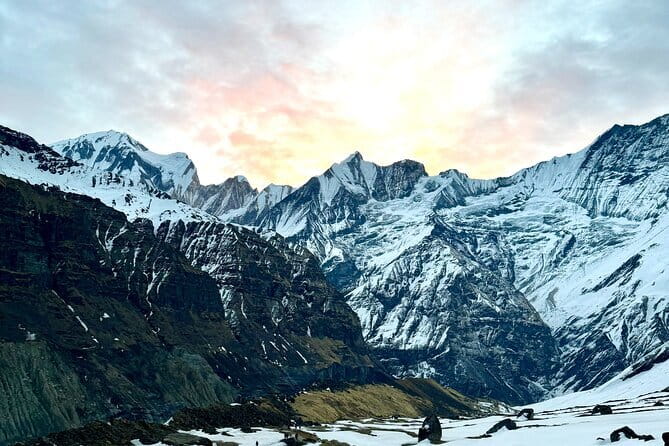
- ABC 360° views as the centerpiece: The final goal is Annapurna Base Camp itself, with standout panorama time built into the schedule.
- Gurung village immersion: Ghandruk and Chhomrong are key stops, and Ghandruk even has a Gurung Museum option if timing allows.
- A route through bamboo forests: You’ll pass through cold, damp bamboo sections before climbing toward viewpoints like the Himalayan Hotel.
- Hot springs at Jhinu Danda: A short walk from Jhinu Danda gets you to one of the region’s most popular natural hot springs.
- Guides, permits, and porter support: You’re not just handed a map—there’s a government-certified English-speaking guide, plus a shared porter (1 porter for 2 trekkers).
- Pokhara acts as your warm-up: Fewa Lake, Tal Barahi Temple, and mountain views (when skies are clear) help you ease into trek mode.
A 12-Day ABC Trek That Fits Real Schedules
This is a compact Annapurna Base Camp trek—about 12 days total with hotel nights in Kathmandu and Pokhara, then trekking-lodge nights in the Annapurna region. For many people, the value is not just the destination. It’s that you still get a “real” trek rhythm: village mornings, forest walking, and multiple nights in the highlands rather than doing a rushed day-hike.
You’ll also get two different worlds. You start with city orientation in Kathmandu, then shift to Pokhara’s lakeside pace before your first real climb begins. That matters because ABC is not a single-day photo-op. It’s a journey, and this itinerary helps you land softly before the hardest walking.
The trekking level is described as moderate fitness overall, but you should treat the day to Machhapuchre Base Camp and ABC as the serious one. Plan for sore legs, slower pace, and time to just sit and look when the views arrive.
You can also read our reviews of more tours and experiences in Kathmandu.
Kathmandu Orientation at Tribhuvan, Then Thamel at Your Own Pace
Day 1 is simple and useful. After you arrive at Tribhuvan International Airport, your representative picks you up and drops you at your hotel. Later, around 7 pm, your trekking leader does a pre-trip orientation and briefing, which is the moment to ask the practical questions you’ll care about later—how cold it gets, what pace to use, and anything you’re unsure about with gear and daily routine.
If you arrive early, the itinerary also encourages time in the Thamel area and a look at the Ason market—plus the option of a Nepali film. This is not “tourist chores for the sake of it.” It’s a low-stress way to get your bearings in Kathmandu before your trek energy shifts from traffic and sidewalks to trails and tea houses.
Overnight stays in Kathmandu are on a standard tourist hotel basis with breakfast (BB plan). That’s a nice buffer day before you start moving all day.
Pokhara’s Lakeside Start: Fewa Lake, Tal Barahi, and Mountain Views When Lucky
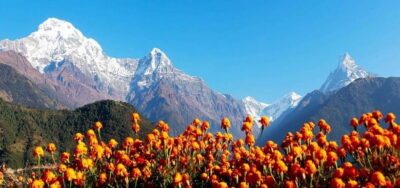
On Day 2 you drive to Pokhara, check in, and get a proper decompression day. The core activities here are Fewa Lake boating and a visit to Tal Barahi Temple. If the weather cooperates, you may catch views of Mt. Fishtail, the Annapurna range, and Mt. Dhaulagiri from the north.
This day does more than entertain. It gives your body a chance to settle after Kathmandu altitude and travel, while your mind gets used to the idea that the mountains are the main event. Pokhara’s lakeside area also makes it easy to find light meals, souvenirs, and street snacks—helpful when you’re testing what your stomach likes before trek food becomes your new normal.
Evening is left fairly loose: leisure time, lakeside strolls, and shopping. For value, this is smart. You’re paying for the trek, not an artificial schedule in Pokhara.
From Nayapul to Ghandruk: Forest Trail Steepness and Real Gurung Life
Day 3 begins with a drive to Nayapul (the trek’s origin point), then you start hiking toward Ghandruk via Birethanti. The route is described as dense forest plus some steep terrain early on, and Ghandruk is one of the most significant Gurung settlements in Nepal.
What I like about placing Ghandruk early is that it gives you culture before you’re exhausted. You get a village atmosphere, not just a waypoint. The itinerary also notes a possible Gurung Museum visit if you have time, which is an easy way to connect the scenery you’re seeing with the people who have lived here for generations.
Also, remember the physical feel of Day 3 matters. Dense forest and early steepness can trick you. You’ll be tempted to “push it,” but pace is everything on ABC-type treks. Keep it steady so the climb doesn’t steal your energy too early.
Overnight is in Ghandruk, usually in a trekking lodge or similar setup along the trail route.
Chhomrong and the Base of the Annapurna Massif: Where Trails Start Feeling Serious
Day 4 focuses on the transition from village comfort into a more athletic day. You start early, reach Kimrung Danda, then deal with a steep descent to Kimrung Khola. After that, you’re climbing again—there’s another steep ascent after crossing the river—before you reach Chhomrong via a gentler walk.
Chhomrong is special because it sits at the base of the Annapurna massif, so the scenery feels closer and more dramatic. You’re also building your confidence with switchback-style effort, because this day teaches your legs the rhythm they’ll need later.
If you want one practical trick for days like this: treat descents like controlled workouts. Don’t let your knees take the entire impact. Short steps and frequent pauses keep you hiking longer.
You stay overnight in Chhomrong.
Bamboo, Himalayan Hotel, and Deurali: Cold, Damp Forest to River Views
Day 5 and Day 6 are where the trek shifts character. On Day 5, you descend through about 2,500 steps to Chhomrong Khola, climb up to Sinuwa, pass through forest, reach Kuldihar, and then continue to Bamboo via easier downhill walking.
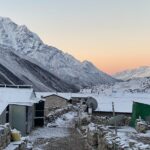
Day 6 keeps the altitude mood steady. Today’s trek is through a dense, cold, damp bamboo forest, with steep ascents leading you to the Himalayan Hotel—an iconic landmark for trekkers. After you reach the hotel area, the forest opens, and you can enjoy views toward a glacial river below. You then climb through a drier section, continue to Hinku Cave, and finish with a descent near the river followed by a gentle ascent to Deurali.
A couple things you should expect here:
- You’ll likely feel damp and cool more than you expect from a “warm trekking” idea.
- Tea-house breaks become your friend. Use them. Eat, drink, warm up.
This is also one of the best stretches for noticing changes in trail mood—bamboo density, river sounds, and that feeling that the mountains are growing bigger every day. Overnight is in Deurali.
The Big Push to Machhapuchre Base Camp and Annapurna Base Camp
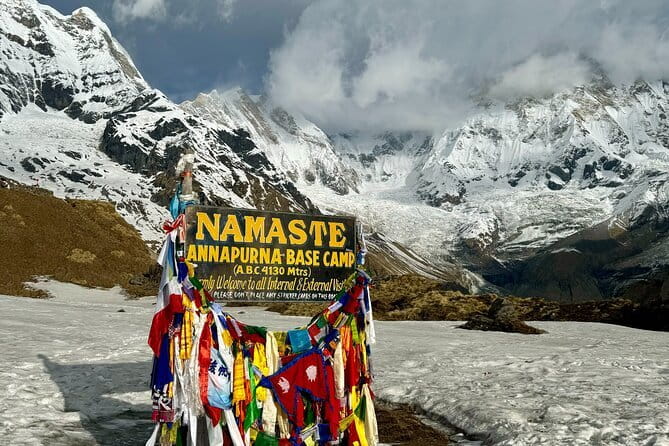
Day 7 is the headline day, and it’s clearly marked as the most strenuous. You start early to Bagar, then hike to Machhapuchre Base Camp (MBC). From there, you continue on to Annapurna Base Camp (ABC), your main highlight.
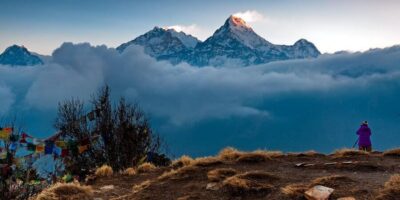
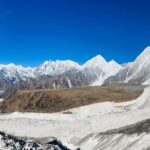
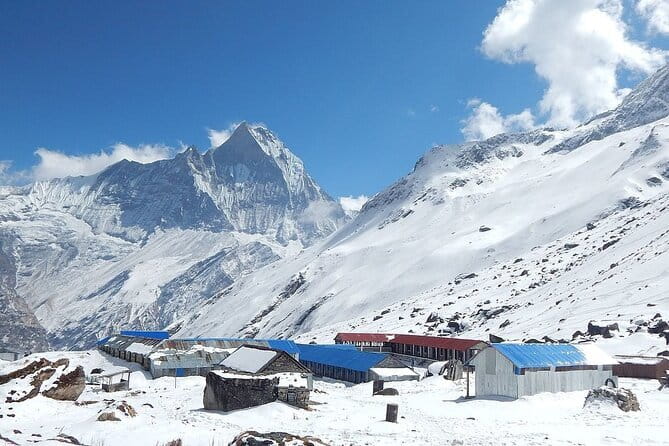
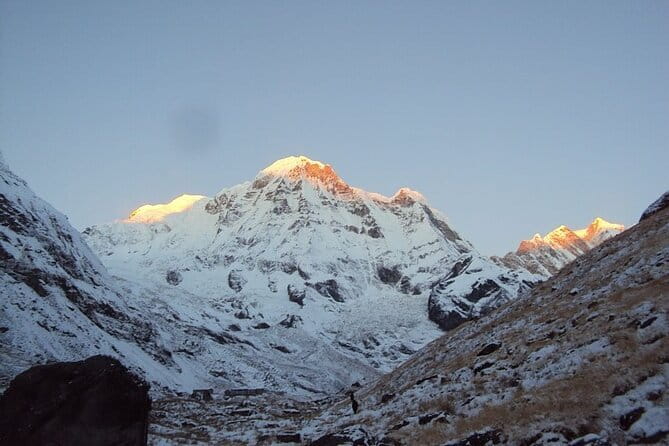
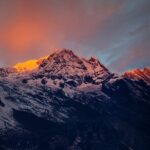
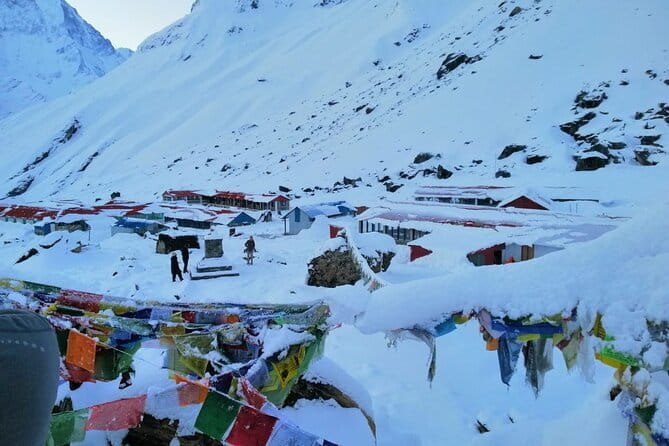
The itinerary mentions sparse vegetation and wide trails as you approach ABC via the Annapurna sanctuary area, and it promises the payoff: a 360° panorama from base camp. That’s exactly the kind of view you’re working for—big mountain walls in every direction, not just one angle.
This is also the day where your mindset matters. If you only think about exhaustion, you’ll miss the best parts: the steady progression, the small breath-catching moments, and the way the air changes as you gain height. Build in tiny goals. Reach the next lodge. Stop when you’re out of wind. Let the views do the rest.
If you like spotting wildlife, you might be in luck. Reviews for this trek mention the chance to spot a yak or two along the way. You can’t count on it, but the odds feel better on ABC routes than in many other trekking areas.
Overnight is in Annapurna Base Camp, which is as close as you’ll get to the “mountain at your doorstep” feeling on this itinerary.
Recovery on the Way Back: Downhill to Bamboo, Jhinu Hot Springs, and a Real Finish
Day 8 is essentially your “get back your legs” day. You retrace your way to Bamboo, and the plan describes it as primarily downhill and relatively easy. That doesn’t mean effortless. Descents still take energy from your calves and knees. But it’s a good mental reset after the intensity of Day 7.
On Day 9 you move toward Jhinu Danda. The route includes an uphill segment to Kuldighar, a descent to Chhomrong Khola, then continuing on to Chhomrong and climbing those 2,500 steps again. After that, you descend to Jhinu Danda, and then a short walk (about 20 minutes) takes you to the natural hot springs.
This is one of the strongest “value” moments on the whole trip. Hot springs are not just a reward. They also help your body feel human again after walking days where your legs do most of the work.
Day 10 continues with a bigger movement shift: you trek downhill from Jhinu to Naya Pul (about 6 hours), then drive back to Pokhara and transfer to your hotel. This is the transition from trail life to city-rest mode.
Pokhara Again, Then Thamel in Kathmandu: Souvenirs With Sore Legs
Day 10 overnight is in Pokhara. You then return to Kathmandu on Day 11 with an early drive. Once you’re back, you can spend time in Thamel for souvenirs and Nepali handmade products.
This is a surprisingly important part of the experience. A trek like ABC can get mentally heavy as you concentrate on steps, breath, and weather. Having an easy, flexible final day gives you a way to process everything you just did, plus do the fun little purchases you’ll actually use or gift.
Day 12 is airport-focused. Your representative drops you off at the airport about 3 hours before your scheduled flight.
Price and Logistics: What You’re Actually Buying for $810
At $810 per person for about 12 days, this package covers a lot more than “a guide and a dream.” Here’s what’s included:
- 2 nights in Kathmandu and Pokhara at standard tourist hotels with breakfast (BB plan)
- 8 nights in trekking lodges / tea houses
- Daily breakfast, lunch, and dinner during the trek
- A private car for airport and hotel transfers
- A long-distance tourist bus for Kathmandu–Pokhara–Kathmandu
- A government-certified English-speaking trekking guide
- Trekking permits and entry fees
- A shared porter setup (1 porter to 2 trekkers) plus a duffel bag
- A Nepali cultural farewell dinner in Kathmandu with local cuisine and performances
That mix is why people who dislike planning often choose packages like this. You’re paying for planning time and execution: meals, lodges, permits, and daily logistics.
What isn’t included is where you should watch your budget:
- Personal items like drinks and laundry
- Tips for guide and porter
- Trip cancellation charges
- Any trip extension due to unforeseen circumstances
- Travel insurance must cover helicopter rescue for emergencies
One more practical point: the trek requires good weather. If conditions force changes, you’re offered an alternate date or a full refund. That’s not a small detail. It’s the reason ABC planning needs some flexibility.
Who This ABC Trek Suits Best
This itinerary is best for you if you want a classic ABC trip without spending weeks organizing details. It’s also a good fit if you like a mix of village culture, forest walking, and a big final payoff at base camp.
It’s not ideal if you hate strenuous days. Day 7 is the hardest, and you’ll feel it. Also, since the trek includes cold, damp bamboo forest sections, expect the temperature to matter a lot, not just the sunshine.
If you want a trek where your guides can help you focus (and multiple reviews credit individuals like Khem and Shree for a smooth, simple experience), this package is built for that kind of support.
Should You Book This Annapurna Base Camp Trek Package?
I’d book this if you want high-value guidance and a structured trek that still feels authentic: Gurung villages like Ghandruk and Chhomrong, forest-to-river scenery, a real hard day to reach Machhapuchre Base Camp and Annapurna Base Camp, then a satisfying finish with Jhinu hot springs.
Skip it (or at least plan carefully) if you’re unsure about the strenuous Day 7 effort or you can’t be flexible with weather. Also, budget extra for drinks and tips, because those are the usual “surprise” categories.
If you want ABC without DIY stress, this one is a solid choice.
FAQ
How long is the Annapurna Base Camp trek in this package?
The trek is listed as 12 days (approx.), with additional hotel stays in Kathmandu and Pokhara.
Where does the trek start?
The trekking portion starts from Naya Pul (with a drive from Pokhara), and the route then goes toward Ghandruk.
Is airport and hotel pickup included?
Yes. The package includes private car transfers for airport and hotel transfers, and a representative picks you up after arrival in Kathmandu.
Do I get a trekking guide?
Yes. You’ll travel with a professional, government-certified, English-speaking trekking guide.
Are permits and entry fees included?
Yes. Trekking permits and entry fees are included in the package.
Do meals come with the price?
Yes. During the trek you get daily breakfast, lunch, and dinner. Kathmandu and Pokhara hotel stays are on a BB plan.
Is lodging included while trekking?
Yes. You get 8 nights in trekking lodge/tea house accommodations in the Annapurna trekking areas.
Do I have a porter?
Yes. You get a trekking porter on a shared basis (1 porter to 2 trekkers), and you also receive a duffel bag.
What should my travel insurance cover?
The data says your insurance must cover helicopter rescue in case of emergency.
What’s not included in the $810 price?
Not included are personal items such as drinks and laundry, tips for the guide and porter, trip cancellation charges, and any additional costs for extensions due to unforeseen circumstances.
What happens if weather affects the trek?
The experience requires good weather. If it’s canceled due to poor weather, you’ll be offered a different date or a full refund.