REVIEW · KATHMANDU
Annapurna Base Camp Trek
Book on Viator →Operated by Nepal High Trek & Expedition Pvt. Ltd · Bookable on Viator
Early mornings, big peaks, and real village life. The 7-day Annapurna Base Camp trek from Nayapul takes you past Ghandruk and Chhomrong up toward the Annapurna sanctuary, with big-picture views of peaks like Annapurna South and Machhapuchhre. I love the full-service logistics that handle permits (ACAP/TIMS), ground transport, and three meals a day, so you’re not constantly problem-solving. I also like that real guide names come up often, including Suraj, Anos, and Laku, and the emphasis stays on friendly, organized support. One consideration: this is an early-start trek (meeting time is 4:45 am) with long hiking days, so plan for steady moderate fitness.
You also get an overnight in Pokhara first, which helps you ease in and see the famous Fish Tail silhouette of Machhapuchhre before the first trail day. And because seasonal fruits are included during the trek, you’re less likely to run low on energy between meals. three meals daily plus trek accommodation makes the whole rhythm easier to manage.
In This Review
- Key Points I’d Prioritize Before You Go
- What This Annapurna Base Camp Trek Is Really Like
- Price and Logistics: What Your $699.67 Covers
- Day-by-Day: From Ghandruk to Base Camp and Back
- Day 1: Pokhara Views to Ghandruk Trail Day
- Day 2: Ghandruk to Chhomrong via Ridges and River Valleys
- Day 3: Chhomrong to the Modi River Gorge Bamboo Area
- Day 4: Into the Annapurna Sanctuary Near Himalaya Hotel and Hinko Cave
- Day 5: Reach Annapurna Base Camp, Then Down to Bamboo
- Day 6: Chhomrong Back Route Plus Jhinu Danda Hot Springs
- Day 7: Finish at Siwai and Return to Pokhara (with a Museum Stop)
- The Most Praised Parts: Guides, Organization, and a Real Support System
- Hiking Notes for a Moderate Trek (How to Make It Feel Easier)
- Food, Lodging, and What to Pack for the “Not Included” Stuff
- Who This Annapurna Base Camp Trek Suits Best
- Should You Book This Annapurna Base Camp Trek?
- FAQ
- Where does this Annapurna Base Camp trek start?
- How long is the Annapurna Base Camp trek?
- What time is the meeting time?
- Is pickup included?
- Are meals included?
- What permits are included?
- Is accommodation included?
- What about hot water, showers, and bottle water?
- What fitness level do I need?
- Is this a private tour?
- Is the trek dependent on weather?
Key Points I’d Prioritize Before You Go
- Licensed mountain guiding and real human support: The program includes a government license holder mountain guide, and past trips highlight guides like Suraj, Anos, and Laku.
- Permits taken care of: Your Annapurna Conservation Area permit (ACAP) and TIMS card are included, which saves you time and hassle.
- Food and lodging are built in: Breakfast, lunch, and dinner plus 7 nights on the trek mean you can focus on walking instead of logistics.
- Classic ABC route flow through villages and forests: Ghandruk, Chhomrong, Sinuwa danda, Modi River gorge bamboo areas, and the base camp region all appear on this itinerary.
- Hot-spring payoff at Jhinu Danda: The trek’s return route includes Jhinu, a welcome recovery stop.
- Early start plus weather dependence: Expect mornings to begin at 4:45 am and know the trek requires good weather.
What This Annapurna Base Camp Trek Is Really Like
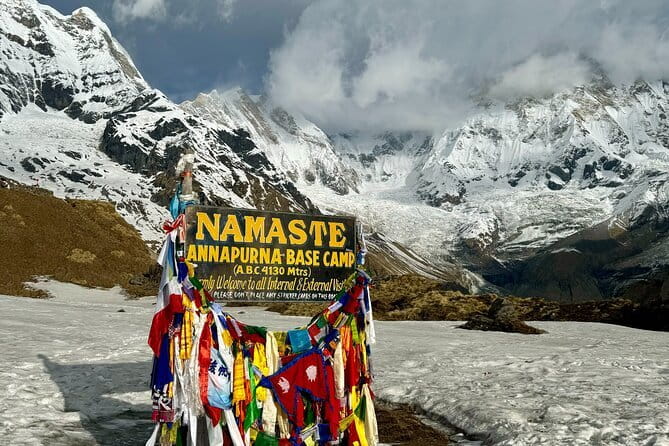
This trek is a steady climb from farmland into forest, then higher into the Annapurna base camp zone where the views and the feeling of accomplishment hit at the same time. You’re moving through recognizable stops—Ghandruk, Chhomrong, bamboo areas near the Modi River gorge—and the pace is shaped around reaching base camp and then working your way back with a couple of rewarding detours.
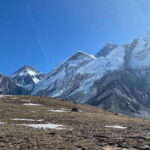
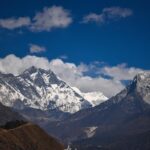
The best part is that it doesn’t feel like a theme-park hike. You pass Gurung villages, terraced fields, and rhododendron forests, then work toward the zone with towering peaks and glaciers mentioned as the highlight. Even if you’re not chasing records, the rhythm is clear: walk, eat, recover, repeat.
You can also read our reviews of more tours and experiences in Kathmandu.
Price and Logistics: What Your $699.67 Covers
For $699.67 per person, what you’re buying is a full trek package rather than just “a guide and vibes.” Your inclusions are practical and meaningful: three meals per day during the trek, government-licensed guiding, ACAP and TIMS permits, 7 nights accommodation on the trail, and ground transportation for the trek segments (Pokhara to the starting area and the return back to Pokhara).
Pickup is offered, which matters in Nepal because getting from where you sleep to where the trek starts can be the difference between a smooth day and a stressful one. You also get seasonal fruits during the trek, which sounds small, but it helps when you’re burning calories and not always near a place with easy snack options.
So what’s not covered? Typical extras like bar bills, laundry, phone calls, battery recharge, bottle of water, hot water, and showers. That doesn’t ruin the value, but it does mean you should budget for small purchases along the way and plan for days when “comfort items” are limited.
Day-by-Day: From Ghandruk to Base Camp and Back
Here’s how the week flows, stop by stop, and what each segment tends to feel like for your legs and your eyes.
Day 1: Pokhara Views to Ghandruk Trail Day
You start with an overnight in Pokhara and a morning breakfast, with views over the Annapurna Himalayan range and Machhapuchhre (the Fish Tail). Then you drive beyond Pokhara to begin the first walking day. Expect a short drive with big first impressions, then a trail that moves through terraced fields and rhododendron forests toward Gurung village scenery, finishing at Ghandruk.
Why this day works: it’s your on-ramp. You get the Nepal “starter hit” of views and culture before you’re fully committed to the climb.
Possible drawback: if you’re not used to early mornings, this first day can feel like it comes fast because the overall meeting time is 4:45 am for the experience.
Day 2: Ghandruk to Chhomrong via Ridges and River Valleys
From Ghandruk you walk along a gradual path, then climb toward Kimrong Danda (a ridge). You’ll break, then descend through cooler, forested trails to reach the Kimrong River and a farm-village area before continuing to Chhomrong.
Why this day matters: ridges and river valleys mean you’ll feel your legs work in different ways—up on one side, down on the other—so this is where you learn your trekking rhythm.
What to watch: long days. Even if you’re mentally ready, descending after a ridge climb can be tough on knees, especially if you step too fast.
Day 3: Chhomrong to the Modi River Gorge Bamboo Area
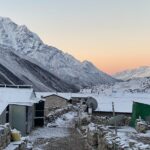
After Chhomrong, the route goes downhill to a bridge, then uphill to Sinuwa danda (ridge). From there, the trail winds through deeply forested areas with ups and downs until you reach a bamboo area within the Modi River gorge.
This is a “quiet beauty” day: the feature isn’t just one view, it’s the mix of shaded trail and constant motion. When the footpath dips and rises, you’ll likely appreciate having meals already handled and not having to hunt for food.
Day 4: Into the Annapurna Sanctuary Near Himalaya Hotel and Hinko Cave
This day pushes you closer to the trek’s highlight zone. The trail takes you close to Himalaya Hotel, located next to a large Hinko cave, and you’ll be walking beneath Annapurna South and Huin-Chuli peaks. From Himalaya Hotel, you descend to the next area for the night (the itinerary describes arrival near the Annapurna Mountain Range zone).
Why it feels special: you start seeing the peaks in a more “all around you” way as you near base camp region. The day also has that in-between feeling—close enough to sense the summit dream, not yet at the final target.
Consideration: walking time can be significant. The day is described as a 13-hour trek, so bring a steady pace and don’t let photos slow you into fatigue.
Day 5: Reach Annapurna Base Camp, Then Down to Bamboo
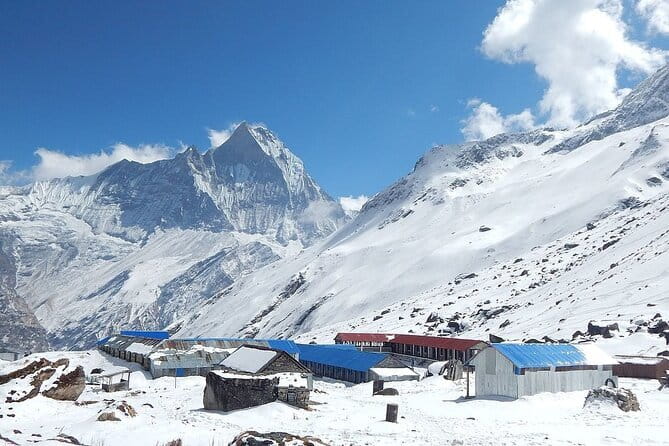
You enjoy time in the base camp area, with a long walk that’s described as near six hours, including downhill with short ups. Then you head to Bamboo and return into tall tree lines and lush vegetation for the night.
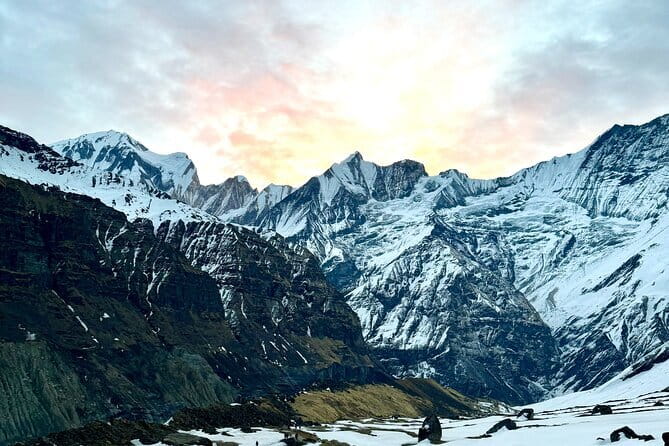
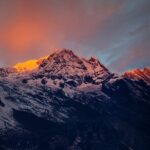
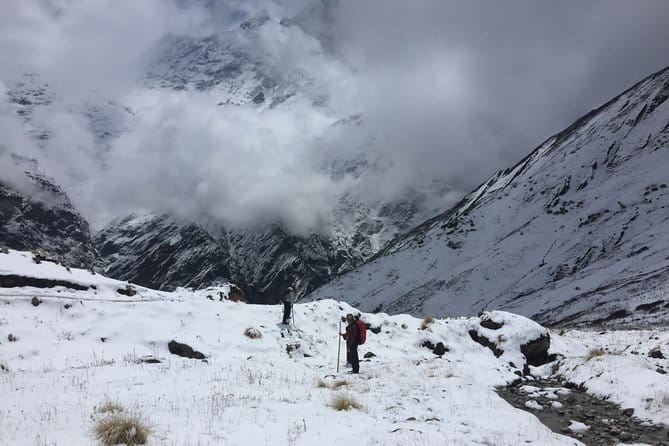
This is the day you plan around your expectations. Base camp time is where the “this is real” moment happens: towering peaks, glacial scenery, and the sense of achievement that comes with finally reaching the target. The overview specifically calls out sunrise views from base camp as a memorable highlight, so time your energy and clothing layers for early conditions.
Practical note: after base camp, your day turns into a recovery mission. Descending can be easier on your breathing than the ascent, but harder on your body if you rush.
Day 6: Chhomrong Back Route Plus Jhinu Danda Hot Springs
You return with ups and downhill trail back toward Chhomrong, then the route diverts to a new trail heading to Jhinu Danda. Jhinu is on a ridge with grand scenery noted in the itinerary description, and it’s your hot-spring reset point.
Hot springs are not a luxury on a trek like this—they’re smart recovery. Even if you don’t soak for long, the change of rhythm helps your legs bounce back for the final day.
Day 7: Finish at Siwai and Return to Pokhara (with a Museum Stop)
On your last day, you trek for about 4 hours to Siwai, then drive back to Pokhara (about 2 hours). The morning includes a pleasant walk downhill within low and warm farm areas, plus a scenic drive through Pokhara, with a Pokhara Museum stop included.
This ending makes sense. It’s not just “walk until you collapse.” You’ve got a final descent, a ride, and then a bit of time that feels like you’re back in civilization.
The Most Praised Parts: Guides, Organization, and a Real Support System
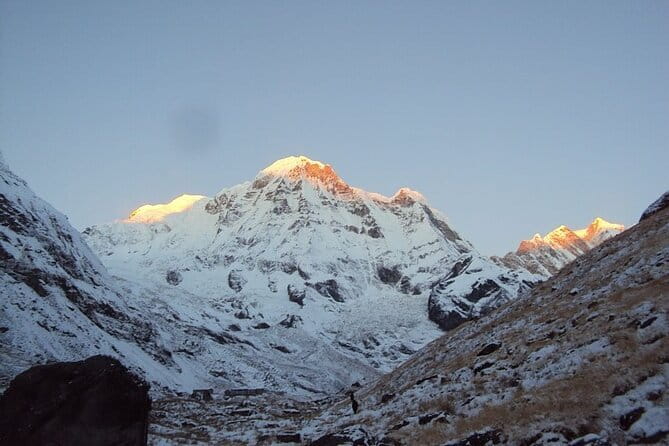
The biggest repeat theme behind strong trip experiences here is the guide team. Names that show up include Suraj, Anos, and Laku, and the way they’re described points to something you can feel in real life: planning that protects you from chaos, and friendly energy that makes the hard bits feel manageable.
Two specific strengths come through clearly:
1) Meal and accommodation planning so you’re not stuck making last-minute decisions in a small mountain guesthouse.
2) Flexibility and care—including route adjustments when the group’s needs differ from the default plan.
Porters also get credit in past experiences, with examples like Sonam and Necha being mentioned as helpful and caring. You should treat this as a hint, not a guarantee: if you want a particular guide or porter team, the practical move is to request in advance.
Hiking Notes for a Moderate Trek (How to Make It Feel Easier)
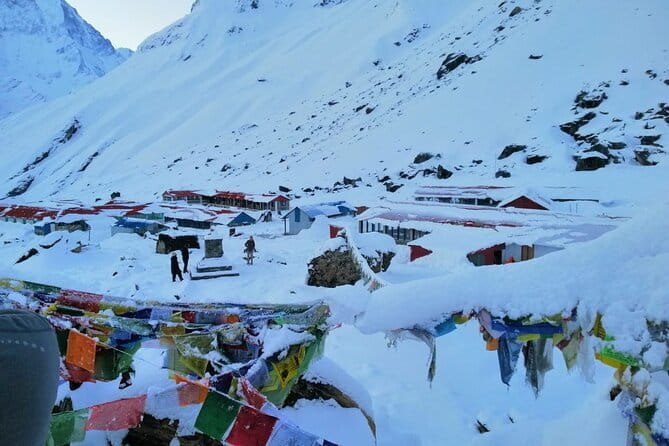
The trek is described as a moderate trekking region, and it’s a good fit if you can handle long stretches of walking and some steep sections without needing constant breaks. Since the itinerary includes extended trekking days on multiple stages, your main job is to keep a steady pace and avoid burning energy early.
A few things to plan for based on the itinerary flow:
- Expect ridges (Kimrong Danda, Sinuwa danda) where you’ll feel the climb.
- Expect downhill sections after villages or river crossings, where knees can complain.
- Expect forest walking in parts of the route, which can be cooler but can also mean fewer sweeping views on that particular hour.
Also, this trek requires good weather. That doesn’t mean it’s fragile, but it does mean your best experience comes when you respect the conditions and don’t treat every day like guaranteed sunshine.
Food, Lodging, and What to Pack for the “Not Included” Stuff
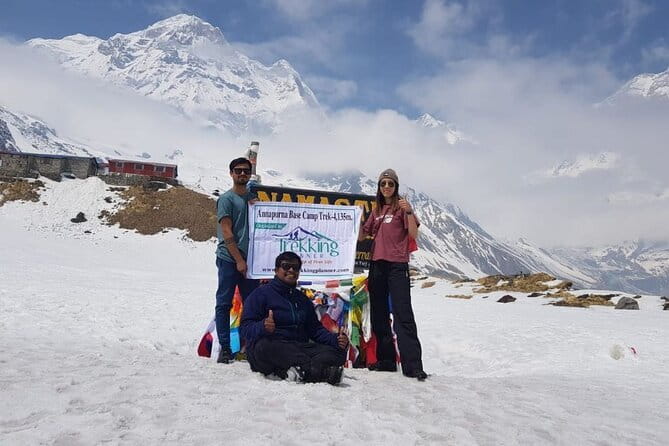
Meals are handled: breakfast, lunch, and dinner during the trek, with seasonal fruits added along the way. That’s a big value piece because it reduces decision fatigue when you’re tired and hungry.
But remember what’s not included: hot water, shower, battery recharge, bottle of water, laundry, and phone call charges. If you rely on charging devices, bring a power strategy (like a power bank) since you can’t assume charging is easy or free. If you like washing up daily, plan for that expectation gap before you arrive.
What’s wise to pack based on how this trek is structured:
- A warm layer for early mornings and higher areas (sunrise is called out as a highlight).
- A light rain layer since mountain weather changes fast.
- Walking shoes that can handle long downhill days.
- A small cash stash for extras that aren’t included.
Who This Annapurna Base Camp Trek Suits Best
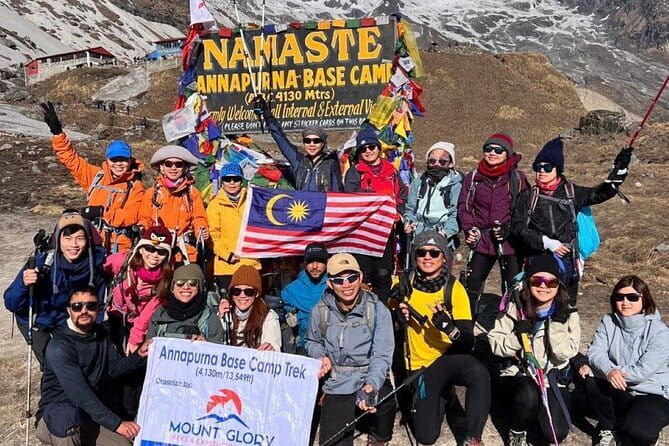
You’ll likely love this trek if you want a classic ABC route with village culture and a base camp finish that feels earned, not rushed. The included permits and guiding make it a good choice if you prefer to focus on walking instead of paperwork.
It also fits well if you like a structured trip: 7 nights on the trek, meals handled, ground transportation covered, and pickup offered. On a multi-day trek, that kind of structure prevents the common stress spiral of “we’re lost, we’re late, where do we eat?”
This might be less ideal if you want a shorter or more flexible timeline without early mornings. The meeting time of 4:45 am and the long days on several dates mean you should be ready for a full-week commitment.
Should You Book This Annapurna Base Camp Trek?
If your goal is a well-run, end-to-end Annapurna Base Camp experience at a price that includes the heavy admin items (ACAP/TIMS), meals, accommodation, and transport, this is a strong option. The guide support is the deciding factor here, and names like Suraj, Anos, and Laku show up as examples of attentive, friendly professionals who keep the trip moving while looking out for the group.
I’d book it if:
- You’re comfortable with moderate trekking days and early starts.
- You want someone else to handle permits, transport, and daily meal plans.
- You’re excited about base camp time, especially sunrise views.
I’d pause if:
- You’re hoping for a trip where you can easily skip long walks.
- You need guaranteed creature comforts like hot showers and frequent battery charging.
If you want, tell me your travel month and your hiking experience level, and I’ll help you sanity-check the timing and what to prioritize in your packing.
FAQ
Where does this Annapurna Base Camp trek start?
The trek starts from Nayapul. You also have an overnight in Pokhara before beginning the first day walking.
How long is the Annapurna Base Camp trek?
It’s listed as 7 days (approx.).
What time is the meeting time?
The meeting point start time is 4:45 am.
Is pickup included?
Pickup is offered.
Are meals included?
Yes. Three meals are included during the trek: breakfast, lunch, and dinner.
What permits are included?
The Annapurna permit (ACAP) and the TIMS card are included.
Is accommodation included?
Yes. The package includes 7 night accommodation on the trek.
What about hot water, showers, and bottle water?
Hot water, shower, battery recharge, bottle of water, and similar extras are not included.
What fitness level do I need?
The experience is meant for travelers with a moderate physical fitness level.
Is this a private tour?
Yes. It’s described as private, and only your group will participate.
Is the trek dependent on weather?
Yes. The experience requires good weather. If it’s canceled due to poor weather, you’ll be offered a different date or a full refund.