REVIEW · KATHMANDU
Everest Base Camp Yoga Trek – 15 Days
Book on Viator →Operated by Trekking Planner Nepal · Bookable on Viator
A trek to Everest Base Camp with daily yoga is a rare mix. What makes this one interesting is the way the day starts with yoga at altitude and then hands you the real mountain day right after, from Kathmandu temples to the Khumbu villages. I especially like that the yoga instructor travels for the full trek, so your practice has continuity, not random stop-and-start sessions. I also like the small group size (max 8), which usually means you get less crowding and more flexibility with the pace.
The big consideration is altitude and weather. This is a serious trekking plan with multiple days climbing high, so you need solid moderate physical fitness and the right gear for cold, wind, and thinner air.
In This Review
- Key highlights if you’re choosing Everest Base Camp Yoga Trek
- Yoga at altitude: how this trek feels different
- Kathmandu setup: Monkey Temple to Boudhanath before the climb
- The Lukla gateway: flight day and the first trail
- To Namche Bazaar: Dudh Koshi, bridges, and the Sagarmatha entry feel
- Acclimatization days: Namche and Dingboche are where you win
- From Tengboche to Dingboche: Ama Dablam views and wildlife sightings
- Toward Gorakshep and Lobuche: Khumbu Glacier edges and the feeling of Everest
- Kala Patthar sunrise: the Everest payoff day
- Coming back down: Periche, Namche, and the long Khumbu unwind
- Exiting Sagarmatha at Monjo and closing in on Kathmandu
- Price and value: what $1,699 buys you in real terms
- Who this Everest Base Camp Yoga Trek fits best
- Should you book this Everest Base Camp Yoga Trek?
- FAQ
- How long is the Everest Base Camp Yoga Trek?
- Where does the trip start, and what time is listed?
- Is airport pickup or assistance included?
- What meals are included?
- Is the trek in a small group?
- What fitness level do I need?
- Does the experience include daily yoga?
- What drinks are included, and what is not?
- What is the cancellation policy for a full refund?
Key highlights if you’re choosing Everest Base Camp Yoga Trek
- Daily yoga with a traveling instructor so your bodywork matches the climb and recovery rhythm.
- Kathmandu UNESCO-site warmup: Monkey Temple views, Boudhanath stupa rounds, and Durbar Square wandering.
- Lukla twin-otter flight to get you into the Everest gateway fast (and make the days ahead make sense).
- Acclimatization built in with rest days in Namche and Dingboche, plus short hike options.
- Everest moment at Kala Patthar for sunrise views over the Khumbu Glacier and Everest’s south/east faces.
- Return through the Sagarmatha National Park corridor via Monjo and classic Khumbu villages.
Yoga at altitude: how this trek feels different
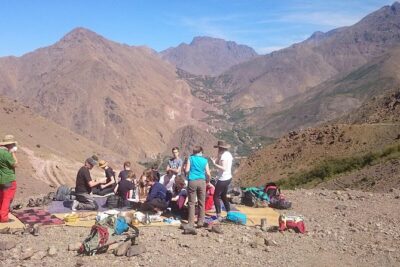
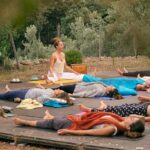
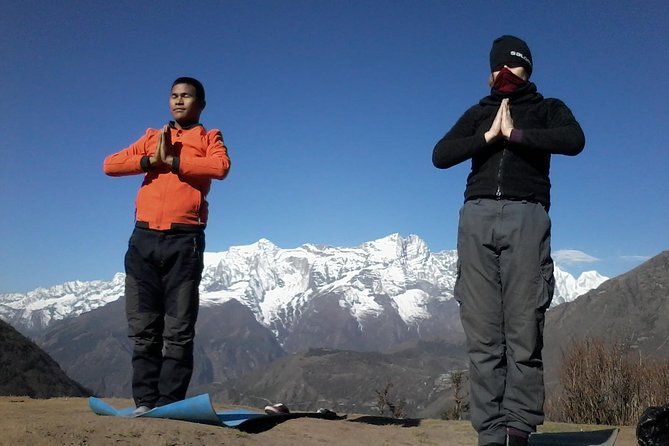
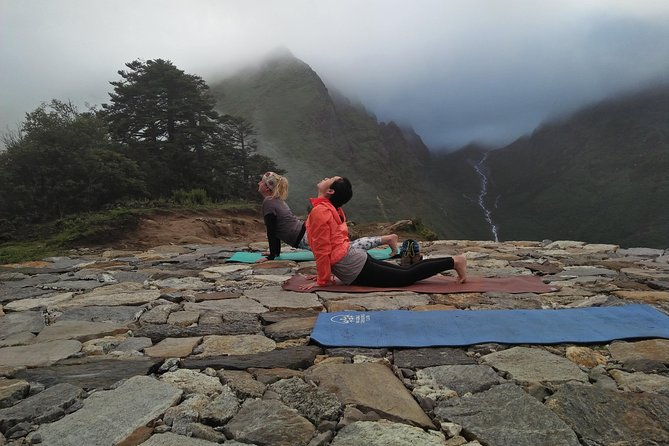
Most Everest Base Camp treks are about trekking. This one adds a daily practice that starts by centering your mind and body for the mountain day. That matters because the Khumbu can feel mentally loud: steep trails, fast-changing weather, and the constant reminder that you’re breathing slower.
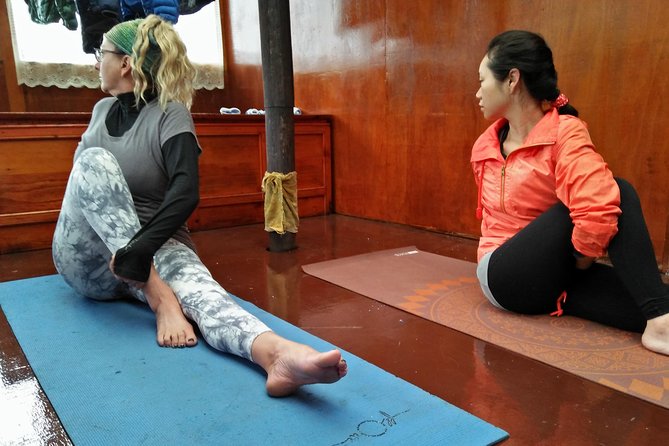
When your yoga instructor is with you each day (not just a one-time class), you tend to get practical benefits: better awareness of posture on uneven steps, a calmer reset before descents, and a chance to stretch out the legs and hips that take a beating on suspension bridges and rocky climbs. You’re not trying to become a mountain yogi overnight. You’re using short sessions to stay connected to your body and move more efficiently.
There’s also a spiritual layer. The itinerary doesn’t treat culture as a side quest. It brings you into Buddhist and Hindu spaces in Kathmandu first, then you keep seeing prayer wheels, mani walls, chortens, and stupa stops as you climb. Yoga becomes the thread that helps you pay attention, instead of just passing time between viewpoints.
You can also read our reviews of more tours and experiences in Kathmandu.
Kathmandu setup: Monkey Temple to Boudhanath before the climb
You start in Kathmandu with airport reception and hotel stay, then you get two main days of orientation through the city’s major sacred sites. Day 2 is a great way to get your bearings fast before your body shifts into trekking mode.
You’ll visit Swayambhunath, also called the Monkey Temple, with its mix of Hindu and Buddhist elements and the city views from the hilltop. Then comes Boudhanath Stupa, one of the largest stupas in the world, where Tibetan Buddhist pilgrims and visitors circle the monument and chant with steady focus.
And you also get Durbar Square time. That’s useful in a practical way: you’ll be walking, seeing old courtyards and carved stone work, and getting comfortable with Nepal’s pace and crowds. After that, you’re not arriving in the Khumbu cold. You’ve already started learning how to slow down and look around.
If you like “culture as context” rather than a box-checking tour, Kathmandu is where this trip earns its stripes. The only drawback is that it’s still Kathmandu—heat, dust, and traffic can affect how you sleep. Try to keep your first nights low-stress so you’re ready for the early launch days.
The Lukla gateway: flight day and the first trail
The real shift happens when you organize gear and pack up the day before an early departure to Lukla. From Kathmandu, you fly in a carefully loaded twin-otter and land at Tenzing–Hillary Airport (LUA).
This flight is short, but it gives you an instant map of the route you’re about to walk: terraced hills, river valleys, and dramatic mountain lines. Even if the flight feels intense, it’s also a time-saver that keeps the trekking schedule from getting too stretched.
From Lukla, you meet the group and start with an introductory trek to Phakding. This section is a gentle start that still gets your legs working and helps you notice the altitude effect early. It’s also a good day to practice your daily routine: hydration, warm layers, and the “don’t rush” mindset that keeps you from burning out before Namche.
Tip: on this kind of trek, your first big win is consistency. Walk at a steady effort, keep breaks short, and let the higher-altitude days do their work later.
To Namche Bazaar: Dudh Koshi, bridges, and the Sagarmatha entry feel
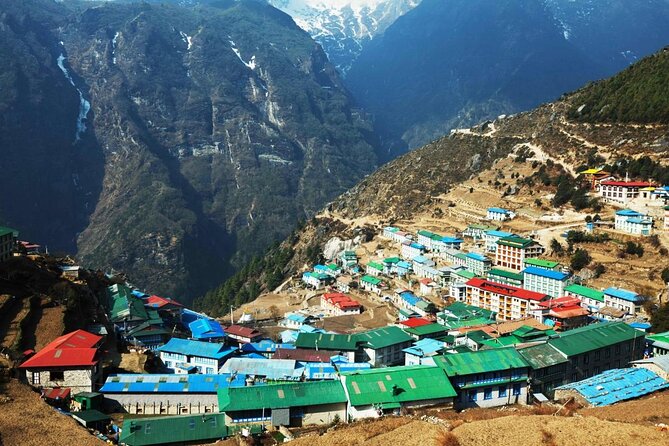
From Phakding, the next major stretch follows the Dudh Koshi River, with a mix of suspension bridges, forests, and village trails. You’ll pass spots like Benkar and Monjo, then work your way toward Namche Bazaar, which is the main hub for supplies, views, and meeting other trekking groups.
Day 4 includes views that hint at what’s ahead—Kongde Ri Peak and strong Everest sighting moments—along with frequent changes in trail style. One minute you’re moving through lush areas; the next you’re dealing with bridge crossings and river-level terrain.
Monjo is also an important psychological checkpoint because it’s tied to entry into Sagarmatha National Park. Even if you don’t think about permits day-to-day, the park boundary acts like a line you’ve crossed. Everything from trail signage to how people talk about the mountains becomes more focused.
You’ll also cross toward areas around the confluence of the Dudh Koshi and Bhote Koshi rivers. That detail matters because it’s where the walking terrain starts to feel more “Khumbu rugged” than “easy valley trekking.”
Acclimatization days: Namche and Dingboche are where you win
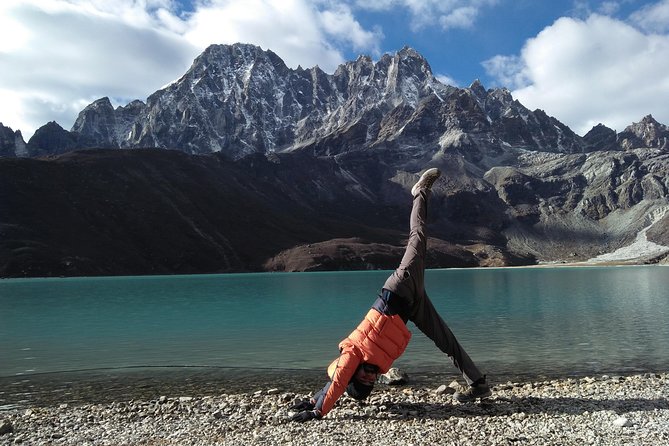
A lot of Everest treks fail people by ignoring their bodies. This one uses rest days smartly, giving you time to acclimatize while still keeping you moving.
In Namche Bazaar, you get a rest/acclimatization day with options: browse shops, visit the Sherpa Cultural Museum, and plan an early hike to nearby viewpoints. Namche’s Saturday market is specifically called out, and it’s exactly the kind of place where you can reset mentally after the first days of climbing.
Then you push to higher altitude and later reach Dingboche, which is another key acclimatization stop. You’ll have time for short hikes like a trip toward Nangkartshang Gompa and options for viewpoints above Dingboche that show multiple six-thousand-meter peaks.
The practical benefit of these days is simple: you get altitude adaptation without having to force a huge push to Everest every single day. If you’re prone to feeling breathless, these rest days can be the difference between “fine” and “I regret everything.”
Keep in mind that even on rest days, you’re still in the Himalaya. You can’t treat them like a full day off at sea level. Move gently, eat well, and don’t stack multiple hard hikes just because you feel okay.
From Tengboche to Dingboche: Ama Dablam views and wildlife sightings
Once you’re around Tengboche and then move toward Dingboche, the route becomes a mix of big views and slower, careful walking. You’ll leave Tengboche after sunrise/sunset scenery, then descend toward Deboche, where you can see Everest, Ama Dablam, Lhotse, Nuptse, and more.
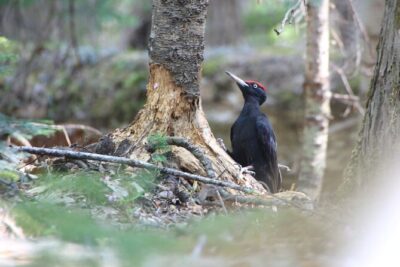
This part of the trail is also described with wildlife moments—musk deer and blue sheep sightings are mentioned as possibilities. That’s a reminder that you’re not only walking through geography. You’re walking through an ecosystem.
The villages you pass—Deboche, Panchboche, and the Pangboche area—include stops where stupa and monastery culture shows up in the trail routine. You’ll even find an ancient stupa at upper Pangboche, which gives you a natural place to pause and look closely instead of treating every stop like a checkpoint.
On walking days, your ankles and calves do the heavy work. The itinerary includes suspension bridge crossings here, and those are the sections where good pacing matters. If you feel wobbly, slow down early and place your steps deliberately.
Toward Gorakshep and Lobuche: Khumbu Glacier edges and the feeling of Everest
As the trek rises, the days start to feel more “high and wide.” You move past chortens, mani walls, and stupas, and you get expanded views of Taboche Peak and the larger Ama Dablam region.
You’ll reach Dughla as a last settlement before the more intense approach toward Everest. This area is tied to the poignant Chukpo Lari memorial ground, which is built in remembrance of climbers. It changes the mood—at that point, Everest stops being a symbol and starts feeling like a lived risk with human stories attached.
Day 10 is the big movement toward Everest Base Camp via Lobuche and the route over the Khumbu Glacier region. You’ll pass an Italian research center and work along lateral moraines, with cautions about avoiding ice pinnacles and crevasses. This is where your guide’s experience becomes real—not just for navigating, but for choosing safe lines.
You’ll continue to Gorakshep, which is where you stop for lunch and overnight. In high-altitude tea-house style lodging, the basics matter: warm layers, sleep that doesn’t start by fighting the cold, and water management. Don’t wait until you feel thirsty to drink.
Kala Patthar sunrise: the Everest payoff day
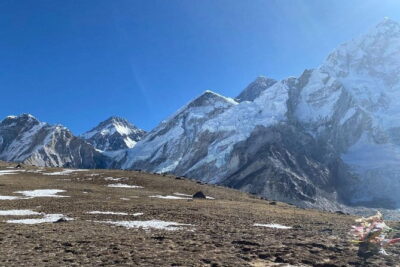
If Everest Base Camp is the destination, Kala Patthar is often the moment people remember most. On Day 11, you trek from Gorakshep to Kala Patthar before dawn, aiming for one of the most striking sunrises in the region.
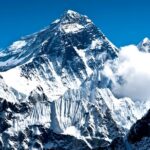
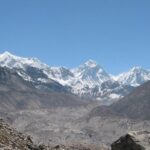
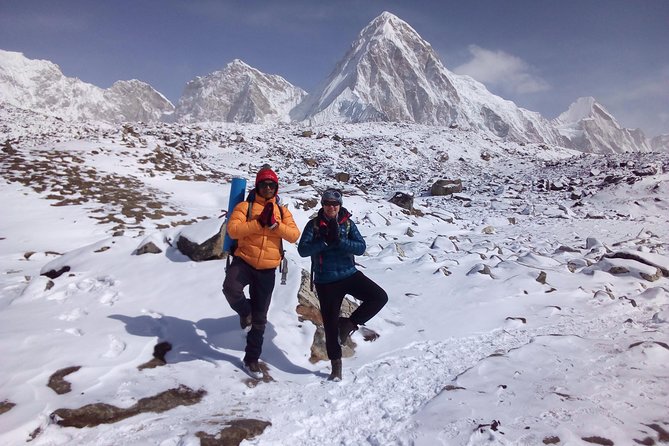
The view is described as close-up Everest angles along with Pumori, Lhotse, Nuptse, and Changtse, plus the Khumbu Glacier and the southeast face of Everest. This is a day where timing matters more than distance. You need to be ready before sunrise lighting improves contrast and makes the mountain faces look sharp.
You’ll climb to a small brown hill that dwarfs into the larger scene. It’s also a “photo and breathe” day. Even if you don’t care about pictures, it helps to keep your breathing steady and use the moment to scan the horizon slowly.
Then you return to lower altitudes. That descent matters as much as the ascent. Your body needs recovery before the longer walk days back.
Coming back down: Periche, Namche, and the long Khumbu unwind
The return days are where your legs teach you patience. You’re leaving the Everest vicinity, heading back toward Namche Bazaar, and the itinerary describes a mostly downhill rhythm where you still walk steadily without hammering your knees.
Through Periche and onward, you’ll keep encountering classic Khumbu village scenes: forests, waterfalls, suspension bridges festooned with prayer flags, and gompas and monasteries. There’s also mention of busy trail life—porters, other trekkers, locals, and pack animals like yaks moving goods along the corridor.
When the trail gets busy, this is where a calm, predictable walking style pays off. Keep right/left as your guide directs, give space early, and don’t block the flow at narrow bridge sections.
One more practical note: descents can feel easier mentally but harder physically. If you go too fast, your quads will punish you.
Exiting Sagarmatha at Monjo and closing in on Kathmandu
On the final trekking stretch, you exit Sagarmatha National Park at Monjo after a descent out toward the riverbed of the confluence of Dudh Koshi and Bhote Koshi and a suspension bridge crossing.
From there, you work through the returning village route—Benkar, waterfalls, suspension bridges, plus smaller stops like Phakding and other places along the way. The goal is to get back to the Namche area atmosphere, then continue toward Lukla for your flight.
Day 14 brings the Lukla flight back to Kathmandu. The itinerary flags weather-related disturbances as a reason you fly early, and that’s a normal reality in the Himalaya. The flight is short (around 35 minutes), but it can still feel like a reset switch: chairs, showers, and the return of familiar movement.
You’re given downtime in Kathmandu afterward, with optional strolling around Thamel. It’s a good place to decompress and do last-minute souvenir shopping.
Price and value: what $1,699 buys you in real terms
At $1,699 per person for about 15 days, the value here comes from more than “booking a trek.” You’re paying for a structured plan that includes accommodation throughout the journey, national park fees, and meals (breakfast for all 15 days, plus lunch and dinner counted for 12 days). You also get coffee and/or tea, a local guide, and airport/departure taxes and handling charges.
What you’re not paying for is drinks and alcohol, which you’ll likely buy during breaks. You also aren’t paying for personal gear, travel insurance, or any items not listed under included services.
The high value aspect is the daily yoga structure and the small-group setup. A max group size of 8 can mean more attention and easier logistics with guides, porters, and daily yoga space. If you want the experience to feel personal instead of crowded, this price reflects that approach.
Who this Everest Base Camp Yoga Trek fits best
This trek fits best if you want Everest in a slower, more body-centered way. If you like structured daily routines and you’ll actually use them—yoga, short hikes, acclimatization pauses—this plan matches that style.
It’s also a good fit for people who want cultural context without losing focus on the trek. The combination of Kathmandu sacred sites and Khumbu prayer-stop culture creates a theme you can follow day after day.
If you’re very new to trekking, you’ll likely need to be extra honest about your readiness. The trek requires moderate fitness, and the altitude adds pressure even when the trail distance seems manageable on paper. Bring the right mindset: you’re building strength for the long middle days, not racing every day.
If you have concerns like solo travel or specific dietary needs, the operator’s communication approach in past interactions is described as fast and supportive, and guide style is often praised as compassionate and helpful. That matters because the Himalaya punishes surprises.
Should you book this Everest Base Camp Yoga Trek?
If you want a standard Everest trek, there are plenty of options. If you want daily yoga plus a small-group plan that builds acclimatization time in the right places, this one is a strong choice.
A couple of decision points:
- Book if yoga at altitude is a real priority for you, not a marketing checkbox.
- Book if you’re the kind of person who likes routines and calm guidance.
- Think twice if you’re worried about cold, altitude discomfort, or you don’t have moderate trekking fitness yet.
With a near-perfect overall satisfaction score (4.9) and 100% recommendation, this trek’s reputation matches the design: structured support, daily practice, and a clear path to Kala Patthar and Everest Base Camp.
If that’s your kind of trip, you’ll probably feel like your money went into safety, pacing, and meaning—not just a stamp on an itinerary.
FAQ
How long is the Everest Base Camp Yoga Trek?
The trek runs for about 15 days.
Where does the trip start, and what time is listed?
It starts in Kathmandu, with a start time listed as 9:15 am. You are also received at Tribhuvan International Airport on arrival.
Is airport pickup or assistance included?
Pickup is offered, and a representative meets you at Tribhuwan International Airport in Kathmandu.
What meals are included?
Breakfast is included for 15 days. Lunch and dinner are included for 12 days. Coffee and/or tea are also included.
Is the trek in a small group?
Yes. The maximum group size is 8 travelers.
What fitness level do I need?
The tour asks for travelers with moderate physical fitness.
Does the experience include daily yoga?
Yes. Each day begins with yoga practice under a yoga instructor, and the instructor travels with you for the duration of the trek.
What drinks are included, and what is not?
Coffee and/or tea are included. Drinks and alcoholic drinks are not included.
What is the cancellation policy for a full refund?
You can cancel for a full refund if you cancel at least 24 hours in advance of the experience’s start time. If you cancel less than 24 hours before, the amount paid is not refunded.