REVIEW · KATHMANDU
Manaslu Circuit Trek
Book on Viator →Operated by Nepal Mountain Trekkers - Day Tours · Bookable on Viator
Larkya La Pass makes the Himalayas feel close. This trek mixes Kathmandu UNESCO sights with a real circuit route through Gurung villages, suspension bridges, monasteries, and river valleys, then builds in an acclimatization rhythm before the high point.
I love how the trip reduces planning stress. From airport pickup to Kathmandu hotel stays, permits, and even rented core cold-weather gear, you spend your energy on walking and taking photos, not figuring out logistics in a foreign city.
The main consideration is effort. Days are often long, and the schedule depends on safe mountain conditions at altitude, so you’ll want solid fitness and a calm pace when the air gets thinner.
In This Review
- Key things I’d bookmark before you go
- Entering Kathmandu: UNESCO sights and getting ready for the trail
- The long drive out of Kathmandu: how the circuit begins
- Machha Khola to Jagat: suspension bridges, forests, and first village meals
- Deng and Namrung: views with work attached
- Lho and Samagaon: monasteries, apples, and the circuit’s slower mood
- Pungyen Gompa and the Manaslu base area excursion
- Samdo rest day and Dharmashala acclimatization: your altitude insurance
- The Larkya La Pass day: the short hike with huge stakes
- Bimthang to Tilije: pasture ridges and rhododendron season vibes
- Tilije to Tal via Dharapani: bridges, waterfalls, and the circuit crossover
- Getting back to Kathmandu: jeeps, lunch in Besisahar, then real sleep
- Price and logistics: what you’re actually paying for
- Who should book this trek, and who should think twice
- So, should you book the Manaslu Circuit Trek here?
Key things I’d bookmark before you go
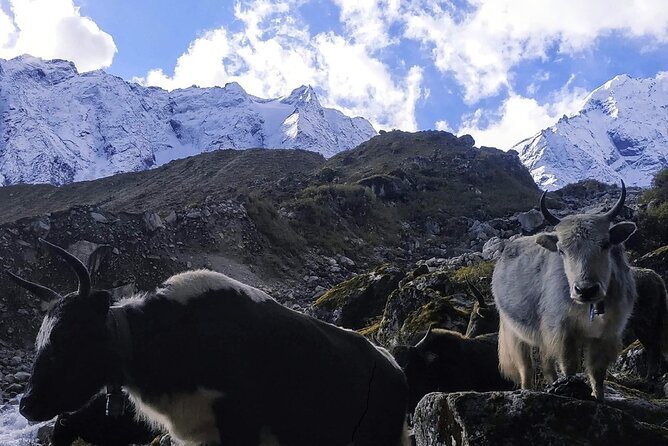
- UNESCO Kathmandu add-on: Durbar Square, Swayambhunath, Pashupatinath, and Boudhanath help you start with culture, not just packing layers.
- Handled permits + trained support: you get the required permits, an English-speaking trekking guide, and a porter, plus a first-aid kit and rescue management service.
- Acclimatization where it matters: a rest day at Samdo, plus time around Dharmashala before Larkya La.
- Ancient monastery moments: a visit to Pungyen Gompa (with a prayer hall) and views from places like Ribung Monastery.
- The big payoff at Larkya La Pass: the high pass day is short on paper, but it’s the visual highlight of the circuit.
If you want a Himalayan circuit that feels like a living place, not just a slideshow, the Manaslu Circuit delivers. You start in Kathmandu with UNESCO world heritage sites, then trade traffic noise for bridge crossings, forest trails, and village stone-and-stone routines. And yes, the pass day matters. Larkya La Pass is the finish-line view everyone hopes for.
This is also a trek where good support changes everything. Nepal Mountain Trekkers runs the trip with group travel in mind (maximum 20 people), so you’re not dealing with gear hunting, permits, or route logistics on your own. In participant feedback, names like Suman, Ramesh, Mod, Chirring, and TB come up as part of the team. You may not meet the same people, but the pattern is clear: the company focuses on experienced guidance and keeping the machinery running.
Entering Kathmandu: UNESCO sights and getting ready for the trail
Your experience starts in Kathmandu right after you land at Tribhuvan International Airport. You’ll be met by a company representative and taken to Hotel Green Horizon (listed as Hotel Horizon in one day detail, but the Green Horizon name is used throughout the trek overview).
The first full sightseeing day is not a random add-on. You’re taken around major UNESCO sites:
- Kathmandu Durbar Square
- Swayambhunath Stupa
- Pashupatinath Temple
- Boudhanath Stupa
This matters because it sets expectations for what Nepal will feel like on the trek. Even before you reach the mountains, you’re seeing how religion, architecture, and everyday life overlap. Later, when you reach places like monasteries and mani walls, it hits harder because you’ve already seen the cultural backbone.
You also meet the trekking team at Thamel and go through preparations. That includes trekking gear rental (more on that soon), plus getting your bearings with the trekking map and briefing-style setup. The trip is built to get you walking with less confusion.
You can also read our reviews of more tours and experiences in Kathmandu.
The long drive out of Kathmandu: how the circuit begins
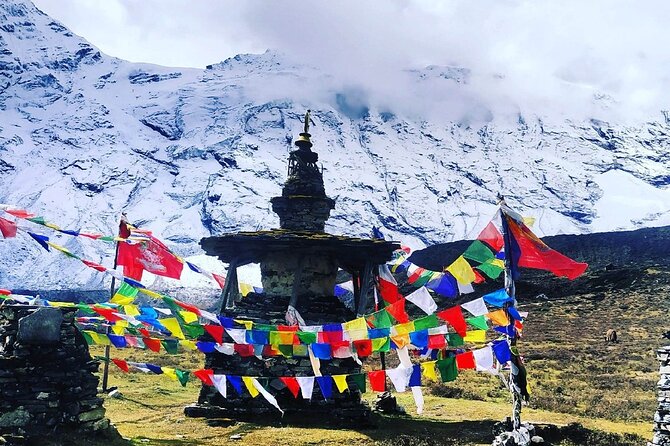
The Manaslu Circuit is known for the contrast between road time and trail time, and this one starts strongly with a full driving day. In the trek plan, the route from Kathmandu to the trail region is described as a long haul, including time to Baseri and then onward to the trekking start area around Machha Khola.
What to know: the mountain trekking experience doesn’t start only when you lace up boots. It starts when you’re still in the vehicle, watching the valleys shift and the road pull you away from Kathmandu’s rhythm.
On the first trekking day into the circuit, you’re moving across river corridors—specifically along the Budhi Gandaki system—and the route uses major river basins you’ll later hike parallel to for days. If you’re prone to getting stiff during long drives, plan your comfort strategy. Bring a small travel pillow or be ready to stretch during breaks.
Machha Khola to Jagat: suspension bridges, forests, and first village meals
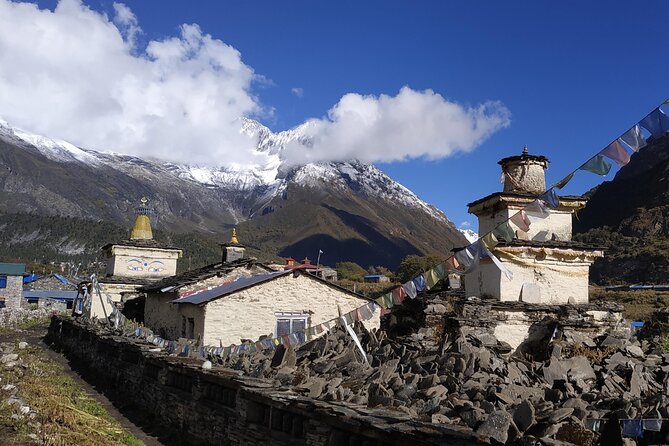
The trek proper starts with a classic circuit-style sequence: cross, climb, descend, repeat—without the harsh jump into altitude too early.
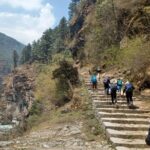
You’ll head toward Maccha Khola / Machhakhola via forested trails and river approaches, with suspension bridges in the mix early. That’s one of those details that sounds small until you’re on it. Suspension bridges are part practical (crossing fast-moving river branches) and part emotional (you feel the remoteness quickly).
Then the early days lead you through places like:
- Tatopani, where you get a chance to use natural hot springs
- Jagat, a village stop that balances scenery with trail reality
That first hot-spring day is a big deal if you’re serious about enjoying the trek instead of merely surviving it. Warm water after early fatigue can make the next two hikes feel easier.
Deng and Namrung: views with work attached
As the trek continues, the route leans into a strong pattern: better views, more uphill effort, and more village life. You reach Deng, enjoying scenery tied to high peaks in the region (like Singri peak in the route description). Then you continue toward Namrung, where mani walls and crossing the Budhi Gandaki River are part of the day’s feel.
Namrung also tends to be a turning point mentally. The terrain doesn’t become harder in one dramatic leap. Instead, you start noticing how your legs and lungs adapt over time. You stop thinking of it as a series of separate days and start thinking in phases—village trekking, then higher-altitude trekking.
Lho and Samagaon: monasteries, apples, and the circuit’s slower mood
Two areas make the middle stretch special: Lho and Samagaon.
At Lho, the route includes a half-day walk that’s described as easier, with great views of Himalchuli near Hinang Glacier. It’s also connected to the idea of a village known for apples (the plan mentions the area is famous for apples). Later the day shifts toward Ribung Monastery, including time to climb near the monastery for a clearer look at the Manaslu massif.
If you like sunrise views, this is the kind of trek day that fits early starts. The plan even mentions the option to walk from the hotel to a viewing point for sunrise near Ribung Monastery.
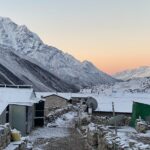
Then you move onward to Samagaon. This section feels more “high village” than “lower trek.” You’ll see snowy peaks nearby mentioned in the plan, terraced farming, chortens, and the constant sense that you’re getting closer to a world that runs on mountain calendars.
Pungyen Gompa and the Manaslu base area excursion
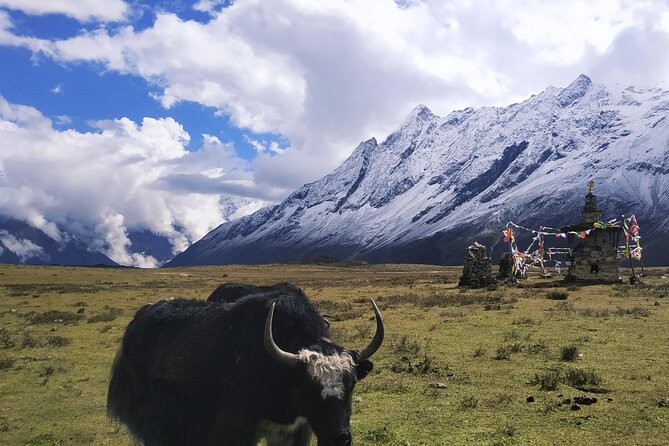
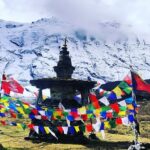
One day is devoted to an excursion around Pungyen Gompa. This ancient monastery is highlighted as a cultural and spiritual stop, including a small prayer hall and rituals you can watch as part of the experience.
Why I think this matters: circuits can become all about walking and views. A monastery day forces you to slow down and notice how people live here year-round, not just during trekking seasons. It also keeps the trek meaningful on days when your legs are tired but your mind wants context.
Expect this to be a calmer day than a full grind. You still trek, but the payoff is cultural. The views around the monastery area are also part of the point, since you’re combining heritage with high mountain framing.
Samdo rest day and Dharmashala acclimatization: your altitude insurance
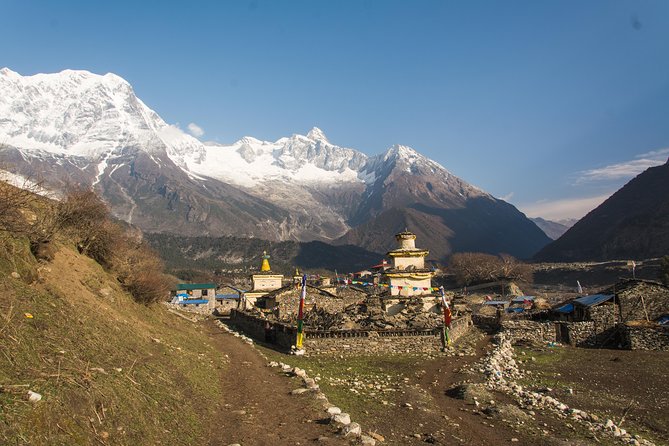
Altitude is where trekking plans either feel confident or feel stressful. Here, the pacing is built around that reality.
You take a rest day at Samdo for proper acclimatization. This is not filler. It’s a strategic pause before pushing higher toward Dharmashala and ultimately Larkya La Pass.
On the Dharmashala day, you follow the river banks again, crossing streams and moving upward gradually. The plan notes time for acclimatization when the route reaches around 5,000 meters. That timing is the difference between arriving tired and arriving with enough breathing room to keep your safety margin.
Also worth noting: the trek includes a first aid medical box and rescue management service. That doesn’t replace smart pacing, but it signals that safety planning is part of how the trip is run.
The Larkya La Pass day: the short hike with huge stakes
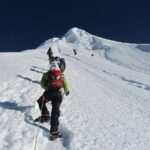
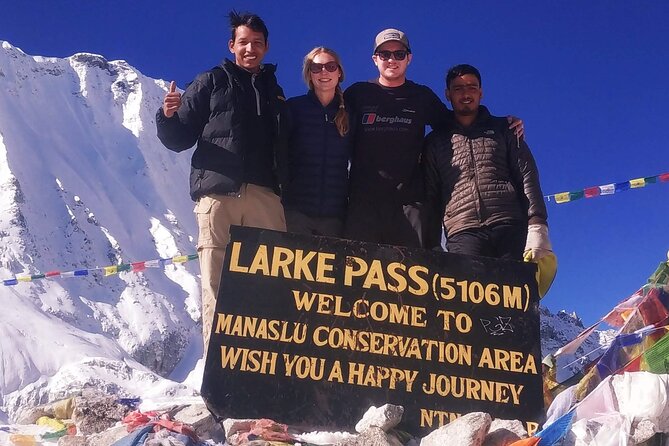
Larkya La Pass is the highest point in this trek. The plan describes leaving Dharmashala, climbing through glacier moraines, and reaching the pass. The pass day is listed as a short window (around 30 minutes for the pass moment), but don’t treat that as a sign the day is easy.
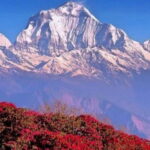
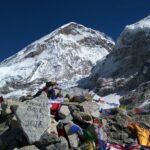
This is the day you’re carrying the most altitude pressure. Even if the walk time at the top is brief, you’ll feel it in the approach. The payoff is the view described as unforgettable: Annapurna II, Cheu Himal, Himlung Himal, and surrounding peaks, with Manaslu Himal appearing very close.
Then you descend to Bimthang, where the trek plan mentions rhododendron and local hospitality. It’s a good note for your mindset. The pass isn’t the only memory—how you recover afterward matters too.
A practical tip: if weather is uncertain, keep your layering plan simple and reliable. You’ll likely be changing conditions—cool pass air, warmer descent, and occasional wind. The trip provides rented down jacket and sleeping bags, which helps, but your day layers still matter.
Bimthang to Tilije: pasture ridges and rhododendron season vibes
After the high pass, the trail transitions into a more “flowing” circuit mood. From Bimthang, the route goes along ridges with views of Manaslu, Himlung Himal, and Lamjung Himal, then slowly descends through pasture land at Sangre Kharka.
The plan then calls out rhododendron forests, specifically noting the spring bloom effect. If you go in spring, this part can feel extra special because the trail color changes with the season. Even outside spring, the ridges and open sections are a relief after the most demanding days.
Finally, you reach Tilije for overnight. This stop is about reset and recovery—getting your body back to normal trekking rhythm before the circuit connects into lower trails.
Tilije to Tal via Dharapani: bridges, waterfalls, and the circuit crossover
The final major walking stretch is where the Manaslu Circuit connects with the broader region’s trail system. After you reach Tilije, the trek moves toward Tal.
On the way, you pass through:
- Thonje Village
- A crossing of the Milky white river above a bridge
- Connection to the Annapurna circuit trail at Dharapani
- A Marsyandi River bridge
- Waterfalls along the route
This is one of those segments that can feel surprisingly lively because you’re dropping into more established trekking corridors. Tea houses become part of the day’s rhythm—Tal is specifically described as arriving after a tea-house meal and additional connections over rivers and waterfalls.
Getting back to Kathmandu: jeeps, lunch in Besisahar, then real sleep
Your last full trekking day ends with travel out. The plan has an early morning wake-up, then a drive to Besisahar using local transport (jeep), a lunch stop there, and then continued driving back to Kathmandu with an overnight at the hotel.
At this point, you’ll feel the difference between mountain trekking and city life instantly: sleeping on a proper bed instead of a trek room, warm water on demand, and time to think without the worry of your next altitude step.
Day 16 includes free time with the option to shop and relax without a guide and porter, plus a farewell dinner at a Nepali culture restaurant. The trek finishes with a final drop to Tribhuvan International Airport on day 17.
Price and logistics: what you’re actually paying for
The price listed is $1,386.67 per person for about 17 days. On paper, it’s not a bargain. But for the type of trek you’re doing, it starts to make sense when you break it down.
This package includes:
- Airport pickup and drop
- 4-night hotel in Kathmandu
- Kathmandu sightseeing with a tour-licensed guide and vehicle
- All food and lodging during the trek (breakfast, lunch, dinner)
- A trekking guide and porter
- All required trekking permits
- First aid medical box and rescue management service
- Trekking gears like sleeping bags and down jacket on rent
- T-shirt, duffel bag, and trekking map
- Farewell dinner, plus taxes listed as 13% VAT and company service charge
What’s not included is also clear: visa fee, international flights, travel insurance, and personal expenses like charging devices or laundry. Tips for your guide and porters aren’t included either.
The value logic I see is simple: Manaslu Circuit permits, guide time, porters, and the logistics to move you from Kathmandu into the trek valley are expensive if you try to DIY. Here, you buy the safety margin and time-saving in one package.
The “gotcha” to consider isn’t price. It’s that you still need to handle your own fitness and altitude judgment. The trip can set a smart schedule, but your body has the final say.
Who should book this trek, and who should think twice
This trek is for you if:
- you have moderate physical fitness
- you want a guided circuit with support for permits and gear
- you like mixing culture (monasteries and UNESCO sites) with high-mountain walking
- you’re comfortable with long travel days and long hiking days
Think twice if:
- you struggle with long days on your feet (the plan describes multiple trekking days at around 12 hours)
- you have health issues that altitude could worsen and you haven’t discussed them with a clinician
- you prefer a fast, minimalist trek with fewer days and fewer transitions
The route is built around acclimatization days (Samdo and time around Dharmashala), which is good. Still, altitude is not optional physics.
So, should you book the Manaslu Circuit Trek here?
I’d book it if you want an organized circuit that pays attention to the details that keep trekking smooth: permits, gear rental, real guidance, and acclimatization structure. The UNESCO start in Kathmandu also helps if you’re the kind of traveler who wants meaning before altitude.
I wouldn’t book it if you’re looking for an easy stroll, or if you’re the type who gets stressed by weather changes and schedule adjustments. This pass route is worth it, but it’s still mountains first.
If you do book, train before you go, plan to pace early, and don’t treat “long day” as a negotiable number. The circuit rewards steady hikers, not frantic ones.