REVIEW · KATHMANDU
Manaslu Trek with Larke Pass
Book on Viator →Operated by himalayan sanctuary adventure private limited · Bookable on Viator
Manaslu Larke Pass mixes solitude with jaw-dropping peaks. This trek is interesting because it follows the Budhi Gandaki upstream from subtropical forests into Tibetan-climate high country, then crosses Larke La and drops you into the Annapurna trails. I like the mix of practical support (guide, porter, permits handled) and the way the route shifts cultures as altitude climbs. One drawback to think about: this is a restricted-region trek, so you must go with a licensed guide and have the right permits, plus you’ll need good weather and solid altitude readiness.
You’ll also see real value in how the schedule builds in acclimatization before the pass day. And in the team background, I’ve picked up that support can be very hands-on; for example, a trekker named Karma showed up as a guide in prior accounts, and porter Bishbu Bhatta was praised for quick help during a stressful moment. If you’re expecting a luxury trip, keep your expectations aligned: nights are mainly in tea houses or lodges.
In This Review
- Key highlights you’ll feel on the trail
- Why Manaslu Larke Pass feels different from the usual trekking pattern
- Permits and licensed guiding: the real reason this trek is special
- Kathmandu pre-trek days: temples, orientation, and getting your legs calm
- From Kathmandu to Soti Khola: the road-to-trail transition
- River valley days: Budhi Gandaki upstream to Machhakhola, Jagat, and Deng
- Tibetan-region shift: Bagarchhap, Namrung, and your first big character change
- Sama Gaon and Samdo: acclimatization with real payoff
- Larke La day: the pass, the packed lunch, and the icy realism
- After the pass: Bimthang to Tilje, rhododendron, and the apple-orchard stop
- Down to Dharapani and out to Besi Sahar: where the trek connects to the Annapurna trail world
- Tea houses, meals, and comfort math on a restricted trek
- Price and logistics: what the $1,797 includes, and why that’s worth watching
- Who should book this Manaslu Larke Pass trek
- Should you book this trek or choose something easier?
- FAQ
- Is airport pickup and drop included?
- Do I need a licensed guide for this trek?
- Are the trekking permits included in the price?
- What kind of lodging will I have during the trek?
- Are meals included?
- How many trekkers share a porter?
- How long is the trek?
- Is Kathmandu sightseeing included?
- Is travel insurance included?
Key highlights you’ll feel on the trail
- Restricted Manaslu routing with permits and a licensed guide, which keeps the experience more controlled and authentic
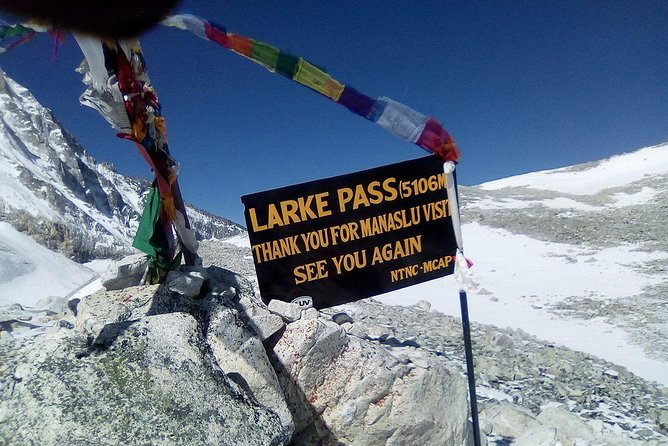
- Larke La crossing (5135m) with pack-lunch trekking, icy lakes, and big sunrise potential
- Accurate acclimatization structure at Sama Gaon and Samdo before your highest day
- Cultural shift as you climb: mani stones, Tibetan-style villages, gompas, and a refugee community at Samdo
- A real finish into the Annapurna world at Dharapani, ending with a drive back to Kathmandu
- Support that matters: guide plus porters (1 porter for every 2 trekkers) and first-aid basics included
Why Manaslu Larke Pass feels different from the usual trekking pattern
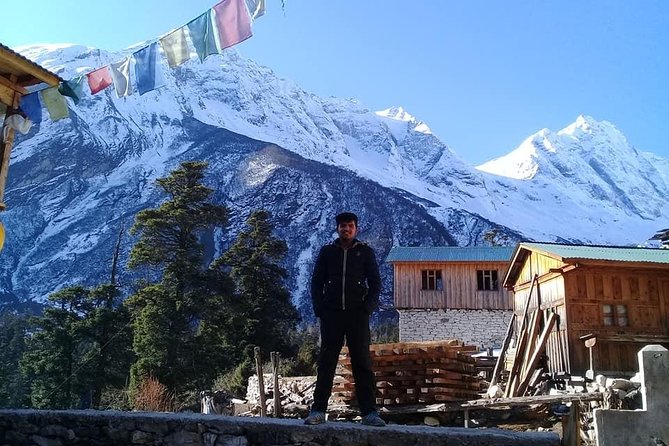
Most Himalayan trekking routes are either heavily visited or very short on cultural change. Manaslu Larke Pass does something else. It starts in the Kathmandu valley vibe, then sends you into the midwest Himalayan range where the Budhi Gandaki valley gradually becomes cooler, drier, and more Tibetan in character.
Early days are all about river rhythm and valley ups and downs. You trek through terraced farmland, pass scattered villages, and follow footpaths that keep you close to the Buri Gandaki (a major form of the Budhi Gandaki system). As you gain height, you start seeing mani stones and Buddhist markers more often. Above Namrung, the scenery starts feeling higher, drier, and more “high-country” than lush.
Then comes the big pivot: Larke La. After the pass, the trail runs downhill through pine and rhododendron country and eventually links into the Annapurna circuit trail system near Dharapani. In plain terms, you get both worlds: the Manaslu valley experience and a taste of the Annapurna trail network.
You can also read our reviews of more tours and experiences in Kathmandu.



Permits and licensed guiding: the real reason this trek is special
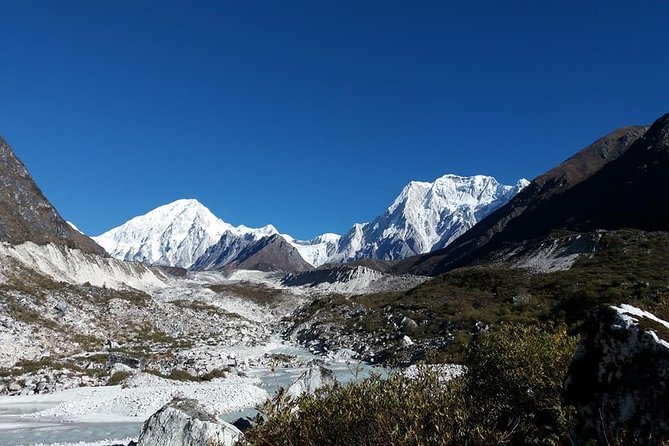
Manaslu is a restricted region. That matters because it changes who can go and how. Individual travel isn’t allowed in the way it is on many other routes. You need a unique permit from Nepal’s government, and you also need a licensed guide.
This itinerary handles the “paperwork load” for you. The package lists national park fees and all required trekking permits, plus a special permit and TIMS. It also includes a guide and porters. So you’re not trying to figure out the restricted-region rules alone while standing in a place with a narrow timetable.
For you, the practical takeaway is simple: you can spend your energy on hiking, hydration, and altitude pacing instead of juggling permits. The trade-off is that you’re locked into a guided trek structure, including the fixed rhythm of the route and overnight stops.
Kathmandu pre-trek days: temples, orientation, and getting your legs calm
Your trek begins in Kathmandu with two full days of city time before the long road transfer into the trailhead area.
Day 1 is arrival and a hotel transfer in Thamel after landing at Tribhuvan International Airport. It’s a normal, helpful setup: meet-and-greet, hotel check-in, and time to settle before the sightseeing schedule starts.
Day 2 is a classic Kathmandu cultural sweep: Pashupatinath Temple, Boudhanath Stupa, Patan Durbar Square, and Swayambhunath Stupa. Swayambhu is described as more than 2000 years old. You also get a day to start mentally preparing for trekking logistics—pack organization, hydration habits, and checking that your gear list is ready (since personal gear isn’t included if it’s not specifically mentioned).
This is also a smart buffer. You’ll likely feel travel fatigue in your first 24 hours in Nepal. By day 3, you’ll be heading to the countryside in a long drive.
From Kathmandu to Soti Khola: the road-to-trail transition
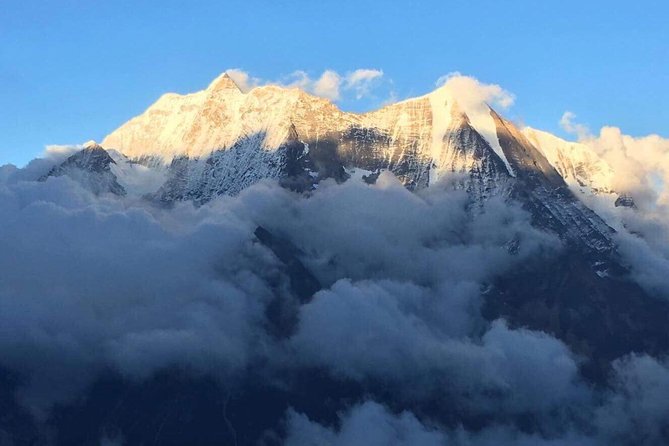
Day 3 is a long push by jeep or bus: Kathmandu to Aarughat, then onward to the Aarkhet Bazaar area. The schedule says around 7–9 hours total driving. Aarughat is framed as a shopping area for Manaslu Gorkha and Dhading’s remote villagers, so you’re not just “passing through”—you’re moving into the region’s supply chain before you hit the footpaths.
You’ll overnight at Soti Khola / Aarkhet Bazaar area per the day-by-day plan. This matters because it sets the tone: the next morning you start trekking for real.
If you’re the type who gets cranky without a proper breakfast, plan to eat well before starting the trekking legs. The road days are long, and you’ll want steady fuel before your first river-valley hikes.
River valley days: Budhi Gandaki upstream to Machhakhola, Jagat, and Deng
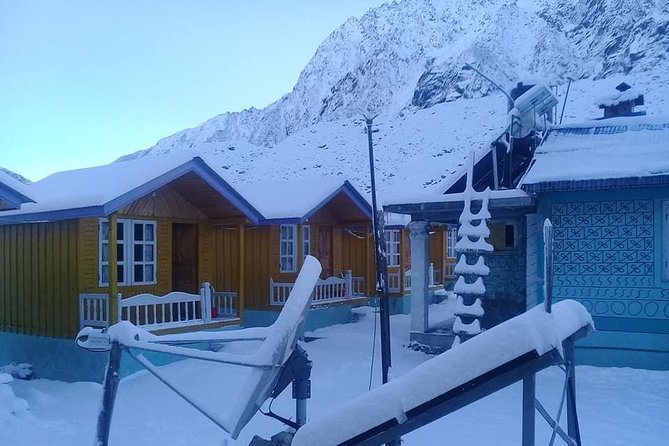
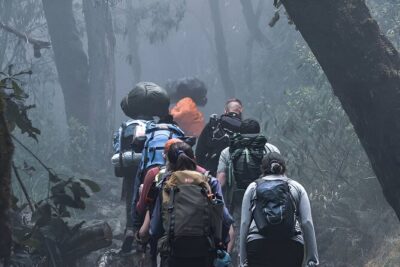
The trek proper begins by following the Budigandaki (Buri Gandaki) river upstream, and the early route teaches you a core skill: expect constant small climbs and descents, often with river crossings.
Day 4 targets Machhakhola (1300m). You start by climbing briefly toward Kyoropani, then descend back to the river at a confluence with the Soti Khola tributary. You’ll pass villages tucked into hillside folds, then follow a path that sits below steep valley walls. The day ends with a climb back up to Machhakhola.
Day 5 builds intensity. You cross toward Tatopani hot springs via a route that includes a suspension bridge and exposed trail sections in places. The plan mentions a single tea house at Doban, rapids above, and river meandering across gravel beds beyond the steep stretch. After re-crossing at Lauri, you climb to Jagat (1360m).
Day 6 takes you to Deng (1800m). Expect a long step-down toward the river, then a terraced hill climb to Saguleri with views of Sringi Himal (7187m). After additional crossing points and gorge sections with towering walls, you climb up to Deng.
These days are a good match if you enjoy steady work. You’re not chasing a single dramatic viewpoint every hour. Instead, you get the real rhythm of a river valley trek—villages, crossings, and terrain that gradually becomes more challenging.




Tibetan-region shift: Bagarchhap, Namrung, and your first big character change
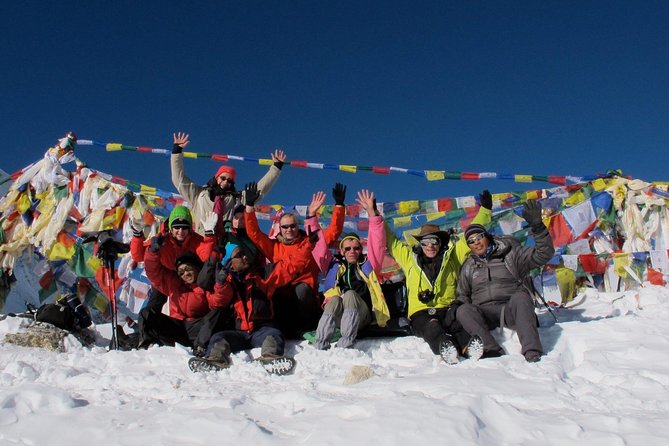
By Day 7 and 8, the cultural shift becomes obvious. Mani stones appear more often, and the trek enters higher, more Buddhist-influenced country.
Day 7 moves from Deng up to Bagarchhap. You cross toward Lana village, then see mani stones more clearly—your sign you’re moving into high-country Buddhist regions. The plan then reaches Ghap/Bagarchhap with an overnight place straddling the river.
Day 8 continues the climb into alpine territory toward Namrung (2550m). This day includes multiple Buri Gandaki crossings, rising to a point where pastures open up. You also reach Sho/Syanjang (a Tibetan village area) and cross again, finishing at Namrung’s tea house. You’ll likely notice the air feeling sharper and the views feeling more “stacked” as mountain mass fills more of your sightline.
Also, the itinerary explicitly says you’ll get incredible views of Manaslu North just above Namrung. That’s the moment when the trek starts feeling like it belongs to big alpine country, not just a mountain valley walk.
Sama Gaon and Samdo: acclimatization with real payoff
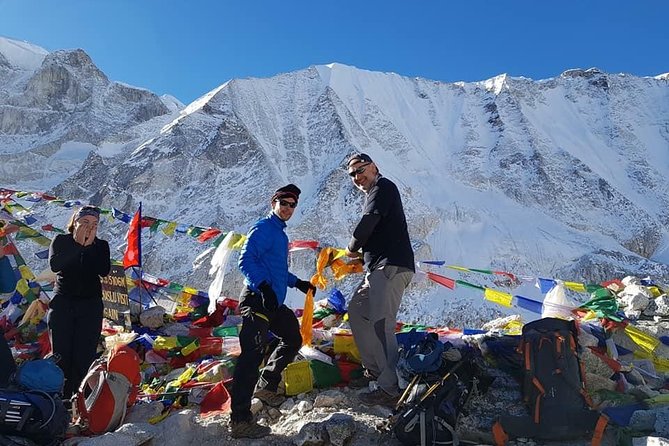
The trek doesn’t jump straight to Larke La. It gives you time where altitude matters.
Day 9 continues to Samagaon / Sama Gaon (around 3500m) after passing Lho (3150m) with a monastery, chortens, and mani walls. There’s also mention that Ganesh I is visible looking back, and that Peak 29 appears ahead. You can take detours toward Honsansho Gompa and the Pungen Glaciers, then reconnect with the main riverbank trail to Sama Gaon.
Day 10 is a dedicated rest day in Sama Gaon for acclimatization. The plan says you can hike to Manaslu Base Camp for views of Samdo (Pang phuchuli), Nagdi chuli, Simnang Himal, the Manaslu glacier, and Manaslu icefall, plus Birendra Kunda, an ice lake nearby.
Day 11 moves to Samdo (3690m). The route is described as gentle uphill through a desert path and windy valley, with the Tibetan border just four kilometers away, though visitors aren’t allowed to pass it. There’s also a Tibetan refugee village at Samdo, which adds a human, lived-in layer to what might otherwise feel like just scenery. Samdo is positioned as an excellent viewpoint for Manaslu and several neighboring peaks.
For your planning: these rest and viewpoint days are what help the pass-day feel less punishing. If you treat them like bonus days and ignore acclimatization discipline, Larke La can feel rougher than it needs to.
Larke La day: the pass, the packed lunch, and the icy realism
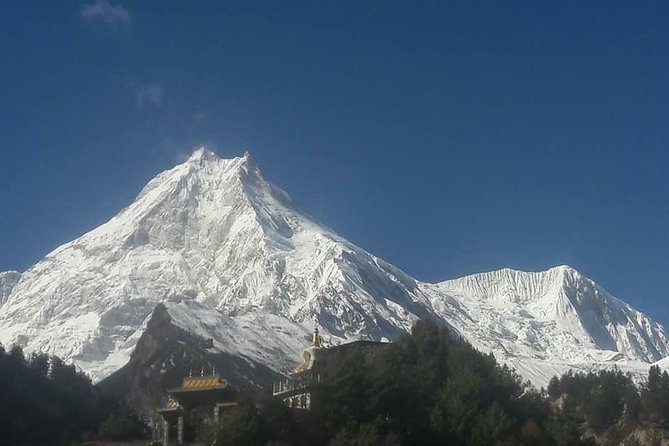
Day 12 takes you to Dharmashala or Larkya Phedi. The time is listed as about 4–5 hours, and the trail is described as rocky and zigzagging. Before reaching Larkya Phedi, there’s a market area called Larkya Bazaar, where seasonal fairs are held and people bring goods from Tibet.
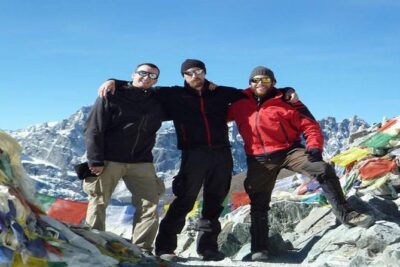
Day 13 is the pass day, from Larkya Phedi up to Larke La (5135m) and then down to Bimthang (3590m). You start early, take a steep ascending path on a rocky, windy trail, and carry a packed lunch. The schedule points out views from the top, including Larke peak, sunrise potential at Manaslu, Ratna chuli, Cheo Himal, and other snow-capped peaks.
The descent is where you feel the high-country reality. The itinerary mentions steep downhill on rock and ice, icy lakes, and then Bimthang as a broad, level ablation valley with mani walls and deserted houses.
This is the day to respect cold management. The route includes a lot of wind exposure language. Bring layers you can adjust fast. And if you’re the type to push too hard early, remember: the pass day punishes that attitude.
After the pass: Bimthang to Tilje, rhododendron, and the apple-orchard stop
Day 14 is about recovery through movement. From Bimthang to Tilje, the itinerary estimates 4–5 hours. You descend the Burdin Khola valley and reach the base camp area for the west side of Manaslu, then cross a bridge over the headwaters of the Dudh Khola. After that, the route goes into rhododendron forest and through a narrow valley until you reach Karche (2785m), the highest cultivated land in this valley.
You continue downward to Tilje. The plan also notes an apple orchard here, and says Tilje’s orchard is famous for local wine. It’s one of those “you made it” moments after the pass: the scenery feels more alive, and the walk shifts away from pure alpine harshness.
Down to Dharapani and out to Besi Sahar: where the trek connects to the Annapurna trail world
Day 15 goes from Tilje to Dharapani (1860m). The route includes about a 45-minute uphill section before reaching Dharapani and crossing a bridge over the Marshyangdi River.
Day 16 drops further, from Dharapani down to Syange (about 3–4 hours) and then a Jeep/Bus ride to Besi Sahar (2–3 hours). So you’ll get a change of pace: legs out of hiking mode, then riding back to civilization.
Day 17 returns to Kathmandu (4–5 hours), and you’re also offered a cultural dinner in the evening. Day 18 is departure, with a driver transfer to the international airport earlier so you can catch your flight.
That “finish logistics” part matters. A lot of people underestimate it. Here, the plan is explicit about when you transition from foot travel to vehicle travel.
Tea houses, meals, and comfort math on a restricted trek
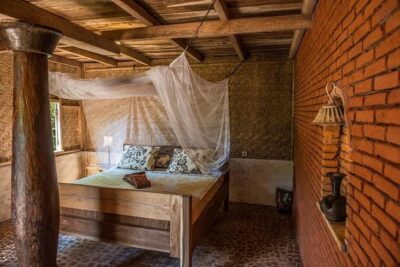
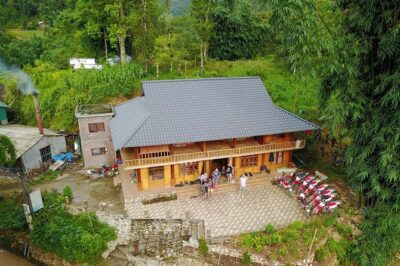
This trek is set up around tea house or lodge stays during the walking days, plus a 3-star category hotel in Kathmandu with breakfast (BB plan).
During the trek, it includes tea house/lodge accommodation with breakfast, lunch, and dinner. In other words, you’re not budgeting daily meals on the trail as long as you stay with the schedule and your trek meals follow the included plan.
What to expect practically:
- Nights are basic compared to city hotels.
- Facilities vary by stop, so it’s worth traveling with a flexible mindset.
- Hot showers aren’t mentioned in the inclusions, and personal extras like hot/cold water, tea/coffee, and bar items are called out as personal expenses.
If you want the hike to feel manageable, pack for warmth and think of your sleep as a tool for recovery. The itinerary’s success depends on you being able to wake up ready for the next section.
Price and logistics: what the $1,797 includes, and why that’s worth watching
The price listed is $1,797 per person for approximately 18 days.
Here’s what you’re paying for that you might otherwise have to organize:
- Airport pickup and drop in Kathmandu
- Private vehicle full-day sightseeing in Kathmandu
- 3-star hotel with breakfast in Kathmandu
- Tea house/lodge lodging and meals (breakfast, lunch, dinner during trekking as described)
- Guide and porters (1 for 2 trekkers)
- National park fees, trekking permits, plus a special permit and TIMS
- Transportation tied to the route’s road legs
- General first-aid kits
- Taxes and fees required for the program
What you still need to plan for:
- Your Nepal visa fee and sightseeing entrance fees aren’t included
- Meals in Kathmandu aren’t included
- Travel insurance is essential and not included
- Tips for staff are not included
- Personal gear that isn’t listed in the contract is not included
So the value angle is mostly about risk reduction and time saved. On Manaslu, permits and the licensed guide requirement can eat up time if you do it yourself. This package aims to handle those parts, which lets you focus on the hiking and altitude schedule.
Who should book this Manaslu Larke Pass trek
This is a strong fit if you:
- Want a restricted-region trek with a guide and permits handled
- Prefer a route that changes cultural zones as you climb
- Are comfortable hiking multiple days with river valleys, crossings, and variable trail conditions
- Appreciate acclimatization structure at Sama Gaon and Samdo before the highest day
It may not be the right fit if you:
- Want a fully independent trek with no licensed guiding requirement
- Are sensitive to cold, wind, or rocky terrain on a pass day
- Expect luxury comfort in tea houses
Moderate physical fitness is stated as the baseline expectation. If you’re newer to high-altitude trekking, this route’s pass day is the moment to take seriously.
Should you book this trek or choose something easier?
If you’re drawn to Manaslu’s restricted, less-crowded feeling and you like routes that actually change as you climb, this itinerary makes sense. The schedule builds in acclimatization where it counts, and the included support (guide, porter ratio, permits, first-aid basics) reduces the avoidable stress.
I’d book it if you’re ready for a serious trekking experience and you’re willing to plan for cold nights and cold-weather mountain walking. I’d hesitate if you want a gentle hike with minimal elevation drama. Here, elevation is the point—and Larke La is the headline.
FAQ
Is airport pickup and drop included?
Yes. The trip includes airport pickup and drop in Kathmandu.
Do I need a licensed guide for this trek?
Yes. Manaslu is a restricted-region trek, and it requires a licensed guide and special permits.
Are the trekking permits included in the price?
They are included. The package lists national park fees, trekking permits, and special permits including TIMS.
What kind of lodging will I have during the trek?
You’ll stay in tea houses or lodges during the trekking days, and in a 3-star category hotel in Kathmandu with breakfast.
Are meals included?
Yes during the trek: tea house/lodge accommodation includes breakfast, lunch, and dinner as per the itinerary. Meals in Kathmandu are not included.
How many trekkers share a porter?
The plan states 1 porter for every 2 trekkers.
How long is the trek?
It runs for about 18 days, including Kathmandu arrival and departure days.
Is Kathmandu sightseeing included?
Yes. The package includes a full-day Kathmandu sightseeing tour by private vehicle, covering Pashupatinath, Boudhanath, Patan Darbar Square, and Swayambhunath.
Is travel insurance included?
No. Travel insurance is essential but not included.