REVIEW · KATHMANDU
Mardi Himal Base Camp Trek -9 Days
Book on Viator →Operated by Himalayan Adventure Treks and Tours Pvt Ltd · Bookable on Viator
Mardi Himal is short, but it hits hard. This 9-day trek mixes Kathmandu and Pokhara warm-up days with a steady push to Mardi Himal Base Camp, where Machhapuchhre (Fishtail) shows up again and again as you climb. It’s a fairly popular route in Nepal’s Annapurna region, mainly because it’s quicker than some bigger treks—and you still get mountain drama plus Gurung culture.
I like that the trek is pitched for moderate physical fitness, yet the hiking actually changes over time: forest paths, then more open alpine walking. I also like the practical setup for carrying less—there’s a 1 porter for 2 clients system, plus a duffle bag that you get back after the trek.
The main thing to consider is altitude and trail stress. You’ll reach around 4,450m at base camp, and the finish includes a steep-feeling downhill day, which can be tough on knees if you go too fast.
In This Review
- Key points worth knowing before you go
- Why Mardi Himal Base Camp feels like a smart Annapurna choice
- Kathmandu and Pokhara: the ramp-up days that save your trip
- From Phedi to Forest Camp: rhododendron and quieter walking
- Forest Camp to High Camp: the steeper move into alpine country
- Mardi Himal Base Camp day: short distance, serious altitude
- Down to Siding village: knees meet culture, and it’s a good combo
- Pokhara back to Kathmandu: the long road day before your flight
- Tea houses, meals, and the porter setup that changes everything
- Permits and paperwork: the stuff you’ll be glad you don’t manage
- Price and value: what $900 covers, and what you’ll likely pay extra for
- Best timing: October clarity vs monsoon grit
- Should you book the Mardi Himal Base Camp trek?
- FAQ
- Where do I meet the tour, and what time does it start?
- Does this trek include hotel stays in Kathmandu and Pokhara?
- What kind of sleeping arrangements are used during the trek?
- What permits are included?
- What meals are included during the trek?
- Is a vegetarian diet available?
- How many porters are provided?
- How do you handle transport during the trip?
- Is there medical support included?
- What’s included in the $900 price, and what costs extra?
- What is the cancellation policy?
Key points worth knowing before you go
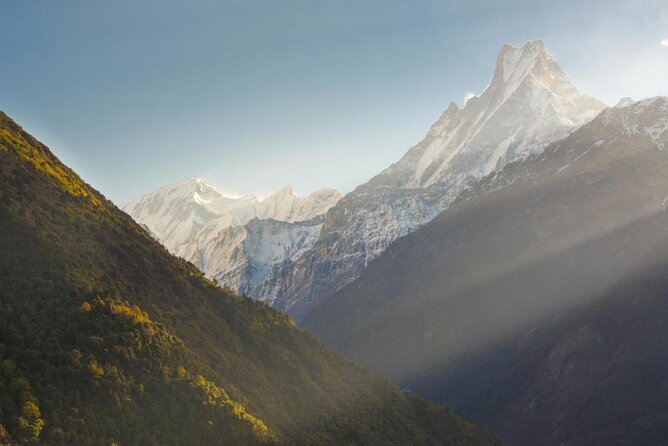
- Machhapuchhre views on multiple days: You’ll see Fishtail from different elevations, not just one lucky moment.
- Forest-to-alpine walking: Rhododendron and oak start the story; the higher zones get rockier and more exposed.
- A high camp climb that’s short but steep: Base camp is only a few hours from High Camp, but it’s not a stroll.
- Guides and porters who keep things moving: Names you may encounter include Prakash, Lakpa, Badri, and Ang gombu sherpa.
- You end in Gurung villages: Siding village adds culture and everyday life after the mountain work.
Why Mardi Himal Base Camp feels like a smart Annapurna choice
If you want the Annapurna region’s big-mountain feeling without dragging your trip out for weeks, Mardi Himal Base Camp makes a lot of sense. The trek runs along the east side of the Annapurna range and the Mt. Machhapuchhre area, so your view angles aren’t the same as the famous Annapurna routes. You get your own “camera perspective,” with peaks like Machhapuchhre and Annapurna South showing up from different directions as the trail rises.
This route also works for culture lovers. You’re not just walking through scenery; you’re walking through communities connected to the Gurung way of life. The finish in Siding village matters because it turns the trek into something more than a badge you pin on your jacket. You get a slower rhythm—villages, farms, and local daily routine—after the steep part.
And the “easy yet adventurous” description is pretty accurate in practice: it’s not billed as a technical expedition, but you still earn your base camp views. If you’re the type who likes a clear goal (base camp) and a manageable daily structure, you’ll probably like this format.
You can also read our reviews of more tours and experiences in Kathmandu.
Kathmandu and Pokhara: the ramp-up days that save your trip
Day 1 starts in Kathmandu with airport pickup and a transfer to your hotel. You’ll get time to settle in, then meet your group and trek team in the evening. After a flight, that first human contact helps. It’s not just comfort—it’s also where you can ask the “small questions” that stop problems later.
Day 2 is your Kathmandu to Pokhara drive. It takes about 6–7 hours and covers roughly 200 kilometers. On a road day like this, I’m glad the schedule gives you a full travel block up front rather than scattering short moves around the trek. You’re in a vehicle long enough to arrive with daylight for a proper start.
Pokhara then supports the trek with two things: altitude you can tolerate and easy logistics. You spend another night there before the walking begins. The trek itself doesn’t start immediately from Pokhara town; instead, you go to Kande, which is higher up. That means you start Day 3 already somewhat “preloaded” for the climbing ahead.
Day 3 is drive plus first hike: Pokhara to Kande takes about 1.5 hours, then you hike to Pitam Deurali (around 3.5 miles / 5.6 km, about 3–4 hours). This is the trek’s tone-setter. It’s moderate hiking through dense forest and occasional clearings, so you get used to uphill rhythm without going straight into the highest altitude pressure.
Also note the hotel style: you’re given two nights in 3-star hotels in both Kathmandu and Pokhara with breakfast. Those meals and beds matter more than people think when you’re about to sleep in tea houses.
From Phedi to Forest Camp: rhododendron and quieter walking
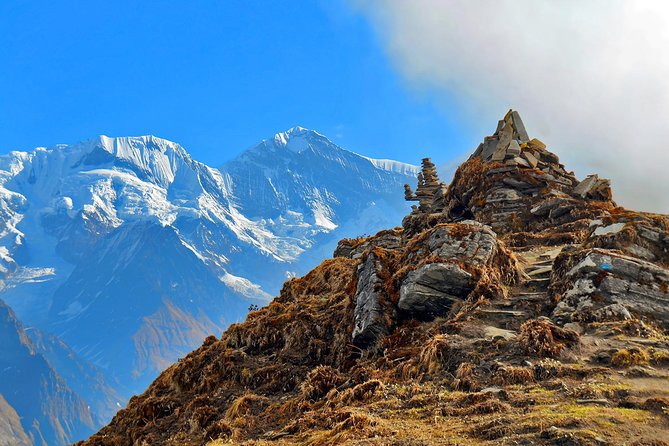
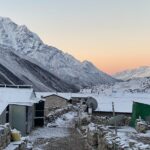
Your main trek day rhythm begins as you move from the lower starting point toward higher camps. The route goes through places like Pothana and then upward via Deurali toward Forest Camp, typically around 8,202 feet / 2,500 meters.
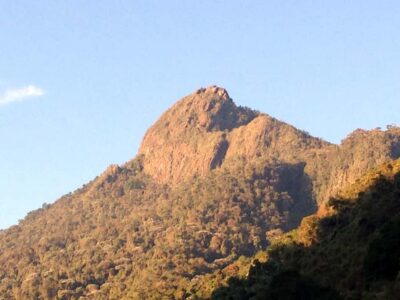
What I like here is the gradual “environment shift.” You’re trekking through rhododendron and oak forests early on, and that’s not just pretty—it’s practical. Forest cover can mean more stable footing and less sun glare than exposed alpine trails. The path is described as quiet and remote in stretches, which you’ll feel because your hiking doesn’t turn into a constant stream of people.
Forest Camp is also one of those places where you get early payoffs. From the trail, you can catch views of Machhapuchhre and Annapurna South when the clearing timing lines up. These peek moments are useful because they make you trust the climb. You’re not wondering if the hardest days are “wasted effort.” The mountains show up early enough to keep your motivation real.
The tradeoff is time in your legs: Day 3 to Day 4 is a longer hike (about 5–6 hours for roughly 4 miles / 6.4 km). The trail can be steep and narrow in places, which is where good pacing becomes everything. If you go out fast, you’ll arrive feeling like you did a workout. Go steady, and you’ll arrive ready to enjoy the camp.
Forest Camp to High Camp: the steeper move into alpine country
The climb from Forest Camp (around 2,500 m) to High Camp (around 3,600 m) takes about 5–6 hours over roughly 4.5 miles / 7.2 km. This is where the trek stops feeling like “forest hiking” and starts becoming high-country trekking.
Early on, you still have rhododendron and oak forests. Then the vegetation thins out as you gain altitude. The trail descriptions shift toward dwarf bamboo and juniper—plants that make sense in harsher, colder conditions. This change matters because you’ll notice the temperature feel different and the air feel thinner. It’s not just scenery; your body reacts to altitude even if the steps stay similar.
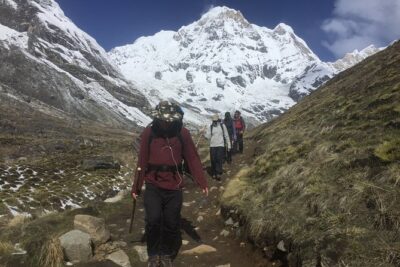
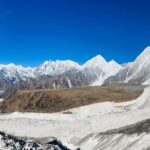
The good news: this is also one of the best viewing legs. Along the way, you get occasional clearings with bold views of Machhapuchhre, Mardi Himal, and Annapurna South. Those are exactly the mountains you’re here for, so the hike turns into a sequence of “look up and check your angle” moments.
This is also a leg where a strong guide can protect you from wasteful effort. If you’ve got a guide who knows how to pace a group, you spend less time huffing and more time walking efficiently. Names that show up in past experiences include Prakash and Lakpa, and the repeated theme is patience and care.
Mardi Himal Base Camp day: short distance, serious altitude
The jump from High Camp (11,800 ft / 3,600 m) to Mardi Himal Base Camp (14,600 ft / 4,450 m) is about 2.5 miles / 4 km one way. You’ll typically spend 3–4 hours reaching base camp.
Don’t let the short distance fool you. The route is described as steep and rugged, moving from grassy alpine meadows to rocky ground closer to the snowline. Even if you’re not seeing snow, you’re walking near a zone where the weather can change quickly. That means you should plan for cold air and wind feeling sharper than it does at lower elevations.
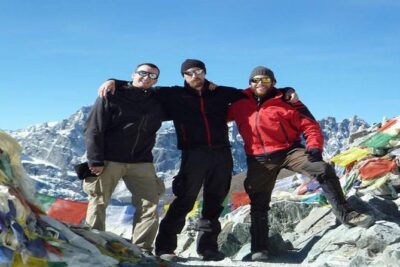
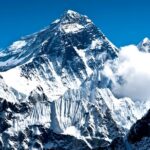
The reward is huge for a day that isn’t long on the clock. Views expand toward Annapurna South (7,219 m), Hiunchuli, and Machhapuchhre right in front. This is the day when the trek’s name stops being an idea and becomes a real location under your feet.
If you’re chasing a “big view in a manageable time” trek, this is the core moment. It also helps that you’re not doing an endless multi-day summit grind. You reach base camp, you take in the view, and you still have time to descend comfortably afterward.
Down to Siding village: knees meet culture, and it’s a good combo
On the way down, the trek shifts from mountain goal to human scale. You start from Badal Danda (around 10,500 ft / 3,200 m) and hike down to Siding village (5,250 ft / 1,600 m). That’s a descent of about 4,920 ft / 1,500 m over roughly 4–5 hours and around 4.3 miles / 7 km.
I like how this ending stays scenic but also grounded. The trail is mostly downhill through forests, terraced farmland, and traditional villages. This is where you’ll feel the Gurung connection more clearly. It’s not a museum vibe. It’s a working landscape with daily routines, which is exactly the kind of cultural texture I look for after trekking.
The drawback here is physical: downhill walking can be harder than uphill climbing because your knees handle braking. If you’re the type who forgets to slow down when it’s easier terrain, this is where you’ll pay for it. Take short steps, watch your footing, and don’t treat the downhill like a race.
After reaching Siding village, you’re picked up and moved back toward Pokhara by private vehicle. That’s a nice payoff: you finish the trek and you’re not stuck arranging transport.
Pokhara back to Kathmandu: the long road day before your flight
Day 8 is your drive from Pokhara to Kathmandu. It takes about 6–8 hours and covers roughly 200 kilometers (about 125 miles). The route follows the Prithvi Highway, with views of valleys, terraced fields, rivers, and occasional Himalayan glimpses.
This road day is visually interesting, but it’s still a road day. After trekking, your body tends to interpret “sitting in a car” as extra work. I’m glad the schedule gives you a full drive day instead of stuffing it right before a morning flight.
Day 9 ends with airport help. A representative from Himalayan Adventure Treks and Tours meets you and takes you to the airport with about 3 hours buffer before your flight. That’s a simple kindness because it lowers stress for check-in and security.
Tea houses, meals, and the porter setup that changes everything
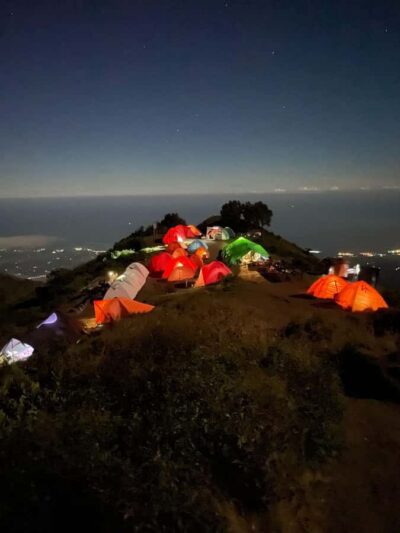
During the trek, your accommodations are in lodges/tea houses. This is the right kind of arrangement for this route because it keeps you fed and sleeping without needing camp gear. It also means your daily effort focuses on walking, not campsite building.
Meals are included: lunch and dinner and breakfast during the trek. On top of that, breakfast is included with your Kathmandu and Pokhara hotel stays. The count included is listed as 8 breakfasts, 4 lunches, and 5 dinners across the days you’re trekking and staying in hotels.
Vegetarian food is available if you request it in advance. If you have dietary needs, you should flag them during booking. This matters most in mountain settings, because your choices narrow quickly when you’re not flexible.
The porter system is also key. You have one porter for two clients, and you get a duffle bag that’s returned after the trek. In plain terms: your pack weight is controlled, and you can keep your day pack manageable for water and layers. For many people, that’s the difference between enjoying the view and fantasizing about a bench.
Medical supplies are included in the form of a first aid kit. That doesn’t replace travel insurance, but it does mean you’re not going in completely unprepared.
Permits and paperwork: the stuff you’ll be glad you don’t manage
This trek includes the TIMS permit and ACAP permit, along with the “all necessary paper works.” It also includes all government taxes. In Nepal, permits are part of the system for trekking, and handling them through a trekking operator is one less thing you need to worry about on your travel days.
Why I care about this: permits can turn into time sinks if you try to manage them at the last second. Here, the structure is set up so you can focus on the mountains and not on forms.
Price and value: what $900 covers, and what you’ll likely pay extra for
At $900 per person for an approximately 9-day program, the value comes from what’s bundled. You’re not only buying guide time. You’re buying a full chain: airport pickup, hotel nights in Kathmandu and Pokhara, transport between key points, trek meals, permits, and the porter system.
Included items that matter in real life:
- Two nights each in Kathmandu and Pokhara at 3-star hotels with breakfast
- Trek lunch, dinner, and breakfast
- An experienced guide plus porters (1 porter for 2 clients)
- TIMS and ACAP permits plus paper work
- Lodges/tea houses during the trek
- Kathmandu to Pokhara and back by tourist bus, plus private transfers for specific legs (Pokhara to Kande, and Siding to Pokhara)
- Medical first aid kit
- A duffle bag (returned after the trek)
- Company t-shirt
- Last night farewell dinner at an authentic Nepalese restaurant with cultural performance
- Mobile ticket
Not included costs you should budget for:
- Nepal visa fee (you obtain it easily in Kathmandu airport)
- International air fare
- Travel and rescue insurance
- Personal expenses such as phone calls, laundry, bar bills, battery recharge, extra porters, bottle or boiled water, shower, and similar items
- Tips for guide and porter
One practical way to think about the price: if you tried to piece this together yourself, you’d still need hotels, the guide, permits, transport, and meals. Here, you’re paying for coordination, so your trip stays smooth.
Also: this is described as a private tour/activity, meaning it’s only your group.
Best timing: October clarity vs monsoon grit
You’ll hear two different stories about weather here, and both are supported by what’s shared: rhododendron season and monsoon season.
In spring-like rhododendron bloom, the trek can feel extra alive because the route runs through forests loaded with flowers and trees. That’s a major part of why the middle elevations are popular: the scenery isn’t just rock and sky.
For classic clear mountain days, October shows up as the best time in at least one past experience, with bright skies and sunny visibility. If you want crisp, high-contrast views, that timing matters.
And yes, the trek can still be done in monsoon season. One shared experience describes it as workable even then, with a helpful team. Still, monsoon implies rain and slippery footing, so you’ll want to walk slowly and accept weather changes as part of the deal.
Should you book the Mardi Himal Base Camp trek?
Book it if you want:
- Big mountain views without committing to an ultra-long expedition
- A trek that’s challenging enough to feel real but still framed for moderate fitness
- A route where you spend meaningful time with Nepal’s Gurung culture, especially around Siding village
- A setup with a guide, porters, tea houses, and meals handled so you’re not juggling logistics mid-climb
Skip or ask more questions before booking if:
- You’re sensitive to high altitude and want extra safety buffers (this route reaches about 4,450m)
- You worry about downhill knee strain and don’t feel comfortable with a steep descent day
Quick smart checks before you confirm:
- Request vegetarian meals at booking if you need them.
- Plan for visa and travel insurance (those aren’t included).
- Set aside extra budget for personal expenses like water and tips.
- If possible, time your trek around October for better visibility, but know monsoon is workable if you’re flexible.
FAQ
Where do I meet the tour, and what time does it start?
You meet at Tribhuvan International Airport, Ring Rd, Kathmandu 44600, Nepal. The start time is 7:00 am, and the activity ends back at the meeting point.
Does this trek include hotel stays in Kathmandu and Pokhara?
Yes. You get two nights in 3-star hotels in Kathmandu (with breakfast) and two nights in 3-star hotels in Pokhara (with breakfast).
What kind of sleeping arrangements are used during the trek?
During the trek, accommodations are in lodges/tea houses.
What permits are included?
The trip includes the TIMS permit and the ACAP permit.
What meals are included during the trek?
Lunch, dinner, and breakfast are included during trekking, along with breakfast during your hotel stays. A farewell dinner with cultural performance is included as well.
Is a vegetarian diet available?
A vegetarian option is available. You should advise the operator at the time of booking if you need it, along with any other dietary requirements.
How many porters are provided?
You get a porter ratio of 1 porter for 2 clients, and you also receive a duffle bag that is returned after the trek.
How do you handle transport during the trip?
You’ll be picked up from the airport with private vehicle transfers. Kathmandu to Pokhara and back is by tourist bus, while Pokhara to Kande and Siding to Pokhara are by private vehicle.
Is there medical support included?
A first aid kit is available, and medical supplies are included.
What’s included in the $900 price, and what costs extra?
Included are hotels, trekking meals, guide and porter support, permits, transport between key points, accommodations in tea houses, and government taxes. Not included are Nepal visa fees, international airfare, travel/rescue insurance, personal expenses, and tips for the guide and porter.
What is the cancellation policy?
There is free cancellation up to 24 hours in advance of the experience for a full refund. If you cancel less than 24 hours before the start time, the amount paid is not refunded.